

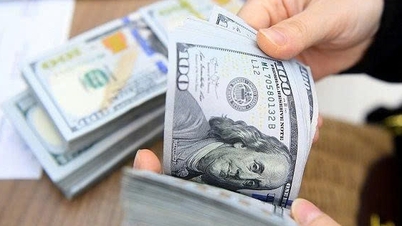
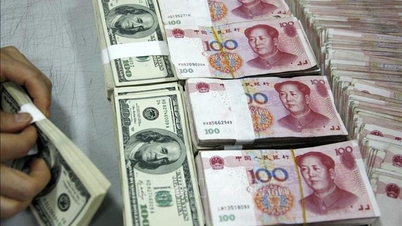
There are growing calls to reduce reliance on the US dollar for trade and reserves, threatening the greenback's leading position...
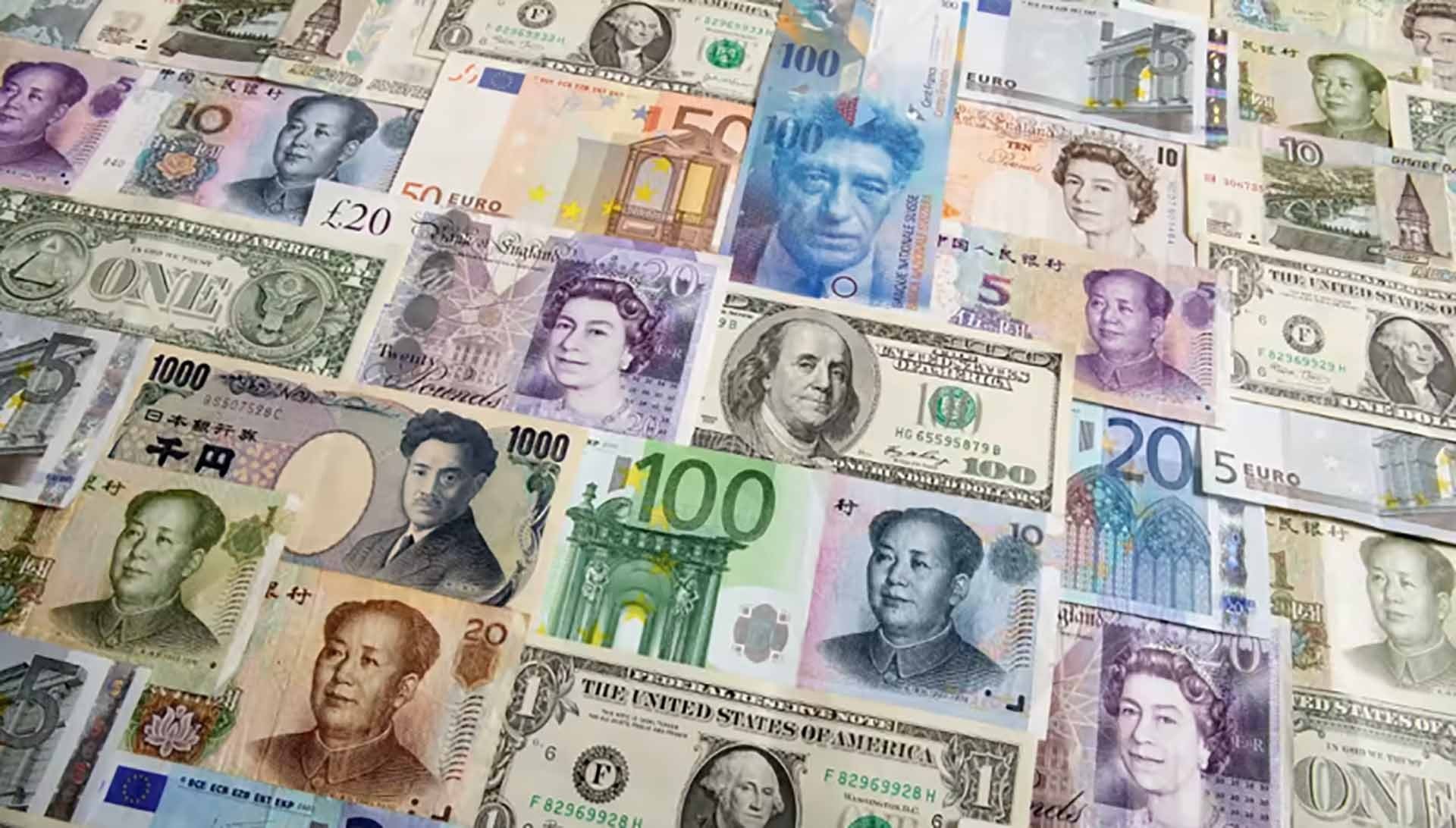 |
| There are growing calls to reduce reliance on the US dollar for trade and reserves, threatening the greenback's leading position... |
Recently, with the strong rise of economies such as China, India, Russia, and Brazil, and profound geopolitical changes, efforts to reduce dependence on the US dollar have been increasing.
Efforts to reduce dependence
According to The Hindu (India) on May 4th, India and Malaysia have agreed to use the Rupee for payments in bilateral trade. Previously, Brazil and China agreed to increase payments in their respective currencies in February 2023. More recently, Saudi Arabia and the UAE announced they would accept alternative currencies besides the USD for oil exports, while Iraq declared a ban on personal or business transactions in USD within the country...
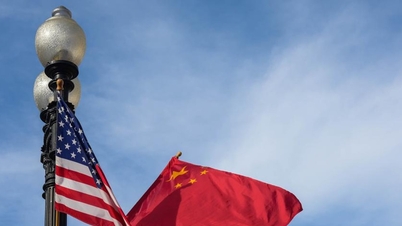
Currently, Russia and China are two leading countries in the effort to de-dollarize the economy. During his visit to Russia last March, Chinese President Xi Jinping and Russian President Vladimir Putin issued a statement agreeing to strengthen bilateral cooperation in the economic field, notably promoting the use of the Renminbi (RMB) in transactions between the two countries. President Putin affirmed his support for "using the RMB in payments between Russia and countries in Asia, Africa, and Latin America."
Previously, at the 14th BRICS Summit in June 2022, Russian President Vladimir Putin proposed studying the possibility of establishing an international reserve currency based on the national currencies of the BRICS countries. President Putin's idea was supported by members of the group, particularly China and Brazil.
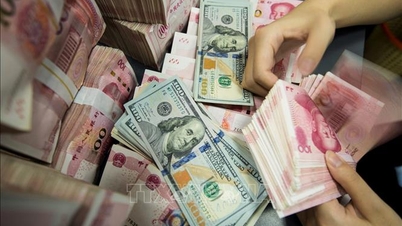
According to Bloomberg, in February and March, the yuan officially surpassed the dollar to become the main currency traded in Russia. Prior to that, the proportion of payments in rubles and yuan had increased significantly, reaching 47% in March 2023 in transactions between the two countries. The yuan has also been boosted in financial transactions between ASEAN countries, the region currently China's largest trading partner.
However, the current global usage rate of the RMB remains low. It accounts for only 2.19% of total global payments; 3.5% of foreign exchange transactions; 2.69% of reserves held by central banks; and 12.28% of the International Monetary Fund's (IMF) Special Drawing Rights (SDR) currency basket.
From USD to "Petrodollars"
Leveraging its economic and military power, and possessing 80% of the world's gold reserves, the United States established the Bretton Woods system after World War II, pegging the value of the US dollar to the price of gold. From then on, the US dollar began to replace the British pound and became the leading currency.
Subsequently, the US undertook the reconstruction of Europe with the four-year Marshall Plan, providing the EU with over $13 billion in aid. Of this, 90% was provided as "gifts" and only 10% as loans, allowing the US dollar to take root in Europe and then spread globally.
However, by the late 1960s, excessive military spending forced the US government to print and issue large quantities of US dollars, causing it to begin depreciating. To prevent further losses, countries using the US dollar began selling off their reserves to buy gold, leading to a dramatic drop in the dollar's value. The US suffered a massive loss of gold reserves, from over 20 billion ounces at the time Bretton Woods was established in 1944 to only 250 million ounces in 1971, when Bretton Woods ended.
Under economic pressure, the US government had to implement new economic policies, ending the ability of foreign governments or central banks to use the US dollar to exchange for US gold. The Federal Reserve (Fed) announced the decoupling of the US dollar from the gold standard, officially causing the collapse of the Bretton Woods system. However, the collapse of Bretton Woods did not mean that the US would relinquish its leading position in the world, thanks to the US dollar.
When the Fourth Middle East War broke out in 1973 between Egypt, Syria, and Israel, the opportunity arose for the US to reclaim the dominance of the dollar. Under US influence, in 1973, Saudi Arabia was the first country to sign an agreement with the US, agreeing to use the dollar for payment in oil exports. Two years later, all OPEC member countries agreed to use the dollar in transactions. Since then, the dollar has separated from gold and formed a new syndicate with oil, based on the value of oil transactions, becoming the "Petrodollar".
To purchase oil, countries are forced to prepare large reserves of US dollars, which continuously increases the demand for this currency. In addition, oil-exporting countries use petrodollars to buy US bonds and related financial products, causing large amounts of US dollars to flow back to the US. The US government no longer has to worry about the rapid depreciation of the US dollar as before.
In fact, besides the Petrodollars and US public debt supporting the USD, the two institutions that remained after the collapse of the Bretton Woods system, the IMF and the World Bank, also helped the USD regain its dominant position in the international market.
In the SDR currency basket subsequently developed by the IMF, the US dollar accounts for up to 70% of the weighting. The US is also the largest shareholder of the World Bank and has veto power on important issues of both organizations. Furthermore, loans granted through the IMF and World Bank mechanisms are valued in USD. This has led to the continued widespread support of the US dollar among borrowing countries.
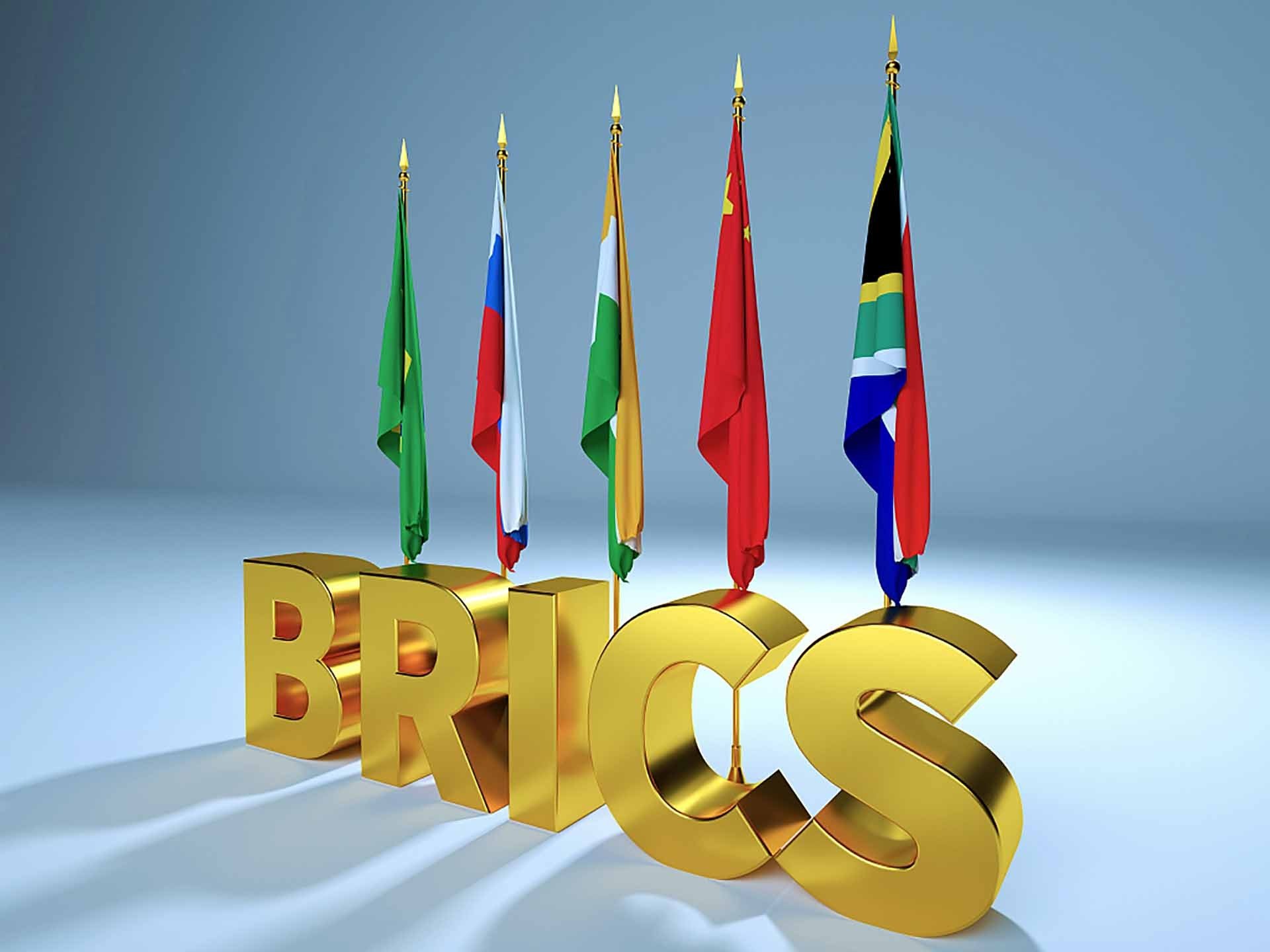 |
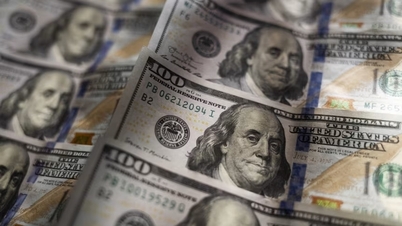
| The BRICS countries are aiming to introduce a new currency to compete with the US dollar. (Source: Chinadaily.com.cn) |
Tools for maintaining strength
Although the "Petrodollar" is closely tied to the "oil standard," this resource is located in other countries. To monitor the use of the USD in circulation, in 1974, three years after the end of Bretton Woods, the United States established the Society for Worldwide Interbank Financial Telecommunication (SWIFT). Although SWIFT is a neutral, non-profit organization, transactions through its system essentially use USD as the primary payment instrument. While other currencies are traded through SWIFT in smaller quantities, the flow of money through this system remains effectively controlled and influenced by the United States.
The widespread trading and primary reserve of the US dollar in many economies also creates problems for numerous countries. When the dollar appreciates, other currencies depreciate, leading to inflation. Conversely, when the dollar depreciates, other currencies appreciate, benefiting the management of other economies. Since strategic commodities are priced in US dollars, a depreciation of this currency leads to price increases, resulting in widespread import inflation.
While the Fed controls money printing, the US Treasury uses the USD for lending, forcing central banks of borrowing countries to buy US bonds. In the event of a depreciation of the USD, countries borrowing through US government bonds have no choice but to accept a reduction in their reserves.
The US could use SWIFT to prevent sanctioned countries from using the USD in international payments, even excluding "unfriendly nations" from SWIFT. In addition, there are demands for policy reforms, a "bitter pill" for some developing countries through IMF loans, and frequent warnings to these countries.
For the reasons mentioned above, the need for payment mechanisms not based on the USD is increasing. However, given the economic power and geopolitical role of the United States, the influence and position of the USD remain very difficult to replace. Currently, the US is the world's largest producer and exporter of oil, holds the world's largest gold reserves with over 8,000 tons, and possesses strong technological innovation capabilities. The USD's dominant market function remains very strong. Of the 81 commodity prices published by the United Nations Conference on Trade and Development (UNCTAD), only five are not priced in USD.
In terms of circulation, according to SWIFT statistics, the US dollar currently holds a 41.1% market share in international payments; in cross-border trade financing, the US dollar accounts for 84.32%; in global foreign exchange transactions, the US dollar accounts for 88%; in financial transactions, 47% of international debt is denominated in US dollars, and as many as 58% of international reserves are assets denominated in US dollars. Considering the proportions of these indicators, the US dollar consistently ranks first.
In this context, although many economies are striving for "de-dollarization," as long as developed economies continue to use the US dollar in bilateral investment and trade, these efforts by developing and emerging economies will face limitations. Certainly, for a long time to come, the US dollar will remain the leading currency in world trade and reserves.
Source
![[Photo] General Secretary and President To Lam visits and delivers a policy speech at Tsinghua University.](https://vphoto.vietnam.vn/thumb/1200x675/vietnam/resource/IMAGE/2026/04/14/1776164592318_vna-potal-tong-bi-thu-chu-tich-nuoc-tham-va-phat-bieu-chinh-sach-tai-dai-hoc-thanh-hoa-trung-quoc-8700658-5437-jpg.webp)
![[Image] Expediting land clearance at Alley 310 Nghi Tam to facilitate the construction of Tu Lien Bridge](https://vphoto.vietnam.vn/thumb/1200x675/vietnam/resource/IMAGE/2026/04/14/1776160406551_ndo_br_z7724148990408-9e5d4777e3c4504998b4286178b2e66e-jpg.webp)
![[Photo] General Secretary and President To Lam and his wife begin their state visit to China.](https://vphoto.vietnam.vn/thumb/1200x675/vietnam/resource/IMAGE/2026/04/14/1776133794926_z7723148772587-ffefa3c4b1e54e100de1554593a862c6-jpg.webp)















![[Photo] General Secretary and President To Lam receives Slovak Prime Minister Robert Fico](https://vphoto.vietnam.vn/thumb/1200x675/vietnam/resource/IMAGE/2026/04/13/1776080592076_a1-bnd-8227-6002-jpg.webp)

































































Comment (0)