

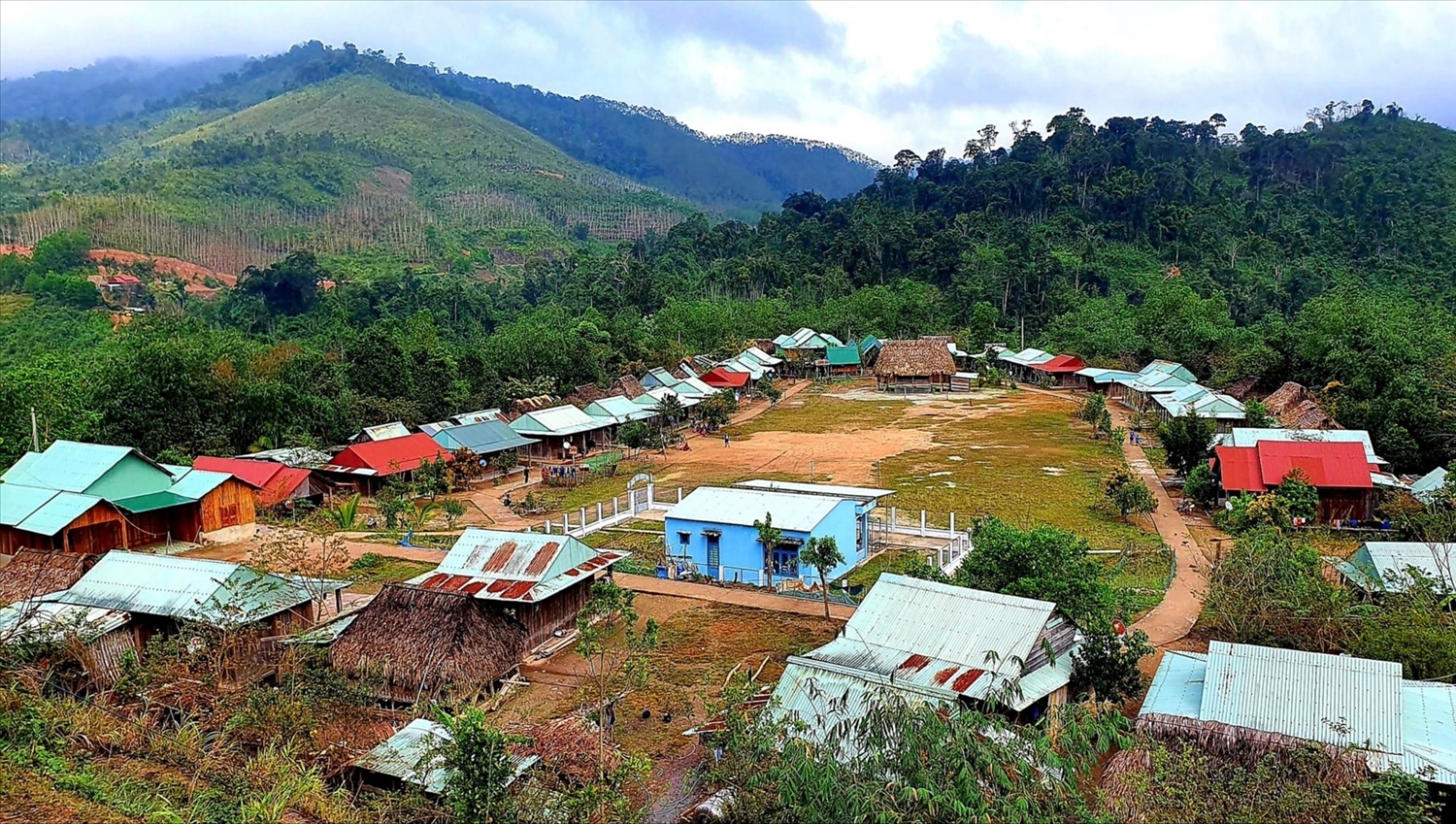
The data collected through the survey of 53 ethnic minority groups not only measures the impact of investment and development policies that have been and are being implemented in "core poverty" areas, but also serves as a basis for long-term policy planning for the sustainable development of ethnic minority and mountainous regions.
In reality, many "basic" indicators and data regarding living conditions remain unmet after periods of implementing ethnic minority policies; this is clearly revealed and fully reflected in the survey of 53 ethnic minority groups. Taking the criteria of electricity grids, roads, and health stations as examples, this is evident.
Accordingly, in 2019, 98.6% of villages in ethnic minority areas had access to electricity. Of these, the percentage of villages using the national power grid reached 97.2%, an increase of 4.2 percentage points compared to 2015. Nearly 90% of villages in ethnic minority areas had paved roads leading to the commune center, almost 17 percentage points higher than in 2015. The percentage of communes with health stations meeting national standards for commune-level health care by 2020 reached 83.5%, nearly double the 45.8% in 2015. The poverty and near-poverty rate in ethnic minority areas was 35.5%, a decrease of 1.2 percentage points compared to 2015; 3.5 times higher than the national average (10.2%).
Currently, looking from Nghe An province , many villages and residential areas still lack electricity, some localities still lack roads connecting to the commune center, many commune health stations still do not meet standards in terms of facilities, and the poverty rate remains high…
Thus, the survey of 53 ethnic minority groups has revealed fundamental "gaps" in living conditions, economic, social, and cultural aspects, with many shortcomings and limitations that do not meet the living and enjoyment needs of the people in the region.
More than ever, the people and local authorities in the "core poverty" areas, still facing many difficulties and lacking basic living conditions, are looking to ethnic policies and resources from ethnic affairs work to "fill" the "gaps" revealed after the survey of 53 ethnic minority groups. To achieve this, the data provided by the grassroots level will be crucial in making ethnic policies more accurate, comprehensive, and practical.































































































Comment (0)