

The new look of the Japanese Bridge after its major renovation is receiving mixed reactions from the public. Many people believe that the renovation has diminished the ancient beauty of the structure, considered a symbol of the ancient city of Hoi An ( Quang Nam ), making the bridge look unfamiliar compared to before.
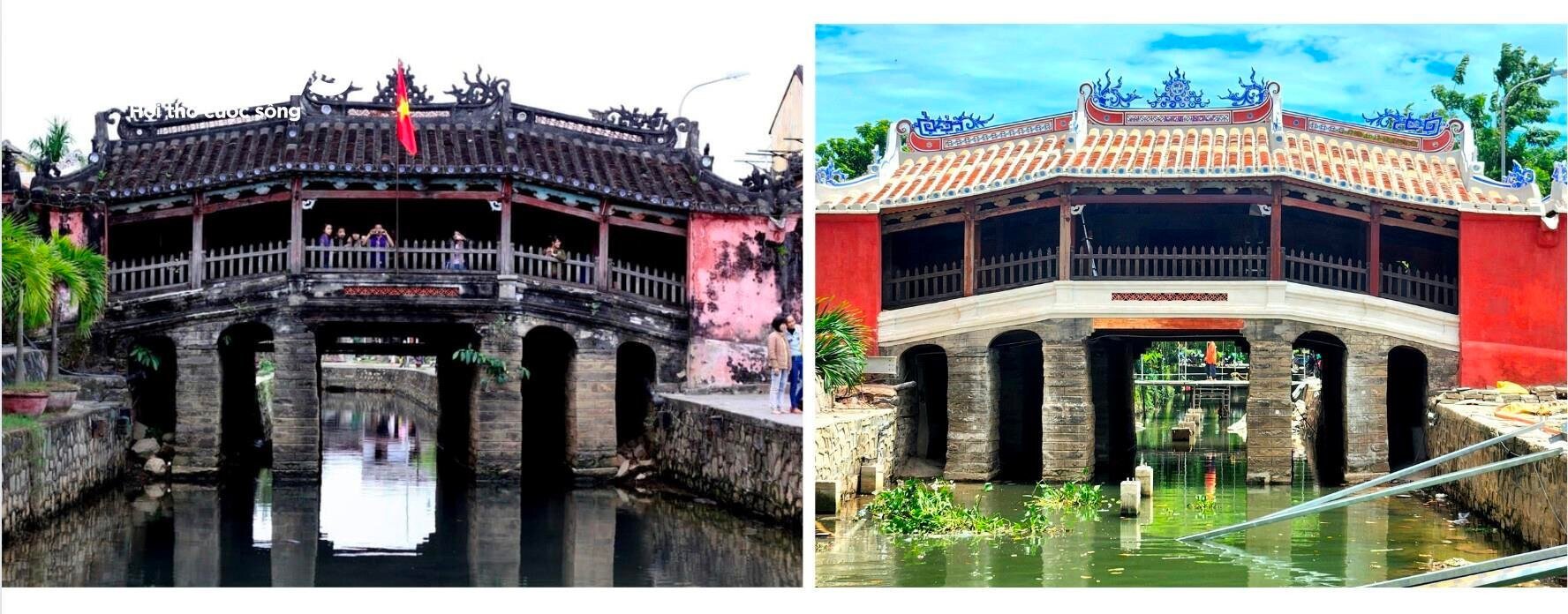
Regarding this matter, Mr. Nguyen Van Son, Chairman of the People's Committee of Hoi An City, said that the project to restore the Japanese Bridge was carried out in accordance with the correct procedures and principles for the restoration of historical relics and was closely supervised by experts from the Ministry of Culture, Sports and Tourism as well as Japanese experts.
During the restoration process, the city also considered many opinions, then discussed them thoroughly before proceeding with implementation. Therefore, the restoration took more than 1.5 years to complete (the initial estimate was 1 year).
Mr. Son emphasized the need to evaluate projects from a professional perspective, stating that no major restoration project is without changes; the important thing is to preserve the original elements and ensure the project's longevity.
"A major restoration project always presents two major challenges. First, ensuring its originality, meaning that all usable architectural elements such as wood, flooring, and railings should be retained if they are deemed original. However, any components that have deteriorated must be replaced to ensure the structural integrity of the building."
Secondly, after the restoration is complete, the components must be repainted for preservation," Mr. Son said.
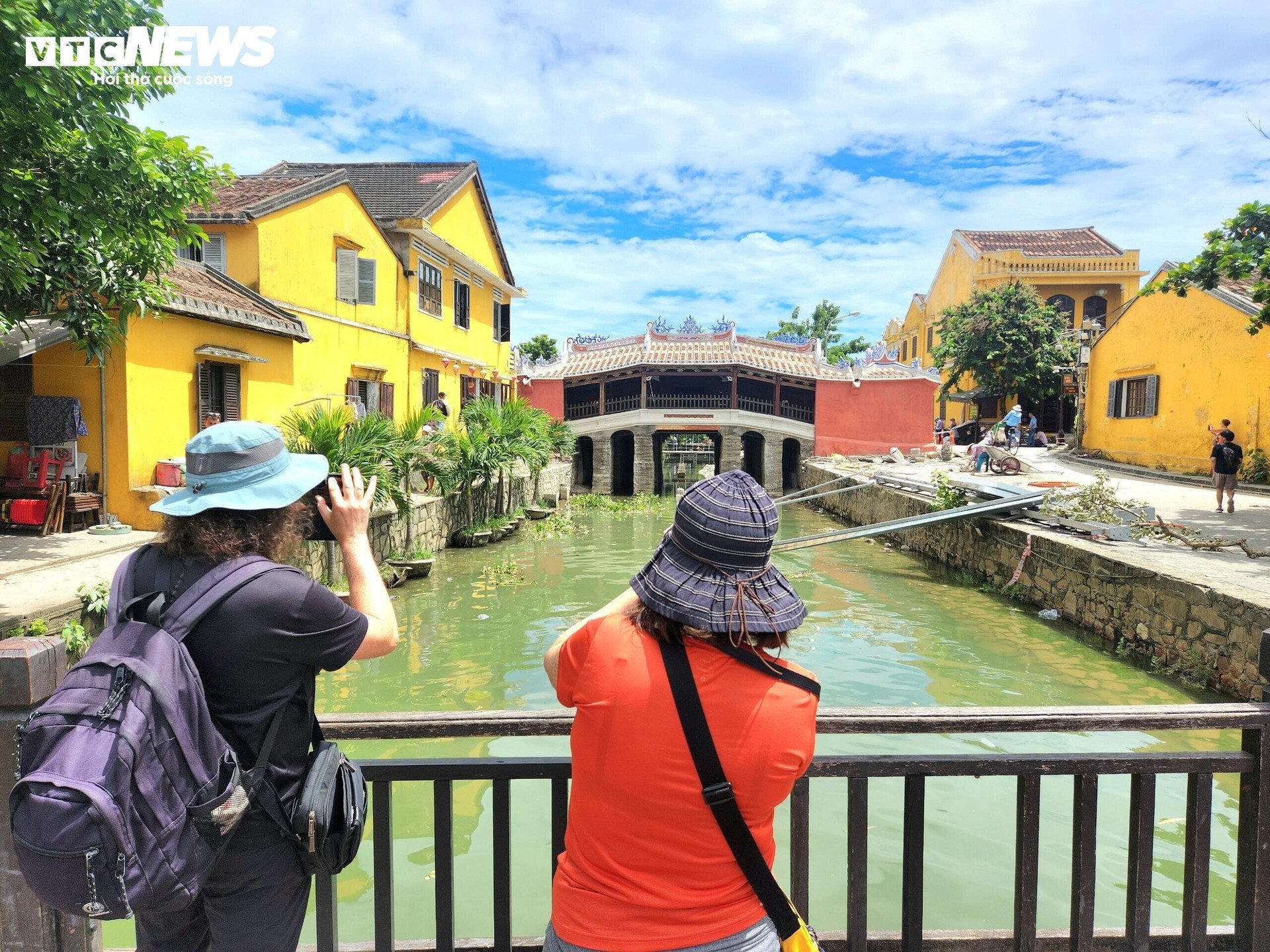
Meanwhile, Mr. Pham Phu Ngoc, Director of the Hoi An Cultural Heritage Conservation Management Center (the unit assigned to carry out the restoration), affirmed that restoration has its own principles, especially regarding the color of the monument.
According to Mr. Ngoc, the current wall and tile colors are based on the original colors of the Bridge Pagoda for restoration purposes.
"The colors before restoration were faded over nearly 20 years and hadn't been repainted. The darker colors we see now are due to the original color. This is whitewashing, not painting, so it will fade very quickly over time. On August 3rd, we will publish a book documenting the entire research and restoration process so that everyone can understand," Mr. Ngoc explained.
On his personal Facebook page, Dang Ngoc Viet, who has painted more than 50 pictures of the Japanese Bridge, shared that the Japanese Bridge has donned a "new coat," so we are not yet used to seeing it, but after a while, that "coat" will become as serene, gentle, and weathered as before.
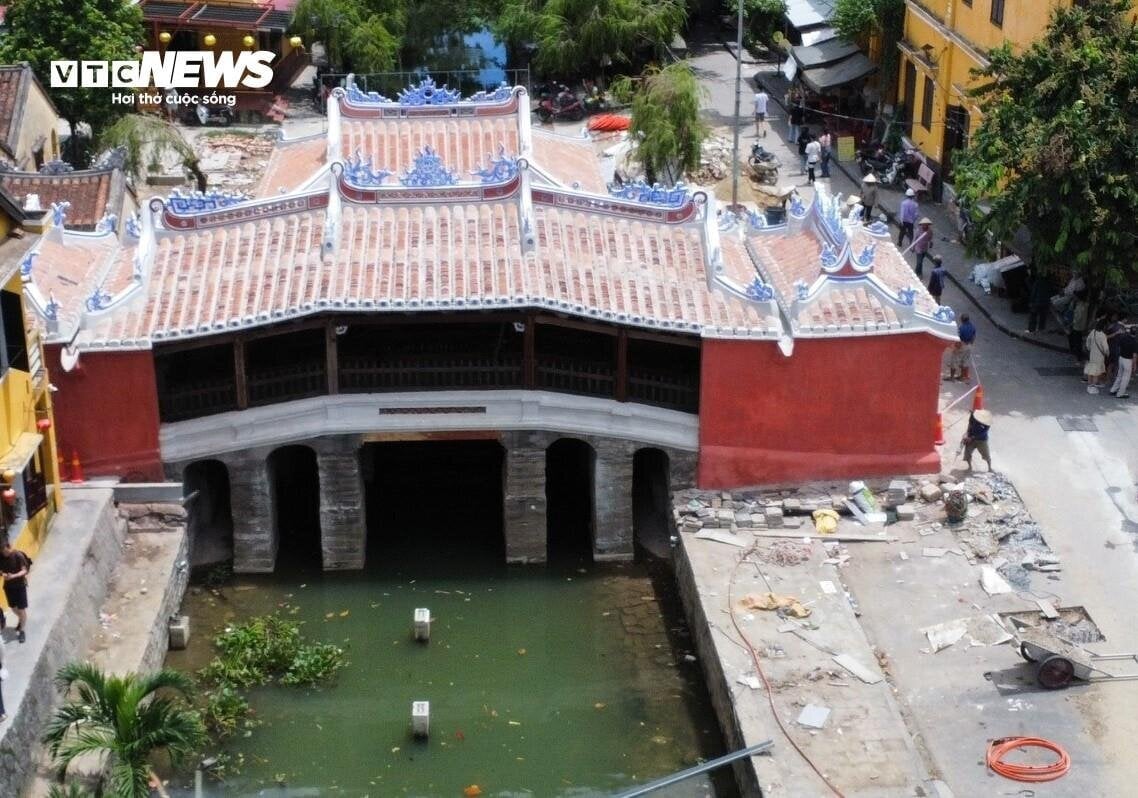
From July 25th, the construction unit dismantled the entire protective structure made of iron frames and corrugated iron roofs, allowing locals and tourists to easily admire the entire Bridge Pagoda relic after 1.5 years of restoration.
Many people said they felt unfamiliar with the new look of the Japanese Bridge. " On weekends, I often take my family from Tam Ky City to Hoi An to stroll around, enjoy the food , and especially admire the centuries-old historical sites. However, I was really surprised to see the Japanese Bridge looking so different from before. Looking at the Japanese Bridge with its new, darker paint, I feel it's more modern than ancient," said Mr. MCĐ (a resident of Tam Ky City).
On his personal Facebook page, the user MDK questioned: "Is this about preserving or destroying the ancient town and tourism in Hoi An?"
According to Ms. TKC (a resident of Hoi An Old Town), the replacement and supplementary components during the restoration of the Japanese Bridge were clearly distinguished from the original components to avoid confusion. "We didn't use techniques or methods that could easily create confusion between the old and the new; instead, we let them naturally absorb the patina of time. Therefore, the public's reaction to the contrast between the old and the new after the restoration is understandable," Ms. C. said.
The project to restore the Japanese Bridge has a total investment of over 20.2 billion VND, of which the Quang Nam provincial budget contributes 50% and the Hoi An city budget allocates 50%. The project is invested by the Hoi An City People's Committee, implemented by the Hoi An Cultural Heritage Conservation Management Center, and advised by the Conservation Consulting Center - Institute of Conservation of Monuments.
The restoration of the Bridge Pagoda focuses on three main areas: beautifying the overall landscape and technical infrastructure; constructing auxiliary facilities to support the restoration of the monument; and digitizing the monument to facilitate restoration work using 3D technology, workshops, and seminars.
This project commenced on December 28, 2022. During the restoration process, thorough consultations with experts were conducted on several important aspects; furthermore, the Provincial People's Committee extended the construction and restoration period due to the importance of this monument, as the Japanese Bridge is considered a symbol of the ancient town of Hoi An.
Source: https://baohaiduong.vn/chua-cau-la-lam-sau-trung-tu-lanh-dao-tp-hoi-an-noi-gi-388686.html


![[Photo] General Secretary To Lam working with Ambassadors and Heads of Vietnamese representative offices abroad attending the 14th National Congress of the Party](/_next/image?url=https%3A%2F%2Fvphoto.vietnam.vn%2Fthumb%2F1200x675%2Fvietnam%2Fresource%2FIMAGE%2F2026%2F01%2F25%2F1769334314499_image.jpeg&w=3840&q=75)




Comment (0)