

Inflation in Russia is soaring, and experts predict the economy is facing a growing crisis.
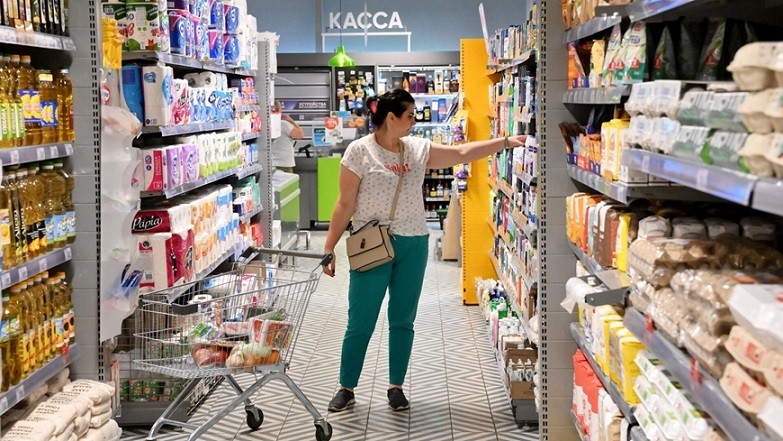 |
| In Russia, national income has increased, but there has been no significant improvement in healthcare, education , technology, and infrastructure. (Source: RIA Novosti) |
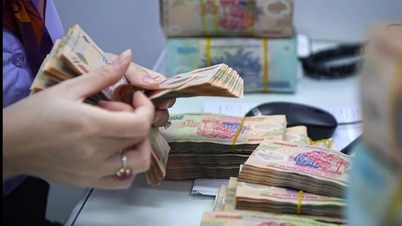
In Russia, official figures show that butter, some meats, and onions are now about 25% more expensive than a year ago. Some supermarkets have restricted butter sales as inflation spreads across the country.
The overall inflation rate in Russia is below 10% – much higher than the central bank's predictions.
Inflation in Moscow is being fueled by a rapid rise in wages, as the Kremlin pours billions of dollars into the military industries and many personnel are engaged in special military operations in Ukraine.
Meanwhile, businesses outside the military sector are short of staff and are having to pay higher wages.
Alexandra Prokopenko at the Carnegie Russia Eurasia Center in Berlin, Germany, says that prices are rising because of the special military operation. Wages are increasing because employers have to compete to attract personnel.
Other economists argue that, in Russia, national income has increased, but there has been no significant improvement in healthcare, education, technology, and infrastructure.
Main obstacle
In an effort to curb inflation, the Russian central bank raised its key interest rate in October to a record high of 21%.
Regarding this issue, economists have observed: "Increasing inflationary pressures will not only continue but may even continue to rise."
Russian President Vladimir Putin said earlier this month that the economy needs nearly 1 million new workers because the unemployment rate is 2.4%, or "almost no unemployment."
Putin described the country's labor shortage as one of the main obstacles to economic growth.
"We have about half a million people working in the construction industry. This industry will need another 600,000 workers. And the manufacturing sector needs at least 250,000 more workers," the Kremlin leader informed.
High labor costs and interest rates are putting pressure on companies.
In October 2024, Alfa Bank stated that companies were already struggling, and with the key interest rate rising to 21%, the situation would become even more difficult. "We do not rule out an increased risk of business bankruptcies," a representative from Alfa Bank predicted.
The bank also predicted that the key interest rate would be raised to 23% by the Russian Central Bank next month.
At the heart of the current situation is Kremlin spending. The military budget is projected to increase by almost a quarter by 2025, accounting for a third of total state spending and 6.3% of Gross Domestic Product (GDP). Adding other expenditures referred to as "national security," this amounts to as much as 40% of the federal budget.
According to the draft budget released in September, Russia's defense spending in 2025 will at least double its social spending, including welfare and pensions.
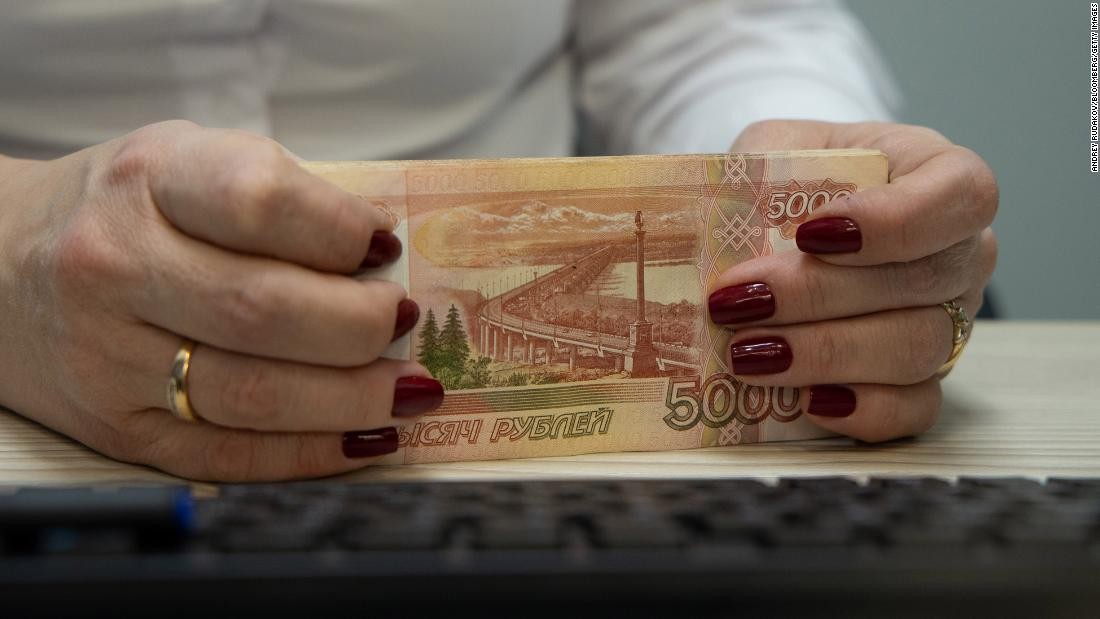 |
| Russia's GDP is projected to grow by 3.6% this year. (Source: CNN) |
The economy is "booming".
The Russian economy was predicted to collapse following unprecedented Western sanctions in 2022. But contrary to expectations, the economy unexpectedly boomed.
According to the Russian Federal State Statistics Service (Rosstat), Russia's GDP growth in the third quarter of 2024 is provisionally estimated at 3.1% year-on-year.
The manufacturing sector is a major driver of GDP growth, with the machinery segment making the largest contribution. High figures have been demonstrated by the output of each type of motorized vehicle and equipment, including railway cars and locomotives.
The International Monetary Fund projects Moscow's GDP will grow by 3.6% this year. For comparison, the forecast in Washington is 2.8%.
Western sanctions have not brought Russia down either. The country has avoided sanctions by importing Western technology through third countries, particularly through Central Asia and Türkiye.
And despite all the sanctions, the European Union's (EU) imports from Russia still reached nearly $50 billion last year.
The Kremlin continues to benefit from exporting oil and gas to India and China – primarily through its "shadow fleet".
Domestically, state revenue is increasing, particularly through sales taxes as Russians spend more.
According to the Russian State Statistics Service, inflation-adjusted earnings rose by 5.8% in 2023, as companies vied for workers.
For millions of people working overtime, especially in the IT, construction, and manufacturing sectors, now is a very good time. And in particular, wealthy people who used to spend a lot of money on vacations in Europe are now in Russia and spending their money. This further boosts the economy.
Families also benefit from higher wages.
Not everyone benefits.
Mr. Prokopenko stated that public sector workers – including doctors and teachers – as well as retirees and social welfare recipients are being severely affected by inflation. President Putin's country also has no solution to the persistent labor shortage.
Furthermore, according to experts, the country's long-term demographic outlook is also very bleak.
The United Nations projects that Russia's population will fall to 142 million by 2030, from under 145 million today. The country's average age is also rising: more than one-fifth of the population is in their 60s.
In 2022, the UK Ministry of Defence estimated that around 1.3 million people left Russia as Moscow launched its special military operation in Kyiv. This exacerbated the country's already declining workforce. Among those who left were many young professionals.
Analysts believe that the Russian economy is facing a gradually building crisis.
Despite its surprisingly resilient performance in recent years, the Russian economy remains vulnerable to shocks amid global instability. Lower commodity prices, slowing demand for crude oil from Beijing, and trade wars will all impact the economy.
And when the military campaign ends, Russia will have to adapt to a new economy. There, priorities for the military will have to be reduced, and the sectors that are currently benefiting will have to shift.
Source: https://baoquocte.vn/lam-phat-tran-lan-khap-nuoc-nga-nen-kinh-te-bung-no-nhung-khung-hoang-dang-dan-tich-tu-294243.html










































































Comment (0)