

THE SUCCESSOR PROBLEM
Returning from Tashkent (Uzbekistan) on the afternoon of November 4th after leading the Vietnamese women's national team to the Olympic qualifiers, coach Mai Duc Chung will meet with the Vietnam Football Federation (VFF) to summarize the journey and outline future directions. His contract with the VFF expires after December 31st. The 74-year-old strategist will not renew his contract, instead expressing his desire to retire and proposing a replacement for the women's team.
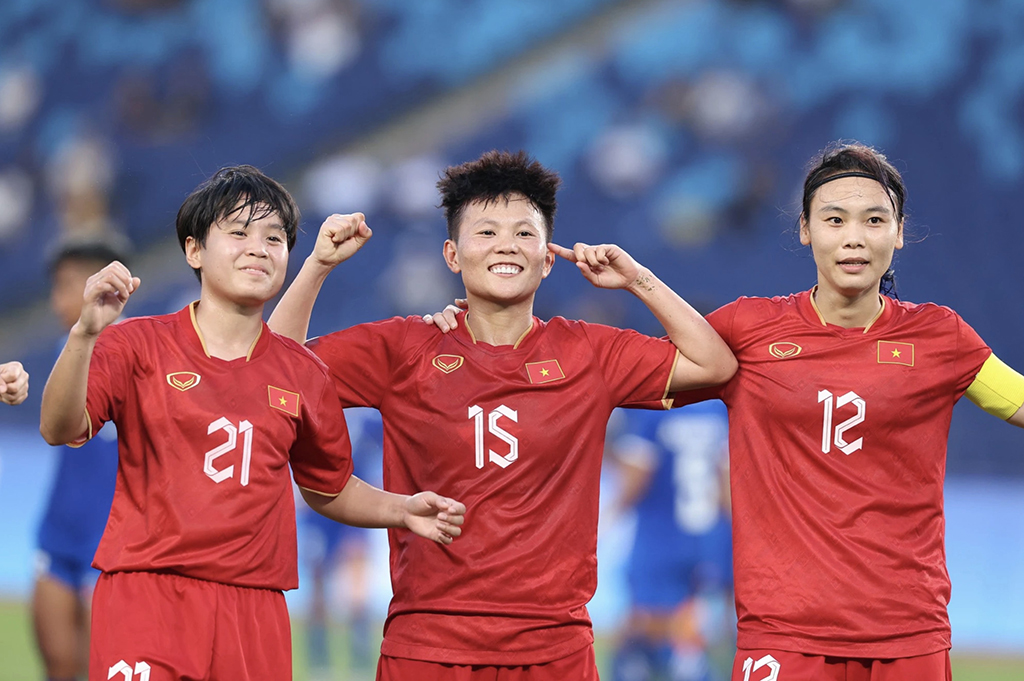
The Vietnamese women's national team will face many new challenges in the future.
Coach Mai Duc Chung's recommendation to the VFF is most likely Akira Ijiri. The Japanese strategist has coached the Vietnam U20 and U17 women's teams since April 2019, with nearly five years of experience in Vietnam. Akira is highly regarded for his expertise and experience, and also serves as an instructor for VFF's B and Pro coaching courses. In 2024, the Vietnamese women's national team will only have one official tournament (AFF Cup 2024), providing an opportunity for the coaching staff to promote more young players, many of whom are Akira's former students from the U20 women's team since 2019. In the context of rejuvenating the squad, building a successor generation, and adopting a new playing style, Coach Akira Ijiri is a leading candidate. However, the VFF will carefully review the list of candidates to choose the most suitable one.

Coach Mai Duc Chung leaves behind a monumental legacy.
After a period of resounding success under coach Mai Duc Chung, with 6 SEA Games gold medals, 1 AFF Cup title, and 1 World Cup appearance, the core generation of the Vietnamese women's national team will largely pass their peak next year. While players like Huynh Nhu and Tuyet Dung will still play an important role, they will gradually step back, making way for a younger generation including Thanh Nha, Hai Linh, Van Su, Tuyet Ngan, Thu Thuong, and Lan Anh, all under 25 years old, who will be integrated into the team's framework aiming for the 2026 Asian Cup (which also serves as the 2027 World Cup qualifiers). At the 2019 Asian Games and the Olympic qualifiers, coach Mai Duc Chung called up 11 players born after 2000 to allow the younger generation to gradually gain experience. However, to catch up with their senior counterparts, the young players still have a long way to go and must strive for success.
Expert Doan Minh Xuong shared: "The biggest challenge for the Vietnamese women's national team is building a successor generation. The golden generation of Vietnamese women's football brought resounding success, but the players revealed limitations at the ASIAD and Olympic qualifiers, when Huynh Nhu and Tuyet Dung reached their peak. The gap between the Vietnamese women's national team and the top teams in Asia is still very large. After the era of coach Mai Duc Chung, I believe the VFF must have a comprehensive, long-term strategy to build a force from the youth levels such as U.20, U.17 to the national team."
Strengthening the Foundation
Coach Mai Duc Chung has laid a solid foundation for the Vietnamese women's national team, paving the way for the next coach. However, Vietnamese women's football cannot rely solely on achievements at the national team level. Club-level teams and youth development are also crucial elements that need to be strengthened to maintain the national team's position. With the top teams in the continent – Japan, China, South Korea, North Korea, and Australia – constantly widening the gap, and Uzbekistan and the Philippines rising, standing still means falling behind. The foundation of Vietnamese women's football still lies at the club level, but the current national women's championship and women's cup, with 8 participating teams and a total of 15 to 20 matches per year, are not yet a good springboard for the national women's team to make a breakthrough.
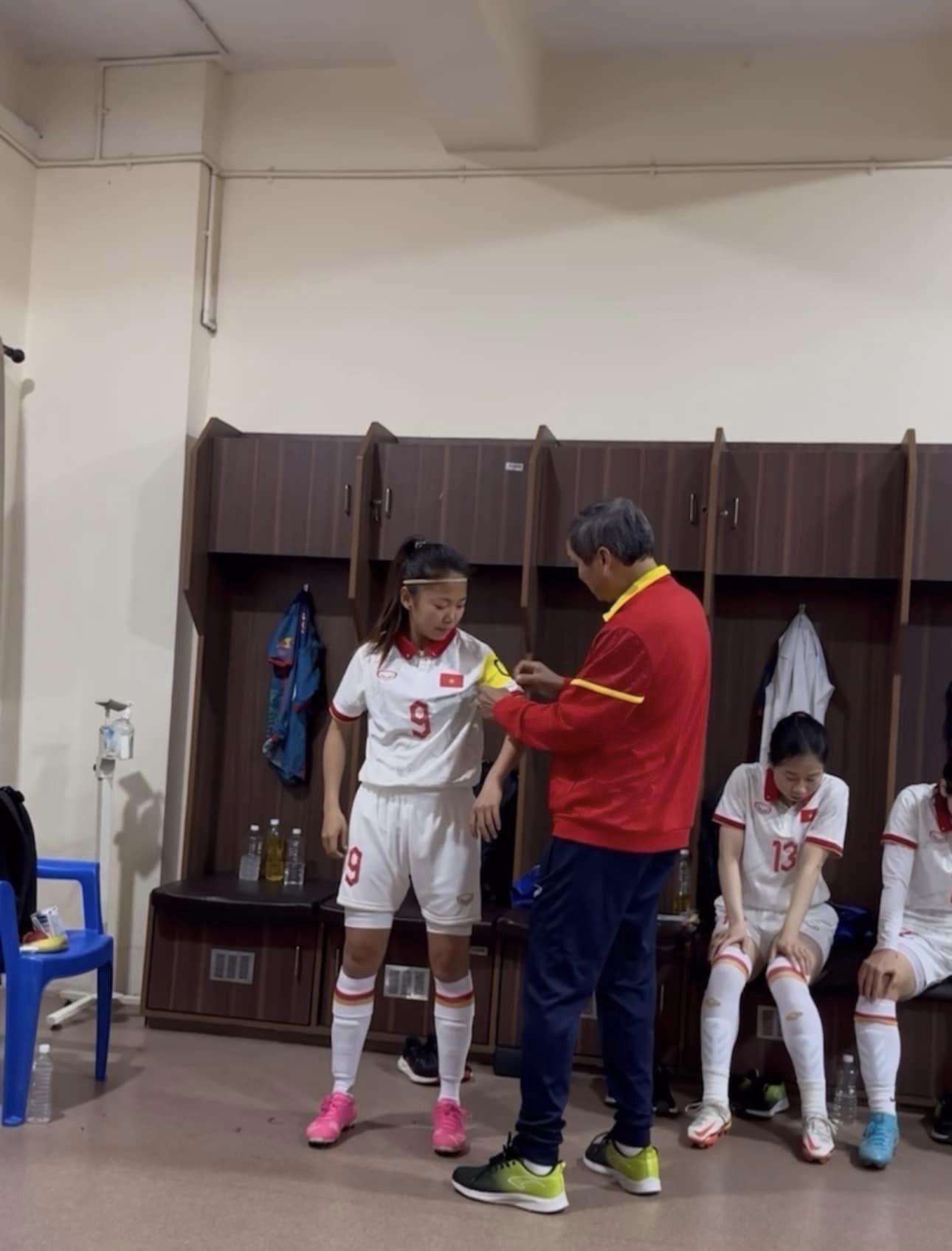
We will have to find a new generation of players to follow in Huynh Nhu's footsteps.
Coach Mai Duc Chung affirmed: "Vietnamese women's football has a fairly good pool of successors. For example, the VFF has two U.16 and U.14 women's teams, as well as young players being trained by clubs. However, I hope that more women's football training programs will be established, and more clubs will participate. When I went to an international tournament with my team, I told my colleagues that the national team's players were only drawn from 4 training centers, and they were very surprised. I hope the women's league will not only have 6 or 8 teams, but 14 teams participating, thus providing more options."
Expert Doan Minh Xuong assessed: "The Vietnam Football Federation (VFF) needs to expand the competition system for Vietnamese women's football, especially at the youth level. Besides upgrading the national championship and youth leagues, the VFF needs to coordinate with the Ministry of Culture, Sports and Tourism to develop a plan to expand the women's football system, and work with localities to support investment in training female players. Achieving continental and world-class goals is very difficult for the Vietnamese women's national team; even playing against the Philippines is challenging. With Coach Mai Duc Chung's departure, Vietnamese women's football will face many challenges. To turn challenges into opportunities and reach new heights, Vietnamese women's football needs the involvement of the entire society, promoting various resources, and not just investing in the superficial aspects."
Source link


![OCOP during Tet season: [Part 3] Ultra-thin rice paper takes off.](/_next/image?url=https%3A%2F%2Fvphoto.vietnam.vn%2Fthumb%2F402x226%2Fvietnam%2Fresource%2FIMAGE%2F2026%2F01%2F28%2F1769562783429_004-194121_651-081010.jpeg&w=3840&q=75)




Comment (0)