 |
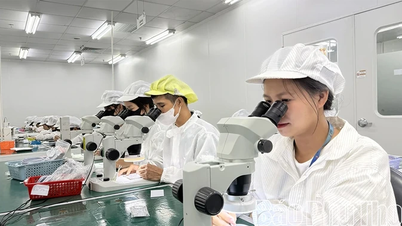
| Resolution 57-NQ/TW creates new momentum for digital transformation, innovation, and science and technology in our country. (Source: VGP) |
Remove the barriers.
Resolution 57-NQ/TW dated December 22, 2024, of the Politburo on Breakthroughs in the Development of Science, Technology, Innovation, and National Digital Transformation once again affirms the spirit of Resolution 52-NQ/TW dated September 27, 2019, of the Politburo on proactively participating in the Fourth Industrial Revolution, at a broader and more specific level, aiming to "unleash" limitations, barriers, difficulties, and challenges, and towards Vietnam's exceptional growth in the next two decades.
The three main pillars— science and technology , innovation, and national digital transformation—affirm a dialectical relationship in shaping the foundation for development.
In this context, science and technology play a fundamental role as the driving force for development. Innovation acts as a catalyst, contributing to the environment, the "transmitter," and the vitality of scientific and technological progress. Digital transformation, when placed in its proper context and position as a new development method, becomes the realization of the impetus provided by science and technology through the driving force of innovation. It can be said that, recognizing this dialectical impact, measures to remove "bottlenecks" have been systematically proposed.
Firstly , institutional reforms create new mechanisms for the development of the science and technology sector with specific characteristics. Specifically, this includes attracting talent and enabling their effective participation in science and technology development; removing institutional bottlenecks regarding investment capital; mechanisms for evaluating and approving scientific projects and research topics; issues of accountability in scientific research; mobilizing social resources, international cooperation, and establishing national priorities.
Secondly, innovation also involves institutional reforms, removing barriers to increase investment capital; creating a favorable development environment; forming "sandboxes" and new awareness to accept risks and ventures...
Thirdly, we must actively and decisively promote digital transformation to absorb, transform, and concretely realize the results that science, technology, and innovation bring to the country's development.



Applying new technologies enhances competitiveness.
In the context of scientific and technological breakthroughs, the application of new technologies and enhancement of competitiveness is the responsibility of businesses. In other words, businesses need to be proactive, not wait for a resolution before acting. Innovation to effectively apply science and technology and enhance the competitiveness of businesses is a matter of survival and is an inherent driving force for businesses.
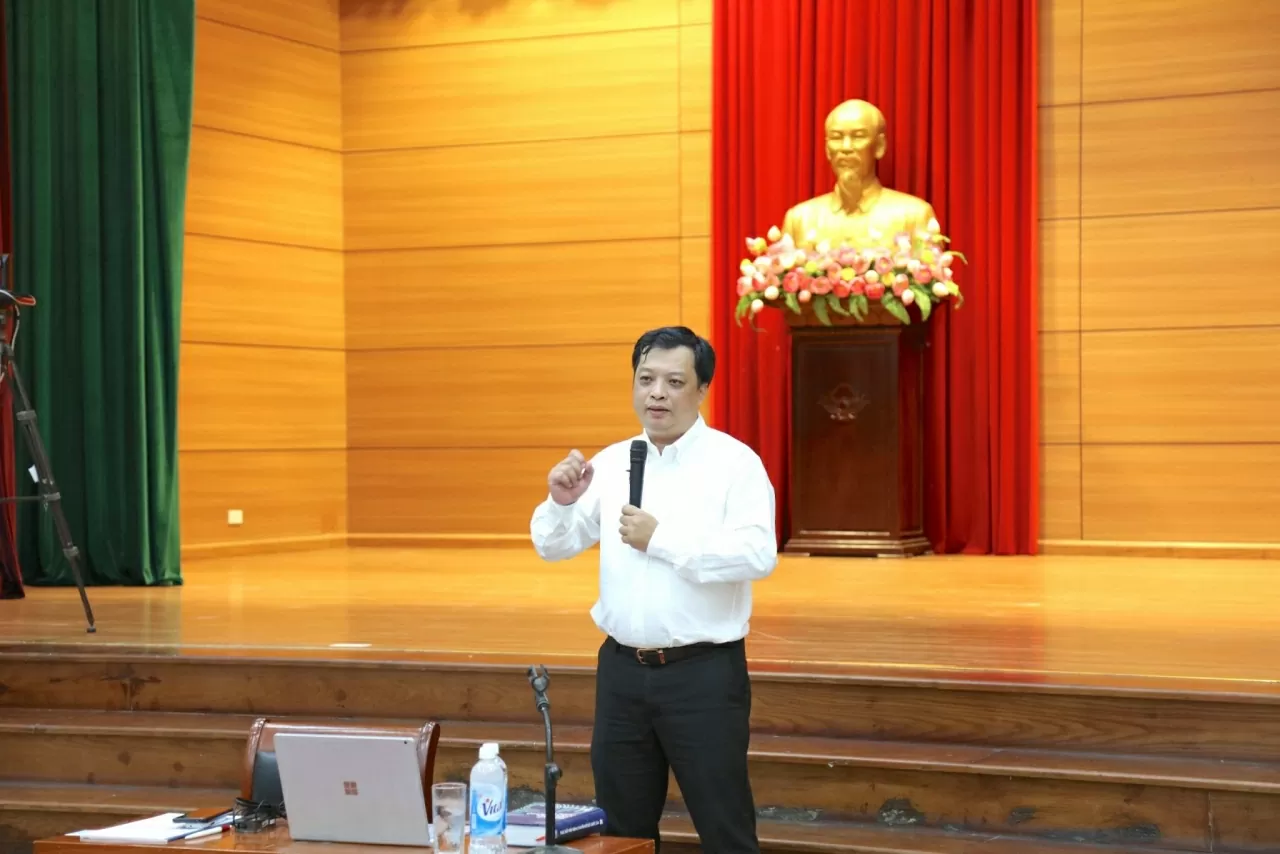 |
| Mr. Le Nguyen Truong Giang. (Photo: Provided by the interviewee) |
Resolution No. 57 contributes to increasing favorable conditions for businesses through institutional support, capital, human resources, infrastructure, and other conditions that facilitate business investment and promote science and technology; innovation and digital transformation.
The issue of strategic direction mainly focuses on planning key priorities and, based on that, establishing forms of support for businesses participating in these sectors. Therefore, businesses with the capacity, or those reorienting their development, have ample room, space, and favorable conditions to participate in sectors encouraged, guided, and supported by the State. This significantly contributes to enhancing endogenous capacity and helps businesses effectively leverage institutional advantages, capital, and favorable business conditions.
According to the Resolution, Vietnam's goal is to bring its innovation potential and capabilities in key sectors to an advanced level, ranking among the leading countries in the upper-middle income group. The level and capacity of innovation in businesses should be above the world average.
Assessing the opportunities, it can be seen that with the development of science and technology, innovation is leaning towards ICT technologies, digital technologies, and applications that contribute to the digital transformation process. These are areas where Vietnam can quickly "catch the wave," catching up from the beginning, allowing for immediate participation and integration alongside developed and leading countries, if we have the ability to learn well, adapt, and catch up.
However, regarding challenges, it must also be acknowledged that Vietnam's level of science and technology, especially in basic science and foundational knowledge, remains extremely limited, restricting its ability to innovate. We can only keep pace with applications, but lack the capacity to fully understand, adapt, create, and master them. The demand for capital and a highly qualified workforce, both in terms of quality and quantity, also presents significant challenges. Furthermore, the institutional framework has not kept pace with the development of new production relations and productive forces.



Digital transformation is a process that is both methodological and instrumental; therefore, it has a shaping/reshaping impact on the business models of enterprises, transforming these models from traditional to digital environments, and shaping how new value is created for organizations and businesses.
Innovation is the foundation of the digital economy and a consequence of the digital transformation process. Therefore, there is a dialectical relationship between innovation and the digital transformation process, as they accompany, interact with, support, and directly influence each other.
Meanwhile, human resources are the first and most crucial factor in the digital transformation process, as well as in the development of science and technology and the country as a whole. Without people, there can be no breakthroughs. Therefore, training and developing human resources in the context of digital transformation and scientific and technological breakthroughs is extremely important.
In particular, Resolution No. 57 places a strong emphasis on international cooperation in digital transformation and innovation. In my opinion, achieving these goals requires significant effort. It's crucial to clearly define the areas, methods, target groups, and organizational approaches for cooperation. We need a strategy to shape this specific cooperation; Vietnam cannot simply be a recipient or a market. Instead, we must use these foundational principles as a basis for proactive integration, mastery, and creation of scientific and technological advancements and the digital transformation process.

![[Image] Building an elevated road through the Ma Da forest.](https://vphoto.vietnam.vn/thumb/1200x675/vietnam/resource/IMAGE/2026/06/29/1782721937402_ndo_br_z7987962650670-9f8b4b8ae18c0c03cb87a49d57f076e8-5087-jpg.webp)



![[Photo] National Assembly Chairman Tran Thanh Man attends the Conference to announce the Master Plan for Hanoi Capital City with a 100-year vision.](https://vphoto.vietnam.vn/thumb/1200x675/vietnam/resource/IMAGE/2026/06/29/1782709639728_ndo_br_1-jpg.webp)