

The highway is chaotic and has many shortcomings.
In the latest directive from the Government Office , Deputy Prime Minister Tran Hong Ha requested the Ministry of Transport to report to the Prime Minister on the construction plan, the basis for construction, international experience, and a proposed draft framework for highway standards, before November 30th.
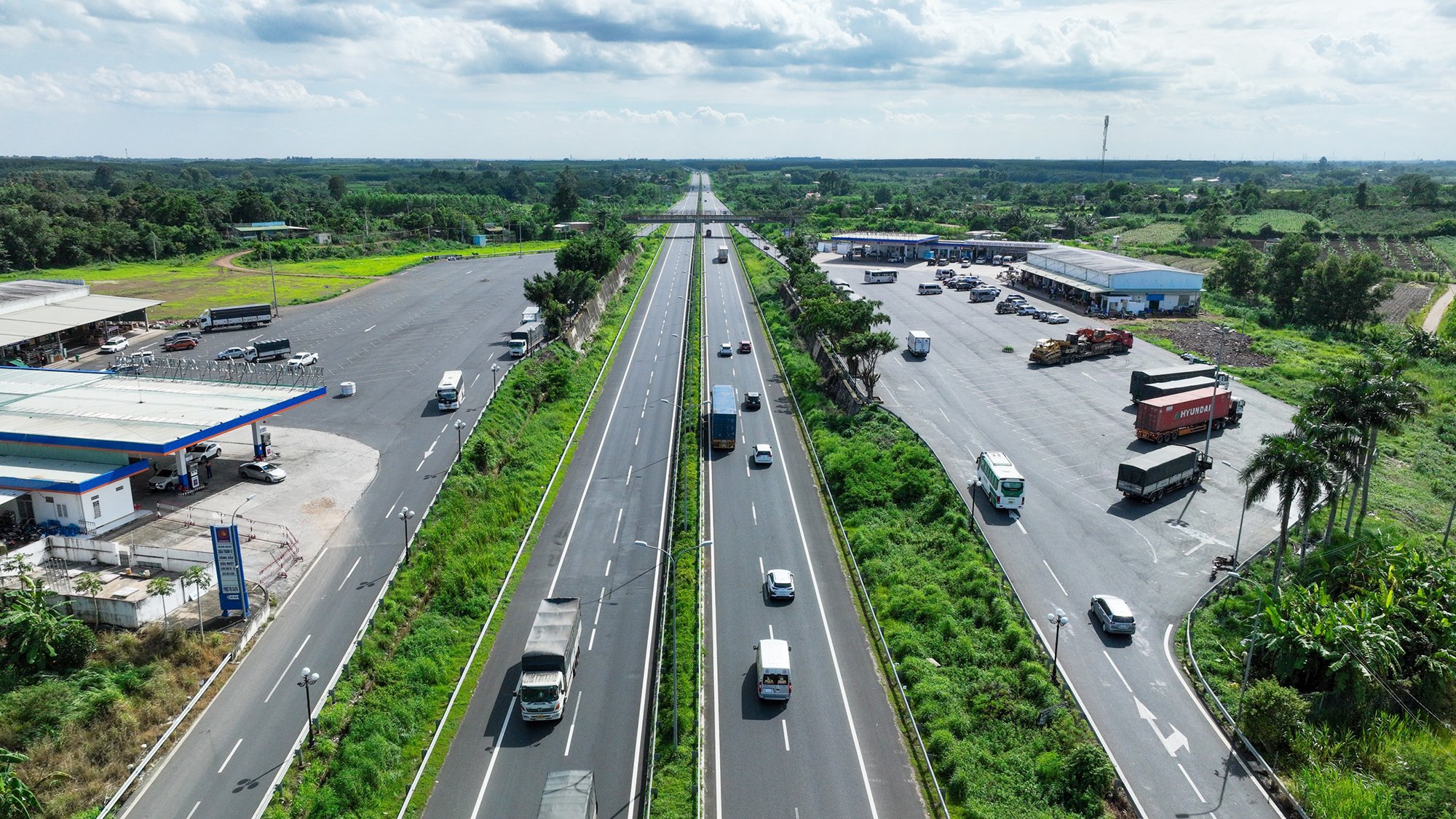
Due to the lack of regulations, few expressways have rest stops; the image shows a rest stop on the Ho Chi Minh City - Long Thanh - Dau Giay expressway.
The process of developing standards requires studying international experience, summarizing the practical experience of investing in and constructing expressway projects in the past, and ensuring suitability to the actual conditions in Vietnam; organizing consultations with ministries, sectors, localities, relevant agencies, and experts and scientists .
Prime Minister Pham Minh Chinh 's Official Dispatch No. 79, signed on September 12, 2023
Previously, in Official Dispatch No. 79 signed on September 12, 2023, Prime Minister Pham Minh Chinh assessed that in the past period, the Ministry of Transport had actively coordinated with ministries, sectors and localities to decisively implement important national transport infrastructure construction projects, initially achieving some encouraging results, contributing to the socio-economic development of the country. Specifically, 8 out of 11 component projects of the North-South Expressway (Eastern section) giai đoạn 2017 - 2020 have been put into use, raising the total length of expressways nationwide to 1,822 km; 12 component projects of the North-South Expressway (Eastern section) giai đoạn 2021 - 2025 have commenced construction; and projects such as the Khanh Hoa - Buon Ma Thuot Expressway, Bien Hoa - Vung Tau Expressway, Chau Doc - Can Tho - Soc Trang Expressway, Ho Chi Minh City Ring Road 3, and Hanoi Capital Region Ring Road 4 have also commenced construction.
However, some shortcomings remain related to investment in transportation infrastructure construction, such as: some expressways lack continuous emergency lanes, and operating speeds are limited; some expressways only have two lanes; the arrangement and investment in the construction of interchanges, especially the width and connection of expressways with the local transportation network to access industrial zones, urban areas, tourism, and service areas, are still not rational...
In fact, shortcomings related to the highway system have been one of the hottest issues in the transportation sector recently. Each highway is built on a different scale, with different numbers of lanes, different maximum speed limits, and different management methods. Even on the same highway, there are many inconsistent regulations. For example, on the North-South highway, the Phap Van - Cau Gie section has 6 lanes, but the 4 middle lanes allow speeds of 100 km/h, while the 2 outermost right lanes only allow 80 km/h. After the Cau Gie section, it narrows to only 4 lanes, but the maximum speed is 120 km/h, without distinction between lanes.
Similarly, the Hanoi-Hai Phong expressway has 6 lanes, with the two innermost left lanes on each side having a maximum speed of 120 km/h, the outermost right lane at 100 km/h, and the next section from Hai Phong to Van Don also at 100 km/h, but the section from Van Don to Mong Cai allows a speed of 120 km/h. Or, like the Ho Chi Minh City-Trung Luong expressway, which was planned as a Class A expressway with a design speed of 120 km/h, shortly after its opening, the maximum speed was reduced to 100 km/h, and the minimum speed from 80 km/h to only 60 km/h.
To promptly address these issues, the Prime Minister requested the Ministry of Transport to urgently develop and issue highway design standards within its authority. These standards will serve as a basis for planning, designing, investing in, constructing, and managing the highway system and connecting interchanges; and as a basis for determining investment costs and mobilizing appropriate capital for highway construction, ensuring transparency, efficiency, and preventing losses, waste, and vested interests. The standards should include regulations on the number of lanes, cross-sections, median strips, emergency lanes, design speed, rest stops, etc.; principles for the scientific and efficient arrangement and organization of interchanges; and ensuring that the width and design speed of interchanges match the highway speed to ensure convenient, safe, and efficient operation, in line with the socio-economic development requirements and conditions of the localities.
Road and bridge expert Vu Duc Thang
If standards already exist, why do we still need regulations?
Speaking to Thanh Nien newspaper, an official from the Ministry of Transport explained: Although there is still no standardized framework, this does not mean that Vietnam's system of over 1,000 km of expressways, both those already in operation and those recently put into service, were built freely. Since 1997, the Standard for the Design of Expressways has been approved by the Ministry of Science, Technology and Environment, applied to the design of expressways outside urban areas as well as the renovation and upgrading of various types of roads into expressways. At that time, the construction of expressway infrastructure required very large investments and synchronized, unified technical standards from the planning and project development stages, detailed design, construction to management and operation. However, to avoid wasting money on applying technical indicators in the use of procedures and regulations, it is necessary to choose those that are reasonable and appropriate while still ensuring basic criteria such as: high traffic volume, continuous traffic flow, high operating speed, and safety.
However, during the development and operation process, some technical specifications needed to be reviewed and revised. Therefore, in 2012, the Ministry of Science and Technology issued TCVN 5729:2012 to replace, update, and supplement some technical content. This included detailed classification of four highway levels (corresponding to regulated speeds of 60 km/h, 80 km/h, 100 km/h, and 120 km/h), cross-sections, guardrails, slopes, design of road sections, median strips, lane balance, auxiliary lane arrangement, etc. Furthermore, most recently in 2022, the General Department of Roads issued the "Basic Standard for Design and Organization of Expressways in the Phased Investment and Construction Stage" to provide guidance on design options, outlining requirements, solutions, and design standards to be applied during the phased investment stage of expressways.
Associate Professor Tran Chung, former Director of the State Inspection Department for Construction Quality (Ministry of Construction), assessed that the current technical standards for highway design are quite comprehensive, from route design to specific structures, designed to ensure safety and approaching world standards. In particular, the definition of a standard highway remains valid: a road built for vehicles traveling at high and continuous speeds, with safety being the top priority. Not only Vietnam, but several other countries have also built highway systems based solely on standards without issuing regulations.
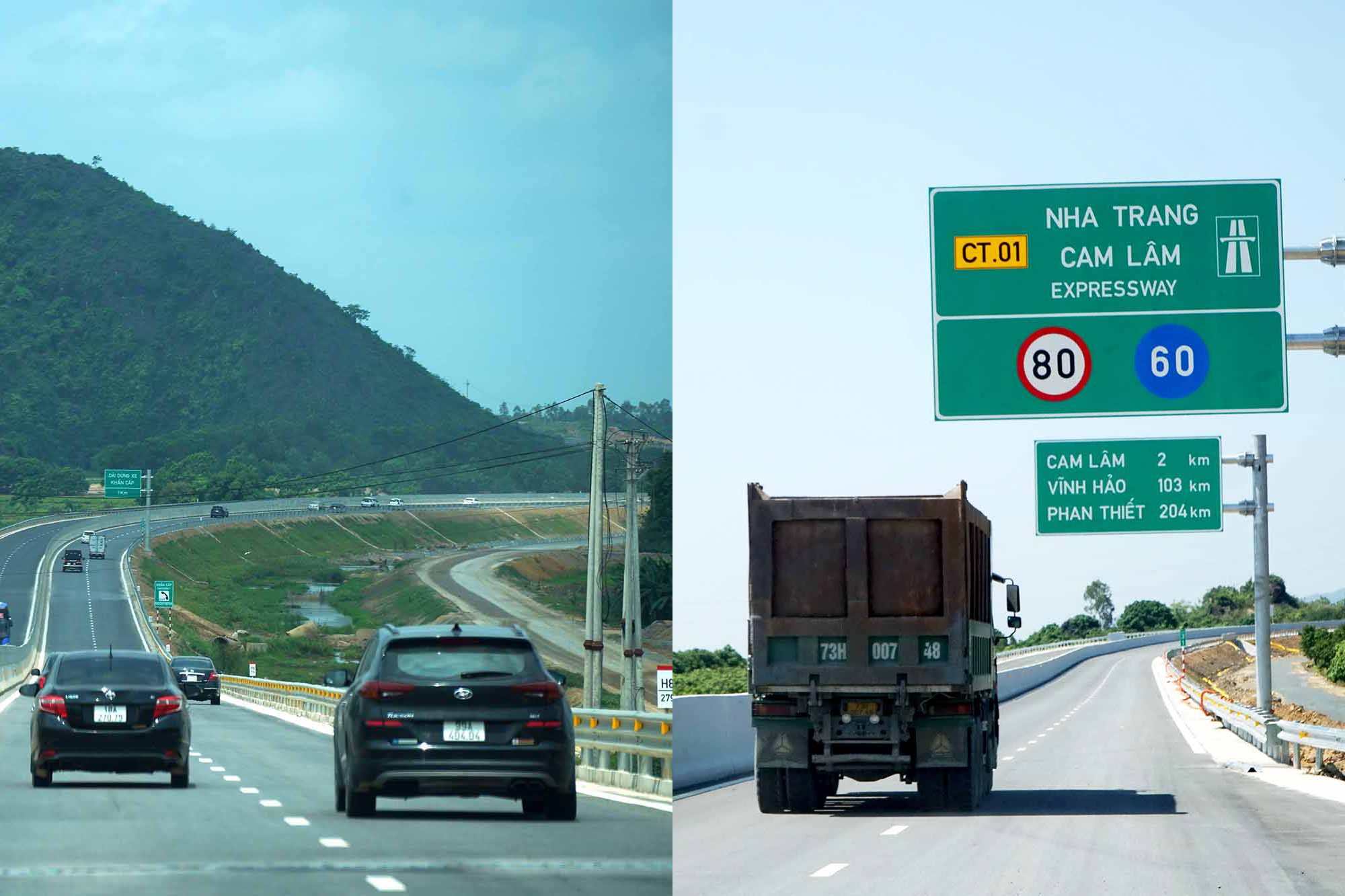
Many newly opened highways are narrow and have speed limits.
NGOC THANG - THE QUANG
However, according to the Law on Technical Standards and Regulations, technical regulations set forth mandatory requirements that must be complied with; while technical standards are documents guiding the design, construction, management, operation, etc., providing solutions for implementation and compliance with the conditions of the regulations. "For example, the Vietnamese civil construction industry widely applies Regulation 02, which concerns Vietnam's natural conditions such as wind, storms, earthquakes, etc. Any construction project in Vietnam must use the data from this regulation for design and must comply with it," Mr. Tran Chung cited as a specific example.
Turning to the topic of highways, to ensure the goal of continuous and safe high-speed travel, the design requires many solutions such as a central median, no level crossings, emergency lanes, and accompanying service infrastructure such as rest stops. Only by fully meeting these elements can a standard highway be formed. However, in the past, due to financial difficulties, Vietnam applied a phased investment standard, leading to a situation where some highways do not meet the above standards. For example, some only have two lanes, lack emergency lanes and instead have emergency stops, and do not have a central median. Coupled with the lack of a plan for rest stops, most highways currently do not have rest stops.
"If these conditions are elevated to the standards for highway design, then compliance will be mandatory. All highways will have to meet these requirements," Associate Professor Dr. Tran Chung clarified.
We need to update our technology and international standards.
According to Associate Professor Tran Chung, if a new standard for expressways is to be developed, a project proposal is needed to clearly define the objectives, the scope, and the detailed content of the standard. Simultaneously, during the drafting process, it is necessary to consult with relevant international standards, because if foreign companies later participate in the design of expressways, they will have to comply with those standards. In addition to ensuring general technical requirements to achieve the most important goal of expressways, they must also be compatible with the socio-economic conditions, regional conditions, and geological conditions of each area.
For example, TCVN 5729:2012 currently classifies highways into four speed categories: 60 km/h, 80 km/h, 100 km/h, and 120 km/h. The maximum speed is regulated depending on the terrain conditions of the area. In contrast, in the US and Europe, road transport systems mainly consist of highways with very high traffic speeds (100-200 km/h), and some countries even have freeways with no speed limit, such as Germany. The global "standard" is that vehicles travel on highways at high speeds, possibly very high speeds, but must maintain continuous and absolute safety. Vietnam cannot expect to have a highway standard that mandates raising all highway speeds to 100 km/h or 120 km/h like internationally. The issue is that for each type of highway, there must be accompanying technical standards to ensure the safety of vehicles operating continuously at those speeds.
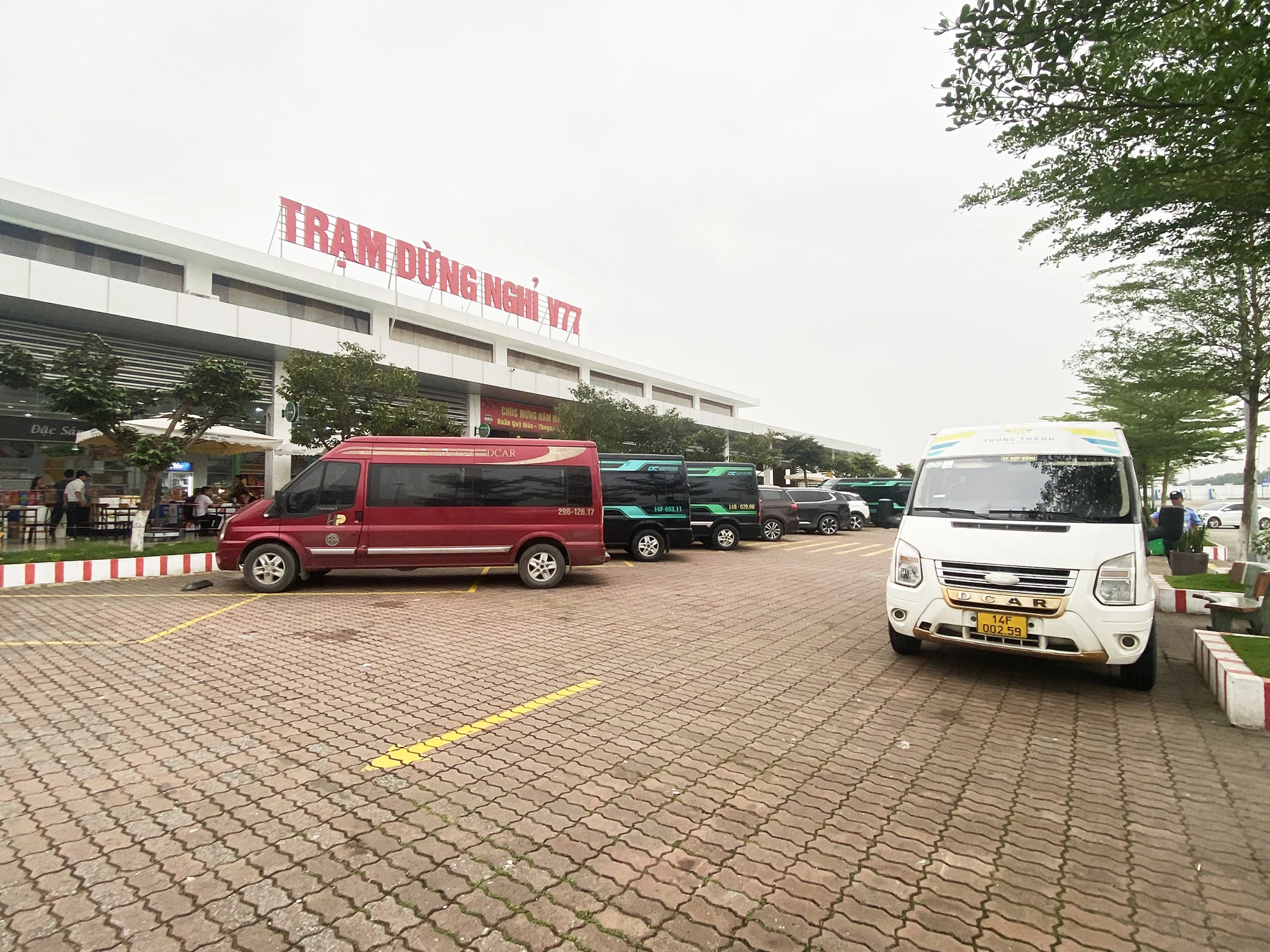
Not all highways have rest stops; the photo shows a rest stop on the Hanoi - Hai Phong highway.
"Highways that allow speeds of 100 km/h or 120 km/h must have an adhesive layer on top, a median strip, and no level crossings… Routes that allow speeds of 60 km/h or 80 km/h may not need an adhesive layer. Regulations regarding the number of lanes, cross-sections… are similar. There can be 3, 4, or 8 lanes on the highway, based on traffic volume and demand to select the corresponding number of lanes. But most importantly, any highway must always have an emergency lane, a median strip, and rest stops," Mr. Tran Chung stated.
Road and bridge expert Vu Duc Thang expects that after the highway standards are established, Vietnam's highway network will be uniformly applied nationwide according to specific criteria: what road classification determines the dimensions, regulations on what must be done, how it should be done, its width, speed limits, etc. In addition, in the context of scientific and technological development, and the ever-changing technology of vehicles, including the emergence of electric vehicles and self-driving cars, the standards for highway design and construction must also be updated to meet practical needs.
According to Mr. Thang, standards and regulations cannot be fixed but must be constantly updated, supplemented, and improved in accordance with the scientific, technical, and socio-economic development of each country. Each regulation usually has a purpose in three stages: before the highway is built; after contact and implementation; and after a period of operation. Vietnam has gone through two stages of standard changes, corresponding to the country's scientific, technical, and socio-economic development. In stage 2, it was necessary to accept incomplete highways due to lack of funding requiring phased investment; and because roads that were not completed according to the plan had to be opened to traffic to meet the urgent needs of socio-economic development. Therefore, shortcomings and inadequacies are unavoidable.
"Currently, with the improved socio-economic conditions in our country, there is a demand for projects that meet higher standards and regulations. Increasing the speed limit on highways also requires raising safety standards. Higher-tech cars require higher standards... This is a research project that requires a research team with sufficient capacity and expertise, international consultation, and broad input from scientists," Mr. Vu Duc Thang emphasized.
Study on investment in expanding the North-South Expressway section from Cao Bo to Mai Son.
The Ministry of Transport has assigned the Thang Long Project Management Board to prepare a report proposing the investment plan for the Cao Bo - Mai Son section of the North-South expressway. The implementation period is from 2023 to 2024. The consulting unit is currently studying the expansion of this road to a full scale (6 lanes). The proposed investment capital will be allocated from increased budget revenue. Previously, the Ninh Binh Department of Transport had submitted a document to the Ministry of Transport proposing the investment in the expansion of the North-South expressway section from Cao Bo to Mai Son to a full 6 lanes, in accordance with the approved plan. The total proposed investment is approximately 2,000 billion VND. If approved, the main route will be widened by an additional 15.75 m of roadbed, ensuring a roadbed width of 32.75 m; and a road surface width of 22.5 m. In addition, four bridge construction sites will have an additional unit invested in: Cao Bo Bridge, Cam Bridge, the National Highway 10 overpass, and Quan Vinh Bridge.
Source link


![[Photo] General Secretary To Lam receives President of the European Council Antonio Costa](/_next/image?url=https%3A%2F%2Fvphoto.vietnam.vn%2Fthumb%2F1200x675%2Fvietnam%2Fresource%2FIMAGE%2F2026%2F01%2F29%2F1769697816651_a1-bnd-5216-9741-jpg.webp&w=3840&q=75)


![OCOP during Tet season: [Part 3] Ultra-thin rice paper takes off.](/_next/image?url=https%3A%2F%2Fvphoto.vietnam.vn%2Fthumb%2F402x226%2Fvietnam%2Fresource%2FIMAGE%2F2026%2F01%2F28%2F1769562783429_004-194121_651-081010.jpeg&w=3840&q=75)


![OCOP during Tet season: [Part 2] Hoa Thanh incense village glows red.](/_next/image?url=https%3A%2F%2Fvphoto.vietnam.vn%2Fthumb%2F402x226%2Fvietnam%2Fresource%2FIMAGE%2F2026%2F01%2F27%2F1769480573807_505139049_683408031333867_2820052735775418136_n-180643_808-092229.jpeg&w=3840&q=75)
![OCOP during Tet season: [Part 1] Ba Den custard apples in their 'golden season'](/_next/image?url=https%3A%2F%2Fvphoto.vietnam.vn%2Fthumb%2F402x226%2Fvietnam%2Fresource%2FIMAGE%2F2026%2F01%2F26%2F1769417540049_03-174213_554-154843.jpeg&w=3840&q=75)





Comment (0)