

Specifically, the Law dedicates a Chapter (Chapter V) to providing detailed regulations on the renovation and reconstruction of apartment buildings.
Many obstacles in implementation.
For over 20 years, the renovation and reconstruction of old apartment buildings and collective housing has been a matter of particular concern for state management at all levels, from central to local. However, the actual implementation has not achieved the desired positive results, with thousands of households still living in dilapidated and unsafe buildings; potential threats to people's lives and property remain ever-present.
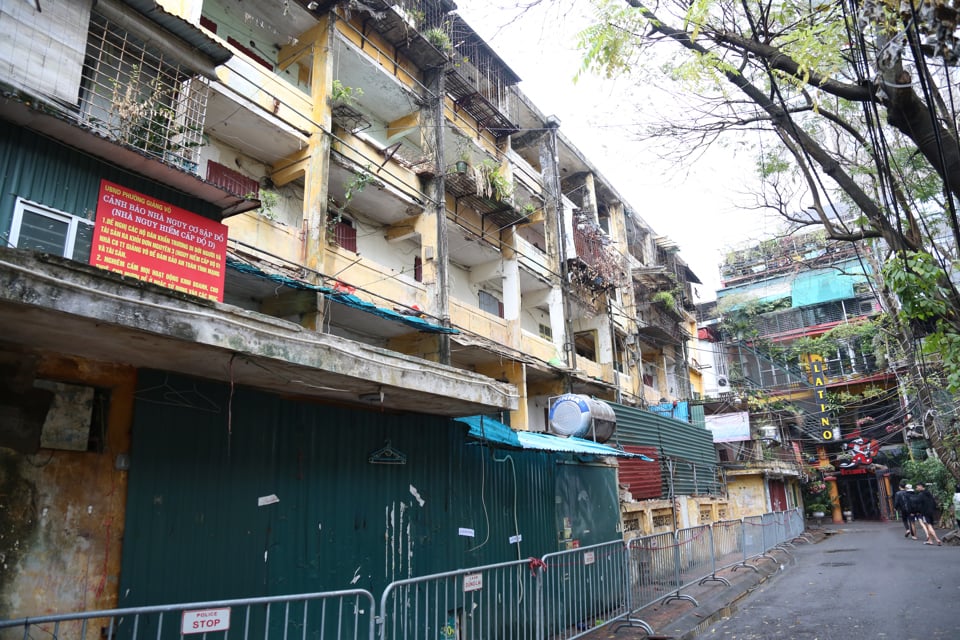
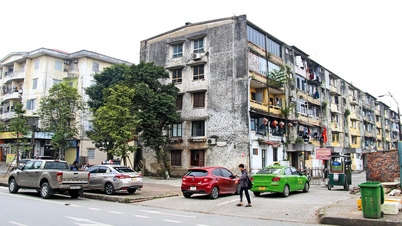
According to statistics from the Ministry of Construction , there are currently more than 2,500 old apartment buildings and collective housing complexes nationwide, with Hanoi accounting for the largest number at 1,579, followed by Ho Chi Minh City.
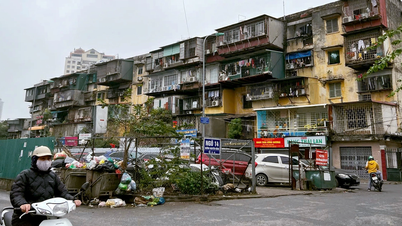
This is a typical product of the centrally planned economy era, built primarily between the 1960s and 1990s, a time when construction technology had not yet achieved the breakthroughs it has today. Therefore, the main structure of these buildings is load-bearing brick walls, with a maximum lifespan of 50-70 years.
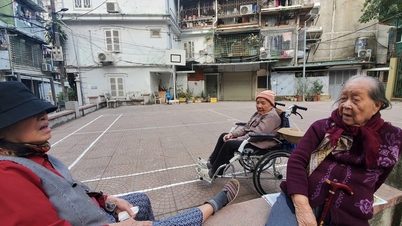
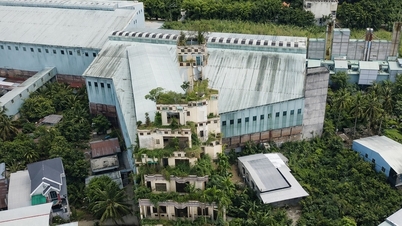
Over time, many buildings have deteriorated significantly due to prolonged operation and use. Furthermore, the need for expanded living space has led residents to arbitrarily extend their living areas, increasing the load on the already unsafe structural system of the buildings. Despite being aware of this, many families are forced to continue living there due to financial difficulties, essentially gambling with their lives. Meanwhile, the renovation and reconstruction of these old apartment buildings and collective housing complexes is progressing extremely slowly.
In Hanoi alone, out of 1,579 old apartment buildings and collective housing complexes (including 1,273 buildings in 76 complexes and 306 independent old apartment buildings), dozens are in a critical condition.
In particular, there are 6 dangerous areas classified as level D (the most dangerous level) that must be demolished and rebuilt, such as building C8 in Giang Vo residential complex, G6A in Thanh Cong residential complex, building A in Ngoc Khanh residential complex, and the Ministry of Justice residential complex...
However, according to data reported by the Hanoi Department of Construction, the renovation and reconstruction of old apartment buildings had only reached 1.14% of the plan by the end of 2023, with 19 areas undergoing renovation and reconstruction.
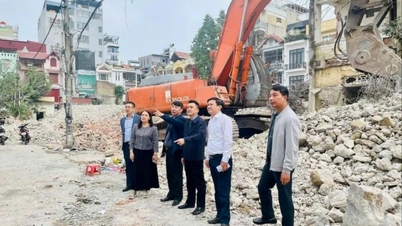
Notably, although the city has approved the selection of investors for many housing projects such as: Nghia Do A & B housing project (Cau Giay district); Nguyen Cong Tru apartment complex (Hai Ba Trung district); X1-26 Lieu Giai apartment complex (Dong Da district); Railway Transport Service apartment complex (Hoang Mai district); apartment building No. 148-150 Son Tay (Ba Dinh district); Vietnam Film Archives apartment complex at 22 Lieu Giai Street (Dong Da district); apartment building No. 23 Hang Bai (Hoan Kiem district)... these projects have remained stalled for many years due to obstacles related to regulations in the 2014 Housing Law and some guiding decrees.
“One of the biggest obstacles in the legal framework is Decree 101/2015/ND-CP (guiding the implementation of the 2014 Housing Law), which allows people and businesses to negotiate compensation, land clearance, and resettlement; the Decree also does not specify the compensation coefficient (K coefficient)... which has led to the two sides being unable to find common ground, making it impossible for the renovation and reconstruction of old apartment buildings and collective housing to be implemented according to the plan and objectives,” said Mac Dinh Minh, Deputy Director of the Hanoi Department of Construction.
New regulations "unblock" bottlenecks.
In response to the aforementioned challenges, the 2023 Housing Law, while inheriting and building upon the positive aspects of the 2014 Housing Law, has amended and supplemented many important provisions to suit current conditions, while simultaneously addressing difficulties and shortcomings, creating a breakthrough for the renovation and reconstruction of old apartment buildings and collective housing in the coming period.
One of the most notable new features in the 2023 Housing Law is the regulation on the percentage of public consent. Previously, 100% consent from all homeowners in a housing complex was required. Now, according to the new law, at least 70% of the total number of homeowners participating in the planning consultation and 75% of them agreeing is sufficient to qualify for demolition.
Furthermore, the 2014 Housing Law does not have specific regulations on the K coefficient for calculating land compensation prices, housing rental prices after reconstruction, the value of apartments determined after converting area, and the value of housing for resettlement in cases of resettlement at a different location.
Accordingly, the K coefficient will be flexibly implemented by localities based on the location and value of the land plots where old apartment buildings and collective housing are situated. The K coefficient will be calculated and adjusted to be 1-2 times higher.
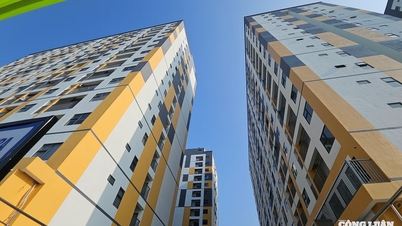
"The highlight of the new law is the regulation on the 'consolidation of old apartment buildings,' according to which individual, independent buildings will be consolidated and the height of new constructions will be increased to make space for public infrastructure (green spaces, parks, playgrounds...).
"This will make it easier for local authorities and encourage businesses to participate more actively in renovating and rebuilding old apartment buildings and collective housing; residents will also be satisfied because they won't have to change their familiar living places or be moved to resettlement areas lacking infrastructure and amenities..." - urban planning expert, Master of Architecture Tran Tuan Anh observed.
Notably, the provisions on renovation and reconstruction of old apartment buildings and collective housing in the 2023 Housing Law further promote decentralization and delegation of authority to provincial People's Committees to assign specific tasks to their subordinate specialized agencies to organize the preparation of compensation and resettlement plans; decide on and approve investment policies and investors; plans for relocation, forced relocation and demolition of apartment buildings; and allocate resettlement budgets...
In addition, the Law also adds a provision requiring owners to contribute funds for the reconstruction of apartment buildings constructed after 1994 to ensure feasibility and a balance of interests between owners, the State, and investors, meeting the requirements of urban renovation.
We highly appreciate the new regulations in the 2023 Housing Law related to the renovation of old apartment buildings and collective housing. These regulations are more practical, detailed, and clearer than those in existing laws, ensuring a balance of interests between the State, the people, and businesses. This will contribute to accelerating the renovation and reconstruction of old apartment buildings and collective housing, creating a more modern urban landscape in the future to meet the needs of integration and development.
Dr. Nguyen Van Dinh, Vice President of the Vietnam Real Estate Association
Source: https://kinhtedothi.vn/cai-tao-xay-dung-lai-chung-cu-cu-ky-vong-tu-nhung-quy-dinh-moi.html


























































































Comment (0)