


In its heyday, in Central Vietnam, when people mentioned roof tiles, they immediately thought of Cừa tiles. Cừa tiles were almost exclusively produced in the North Central provinces, and were even exported to Laos. However, due to various reasons, the craft village is now a thing of the past.
A golden age
In late March 2025, our reporter visited the Cừa tile-making village (formerly Nghĩa Hoàn commune, now Hoàn Long commune, Tân Kỳ district, Nghệ An province). Right on the main road leading in, a sturdy and impressive concrete archway had been built.

Mr. Hoang Xuan Luong reminisces about the golden age of Cua tile-making village.
On the horizontal sign, the words "Cừa Nghĩa Hoàn Tile-Making Village Production, Business and Service Cooperative welcomes you" are almost completely faded. To the right of the entrance gate stand two spacious, imposing concrete buildings constructed in 2010. One building has an office sign, while the other is the cultural center of the Cừa Nghĩa Hoàn tile-making village.
Going further inside, the reporter was struck by a vast, abandoned plot of land spanning tens of hectares. Weeds and bushes grew profusely, becoming a grazing area for the locals' cattle. Interspersed among the vegetation were piles of red bricks, once used to build traditional kilns, now covered in moss and dust. A few dilapidated, temporary houses stood empty inside.
With a nostalgic gaze, Mr. Hoang Xuan Luong (68 years old) recounted that in its heyday, the craft village had nearly 200 tile kilns belonging to 136 households, providing employment for thousands of workers. Every day, traders and craftsmen from provinces in the North came to buy and sell goods, creating a bustling atmosphere; cars and trucks arrived to sign contracts and transport goods from morning until night.
"The people here not only live off roof tiles but also get rich from them. Like my family, three of my children went to university and then abroad, all thanks to the bright red roof tiles fired right here in our hometown."
"On average, a brick kiln has 7 main workers and many seasonal workers. The main workers earn 9-10 million VND per month. For the kiln owner, after deducting all expenses, they pocket around 15-20 million VND per month," Mr. Luong recalled.
Every household makes roof tiles.
Mr. Nguyen Danh Hien, a resident of Hoan Long, recounted that his family owned three tile kilns, which his parents had been running since 1993. In 1997, they handed over the management to him and his wife. During its heyday, tile making not only provided income for those directly involved in the trade but also contributed to transforming the appearance of this impoverished rural area.
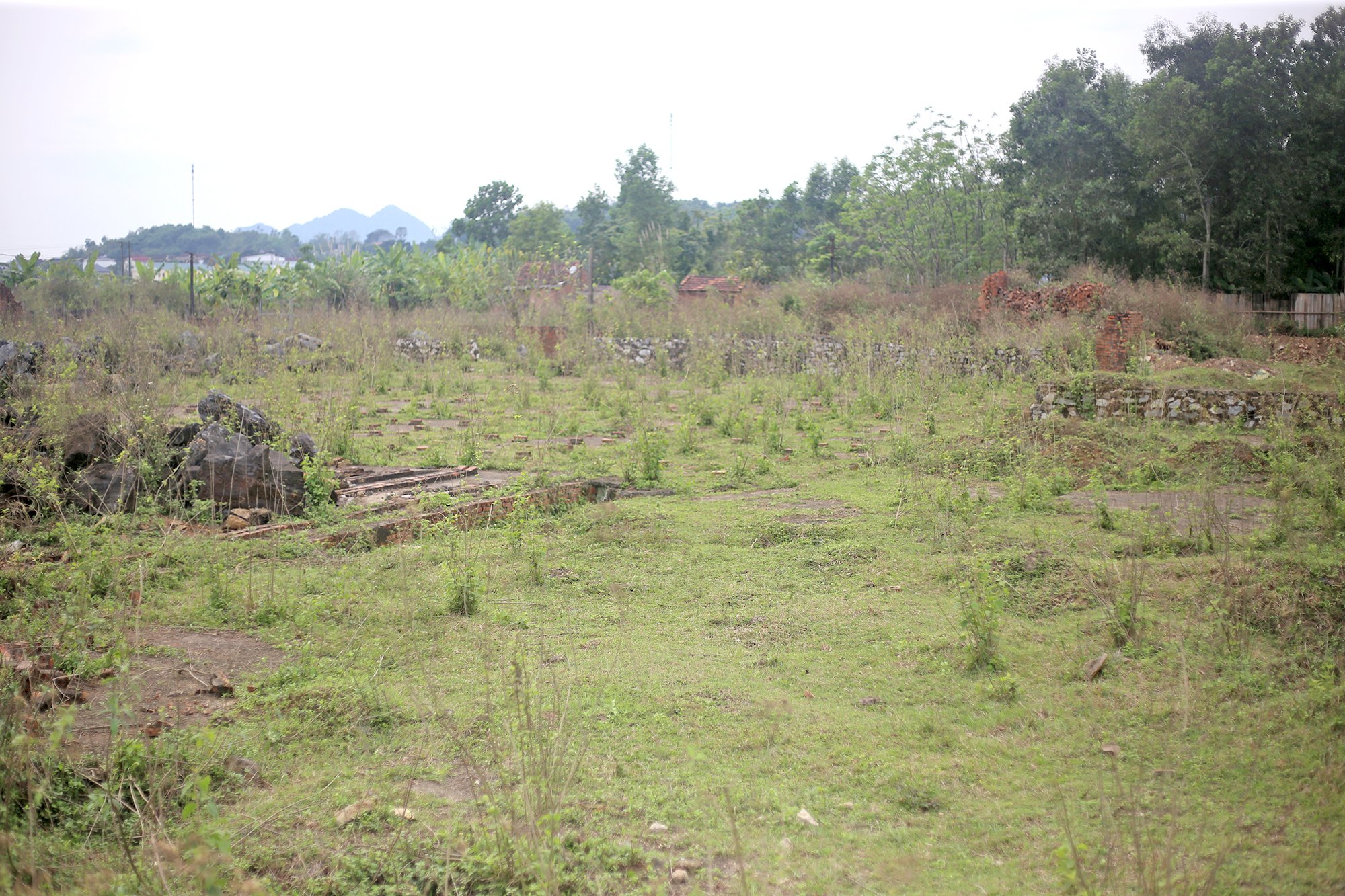
The once famous Cua tile-making village is now just an empty plot of land.
"Visitors from North to South come and go constantly, which has led to the development of related service industries such as restaurants and accommodation, thereby contributing to the economic development of the entire village and commune," Mr. Hien recounted.
According to our investigation, the first Cua tile kiln in Nghia Hoan dates back to the late 1970s, built by a craftsman from Hung Yen province. Initially, the kilns here were mainly owned by the descendants of those craftsmen from Hung Yen.
It wasn't until 1992, when people's lives improved and the demand for roof tiles increased, that the first tile kiln in Nghia Hoan was built. Since then, the people of Nghia Hoan have almost "lived solely on roof tiles." During its heyday, there were nearly 200 tile kilns belonging to 136 households.
Along with expanding the raw material area planning, people have also proactively invested in many modern equipment and applied many scientific and technological advancements to production, thus bringing great efficiency.
On average, the village produces 40-50 million roof tiles annually, with some years reaching nearly 100 million. Each year, the tile-making industry provides employment for 1,000 permanent workers and 2,000 seasonal workers.
The breakdown was due to a lack of unity.
According to locals, the peak period for Cừa tiles was from 2006, when the area was recognized as a small-scale handicraft village, and the Cừa Tile Village Cooperative was established. During those years, Cừa tiles almost monopolized the market in the six provinces of North Central Vietnam, and were even exported to Laos.
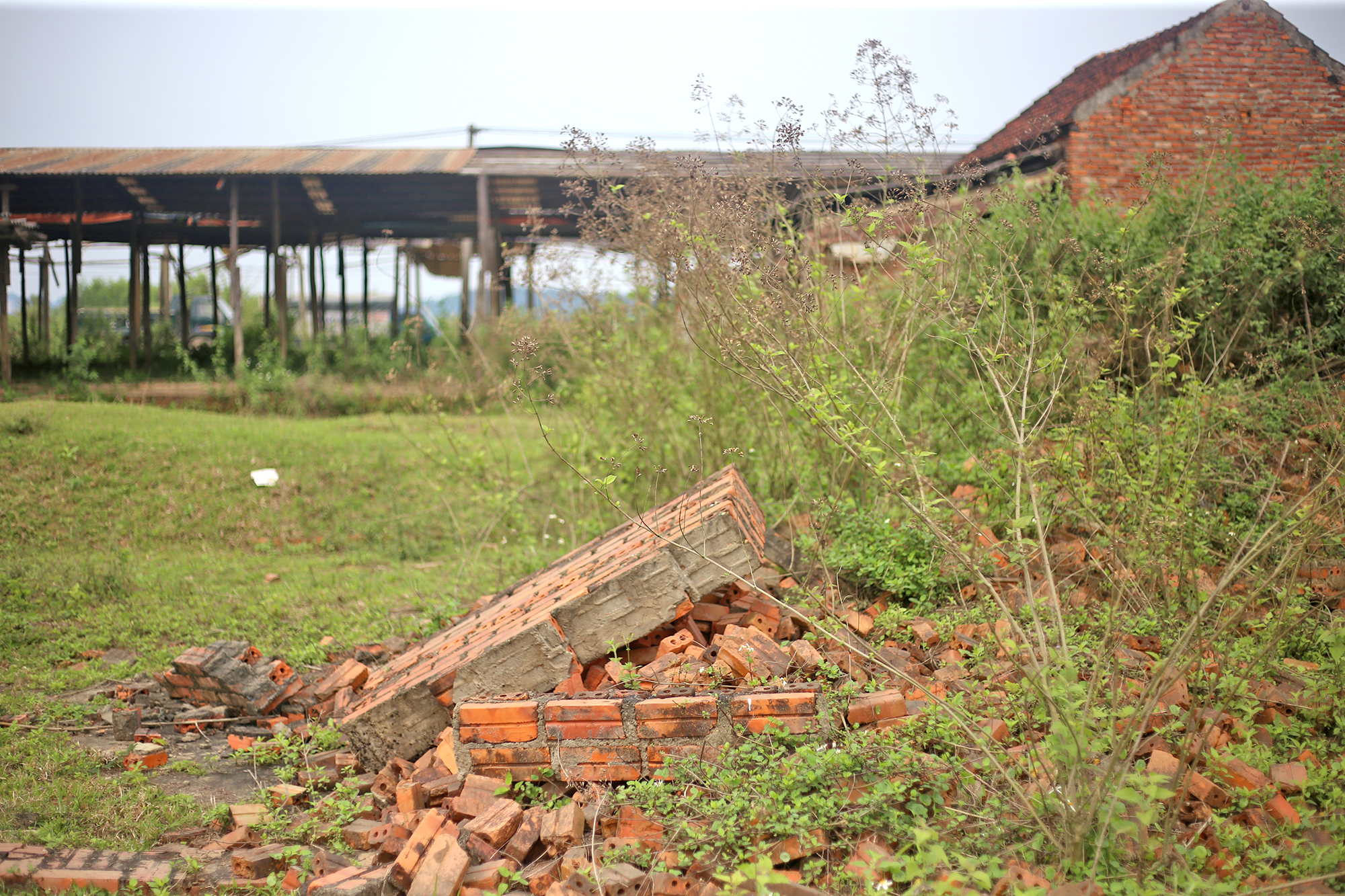
A few empty houses remain in the tile-making village of Cừa.
Cừa village is also the largest tile-producing village in Central Vietnam. Notably, on April 10, 2007, Cừa tiles were granted trademark protection by the Intellectual Property Office.
The reason Cua tiles have continuously developed and become a major brand is because the area is blessed with a special type of soil. It has abundant clay resources, and the clay here is particularly pliable, durable, and produces beautiful tiles when fired.
However, the golden age didn't last long before the Cừa tile-making village cooperative fell into internal strife, infighting, and lawsuits.
It was in 2014, before the government's policy of eliminating traditional brick kilns, that 53 households in the village each contributed 200 million VND to establish their own cooperative, switching to production using new technology.
At this time, the remaining households of the old cooperative also built a high-tech brick and tile production project. Conflicts arose between the two sides as they vied for advantageous locations within the craft village industrial cluster to build their factories.
The commune and district acted as arbitrators, campaigning and eventually the members of both cooperatives agreed to merge the two cooperatives into one. However, the storm was far from over. Due to internal conflicts between the members and the cooperative's board of directors, the high-tech brick and tile factory project remained only on paper. In April 2019, when the cooperative held its groundbreaking ceremony, it faced opposition from some members.
"Actually, at that time, the government only advocated for the elimination of manual kilns, not the elimination of handicraft production. If only a few families had joined together to build a high-tech kiln, then divided the work among themselves. Furthermore, if the leaders of the cooperatives had thought further ahead, the craft village wouldn't be in the situation it is now," Mr. Hoang Xuan Luong lamented.
Mr. Nguyen Van Sam, Chairman of the Hoan Long Commune People's Committee, said: After implementing the policy of closing down manual brick and tile kilns, the abandoned Cua tile kilns posed a safety risk to the people. In 2022, the commune spent funds to demolish them all. Currently, this land is managed by the commune and has been included in the district's overall industrial cluster plan.
When asked about plans to revive the traditional tile-making village, Mr. Sam said it would be very difficult because high-tech tile production facilities in other localities have developed very strongly, making it very hard to compete.
Source: https://www.baogiaothong.vn/ky-uc-lang-ngoi-lon-nhat-mien-trung-192250327222413467.htm







































































































Comment (0)