

The 6th session of the 15th National Assembly concluded successfully after more than 22 working days, considering and deciding on a series of important issues in lawmaking, supreme supervision, and making crucial decisions for the country.
Prioritize the quality of draft laws.
Regarding legislative work, the National Assembly passed 7 laws and 9 resolutions, gave its third opinion on 1 draft law, its second opinion on 1 draft law, and its first opinion on 8 other draft laws. Notably, for the first time in a single session, the National Assembly decided not to pass 2 draft laws to allow more time for research and refinement.
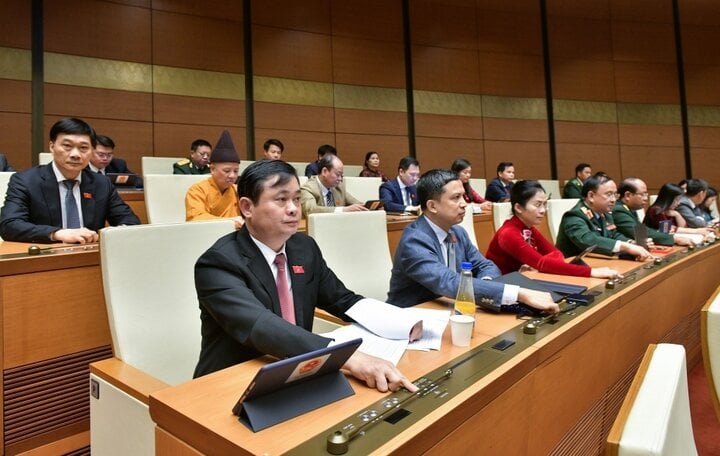
Members of Parliament press the voting button at the 6th Session.
Regarding the amended Land Law, after the third plenary session discussion, based on the proposal of the National Assembly Standing Committee, the National Assembly concluded that the draft law still contains several major contents and policies that require further research to design optimal policy options; a comprehensive review and refinement will require more time to ensure the constitutionality, legality, and consistency of the draft law with the legal system.
Because this draft law is of particularly important nature, with a significant impact on socio-economic activities and people's lives, after reaching an agreement with the Government, the Standing Committee of the National Assembly reported to the National Assembly to allow the adjustment of the time for passing the amended Land Law project from the 6th session to the nearest session of the National Assembly to continue researching, incorporating feedback, revising, thoroughly reviewing, and perfecting the draft law, ensuring the best quality before submitting it to the National Assembly for approval.
Similarly, with regard to the draft Law on Credit Institutions (amended), after discussion, the National Assembly agreed with the assessment of the Standing Committee of the National Assembly that this is a very difficult, complex, and sensitive draft law, related to national financial security, the security and safety of the system of credit institutions, and having a profound impact on socio-economic activities.
This requires thorough and careful research, based on science and practice, to avoid a situation where the law, if enacted, has shortcomings that could cause significant negative impacts. Therefore, the National Assembly also decided not to pass this draft law at the 6th session.
Although it is understood that the two draft laws need to be enacted soon to promptly resolve practical difficulties, as National Assembly Chairman Vuong Dinh Hue has repeatedly emphasized, "thorough preparation and clarity are essential before making a decision; urgency is paramount, but not haste," and "prioritizing the quality of the draft laws above all else."
Supreme oversight continues to leave a significant mark.
From the very beginning of its term, the 15th National Assembly identified the reform of oversight activities as a key focus to improve the overall effectiveness of the National Assembly, as it directly relates to and positively impacts legislative work and the decision-making on important national issues. The 6th session further demonstrated this spirit.
First and foremost, it's impossible not to mention the question-and-answer session, which was considered "innovative," "special," and even "unprecedented" in terms of the scope of the questioning, the method of conducting it, and its nature as a review of more than half of the term.
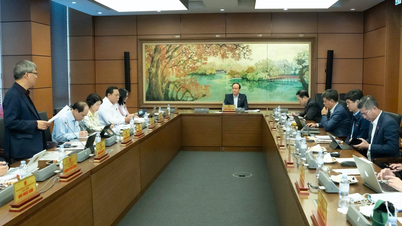
For the first time, the National Assembly did not conduct questioning based on specific issues, but instead focused on the implementation of 10 resolutions of the 14th National Assembly and, from the beginning of the 15th National Assembly term to the end of the 4th session, specialized supervision and questioning covering four areas: General and macroeconomic economics; Sectoral economics; Culture and society; Justice, internal affairs, and State audit.
This means that the National Assembly will conduct questioning regarding the fulfillment of promises and commitments, and all "heads of ministries" could face scrutiny, under the watchful eyes of voters and the public via live radio and television broadcasts.
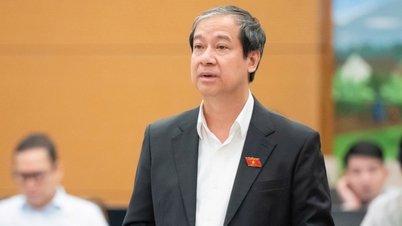
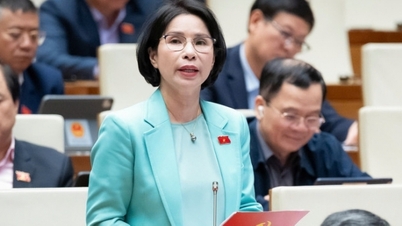
Over 2.5 days, 457 National Assembly deputies registered to participate in the questioning session; 152 deputies exercised their right to question, including 39 deputies who engaged in debate. For the first time in the 15th term, the Prime Minister, all Deputy Prime Ministers, and 21 Ministers and heads of agencies directly answered questions. This included those who had only recently taken up their positions, such as Deputy Prime Minister Tran Luu Quang and Minister of Natural Resources and Environment Dang Quoc Khanh.
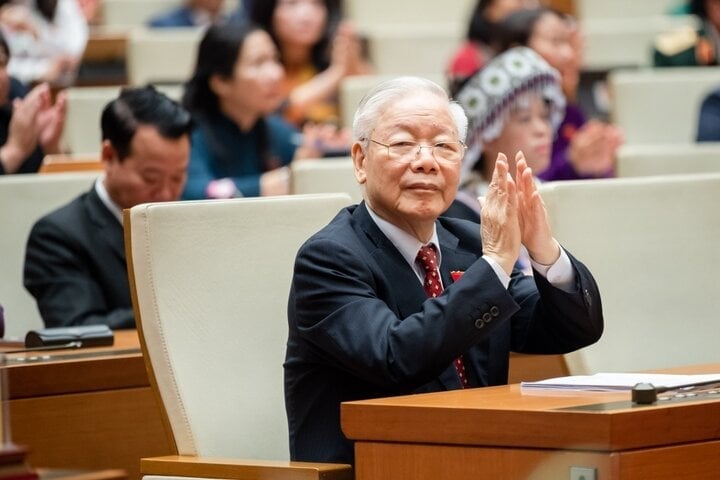
General Secretary Nguyen Phu Trong attended the 6th Session of the 15th National Assembly.
Another activity that attracted particular attention not only from National Assembly delegates but also from a large number of voters, the public, and social opinion was the National Assembly's vote of confidence for 44 positions elected or approved by the National Assembly (5 of which were newly elected or approved by the National Assembly in 2023 and therefore were not included in this vote). The results of the vote of confidence were published in the mass media immediately after being announced.
This is the fourth confidence vote by the National Assembly, but the first time it has been conducted in accordance with Resolution No. 96/2023/QH15, adopted by the National Assembly at its 5th session on June 23, 2023, with many specific evaluation criteria, ranging from the results of performing assigned tasks and powers to political qualities, ethics, lifestyle, etc.
The National Assembly also conducted oversight and passed a Resolution on the thematic oversight of "the implementation of National Assembly resolutions on national target programs on building new rural areas in the period 2021-2025, sustainable poverty reduction in the period 2021-2025, and socio-economic development in ethnic minority and mountainous areas in the period 2021-2030".
It can be said that this thematic study once again demonstrates that the content of supervision is not just about "post-audit" but also about issues in the process of operation and implementation, working with the Government to identify shortcomings in implementation in order to find solutions to create better changes.
Specifically, the National Assembly has instructed the Government to urgently draft a resolution on a number of specific mechanisms and policies to remove difficulties and obstacles and accelerate the implementation of national target programs, to be submitted to the National Assembly for consideration and decision at the nearest session using a simplified procedure, as the implementation time for these programs is only two years. Of particular note is the pilot mechanism for decentralizing the authority to district-level governments to decide on the list, structure, and allocation of state budget funds…
The policy decision contributes to "easing the burden on the people".
While the 6th Session was underway, the National Assembly decided to adjust and add two draft resolutions to the 2023 legislative and ordinance drafting program for consideration under the procedure at a single session. The National Assembly worked for an additional half day and adjourned on the morning of November 29th instead of the afternoon of November 28th as originally planned.
Specifically, the National Assembly's Resolution on the application of supplementary corporate income tax under the global tax base erosion prevention provisions and the National Assembly's Resolution on reducing value-added tax (resolved in Resolution of the 6th session, 15th National Assembly).
The National Assembly is considering and deciding on the continued implementation of value-added tax (VAT) reductions to provide timely support to people and businesses, thus easing the burden on the people. People are the direct beneficiaries of this policy, as VAT reductions will positively impact the prices of essential goods and services. Businesses also benefit from the policy, as VAT reductions will contribute to lower production costs and product prices, thereby helping businesses recover and expand their operations.
This tax reduction is expected to be applied during the first six months of 2024, but notably, the Standing Committee of the National Assembly may consider and decide to continue reducing VAT after June 30, 2024, if the economic situation and businesses and people remain difficult.
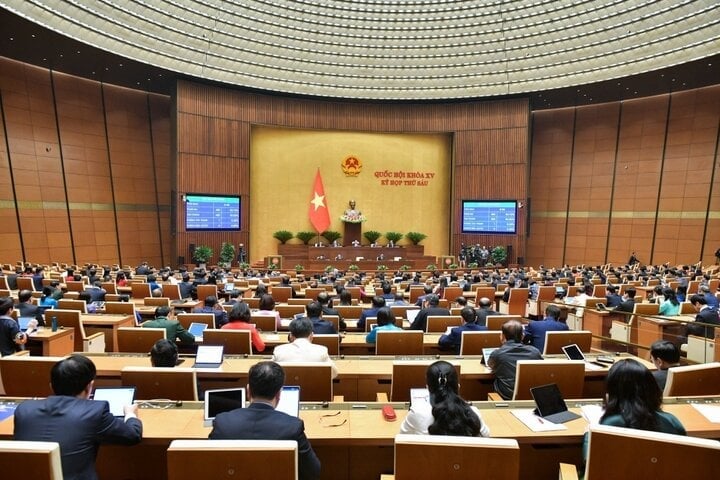
The 6th session of the 15th National Assembly opened on October 23 and closed on November 29, 2023.
Another important item passed by the National Assembly is the Resolution on piloting a number of specific mechanisms and policies on investment in road transport construction projects, with the aim of resolving current difficulties and obstacles.
Essentially, the National Assembly is allowing for deviations from the law within a certain timeframe for road projects and works designated in the appendix to the draft resolution. Specifically, the projects presented this time have all been identified in the medium-term public investment plan, have had investment procedures prepared, and have had funding allocated, but are facing obstacles. Therefore, the National Assembly's approval of special mechanisms and policies will help accelerate progress.
The National Assembly's innovative, flexible, collaborative, constructive approach, and readiness to respond to practical demands and the country's development – these are the hallmarks of the 6th Session of the 15th National Assembly.
Ngoc Thanh (VOV.VN)
Source

![[Photo] Prime Minister Pham Minh Chinh holds a phone call with the CEO of Russia's Rosatom Corporation.](/_next/image?url=https%3A%2F%2Fvphoto.vietnam.vn%2Fthumb%2F1200x675%2Fvietnam%2Fresource%2FIMAGE%2F2025%2F12%2F11%2F1765464552365_dsc-5295-jpg.webp&w=3840&q=75)


![[Photo] Closing Ceremony of the 10th Session of the 15th National Assembly](/_next/image?url=https%3A%2F%2Fvphoto.vietnam.vn%2Fthumb%2F1200x675%2Fvietnam%2Fresource%2FIMAGE%2F2025%2F12%2F11%2F1765448959967_image-1437-jpg.webp&w=3840&q=75)








































![[OFFICIAL] MISA GROUP ANNOUNCES ITS PIONEERING BRAND POSITIONING IN BUILDING AGENTIC AI FOR BUSINESSES, HOUSEHOLDS, AND THE GOVERNMENT](https://vphoto.vietnam.vn/thumb/402x226/vietnam/resource/IMAGE/2025/12/11/1765444754256_agentic-ai_postfb-scaled.png)








































Comment (0)