

VHO - It can be said that, after 50 years of efforts to preserve and promote cultural heritage values, the ancient capital of Hue has experienced a strong revival and development. Many heritage sites have been saved, preserved, and restored.
Importantly, these ancient relics, included in Hue's conservation and development plan, are now presented with new opportunities as Hue officially becomes a centrally-governed city "on the foundation of preserving and promoting the heritage values of the ancient capital and Hue's cultural identity."
According to Mr. Phan Thanh Hai, the difficulties and challenges, stemming from the passage of time and the opportunities that have arisen, are by no means simple. At the very least, to improve the quality and effectiveness of conservation and promotion of the cultural heritage of Hue Imperial City, Mr. Hai believes that the locality needs to implement eight proposed solutions.
First and foremost, the Hue City government needs to remain steadfast and continue to promote research projects aimed at building and developing the Hue cultural and human values system in line with the new context.
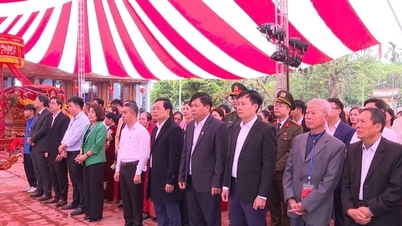
Secondly, localities should focus on disseminating and educating the public about the Law on Cultural Heritage and the Decrees on preserving, restoring, and promoting cultural values, so that this Law is implemented in practice and people raise their awareness and responsibility to voluntarily comply with regulations on protecting and promoting heritage values. Considering that the new Law on Cultural Heritage will come into effect on July 1, 2025, it is necessary to accelerate the dissemination and popularization of this Law to all segments of the population.
Furthermore, Hue City, with its new status, needs to establish regulations for preserving and promoting the value of historical relics and regulations for socio-economic development. Resources should be focused on restoring, rehabilitating, and preserving a number of key architectural works within the Hue Imperial Citadel complex.
Local authorities must pay attention to inspecting the condition of historical sites, promptly taking measures to improve the value and lifespan of these structures, especially those that preserve and promote historical sites such as the Ho Chi Minh Memorial, revolutionary historical sites, cultural and architectural sites. Archaeological planning should be organized to both protect traditional culture and serve socio-economic development and attract investment.
Fourth, it must be recognized that Hue's heritage exists within the community's life and can only be protected and preserved by the community. The people are always the subjects of preserving and promoting the value of heritage. Therefore, a plan must be developed to publicize and promote the cultural heritage values of the ancient capital of Hue, raising community awareness, especially among the younger generation, and fostering a spirit of collective effort in protecting Hue's heritage. At the same time, it is necessary to expand the model of social mobilization to attract social organizations and international organizations interested in the preservation of the cultural heritage of the ancient capital of Hue.
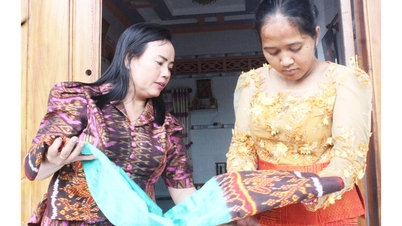
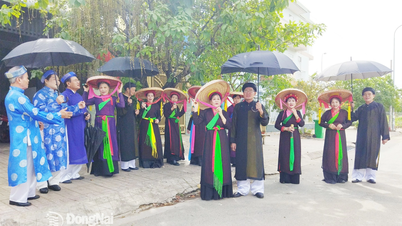
Fifth, localities should promptly conduct an inventory, collect and digitize information, and create scientific dossiers for the intangible cultural heritage and documentary heritage of the Hue Imperial City; encourage the preservation, compilation, and promotion of intangible cultural forms; maintain, restore, and develop traditional crafts; and research the customs, traditional costumes, folk songs, folk music, and folk dances of ethnic minority groups. To protect these "living human treasures," policies should be enacted to reward, honor, and provide the best possible material and spiritual conditions for veteran artisans to play a role in preserving intangible cultural heritage values.
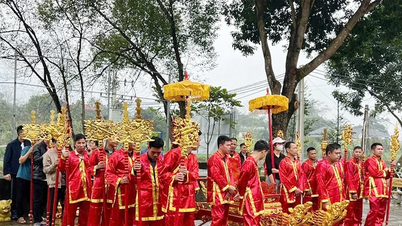
Sixth, implement research, preservation, and promotion programs for the values of festivals, to develop them into distinctive tourism products of the region. This must be done in parallel, both building a system of solutions to mitigate the negative aspects of mass tourism and improving the quality of art forms and activities such as festivals. It is necessary to promote the socialization of cultural and festival activities to attract resources and gradually reduce state subsidies.
Secondly, Hue City needs to reassess the positive and negative aspects of preserving and promoting Hue's heritage values to serve development; and conversely, the impact of socio-economic development on heritage preservation. Through this, the locality can improve its legal framework, unify its management apparatus, and strengthen the training of high-quality human resources to meet the task of preserving and promoting cultural heritage values.
Strengthening connections, expanding international exchange and cooperation, learning from experience, and seeking opportunities to promote cultural heritage values are crucial. Hue needs a plan to train a team of experienced and competent professionals to absorb advanced technologies from around the world and effectively apply them to the field of conservation, restoration, and promotion of heritage values.
Finally, local tourism, cultural, and investment sectors need to leverage the unique characteristics of Hue's cultural heritage to develop distinctive and highly competitive tourism products. This includes effectively implementing the Four Seasons Festival Project, identifying festivals as key tourism products of Hue City, and effectively exploiting the brands "Hue - Culinary Capital," "Hue - Ao Dai Capital," and "Hue - Festival City." Importantly, these sectors must promote the application of digital technology to improve the quality of service for tourists and to serve as a basis for promoting Hue's cultural heritage internationally.
Regarding these eight proposed recommendations, Mr. Phan Thanh Hai shared that all the issues of innovation and enhanced development facing Hue City, right from the initial stage of establishing it as a centrally-governed city, are somewhat urgent. However, considering the responsibility of effectively preserving and actively promoting cultural heritage values—an important cultural and social foundation and a driving force for Hue to assert its advantages—these requirements must be studied and implemented as soon as possible.
If, from the outset, Hue had actively created opportunities to change and restructure the requirements for affirming the value of its cultural heritage, potential risks would have been eliminated, the sustainable development orientation of Hue's cultural heritage values would have been stronger, and future harvests would have been more successful.
Source: https://baovanhoa.vn/van-hoa/ky-2-co-hoi-da-den-nhung-117619.html

![[Image] Vietnam's diverse colors on its journey of innovation](https://vphoto.vietnam.vn/thumb/1200x675/vietnam/resource/IMAGE/2026/03/09/1773041390813_anh-man-hinh-2026-03-09-luc-14-28-17.png)

![[Image] 20 islands in the Spratly Islands special administrative region hold early elections.](https://vphoto.vietnam.vn/thumb/1200x675/vietnam/resource/IMAGE/2026/03/08/1772949669607_img-20260308-112026-90-jpg.webp)



















![[Photo] Diary of the photojournalism contest “Vietnam on the journey of innovation”](https://vphoto.vietnam.vn/thumb/1200x675/vietnam/resource/IMAGE/2026/03/09/1773041117692_anh-man-hinh-2026-03-09-luc-14-24-45.png)





































Comment (0)