

If it's too general, how can it be implemented?
On the afternoon of May 31st, the National Assembly (NA) held group discussions on the draft resolution on special policies for the development of Da Nang City, including a new policy proposing the establishment of a Da Nang Free Trade Zone. Expressing her opinion, Deputy Head of the Quang Ninh Delegation Nguyen Thi Thu Ha agreed with the proposal to establish a Da Nang Free Trade Zone, noting that this is a new policy that localities have not previously implemented when developing special policies.
However, Ms. Ha suggested that the Government should provide more documents on this model around the world so that the delegates can study it; and at the same time, compare how free trade zones differ from border economic zones, high-tech industrial zones, etc., as stipulated in current laws.
Representative Ha also noted that, according to the government 's proposal, investors establishing offices in free trade zones would receive preferential treatment and reduced administrative procedures. However, these benefits are also present in other zones. "I propose that further clarification be needed to make the advantages of free trade zones more convincing," Ms. Ha said.
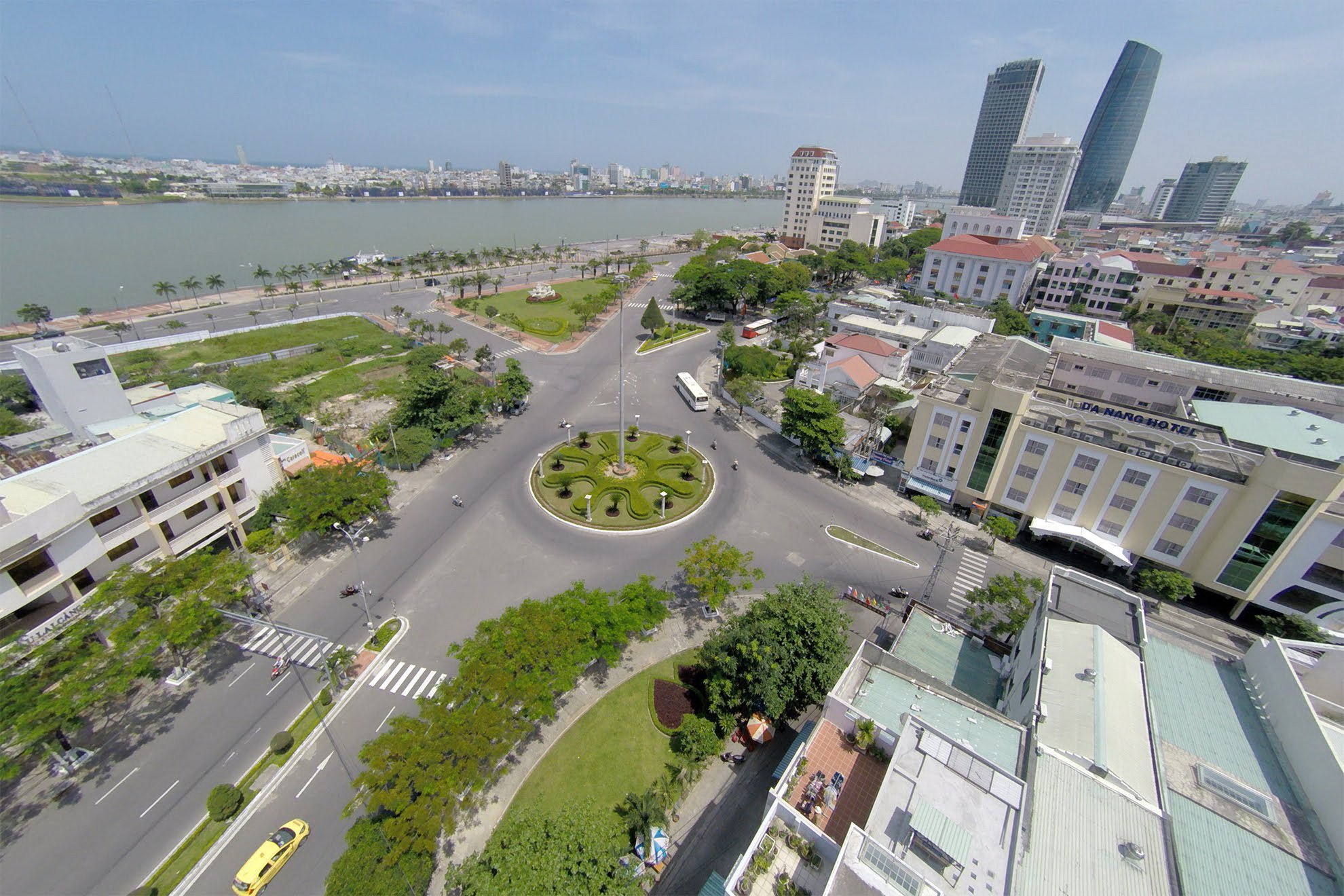
The special mechanism is expected to boost the development of Da Nang City.
Representative Ha Sy Dong, Permanent Vice Chairman of the Quang Tri Provincial People's Committee, suggested that the Government should have a separate plan for free trade zones instead of making general regulations in a resolution.
"If we include it in such a general way, how can we implement it later? Because such regulations are not consistent with current regulations and will create conflicts. We need to separate it and develop a project that clearly states which policy mechanism is superior and which law it is included in," Mr. Dong suggested.
Representative Dong cited the example of Quang Tri province, which piloted the construction of the Lao Bao Special Economic and Trade Zone in 2000. However, a review in 2015 revealed numerous shortcomings and loopholes, resulting in tax revenue losses. Therefore, Mr. Dong suggested the need for specific and clear regulations on mechanisms and policies for free trade zones, as free trade zones are not yet defined in the current legal system.
Chairman of the National Assembly's Economic Committee, Vu Hong Thanh, raised the question: "If we need a separate project, when will we ever have a model for a free trade zone?" Mr. Thanh suggested: "Let's just pilot the establishment and consider it a testing ground for policy mechanisms. If a policy mechanism proves effective, we can replicate it elsewhere." Mr. Thanh informed that China currently has 22 free trade zones, and the first one, in Shanghai, has undergone six adjustments, expanding from an initial 28 square kilometers to 200 square kilometers and is considered very successful.
However, Mr. Thanh also argued that the policy mechanisms for the Da Nang Free Trade Zone "are still too limited" because they mainly copy regulations already applied in industrial zones and economic zones from other places.
"If policy mechanisms like these exist, will they be attractive to free trade zones right next to us? I still want to allow pilot programs, but the policy mechanisms must be groundbreaking and more open," Mr. Thanh stated.
Meanwhile, Da Nang Party Secretary Nguyen Van Quang affirmed that the free trade zone is one of the "highly noteworthy" policies in the draft resolution, demonstrating a breakthrough and a willingness to take risks in experimenting with a model that has been proven successful worldwide but has no precedent or practical experience in Vietnam.
"We acknowledge that this project carries risks, but we accept them. If successful, it will serve as a platform for nationwide replication, and the city will bear the risks," Mr. Quang shared.
Is it too many for Nghe An province to have five vice-chairmen?
Commenting on the draft Resolution on piloting the addition of some specific mechanisms and policies for the development of Nghe An province, National Assembly Deputy Nguyen Thi Thu Ha, Deputy Head of the Quang Ninh Provincial National Assembly Delegation, said that the Nghe An Provincial People's Committee currently has 4 Vice Chairmen. According to the draft resolution, the Government proposes no more than 5 Vice Chairmen, meaning an increase of 1 Vice Chairman position.
However, Ms. Ha cited Clause 2, Article 8 of the 2015 Law on Organization of Local Government, which clearly states: The People's Committee consists of a chairman, vice-chairmen, and members; the specific number of vice-chairmen of the People's Committee at each level is regulated by the Government. "Therefore, the number of vice-chairmen of the People's Committee at each level is regulated by the Government. So, should this be included in the National Assembly's resolution? I request that you consider this further," Ms. Ha stated.
Deputy Chairwoman of the National Assembly's Science, Technology and Environment Committee, Nguyen Thi Le Thuy (from Ben Tre province), stated that although the proposal and verification report indicated prior approval, she still believes this is an issue requiring careful consideration. According to Ms. Thuy, the number of deputy chairmen of provincial People's Committees should be calculated based on population size, land area, and the complexity of local administration.
Ms. Thuy cited the example of Hanoi, a city with the characteristics of being the capital, having a large population and area, and a maximum of 5 vice chairmen. Similarly, Ho Chi Minh City, "as large as that," also only has 5 vice chairmen. "Now, if Nghe An has 5 vice chairmen, I think that's a bit excessive. Actually, adding one more vice chairman wouldn't have a significant impact on socio-economic development or ensuring Nghe An's development as targeted when proposing special policies in this resolution," Ms. Thuy stated.
The draft resolution also proposes that provinces and centrally-administered cities be allowed to use their own budgets to support Nghe An province in carrying out socio-economic development tasks and ensuring national defense and security in Nam Dan district and the western region of Nghe An. The Finance and Budget Committee stated that the majority of opinions agreed with this proposal, as it is similar to the policy that the National Assembly has already approved for pilot application in Thua Thien-Hue.
However, Ms. Nguyen Thi Le Thuy argued that the proposal in the draft is "very different" from the policy currently applied to Thua Thien-Hue. "This means we are making decisions about budget funds that are not ours. It's the budget of another province; they have the right to allocate funds to whoever they want," Ms. Thuy said.
According to Ms. Thuy, in the case of Thua Thien-Hue, other localities provide support through contributions to the Hue Heritage Conservation Fund, which is solely for heritage conservation and development activities. However, the draft for Nghe An is a policy aimed at developing the socio-economic aspects of a district and the entire western region of Nghe An; therefore, its objectives and authority are inappropriate.
"If we rely on this to allocate budget, will the accounts be settled? Because the resolution is for Nghe An province, not for provinces with supporting budgets," Ms. Thuy questioned, while suggesting that regulations should be amended to allow districts within Nghe An province to support each other.
Is the mechanical shirt too tight?
Representative Ha Sy Dong stated that so far, 10 localities have requested special policies. He raised the question: "Is our legal framework too restrictive, no longer suitable for a socialist rule of law state and a socialist-oriented market economy, and is it stifling and hindering the autonomy of local governments, preventing them from fully exercising their self-reliance and accountability?"
While agreeing with the special policies for Nghe An and Da Nang being presented to the National Assembly at this session, Representative Dong said: "After Da Nang and Nghe An, how many more provinces and cities will request to pilot special mechanisms? We should set a stopping point to summarize and expand the program."
Chairman of the National Assembly's Economic Committee, Vu Hong Thanh, also stated that the specific policies of localities, when submitted to the National Assembly, are almost "copied" from other localities without considering their own characteristics. He suggested that it is necessary to evaluate the advantages and disadvantages of previously applied policies in order to adjust them to suit the practical situation, and then incorporate them into resolutions to ensure their effectiveness.
Source: https://thanhnien.vn/khu-thuong-mai-tu-do-phai-dot-pha-va-mo-hon-185240531224637997.htm


![OCOP during Tet season: [Part 3] Ultra-thin rice paper takes off.](/_next/image?url=https%3A%2F%2Fvphoto.vietnam.vn%2Fthumb%2F402x226%2Fvietnam%2Fresource%2FIMAGE%2F2026%2F01%2F28%2F1769562783429_004-194121_651-081010.jpeg&w=3840&q=75)





Comment (0)