

Policy Communication - The Power of the Press With its ability to create forums for dialogue and policy critique, the press and media act as a bridge between policymakers and policy beneficiaries. As media increasingly participates fully in all stages of the policy-making process, the effectiveness and positive impact of policies in practice are further enhanced. The methods and effectiveness of policy communication in our country are the issues discussed in this专题 (special topic). |
Doing good policy communication work will open up great resources.
Over the past period, the press has truly become the main channel for communicating policies. In particular, the press has proactively and promptly informed and publicized the directives and management of the National Assembly in legislative work, supervision, and law enforcement; and of the Government, the Prime Minister, ministries, sectors, and localities in all aspects, contributing to accelerating the recovery and development of the socio-economic sector in a strong and profound manner.
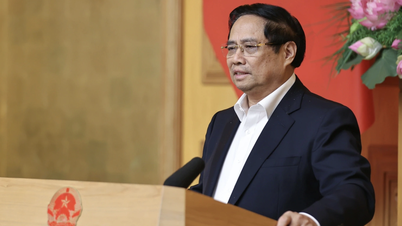
According to Prime Minister Pham Minh Chinh, policy communication plays a very important role and is one of the functions and tasks of the Government, ministries, government agencies, and localities in the process of implementing political tasks. Doing a good job of policy communication will open up great resources, creating great strength and high efficiency in policy making and implementation.
According to the Prime Minister , policy communication work has closely followed reality, respected reality, taken reality as a measure, been carried out more openly, transparently, proactively, promptly, with many creative, innovative, highly effective ways, suitable to the propaganda content, situation, conditions and context of each agency, locality and unit; contributed significantly to bringing legal policies into life and bringing life into the policy-making process, improving the effectiveness and efficiency of policies, thereby unifying awareness, will and action in implementation, creating high consensus in society.
Recognizing that in the current information explosion context, policy communication needs to be prioritized and its professionalism enhanced throughout the entire system of state administrative agencies, contributing to creating consensus and improving the effectiveness and efficiency of policy implementation; recently, on March 21, 2023, Deputy Prime Minister Tran Hong Ha signed Directive No. 07/CT-TTg of the Prime Minister on strengthening policy communication.
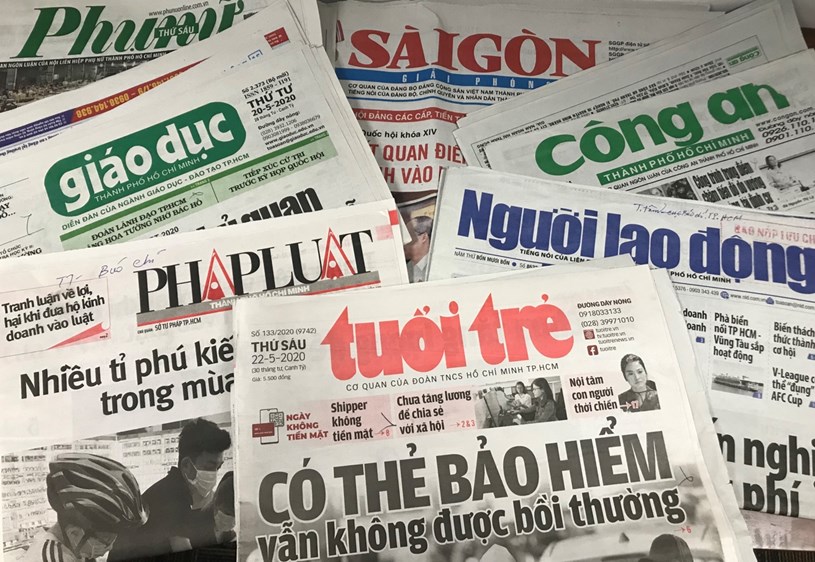
According to the Directive, the Prime Minister requested ministries, branches and localities to proactively innovate communication methods and forms of providing information to the press to ensure publicity, transparency and to meet the information needs of press agencies and journalists. Strengthen close, timely and effective coordination between ministries, branches and agencies working on policy communication.
Pay attention to arranging, organizing, training, and improving the capacity and qualifications of the team doing policy communication work to ensure that it is suitable for the requirements of the task. Arrange officers in charge of policy communication work in ministries, branches, and localities. Develop annual communication plans and flexibly implement communication activities from the time of policy planning, development, completion, issuance, and implementation; arrange for a policy communication department to participate in giving opinions and criticism during the process of policy development and implementation.
In addition, research should be conducted on commissioning and assigning tasks to media and press agencies to carry out policy communication activities in accordance with legal requirements and regulations…
In 2022, according to the report of the General Statistics Office, for the first time, Vietnam's GDP reached 409 billion USD. GDP is estimated to increase by 8.02% compared to the previous year due to the economic recovery and reaching the highest growth rate in the period 2011 - 2022.
The significant achievements mentioned above are thanks to the involvement of the entire political system, the timely, decisive, and close guidance and management of the Government and the Prime Minister, and the efforts of all levels, sectors, localities, and the business community. In particular, the press plays a crucial role in communicating policies, acting as a bridge between state management agencies and the people and businesses.
According to Associate Professor Dr. Dinh Trong Thinh – an economic expert – the press has become one of the useful information channels for businesses, helping them access economic management policies more quickly and effectively, including policies on support from state management agencies for businesses in the national economy.
Specifically, many policies aimed at supporting businesses and improving the business environment, introduced by relevant authorities, are not aligned with the practical context, making them difficult for businesses to access. However, through media coverage, businesses have been able to express their concerns and aspirations.
From there, policymakers can adjust policies to better suit the realities and needs of businesses, facilitating businesses' access to policy support packages and the Party and State's guidelines and policies. Through the media, policies have become closer to businesses and the practical environment.
It is evident that, in the new context, the role of the press in policy communication is given special importance by the Party and the State. Effective policy communication contributes to resolving long-standing issues within the economy that every country faces during its transition, and helps in responding appropriately and effectively to newly arising problems, enabling the people to understand and share the views of the Party, the State, and the Government.
Increase criticality in journalism, not rigidity and mechanism
With the ability to create a forum for dialogue and policy criticism, the press and media create a bridge between the policy issuer and the policy beneficiaries. In particular, the role of the press in monitoring and criticizing is very important and has been recognized by our Party and State.

According to experts, strengthening the role of the press in monitoring and social criticism is extremely necessary, especially at the present stage, when the entire Party and people are focusing on promoting the cause of industrialization and modernization of the country.
Furthermore, the critical role of the press has had many positive impacts on the management of the industry as well as on the overall operation and stabilization of the country's socio-economic situation.
For example, recently, many legal documents issued by ministries and agencies lacked practicality (such as regulations prohibiting the sale of livestock and poultry meat more than 8 hours after slaughter, and regulations banning the sale of beer on sidewalks...). When these regulations were put forward for public and media review, many ministries and agencies had to adjust them by withdrawing or amending the documents.
At the conference on Continuing to implement Directive 11 of the Politburo, actively innovating, improving orientation capacity, propaganda effectiveness associated with buying, reading, and following the Party's newspapers and magazines (morning of April 10, 2023). Mr. Nguyen Trong Nghia - Secretary of the Party Central Committee, Head of the Central Propaganda Department said that in order to attract people's attention, the Party's newspapers and magazines need to closely follow real life, truthfully, objectively, and vividly reflect the lives of people of all walks of life in many fields.
"If we only see the rosy side, the beautiful numbers, and ignore the dark side, the difficulties and hardships of the locality, then it's not right. We must have both objectivity and subjectivity, which will create the motivation for us to overcome difficulties," Mr. Nghia clearly stated.
The Head of the Central Propaganda Department also acknowledged that at an event, each media outlet, with its different principles and objectives, will have different article orientations and approaches to the issue from different perspectives, thus creating diversity in journalistic activities. Therefore, Mr. Nghia suggested that the Propaganda Departments of localities should develop strategic directions for newspapers to create richness, multiple perspectives, and increased critical thinking in journalism, rather than rigidity and mechanicality.
Quoc Tran
Source


![[Photo] Urgently help people soon have a place to live and stabilize their lives](/_next/image?url=https%3A%2F%2Fvphoto.vietnam.vn%2Fthumb%2F1200x675%2Fvietnam%2Fresource%2FIMAGE%2F2025%2F12%2F09%2F1765248230297_c-jpg.webp&w=3840&q=75)















































![[Photo] General Secretary To Lam works with the Standing Committees of the 14th Party Congress Subcommittees](https://vphoto.vietnam.vn/thumb/402x226/vietnam/resource/IMAGE/2025/12/09/1765265023554_image.jpeg)





















Comment (0)