

Geographically and economically, Quang Tri is situated within two national development strategies: the East-West Economic Corridor and the Central Key Economic Zone, with key development pillars being the Southeast Quang Tri Economic Zone, the Lao Bao Special Economic and Trade Zone, and the two international border gates of Lao Bao and La Lay. Particularly noteworthy are the Cua Viet and My Thuy seaports, which serve as gateways to the East Sea and crucial connections to the Pacific and Indian Oceans. Therefore, linking the eastern and western regions is a strategic vision, creating significant opportunities for Quang Tri's rapid and sustainable development.

Cua Viet Port will be expanded and upgraded to become a transshipment point for goods from countries along the East-West Economic Corridor. - Photo: HNK
Eastern Region Advantages
The eastern part of Quang Tri province borders the East Sea and has a 75 km long coastline, along which are two large river mouths: Cua Tung and Cua Viet. The marine ecosystem is rich, with vast fishing grounds and valuable aquatic and marine resources. Quang Tri's coastline boasts many beautiful beaches such as Cua Tung, Cua Viet, and My Thuy, creating favorable conditions for the development of resort tourism .
In addition, Con Co Island possesses abundant potential for developing marine and island tourism. The discovery of gas fields in blocks 112 and 113, located approximately 130 km off the coast of Quang Tri, presents an opportunity for the development of energy industries.
In particular, the establishment of the multi-sector Southeast Quang Tri Economic Zone is expected to be a breakthrough in the economy, forming a major center for agricultural, forestry, and aquatic product processing, construction materials production, electricity generation, tourism, trade and services, and seaports in the Central region.
Through this, the Southeast Quang Tri Economic Zone will be developed into one of the trading centers of the ASEAN and Asia-Pacific regions, creating momentum for socio-economic development and contributing to enhancing the position of Quang Tri province in the North Central region.
Currently, the My Thuy seaport project, invested by My Thuy International Port Joint Venture Company (MTIP), has a total capital of VND 14,234 billion and a 50-year implementation period. After a period of interruption due to land clearance issues and some related procedures, it restarted in the first quarter of 2024 and is expected to commence construction at the end of March 2024.
This is the opportune time to proceed as the technical infrastructure for the development of My Thuy seaport is gradually being completed. This includes regional connectivity, transportation infrastructure, and airport facilities being invested in synchronously to develop logistics. Therefore, the construction of My Thuy deep-water port is crucial, opening access to the East Sea and creating an additional economic growth pole for the province in the trend of global integration and development.
Currently, Cua Viet Port has an area of 42,000 m2, a 7,200 m2 cargo storage yard, a capacity of 2 million tons of goods per year, and the ability to receive ships with a deadweight of 1,000 DWT. The Cua Viet oil and gas storage facility has a construction area of 11 hectares with a storage capacity of 45,000 m3, a specialized oil and gas import port of 40,000 DWT, and the largest ships of approximately 50,000 m3; the Cua Viet oil and gas terminal has a capacity of 1.5 million tons per year. The province has also approved an investment project to build technical infrastructure and create space for expanding Cua Viet Port with a total investment of over 80 billion VND to meet future cargo transshipment needs.
The coastal area of the province holds a particularly important position, favorable for socio-economic development, including the Southeast Quang Tri Economic Zone and the coastal tourism and service route. While the My Thuy area in Hai Lang district is planned to develop into a multi-sector complex economic zone encompassing industries, thermal power, logistics, and seaports, the Cua Viet area in Gio Linh district is oriented towards developing into a center for tourism, culture, and social services, a seaside resort town connected to the Southeast Quang Tri Economic Zone.
This development orientation reflects a strategic vision within the overall development plan once Cua Viet is upgraded to a Class IV urban area by 2050. In particular, Cua Viet is the endpoint of the East-West Economic Corridor and the Greater Mekong Subregion, serving as a gateway to the East Sea, creating favorable conditions for economic development and linkages with neighboring countries for mutual development. Therefore, the planning orientation to develop the coastal area into a multi-sector economic hub as a driving force for socio-economic development is consistent with current realities and future development requirements.
" Open the West"
The La Lay International Border Gate is strategically located for the development of international relations, trade, and services, serving as a gateway connecting the central provinces of Vietnam with the southern provinces of Laos and northeastern Thailand. In recent years, the volume of goods and passengers passing through the border gate has increased significantly. In 2023, the total two-way trade reached over 261 million USD, with state budget revenue reaching 575 billion VND, of which revenue from coal imports exceeded 500 billion VND.
In the near future, when the more than 70-kilometer-long road connecting the La Lay International Border Gate to the Southeast Quang Tri Economic Zone and My Thuy seaport is opened, it will create a new economic corridor parallel to the East-West Economic Corridor.
To form a dynamic economic zone in the West to exploit the potential and advantages to promote economic development in the border gate area and inter-regional connecting transportation routes, the province has urgently developed the Project for Economic Development of the La Lay International Border Gate Area until 2030, with a vision to 2035.
Besides mobilizing various investment resources for infrastructure in border gate areas, encouraging, supporting, and facilitating businesses to implement investment projects, the Provincial People's Committee has directed departments, agencies, and localities to base their development plans on existing master plans to create a new economic corridor parallel to the East-West Economic Corridor, and a logistics service center. The total capital needed to implement the plan is estimated at over 3,000 billion VND.
On January 5, 2024, the Government issued Resolution No. 04/NQ-CP on the investment in the construction of a conveyor belt system for transporting coal from Laos to Vietnam across the border between the two countries at the La Lay International Border Gate. Accordingly, the project to transport coal from the Kaleum mine in Sekong province (Laos) through the La Lay International Border Gate to My Thuy port using a conveyor belt system with a total length of 160 km is about to be implemented.
In the coal conveyor belt investment project, the investor will build a specialized port and port infrastructure capable of receiving 50,000 DWT vessels, with an operating capacity of 30 million tons of cargo per year. Once the coal conveyor belt project transporting coal from Laos to Vietnam via the La Lay International Border Gate becomes operational, it will create favorable conditions for businesses to invest in production and trade; expand partnerships with Salavan province in investment, trade, and logistics to effectively exploit the advantages of its location on the East-West Economic Corridor (PARA-EWEC), further strengthening the connection between Sekong - Champasak - Salavan - Quang Tri provinces and the Central Vietnam key economic region via the La Lay International Border Gate, creating a new economic growth pole in the western part of the province.
Transportation connectivity, development linkages.
The eastern coastal area of the province holds a particularly important and favorable position for socio-economic development, including the Southeast Quang Tri Economic Zone and the coastal tourism and service route. In particular, it boasts a convenient transportation system, including National Highway 9 connecting Cua Viet Port with the Lao Bao International Border Gate, National Highway 9D connecting the Cua Viet - Cua Tung - Vinh Moc tourism and service destinations, and National Highway 49C connecting the center of the Southeast Economic Zone to the La Lay International Border Gate.
In addition, many key projects and infrastructure works such as: the coastal road connecting the East-West Economic Corridor, the North-South Expressway section from Van Ninh (Quang Binh) to Cam Lo (Quang Tri), the road connecting the East and West branches of the Ho Chi Minh Highway, and the eastern bypass of Dong Ha City are being urgently constructed. Currently, Quang Tri is also inviting investors under the PPP model for the Cam Lo - Lao Bao expressway and the 15D road connecting My Thuy port with the La Lay international border gate...
Once crucial infrastructure systems such as roads and railways are invested in and built, along with open, stable, and long-term mechanisms and policies, economic breakthroughs will be created. Especially with the rapidly increasing demand for maritime transport in Vietnam after the completion of the Trans-Asian Highway, this creates favorable opportunities for the province to develop the My Thuy deep-water port complex and the Cua Viet port at the end of National Highway 9 of the East-West Economic Corridor and the East-West horizontal economic corridor.
In addition, international and regional policies such as the East-West Economic Corridor Cooperation Forum, Free Trade Agreements (FTAs) (ASEAN Economic Community aiming for unified market and production base connectivity; CEPTAFTA preferential tariff agreement...), the Vietnam-Laos-Thailand trilateral cooperation agreement, and the Trans-Pacific Partnership (TPP) agreement are progressing through a process of deep integration, creating opportunities for Quang Tri to integrate into the regional economy and accelerate the province's economic development thanks to the connection between dynamic economic regions that have been and are being formed, with the East-West horizontal axis connection being a prime example.
Once the two parallel economic corridors converge in My Thuy, it will facilitate the development of key economic sectors, while simultaneously sharing benefits, linking, and cooperating with neighboring countries for mutual development. This will create a new growth pole, contributing to a rapid shift in the economic structure and building Quang Tri into one of the centers for exchange and cooperation with countries in the Greater Mekong Subregion.
Implementation solutions
It can be affirmed that the potential for exploiting economic resources along the East-West Economic Corridor, especially the East-West horizontal economic corridor (PARAEWEC) connecting National Highway 15D through the La Lay International Border Gate with the provinces of neighboring Laos and vice versa, is enormous. Therefore, the policy of connecting the East-West region and creating inter-regional economic zones for investment and development is a strategic vision of Quang Tri province. Thus, Quang Tri province needs to organize the implementation of several key tasks as follows:
Firstly, effectively implement the Quang Tri Provincial Planning for the period 2021-2030, with a vision to 2050, and other regional, construction, urban, and rural planning schemes. Particular attention should be paid to proposing investment in projects with regional linkages included in the provincial planning scheme recently approved by the Prime Minister; and attracting investors to implement key projects such as the Cam Lo - Lao Bao expressway, National Highway 15D, National Highway 9 connecting Dong Ha and Cua Viet, the Southeast Quang Tri Economic Zone, and the Cua Viet Service-Tourism Zone.
Secondly, continue to promote administrative procedure reform, improve the investment and business environment, and enhance provincial competitiveness. Effectively utilize public investment capital, focus investment on key projects, prioritize projects with regional linkages, and create momentum for rapid and sustainable development.
Thirdly, maximize investment resources, leveraging central and local government budgets, prioritizing investment in essential, interconnected infrastructure projects with a ripple effect to promote economic development. Proactively utilize official development assistance (ODA), foreign direct investment (FDI), and other sources of capital to invest in transportation infrastructure, urban development, and wastewater and waste treatment in urban and industrial zones.
Encourage and attract partners with strong brands, financial capacity, long-term investment capabilities, and strong linkages. Implement policies to encourage businesses to undertake investment projects of various scales. Promote the socialization of infrastructure investment in areas with potential, such as seaports, economic zone infrastructure, and industrial parks.
Fourth, focus on planning and investing in the development of coastal urban chains with synchronous and modern infrastructure, gradually forming ecological urban, tourism, and service areas, especially urban areas along the coastal road connecting the East-West Economic Corridor; economic zones and urban areas along the two economic corridors to meet the scale of development in terms of population, business and trade, especially logistics services... Improve the capacity for resource management and environmental protection; strictly control technical requirements and environmental standards for investment projects with a risk of pollution.
Fifth, strongly promote the spirit of self-reliance and self-improvement, turning difficulties into opportunities, transforming the impossible into the possible, and striving for progress through the strength, will, and aspirations for development of the Party Committee, government, and people of Quang Tri. This requires decisive support through scientific actions, demanding the high level of commitment from the entire political system, the dedication and effort of leaders at all levels, sectors, and localities, and the responsibility of investors. Only then can Quang Tri province achieve rapid and sustainable development.
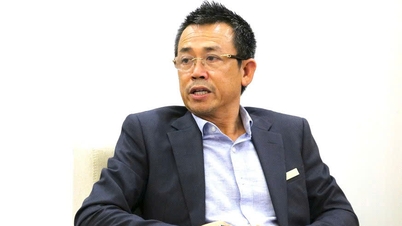
Ho Nguyen Kha
Source
![[Photo] Prime Minister Pham Minh Chinh presides over a meeting on private sector economic development.](/_next/image?url=https%3A%2F%2Fvphoto.vietnam.vn%2Fthumb%2F1200x675%2Fvietnam%2Fresource%2FIMAGE%2F2025%2F12%2F20%2F1766237501876_thiet-ke-chua-co-ten-40-png.webp&w=3840&q=75)
























































Comment (0)