

Leaks about foldable iPhones have been circulating for almost a decade, but it seems the device is finally becoming a reality.
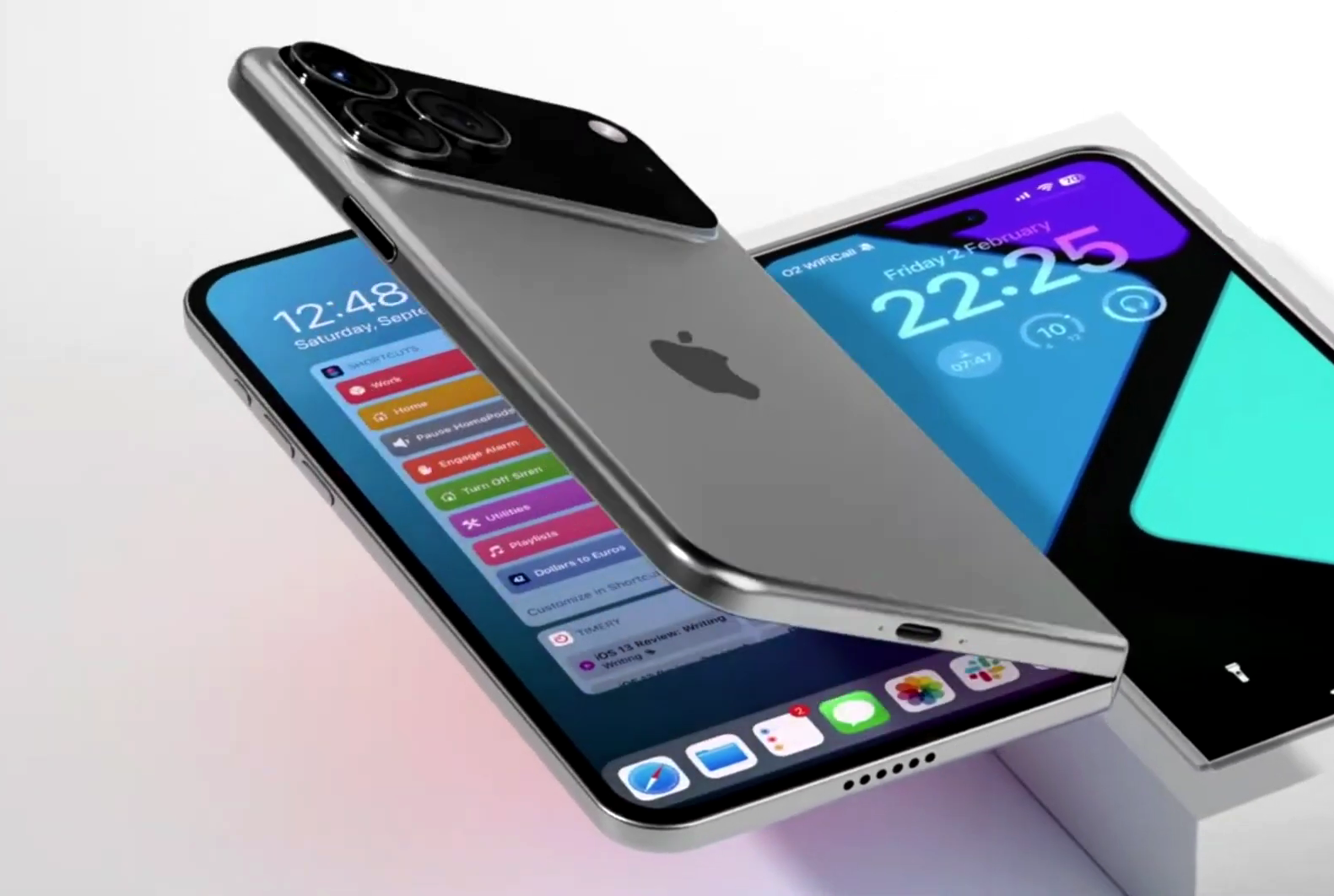
Although there are still many months before Apple launches its first foldable iPhone (tentatively called the iPhone Fold), expected in 2026, the leaks so far are quite promising.
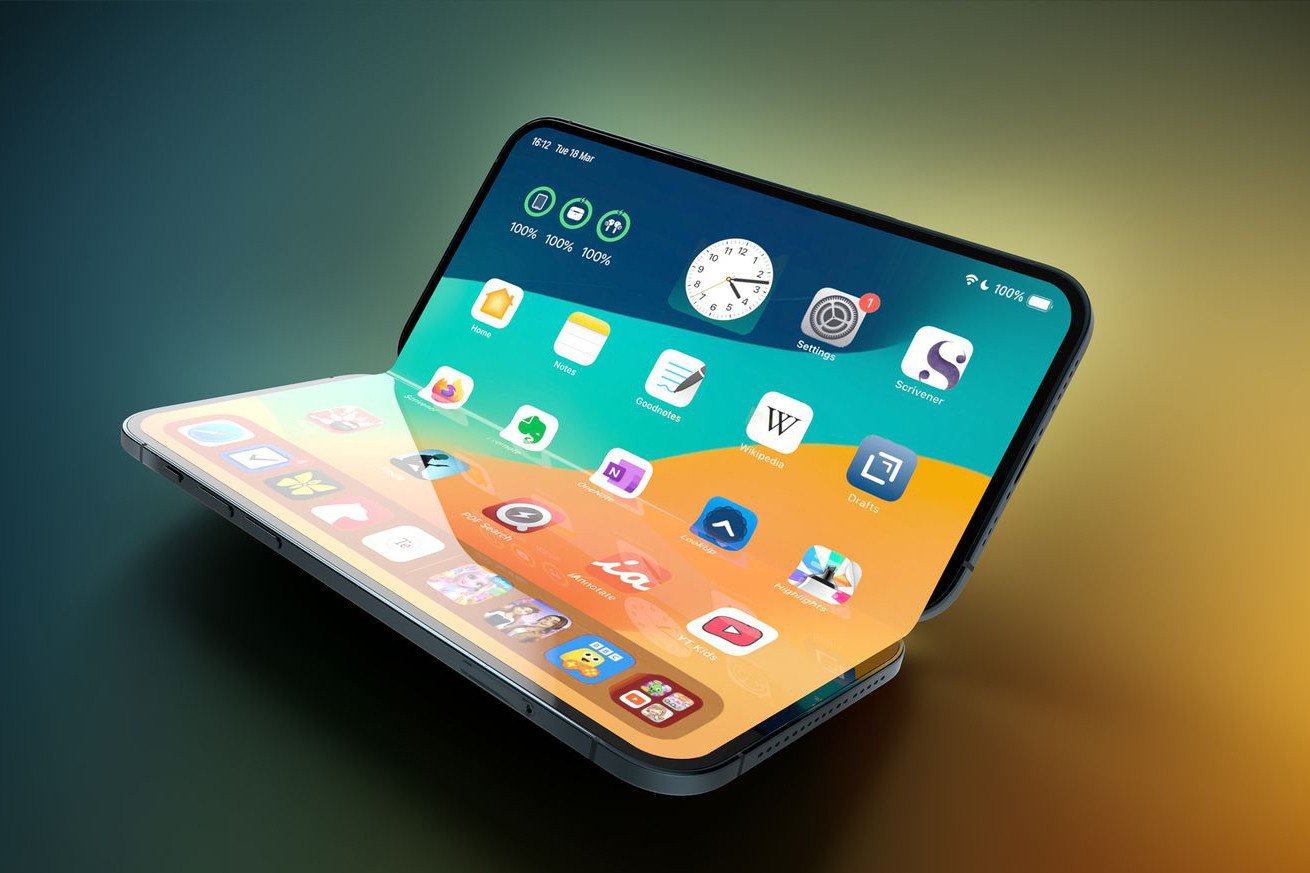
Apple eliminates the screen crease.
Apple spent years designing a foldable iPhone that they were truly happy with, as they wanted to completely eliminate the crease on the screen.
Most foldable smartphones currently have a crease down the middle of the screen, which can be aesthetically unpleasing and affect the user experience.
Apple aims to deliver a perfectly flat screen, freeing users from distractions caused by creases during use.
Do not fold in a clamshell style.
Apple has experimented with various designs, including a clamshell style like the Galaxy Z Flip. However, according to the latest rumors, Apple seems to have opted for a horizontal folding design similar to a book, like the Galaxy Z Fold. This requires iOS to be redesigned to work smoothly in both portrait and landscape modes.
Apple is currently developing iOS 19, iPadOS 19, and macOS 16 with a more consistent interface across devices. This improvement will help the operating system be better compatible with foldable screen designs.
The size is similar to the iPad mini.
When folded, Apple's iPhone Fold will have a 5.5-inch outer screen, smaller than current iPhones (at least 6.1 inches). But when unfolded, the inner screen will be 7.8 inches, nearly the same size as the iPad mini (7.9 inches).
Imagine an iPad mini rotated horizontally, or two 6.1-inch iPhones side-by-side; this will give users a general idea of the size of a foldable iPhone.
Thick when folded, ultra-thin when unfolded.
The foldable iPhone will utilize technology from the iPhone 17 Air, allowing the device to achieve a thickness of 4.5-4.8mm when unfolded – even thinner than the 12.9-inch iPad Pro (5.1mm), Apple's thinnest device currently available.
However, when folded, the device's thickness will be around 9-9.5mm, which is quite thick compared to current iPhones.
Touch ID instead of Face ID
Interestingly, Apple might integrate Touch ID into the power button instead of using Face ID on the foldable iPhone.
According to analyst Ming-Chi Kuo, if Apple cannot thin down the TrueDepth camera module (used for Face ID) enough to achieve the desired screen thickness, Touch ID would be a logical alternative.
The selling price will be very expensive.
Foldable smartphones always come with a high price tag, even from Android manufacturers. Samsung's Galaxy Z Fold6 is priced between 44 and 55 million VND.
For Apple, the price is predicted to be in the range of $2,000 - $2,500 (approximately 51 - 64 million VND), significantly more expensive than current high-end iPhone models.
Even as leaks become more concrete, Apple's continuous testing could lead to design changes or even project cancellation. If Apple does indeed launch a foldable iPhone, users could see it appear by the end of 2026. This was recently confirmed by Bloomberg 's Mark Gurman, who also suggested that the starting price of the iPhone Fold would be $2,000.
Check out this foldable iPhone concept with Touch ID design. (Source: ConceptsiPhone)
(According to Macrumors and TechRadar)
Source: https://vietnamnet.vn/iphone-gap-cua-apple-co-gi-dang-chu-y-2385765.html



![[Photo] Hanoi is ready for the "National Festival"](https://vphoto.vietnam.vn/thumb/1200x675/vietnam/resource/IMAGE/2026/03/12/1773305846167_ndo_br_z7612336508628-14627dc7d18cc27532ffea5d4089713b-4105-jpg.webp)





























































































Comment (0)