

According to Lamanza Mordida , with its improved battery life on older iPhone models, iOS 17.1 is truly appreciated by those who haven't yet upgraded to the iPhone 15 or iPhone 15 Pro. Previously, the first version of iOS 17 caused concern when some users noticed reduced battery life on older iPhone models and overheating issues on the higher-end iPhone Pro models.
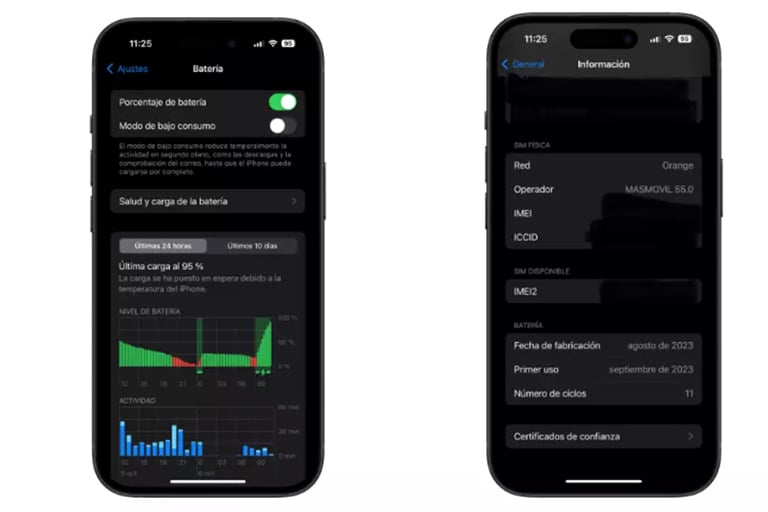
The improved battery life in iOS 17.1 also works for older iPhone models.
Although iOS 17 offers some exciting new features, the declining iPhone battery life has made many people hesitant to upgrade. This problem persists even after Apple released three bug fixes for the mobile operating system.
To assess how well older iPhone models improve battery life after updating to iOS 17.1, the YouTube channel iAppleBytes tested the update on several different iPhone models. The results showed that for some models, such as the iPhone 13, iPhone 12, and iPhone SE 2020, the update was very helpful in increasing battery life. Among these, the iPhone 13 saw the biggest improvement with an impressive 15% increase.
However, not everything is good, as testing also showed that iOS 17.1 reduced battery life on the iPhone 11 and iPhone XR, bringing them below the levels seen with iOS 17.
Despite both improvements and setbacks, the challenge of maintaining optimal battery life across devices remains a significant issue for both Apple and users. As devices become more powerful and offer new features, the demand for power increases, making battery life even more crucial.
As Apple continues to develop its operating system, we're likely to see more updates focused on improving battery life. Apple has the advantage of controlling both the hardware and software on its devices. One area where Apple could improve is optimizing power management, including identifying and reducing unnecessary battery consumption from background apps and running features. Additionally, Apple could leverage artificial intelligence (AI) to more efficiently adjust power consumption based on user usage and needs.
Source link















































































































Comment (0)