

As the only village in Sop Cop commune, Sop Cop district, with 100% Mong ethnic people living there, comprising 71 households and 320 inhabitants, the people of Huoi Ai village have actively preserved the traditional cultural values of their ethnic group over the years.
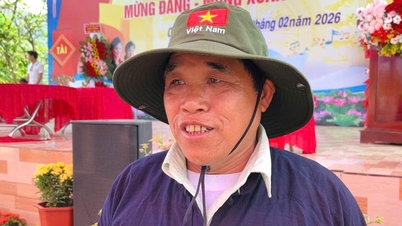
Mr. Vu Ba Khu, Party Secretary and Head of Huoi Ai village, said: In December 2022, Pa Hoc and Co Hinh villages merged and took the name Huoi Ai. To preserve and promote the traditional cultural values of the ethnic group, the village elders, heads, and influential people teach the younger generation to preserve the beauty of ethnic traditions through clothing, folk songs, folk dances, cuisine , and language... 100% of households in the village build houses according to the Mong ethnic architecture, with traditional wood-burning stoves.
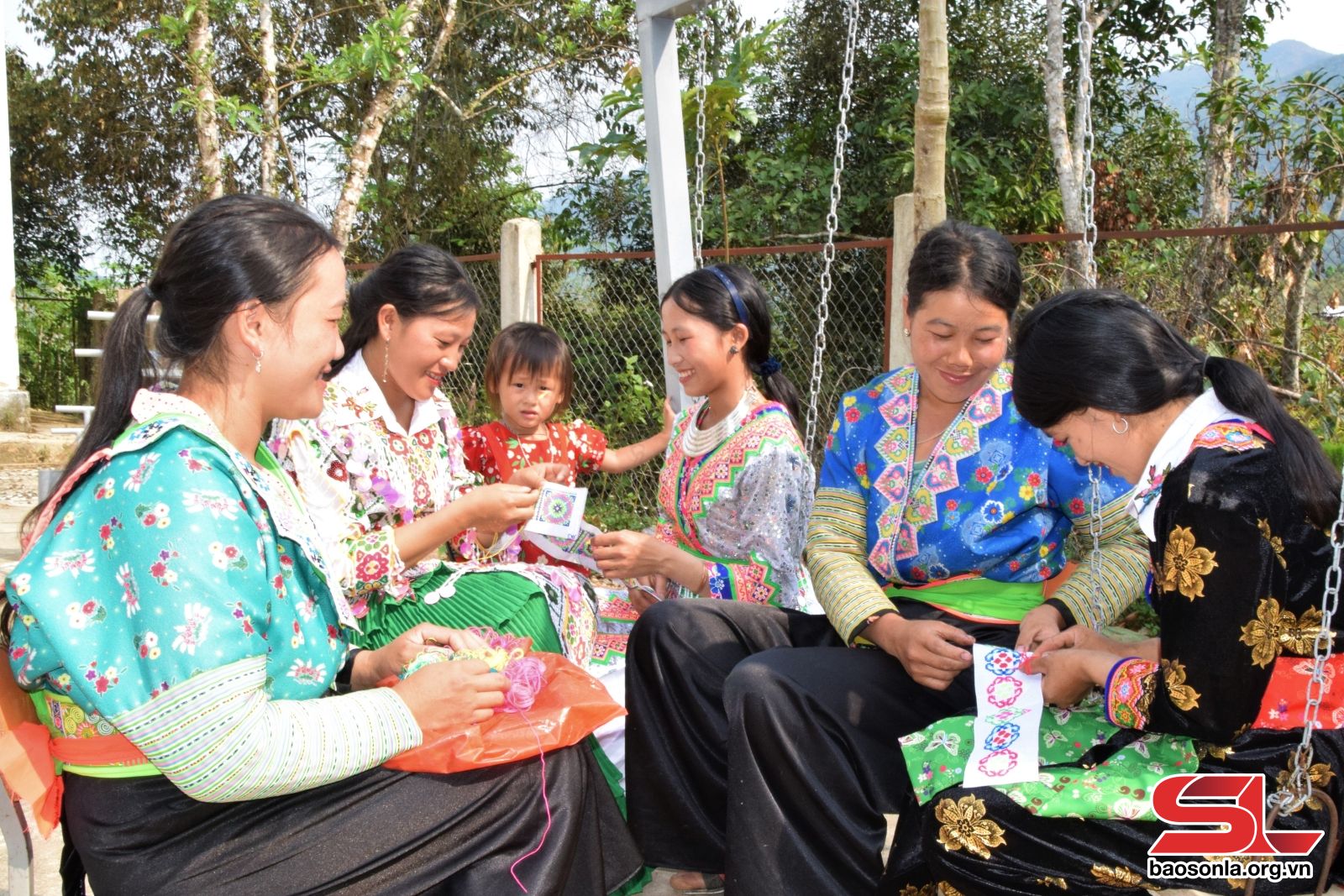
Huoi Ai village preserves many unique traditional cultural features, including the khene dance, the tha kenh dance, and the senh tien dance, which harmoniously combine dancing, juggling, and unique sounds from sticks, mimicking the movements and gestures of the people in labor and production. Currently, the khene dance, tha kenh dance, and senh tien dance are always performed by the villagers in cultural exchange programs with other villages and communes.
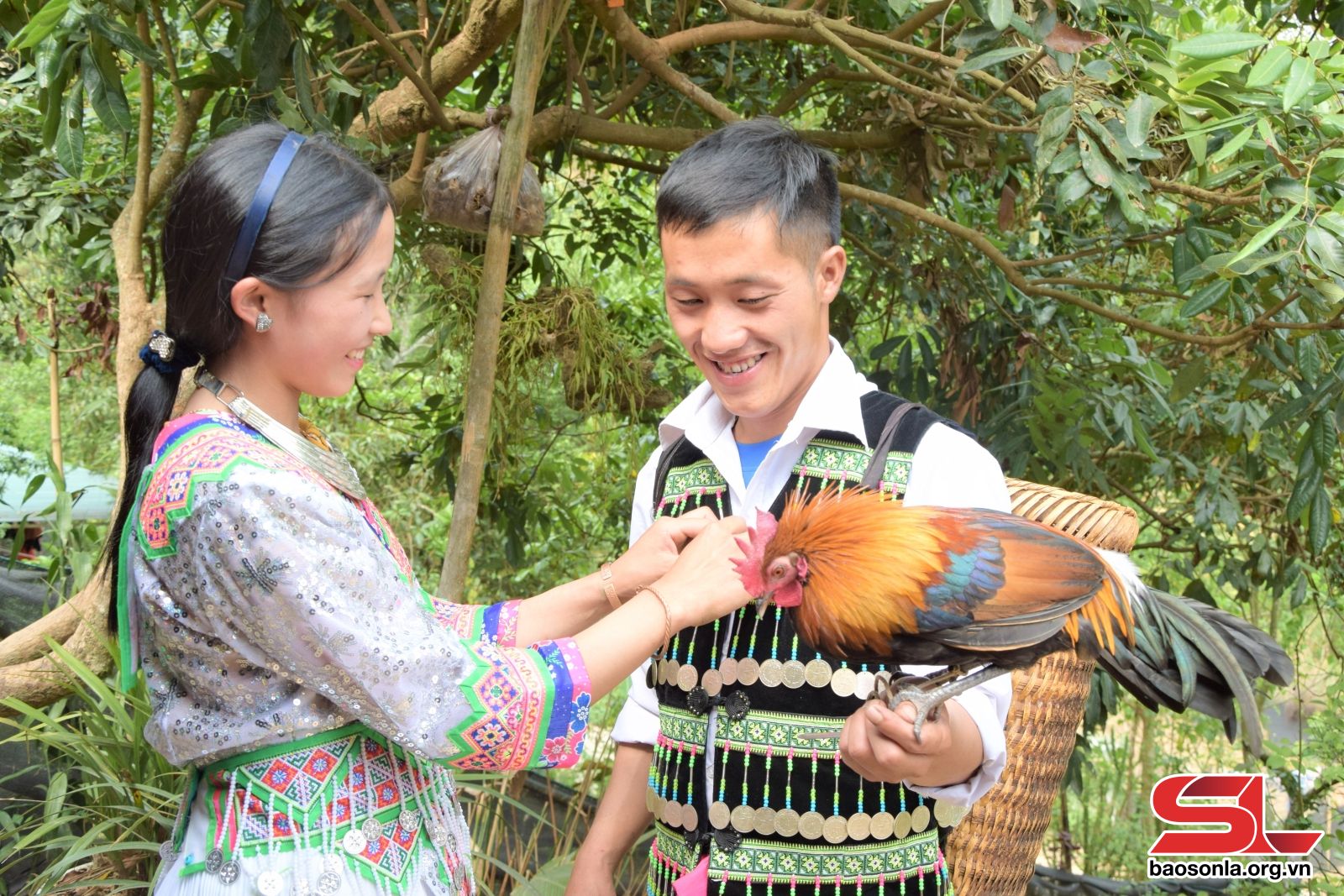
The villagers of Huoi Ai still preserve many traditional musical instruments such as drums, gongs, flutes, and leaf-mouthed mouth organs. Particularly noteworthy is the "sênh tiền" stick, a musical instrument crafted from bamboo stalks, with a diameter of 5 to 7 cm and a length of about 1 meter. These stalks are dried thoroughly in the kitchen rafters and divided into four parts: three parts are drilled with holes for threading coins, and the remaining part is used by dancers during performances. Colorful threads are tied to both ends of the stick to create a graceful and eye-catching effect. Among the Hmong musical instruments, the "sênh tiền" stick is used in both funeral ceremonies and festive celebrations.
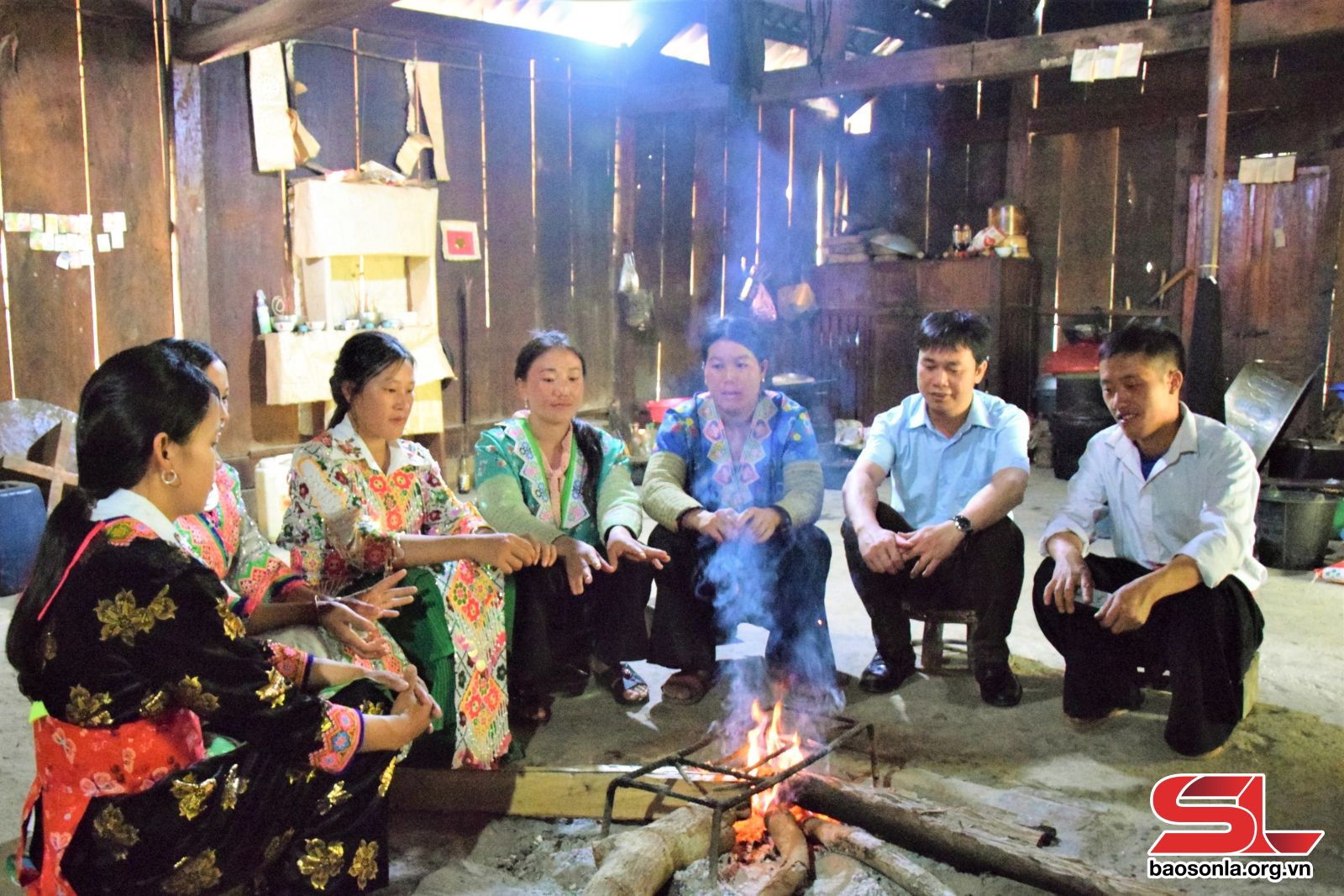
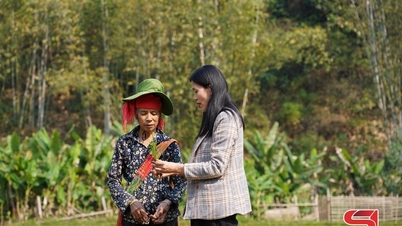
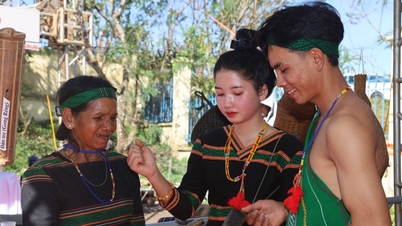
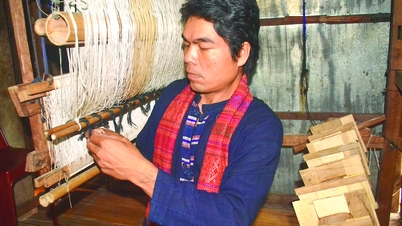
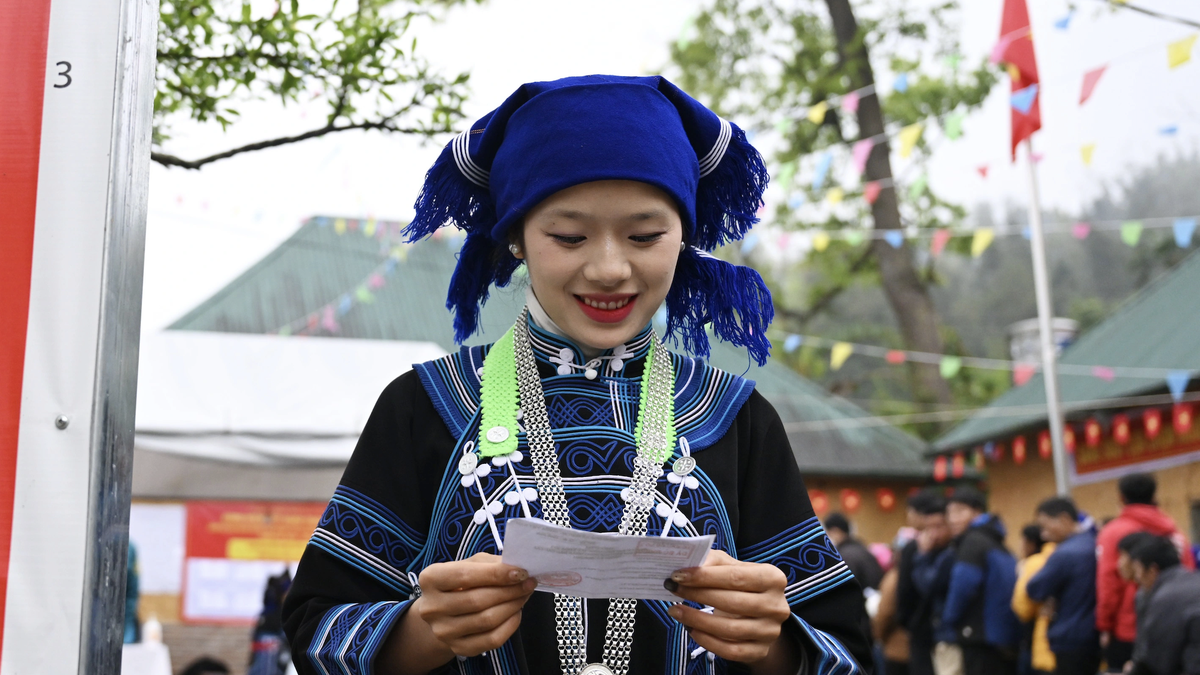
As part of the Mong Do ethnic group's traditional clothing, the attire of the people in Huoi Ai village features predominantly red and blue colors, with decorative patterns embroidered on white or colored linen fabric. Mua Thi Lia, one of the women who has specialized in embroidering and sewing Mong ethnic clothing in the village for many years, shared: "Men's shirts have long sleeves, with the body sewn short, exposing 8 to 10 cm of the abdomen; the trousers are wide-legged with flared legs, a waistband, and a belt. Women's clothing includes skirts, blouses, aprons, leggings, and belts with colorful patterns and attached coins... Every family member has one or two beautiful outfits to wear on important occasions; on ordinary days, when working in production, Mong men and women use industrial fabrics with printed patterns similar to hand embroidery, but the clothing is lighter in weight."
In terms of cuisine, the Hmong people of Huoi Ai village have many traditional dishes, such as various types of smoked meats, chili bamboo shoots, sticky rice... Especially special are the sticky rice cakes made on holidays, festivals, and family celebrations... The people of Huoi Ai village value the traditional Tet holiday, as it is an occasion to thank their ancestors and the heavens for blessing them with good health, abundant harvests, and all good fortune in the year, and to pray for a successful new harvest. During this time, people visit each other's homes to celebrate, pound sticky rice cakes together, dance, sing, play pao (a traditional game), and enjoy unique dishes.
Every year, the village receives funding to support its performing arts group. Many women participate in vocational training classes in traditional sewing and embroidery, as well as Hmong language classes organized by the district and province. Through various ways of preserving traditional culture, the people of Huoi Ai village have promoted the value of their ethnic cultural identity, contributing to improving their spiritual lives and effectively implementing the "All people unite to build a cultured life" movement at the grassroots level.
Truong Son
Source link







![[Photo] The General Secretary and the Prime Minister attend the groundbreaking ceremony for multiple-level boarding schools in border areas.](https://vphoto.vietnam.vn/thumb/1200x675/vietnam/resource/IMAGE/2026/03/19/1773888999705_vna-potal-tong-bi-thu-va-thu-tuong-du-le-khoi-cong-dong-tho-dong-loat-cac-truong-noi-tru-lien-cap-bien-gioi-8649904-3885-jpg.webp)
![[Photo] Tran Cam Tu, Standing Member of the Secretariat of the Central Committee, presides over the first meeting of the Central Steering Committee on the Development of Vietnamese Culture.](https://vphoto.vietnam.vn/thumb/1200x675/vietnam/resource/IMAGE/2026/03/19/1773895004549_ndo-br-bnd-1195-2-jpg.webp)

































Comment (0)