

According to statistics from Bkav, in 2024, 155,640 computers in Vietnam were attacked by ransomware – a type of malware that encrypts data for extortion. The damage caused by this virus to organizations in Vietnam amounted to tens of trillions of VND.
60% of Vietnamese businesses have not yet equipped themselves with adequate security solutions.
In its assessment of cybersecurity for organizations and businesses in Vietnam, shared on March 25th, Bkav stated that 2024 and the first few months of 2025 witnessed a surge in viruses, while ransomware malware truly became a nightmare.
According to statistics from Bkav, in 2024, 155,640 computers in Vietnam were attacked by ransomware. The damage to agencies, organizations, and businesses in Vietnam due to these virus attacks amounted to tens of trillions of VND, including: ransom payments to hackers, direct revenue losses due to system downtime, losses from lost customers, and damaged brand reputation.
For example, on the very first day of a ransomware attack, one business lost over 100 billion VND. Another business estimated its losses after the ransomware attack at 800 billion VND.
However, according to experts, what is visible or quantifiable is only the tip of the iceberg. In recent years, requests for assistance due to ransomware attacks have been sent to authorities and businesses at a high frequency.
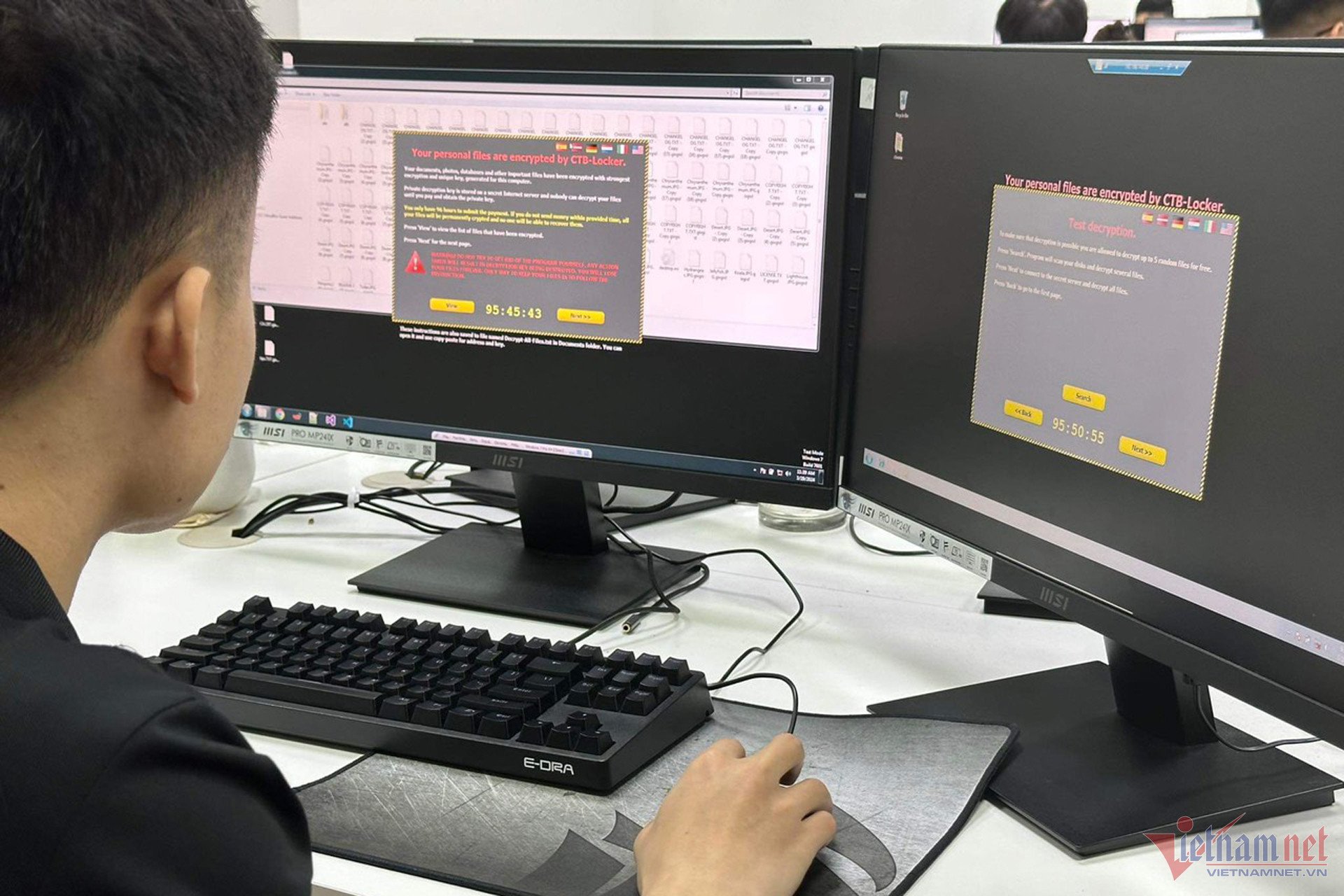
Bkav's research also indicates that viruses are becoming increasingly dangerous and sophisticated, with clear and well-planned attack strategies. Data-encrypting viruses target businesses, aiming for extortion with huge ransom demands. Targeted attack viruses – APTs – silently spread and lie dormant within agencies and organizations, aiming to steal intelligence information.
“Every day, millions of new virus samples emerge, and the damage caused by malware is devastating. But in Vietnam, a sad reality is that up to 60% of businesses are not adequately equipped with security solutions,” shared Nguyen Dinh Thuy, Head of Malware Research at Bkav.
According to Mr. Nguyen Dinh Thuy, in all the agencies, businesses, and organizations where Bkav has participated in responding to virus attacks, they often do not install antivirus software, or use foreign software without close support from experts.
Furthermore, many businesses rely solely on the operating system's built-in antivirus features, which are only basic and insufficient to protect users from today's sophisticated viruses.
"The built-in antivirus features on the operating system cannot completely solve virus problems because they only provide the most basic functions. Therefore, users will not be fully protected from APT malware or ransomware, which are designed to infiltrate systems to hide, steal data, or extort money," a Bkav expert analyzed.
APT attacks and ransomware continue to be major threats.
According to Bkav experts, APT spyware and ransomware viruses are lurking in many systems in Vietnam, silently spreading and potentially causing harm and attacks at opportune times in the near future. Agencies, organizations, and businesses need to raise awareness of cybersecurity and immediately implement professional computer virus prevention measures.
Information security experts generally agree that targeted APT attacks, ransomware attacks, and spyware attacks remain the primary forms of attack that businesses and organizations worldwide, including in Vietnam, need to pay special attention to and take preventative measures against.
Speaking with a VietNamNet reporter, Mr. Hoang Duc Hoan, an information security monitoring expert at VSEC Company, assessed: Ransomware will remain one of the biggest threats in 2025, but ransomware attacks will become increasingly sophisticated and targeted.
Attack groups will not only encrypt data and demand ransom, but also steal sensitive information and publicly threaten victims if they do not pay.
"Furthermore, ransomware can be used by hackers to attack critical infrastructure such as hospitals, energy systems, and transportation infrastructure, causing serious consequences for society and the economy ," Mr. Hoang Duc Hoan added.

Previously, a cybersecurity survey published by the National Cybersecurity Association (NCA) at the end of 2024 showed a significant increase in the number and scale of attacks on agencies and businesses, with over 659,000 incidents.
In 2024, 46.15% of the organizations surveyed by the NCA reported having experienced at least one cyberattack during the year, and 6.77% reported being attacked frequently.
Specifically, the NCA survey also showed that APT attacks and ransomware attacks were the two most common types of attacks in 2024, with 26.14% of attacks that year being APT attacks using spyware; 14.59% of organizations and businesses reported being attacked by ransomware.
In the context of increasing cyberattacks on businesses and organizations, both in number and sophistication, experts recommend that organizations regularly review and promptly address existing vulnerabilities in their systems; and monitor cybersecurity 24/7 to detect threats early.
At the same time, it is necessary to develop and maintain a clear incident response plan, ensuring that there are regular data backup and recovery procedures in place to minimize damage in the event of an incident.

Source: https://vietnamnet.vn/hon-155-600-may-tinh-tai-viet-nam-bi-tan-cong-boi-ma-doc-ransomware-2384142.html




![[Image] Pleasant weather helps students enter the 10th grade entrance exam with confidence.](https://vphoto.vietnam.vn/thumb/1200x675/vietnam/resource/IMAGE/2026/05/29/1780034401612_ngay-1-thi-lop-10-minh-duy-8-5009-jpg.webp)
![[Photo] Ba Lang An Lighthouse - the "eye of the sea" amidst the "rock museum" of Quang Ngai province.](https://vphoto.vietnam.vn/thumb/1200x675/vietnam/resource/IMAGE/2026/05/29/1780038698840_anh-man-hinh-2026-05-29-luc-14-10-42.png)



























































































Comment (0)