

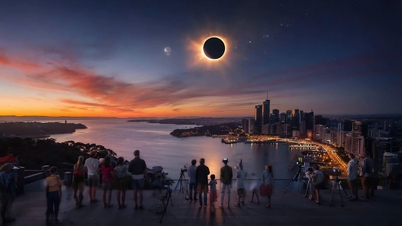
According to the US National Aeronautics and Space Administration (NASA), astronomy enthusiasts will be able to witness a total solar eclipse today (April 8).
A solar eclipse occurs when the Sun, Moon, and Earth are aligned in a straight line. At certain points on Earth, the Moon will partially or completely obscure the Sun, causing a solar eclipse. When the Sun is completely obscured, a total solar eclipse occurs.
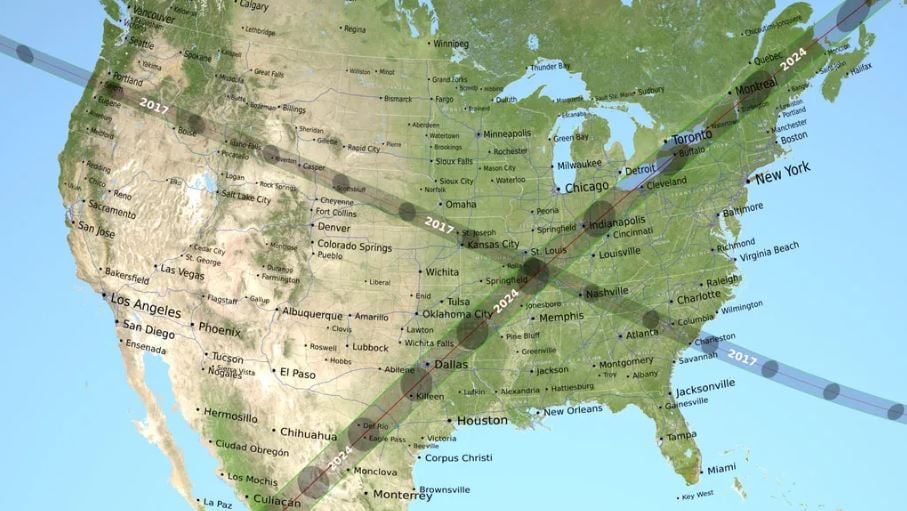
NASA says this total solar eclipse will pass over North America, including Mexico, parts of the US, and the Atlantic coast of Canada. The last total solar eclipse to pass over North America was seven years ago, in 2017.
The total solar eclipse will begin in Mazatlan, Mexico, at 10:50 local time (22:50 on April 8th in Vietnam). It will then pass through several Mexican states before entering Texas (USA). The eclipse will then continue its journey across northeastern America, ending at the easternmost point of Canada at 14:48 local time (early morning of April 9th in Vietnam).
The total solar eclipse on April 8th had a wide coverage, with a path stretching from 173-196 km. The 2024 total solar eclipse passed over many cities and densely populated areas. Despite this, astronomy enthusiasts in Vietnam were unable to observe even a partial eclipse.
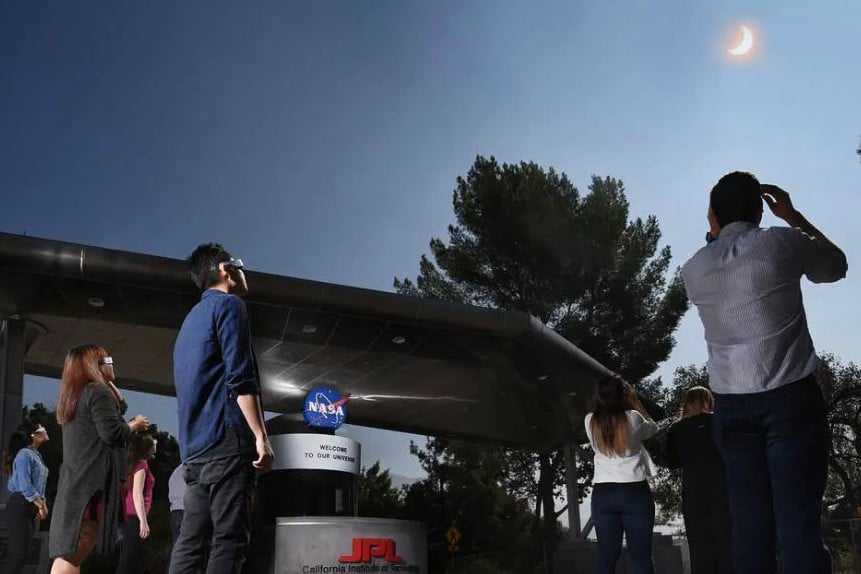
It is estimated that approximately 31.6 million people live within the area covered by the total solar eclipse's trajectory. If we extend this to a radius of 200 miles (321 km) from the eclipse's path, the number of people who could observe the total solar eclipse could reach 150 million. Areas where a partial eclipse could be observed included Europe and all of North America.
During a solar eclipse, looking directly at the sun is unsafe. Solar radiation can damage the eyes. Observing a solar eclipse requires the use of special filters. For safety, observers can also view the eclipse indirectly.
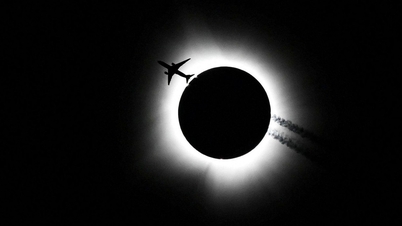
During the April 8th solar eclipse, NASA funded several studies aimed at assessing the Sun's influence on Earth. Among these, two spacecraft were designed to study the Sun's corona.

Source




![[Photo] National Assembly Chairman Tran Thanh Man successfully concludes his participation in IPU-152](https://vphoto.vietnam.vn/thumb/1200x675/vietnam/resource/IMAGE/2026/04/18/1776502638199_vna-potal-chu-tich-quoc-hoi-ket-thuc-tot-dep-chuong-trinh-tham-du-ipu-152-8709975-jpg.webp)































































































Comment (0)