

Considering gasoline and air conditioners to be essential goods, some delegates suggested that these items should not be subject to excise tax.
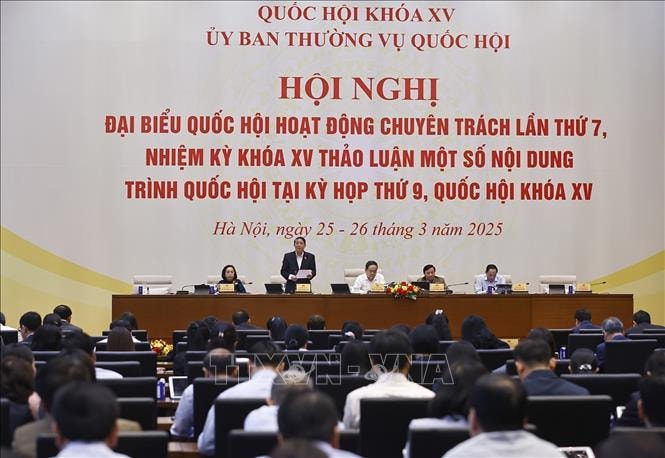
During the discussion, delegate Hoang Van Cuong ( Hanoi ) argued that the goal of imposing a Special Consumption Tax is to change consumer behavior, restrict consumption of goods harmful to health and negatively impacting the community, and shift that behavior towards more beneficial alternative products. He also stated that while the Special Consumption Tax aims to collect budget revenue, "collecting budget revenue is not the main goal; the main goal is changing behavior." Therefore, the delegate argued that the draft Law on Special Consumption Tax (amended) still needs clarification and consideration of whether it accurately reflects the intended goal and behavior, "or whether it remains solely focused on budget revenue."
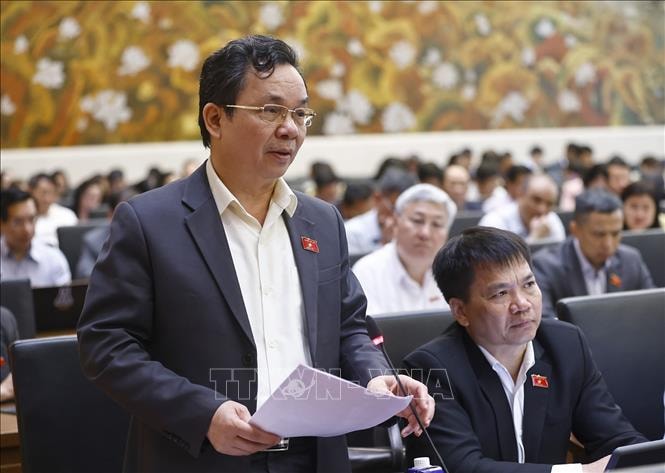
Pointing out that the draft law continues to include air conditioners as an item under consideration and research for "limiting the scope," meaning that air conditioners will still be taxed, Representative Hoang Van Cuong stated: Currently, air conditioners are a truly essential consumer product, irreplaceable, and no matter how much the tax is increased, people will still use them. Restricting certain consumers will not change their behavior.
"I believe that air conditioners should be removed from the list of items subject to Special Consumption Tax," Representative Hoang Van Cuong emphasized.
Agreeing with the viewpoint on the taxable subjects, delegate Nguyen Truong Giang ( Dak Nong ) also argued that the tax must be applied according to the nature of the Special Consumption Tax. Gasoline is also an essential commodity and its use cannot be restricted. More importantly, gasoline is subject to both the Special Consumption Tax and the Environmental Protection Tax. If we determine that using gasoline affects the environment, we can increase the environmental protection tax, but we cannot impose the Special Consumption Tax.
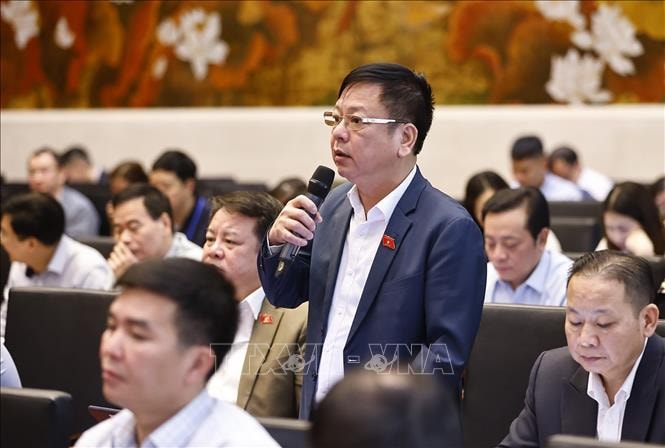
Representative Nguyen Truong Giang also agreed that air conditioners should not be subject to excise tax. He argued that air conditioners are essential goods and are currently using energy-saving technologies. "For gasoline and air conditioners of 90,000 BTU or less, excise tax should not be imposed," the representative stated.
At the conference, some delegates stated that, after consulting with businesses producing and trading alcoholic beverages regarding the draft Law on Special Consumption Tax (amended), businesses generally agreed with the increase in special consumption tax on alcoholic beverages. However, the issue was how much to increase it, the roadmap, and how it would be implemented. This requires careful and scientific assessment, especially given the negative impact of the Covid-19 pandemic and other unforeseen factors that have led to decreased production and revenue for beverage businesses. The current situation for beverage businesses is very difficult, and they need assistance to recover, survive, and develop. Therefore, this increase in special consumption tax needs careful consideration.
Previously, in a report on some basic contents in the explanation, acceptance, and revision of the draft, the Standing Committee of the Economic and Financial Committee stated that there were suggestions to add gasoline and air conditioners as exempt items because these are essential goods. Meanwhile, in Vietnam, gasoline has been subject to special consumption tax since 1995. To encourage the use of bio-gasoline, the Law on Special Consumption Tax has stipulated preferential tax rates of 8% for E5 gasoline and 7% for E10 gasoline (lower than the 10% tax rate applied to mineral gasoline).
This regulation is consistent with the objective of excise tax, which is to regulate consumption of goods that should be used sparingly, and is in line with international practice.
Furthermore, in the context of environmental pollution and climate change being global issues, the Vietnamese Government's commitment at COP26 to achieve net-zero emissions by 2050, along with other solutions, makes the current collection of excise tax on gasoline (including E5 and E10 gasoline) appropriate, contributing to emission reduction and promoting economical consumption.
Therefore, the agency receiving the feedback and providing explanations requested that the draft law be retained as is.
Regarding air conditioners, the Standing Committee of the Economic and Financial Committee stated that the collection of special consumption tax on air conditioners with a capacity of 90,000 BTU or less is being applied consistently to raise awareness about limiting consumption and to promote energy-saving and environmentally friendly consumption.
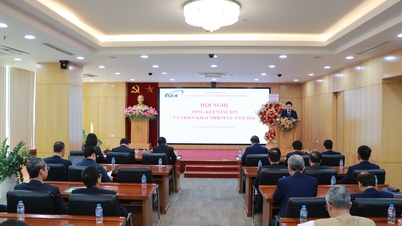
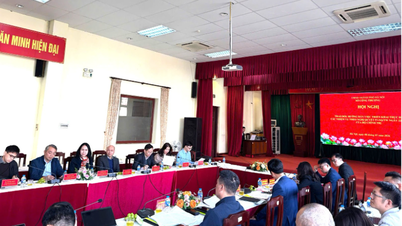
Also at the conference, clarifying this point, Deputy Minister of Finance Cao Anh Tuan stated that the purpose of applying excise tax is to regulate consumer behavior. Air conditioners were previously considered luxury goods, so the excise tax was intended to regulate and adjust consumer behavior. However, now that they are common household items, the drafting committee will review the matter with relevant agencies to find a suitable regulation plan.
Regarding gasoline, Deputy Minister Cao Anh Tuan stated that this tax has been in effect for a long time, and many countries also levy special consumption tax (levied as a percentage) and environmental protection tax (levied as an absolute tax). Furthermore, a lower tax rate is being proposed for biofuels to encourage their use.
Source: https://hanoimoi.vn/hoi-nghi-dai-bieu-quoc-hoi-chuyen-trach-de-xuat-khong-ap-thue-tieu-thu-dac-biet-voi-xang-may-dieu-hoa-696939.html









































































Comment (0)