

Gathering around the sticky rice cake (Banh Chung).
The period leading up to Tet (Lunar New Year) is always the favorite time for the extended family of Ms. Nguyen Thi Song Tra, Director of TH Education and Training Company Limited, Ho Chi Minh City. Everyone goes back to their hometowns, shops for Tet flowers, decorates the house, and makes banh chung and banh tet (traditional Vietnamese rice cakes). Making banh chung is the happiest time for the whole family. They play Tet songs and divide up the tasks; the children wash the leaves, rinse the rice, and prepare the mung beans, while the grandparents split the bamboo strips and wrap the cakes. While working, the whole family shares stories about Tet celebrations of the past and present, plans for cooking, and outings during Tet…
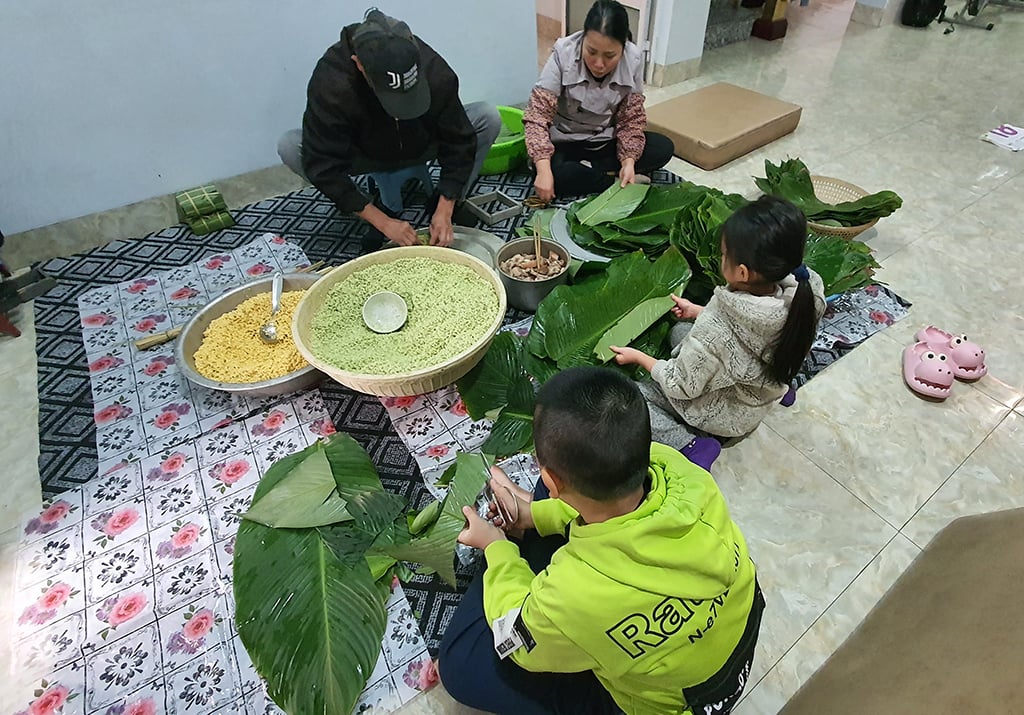
The whole family gathered to wrap banh chung (traditional Vietnamese rice cakes), sharing joyful stories about Tet.
Ms. Tra believes that children learn many valuable lessons not only at school. Within each family or anywhere else, children can learn through their experiences. Ms. Tra's family prioritizes activities that strengthen the bond between children and family, sharing experiences to help them better understand family love, how to care for grandparents, and how to behave towards parents and others, especially since Tet (Lunar New Year) is a time when children meet more people.
"When at home, grandparents and parents should allow their children many days to experience and participate in tasks alongside other family members to prepare for the traditional Tet holiday. While doing housework, grandparents and parents should talk to their children, explaining the meaning of each activity. For example, why Tet is associated with making banh chung and banh tet (traditional rice cakes); why many places have the custom of erecting a New Year's pole... Especially, the dinner on the 30th day of the lunar year always holds great significance for Vietnamese families. Around the reunion dinner after a year of separation, many family members have the opportunity to gather together, share stories of the past year's difficulties, and encourage each other to move forward in the new year with much hope...", Ms. Tra shared.
SLOW LIVING DURING TET
Dr. Nguyen Thi Huyen Thao, a history teacher at Tran Dai Nghia High School for the Gifted in Ho Chi Minh City, believes that the Tet holiday is a time when young people learn a great deal from life. It's a time for them to "test" the theoretical lessons learned in school, to feel and understand more deeply the traditional cultural values of the country, and the cultural norms of behavior and communication in society.
"From a traditional cultural perspective, children have the opportunity to experience and appreciate the festive activities that are only seen during the Lunar New Year, and are rarely seen on ordinary days. For example, the beauty of wearing the traditional ao dai dress in various colors and styles. I am very happy that wearing traditional clothing is becoming a 'trend' among young people; this is also a way for them to connect with the culture and history of the nation. Or in many traditional Tet spaces, children get to play folk games that their generation rarely or never knows about, such as hopscotch, O An Quan (a traditional board game), jump rope, blindfolded goat catching, and dragon and snake game...", said Dr. Huyen Thao.
"Cleaning the house together, cooking together, wrapping cakes together, decorating apricot and peach blossoms together – these shared activities happen naturally but hold great value for spiritual life, helping students learn many good values from life instead of dogmatic theories…," Dr. Nguyen Thi Huyen Thao confided.
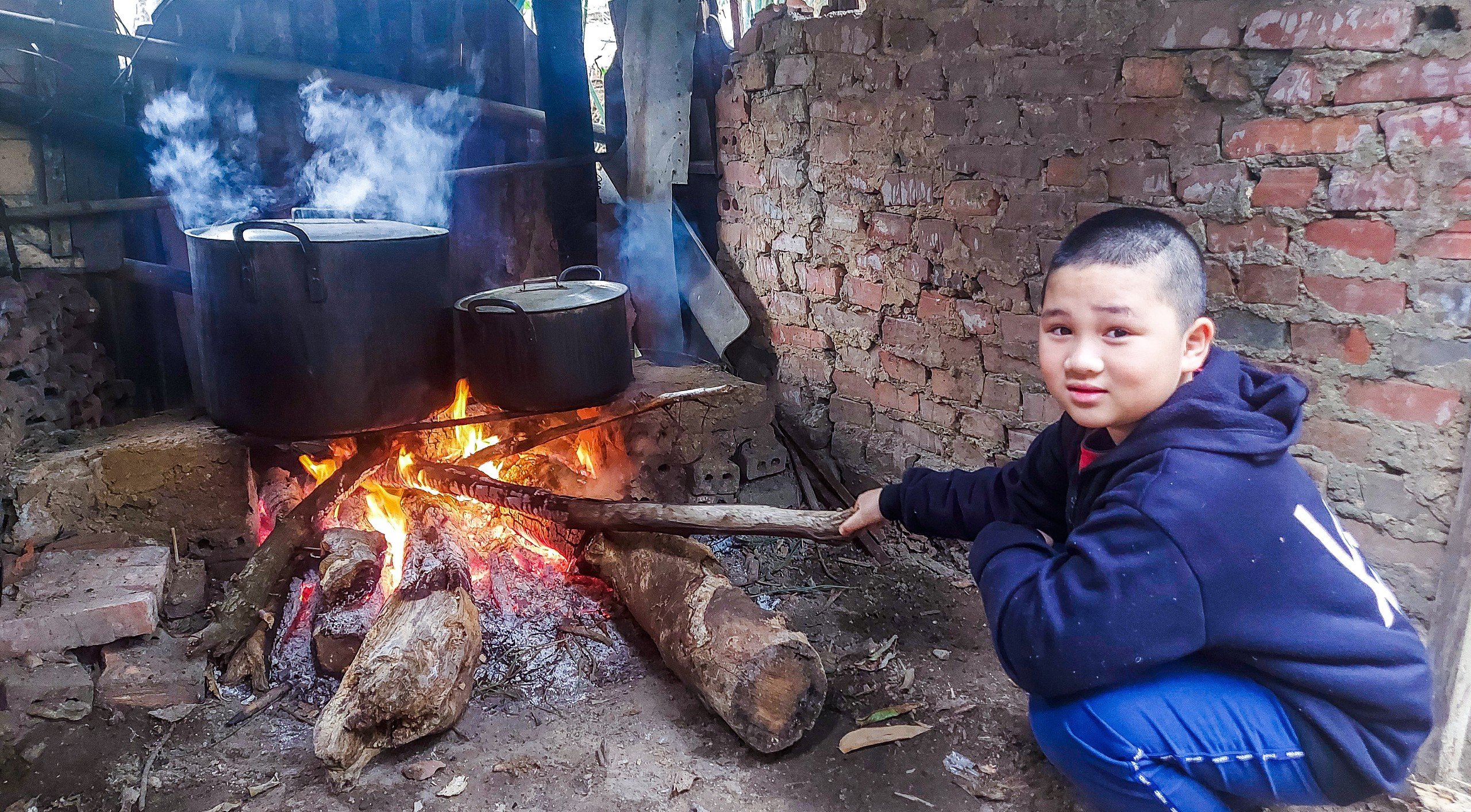
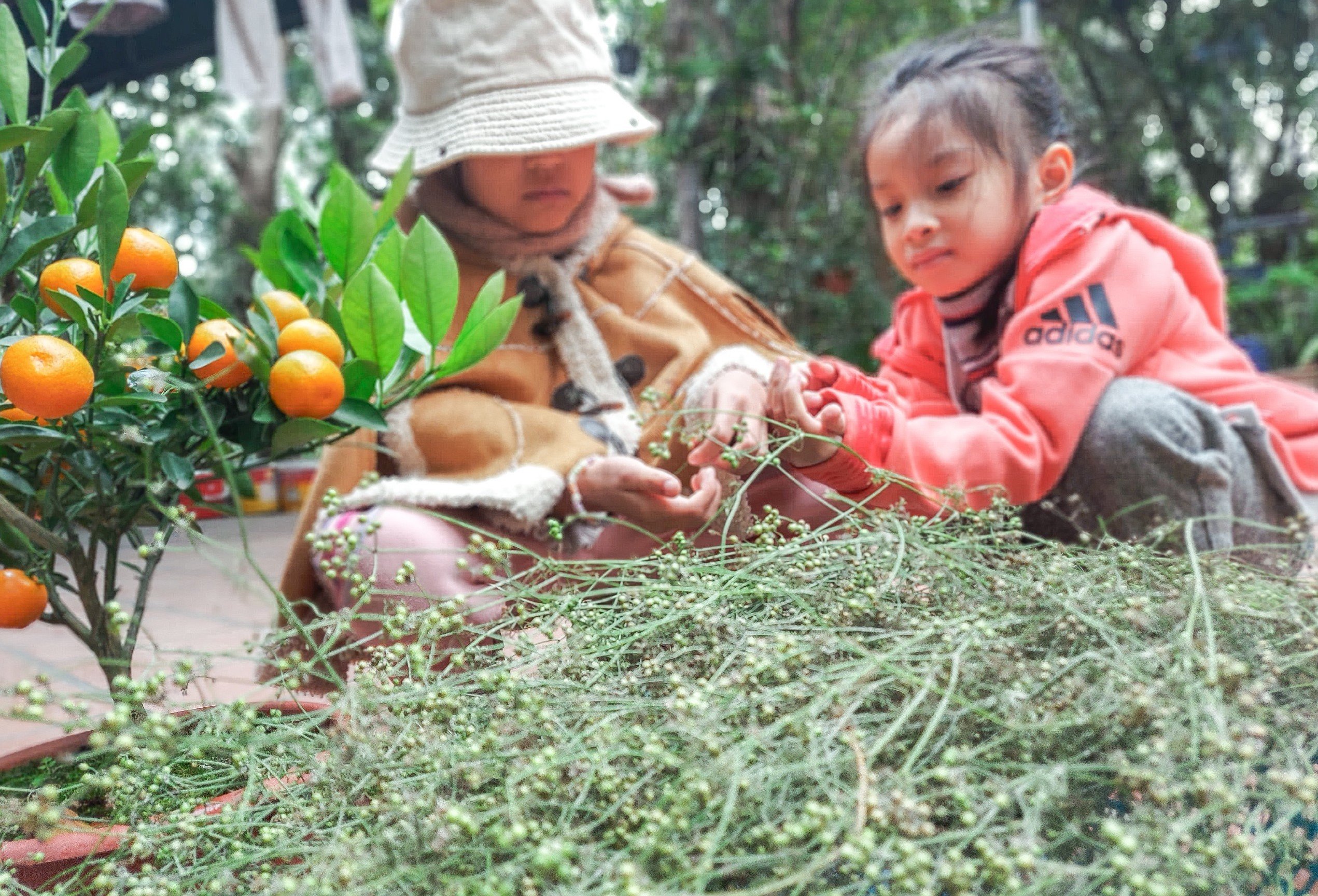
Children participate in wrapping and cooking banh chung (traditional Vietnamese rice cakes), buying coriander, etc., thereby gaining a better understanding of Tet (Vietnamese New Year).
TEACHING CHILDREN TO CELEBRATE TET IN A CIVILIZED MANNER
Tet, or Lunar New Year, is a tradition and a collection of beautiful customs that Vietnamese people have preserved for generations. According to teachers, this is also a time for adults to set a good example for their children in terms of civilized behavior and habits.
Ms. Luong Thi Hong Diep, Head of the Preschool Education Department, Ho Chi Minh City Department of Education and Training, shared that while children are on Tet holiday at home, parents should maintain a balanced daily routine for them, ensuring they don't stay up too late, eat, sleep, and rest at regular times, and avoid excessive consumption of sweets and fatty foods. Similarly, if families travel or go out, they should prioritize the children's safety.
According to Ms. Luong Thi Hong Diep, adults are usually busy during Tet (Lunar New Year), but that doesn't mean they should neglect their children and let them use phones and tablets, because it's very possible that after Tet, the children will become addicted to technology devices.
"No matter how you celebrate Tet, parents can be teachers – teaching their children from the smallest things. For example, teaching them to appreciate spiritual values, not just material ones. Teaching children to wish adults a happy new year; to receive lucky money with both hands; to say thank you when receiving gifts; not to immediately open lucky money envelopes in front of adults and then throw the wrappers away. Or teaching them not to misbehave when visiting other people's homes, to be polite… These are things, though small, that are extremely important," Ms. Diep said.
No matter where I go, I will always remember Vietnamese Tet.
From the time her two daughters, Mylan and Lyanh, were very young, Dr. Phan Bich Thien, a Vietnamese expatriate living and working in Hungary, always focused on teaching them about Vietnamese culture. She taught them the Vietnamese language, Vietnamese food, and Vietnamese customs, traditions, and rituals. Every Lunar New Year, when the family couldn't return to Hanoi to celebrate with their grandmother, this Vietnamese woman in Hungary would make sure to buy banana leaves, sticky rice, and mung beans so she could gather with her children and teach them how to wrap bánh chưng (Vietnamese rice cakes), chả nem (Vietnamese spring rolls), and xôi gấc (Vietnamese sticky rice with gac fruit)...
She confided that family has always been the best cradle for nurturing in children a love for their homeland and country, so that wherever they go, the best values about their homeland will always be quietly nurtured in them.
Source link


![[Photo] Young people in Da Nang radiate the spirit of spring in traditional ao dai dresses.](/_next/image?url=https%3A%2F%2Fvphoto.vietnam.vn%2Fthumb%2F402x226%2Fvietnam%2Fresource%2FIMAGE%2F2026%2F02%2F05%2F1770283565383_ndo_br_d7fd33c1bcc2329c6bd3-3439-jpg.webp&w=3840&q=75)



Comment (0)