

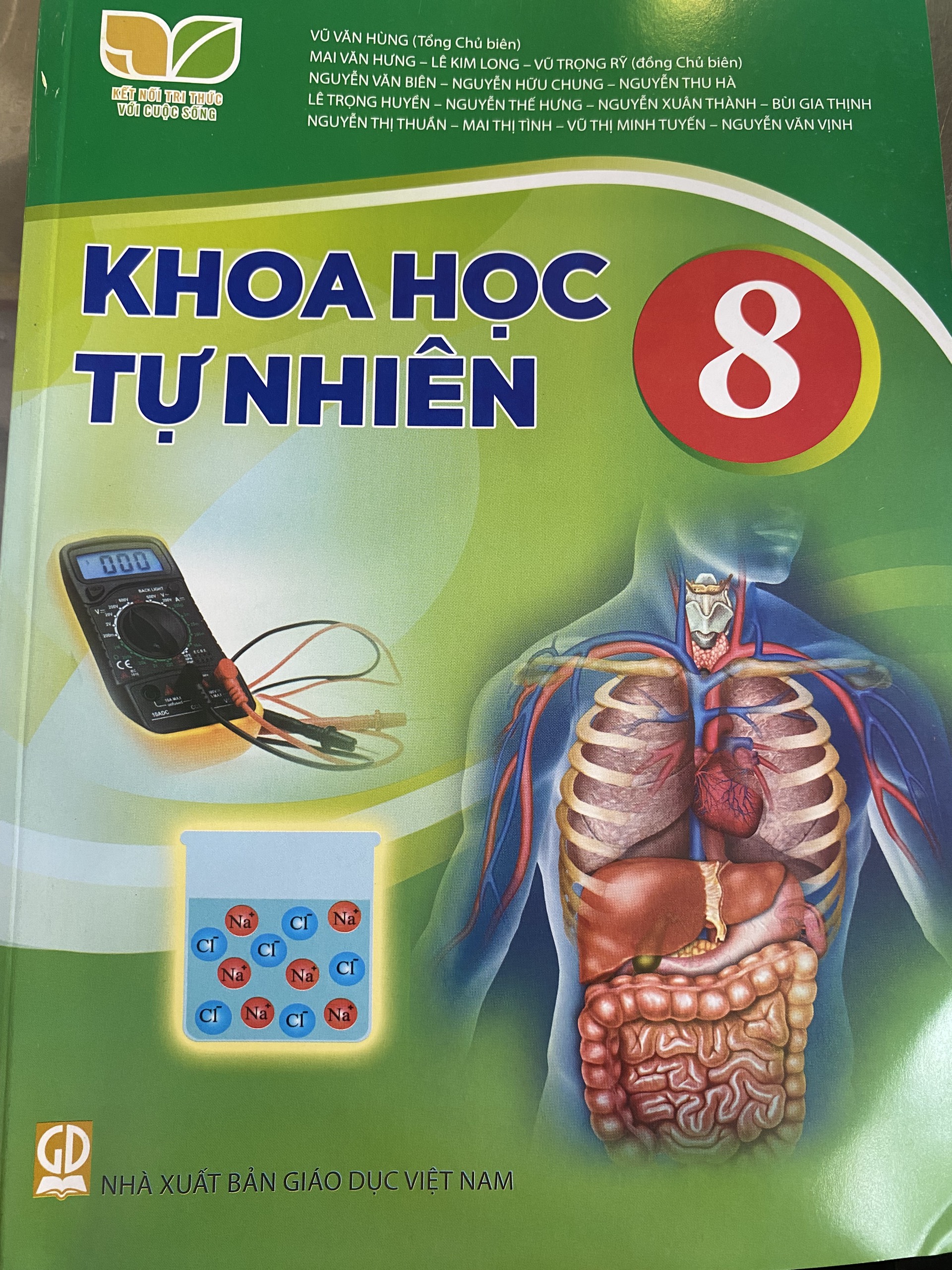
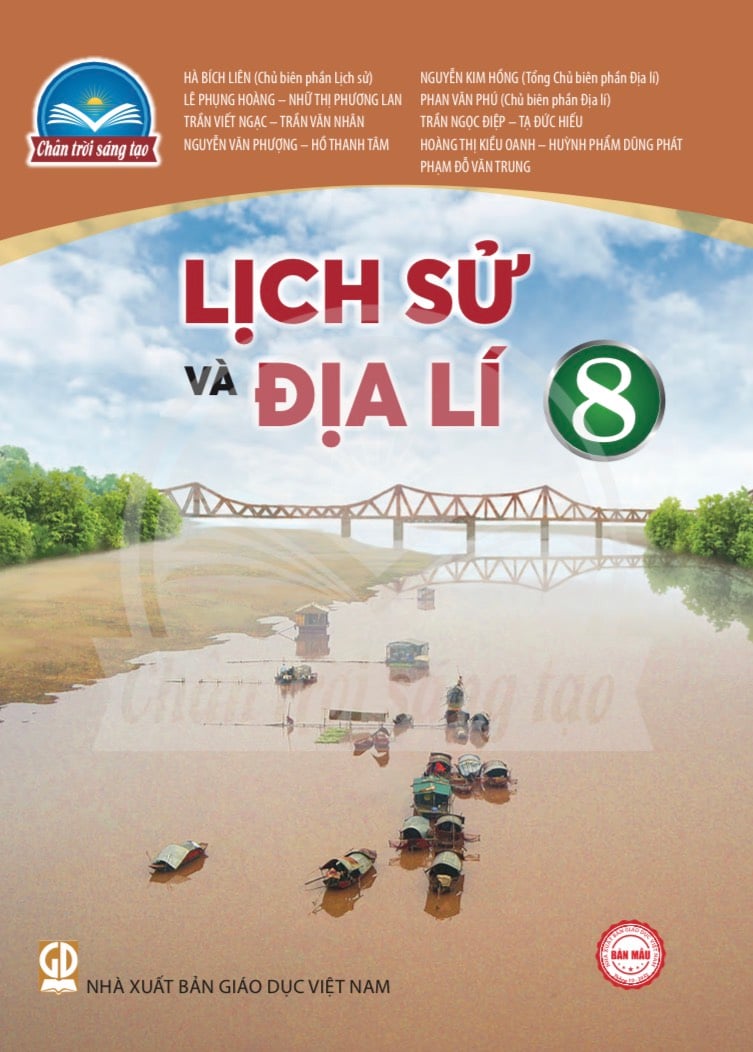
Textbook for the integrated natural science , history, and geography subject for 8th grade.
What are the advantages and disadvantages of integrated subject learning? What are some suggestions from students? We have recorded the opinions of students currently studying the new 2018 general education program at junior high schools in Ho Chi Minh City.
Chemistry at the beginning of the school year, physics in the middle, and students at the end of the school year.
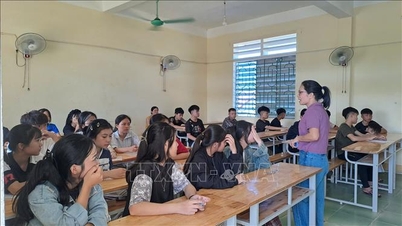
TNTV, a 7th-grade student (going into 8th grade this year) at An Phu Dong Secondary School, District 12, said: "With the integrated natural science subject, I'm taught in semesters. The first semester is chemistry, the middle semester is physics, and the final semester is biology. The drawback is that by the end of the year, I've completely forgotten the knowledge from the first two subjects, chemistry and physics. I think that if it's integrated, the knowledge from different subjects should be interwoven to help students remember the information better."
During the test, the TV showed that there were basic knowledge questions and a few advanced ones, which I personally liked. At the end of the first semester, the school tested chemistry and physics. At the end of the second semester, the school tested knowledge in physics and biology.
In TV's class, one teacher teaches all three subjects: chemistry, physics, and biology in the natural science subject. "She's primarily a physics teacher. However, we feel she's effectively conveyed the subject matter. Some students asked more advanced questions that she couldn't explain immediately, promising to answer later," TV said.
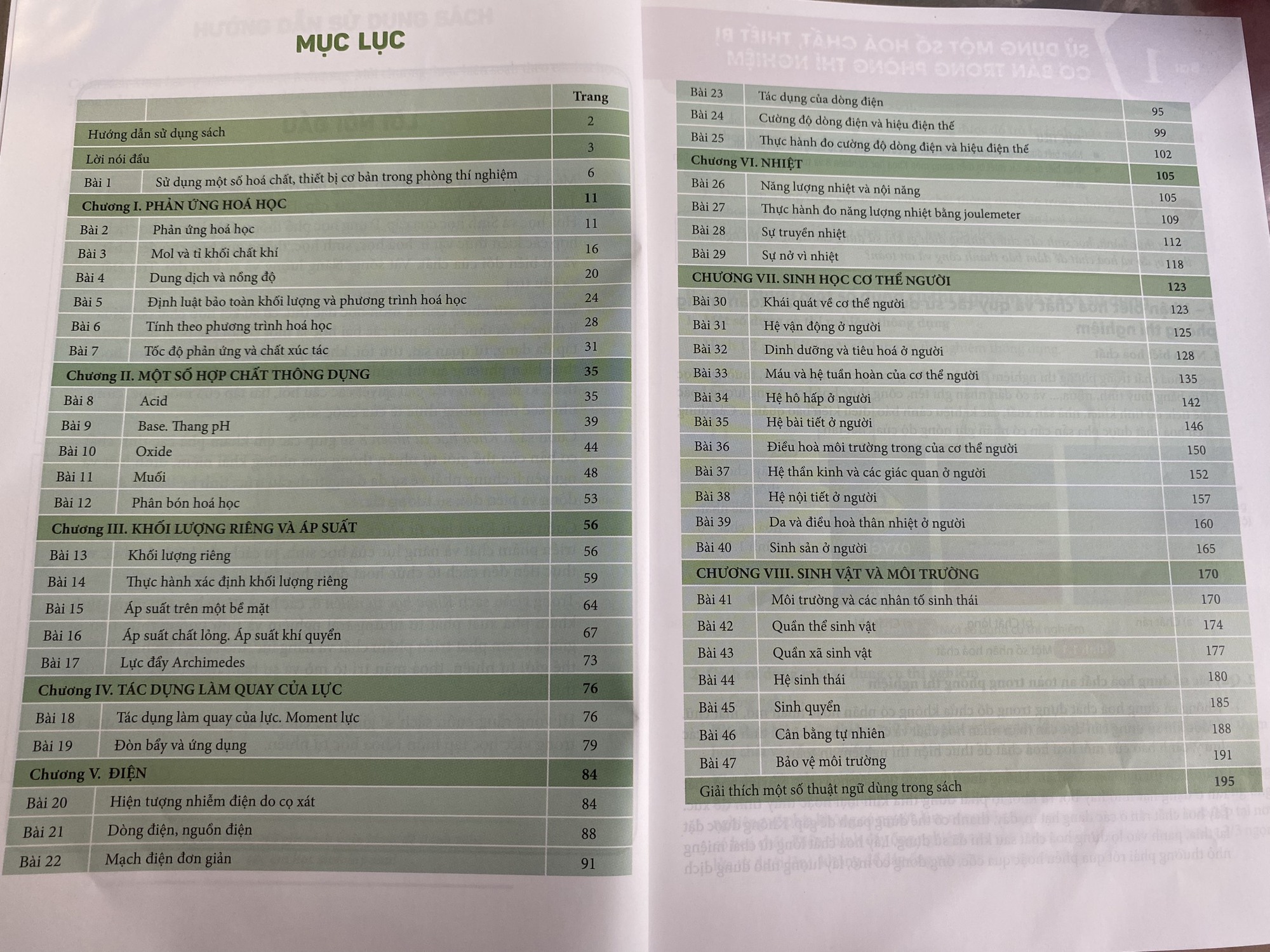
Chapters in the integrated natural science textbook for 8th grade.
For the integrated history and geography subject, the textbooks separate the history and geography sections. A teacher in charge of this integrated subject, who previously only taught history, has been trained to teach both history and geography. According to TV, there are three history and geography lessons per week: two lessons on history and one lesson on geography, then the following week two lessons on geography and one lesson on history, and so on. This student added: "When it comes to tests, they are either multiple choice, essay questions, or a combination of both. A test contains 50% history knowledge and 50% geography knowledge."
Integration is key, but chemistry remains chemistry, biology remains biology, geography remains geography, and history remains history.
D.Nh.K, a 7th-grade student (going into 8th grade this year) at Mach Kiem Hung Secondary School, District 5, Ho Chi Minh City, commented: "At the beginning of the school year, we learned chemistry, in the middle of the year we learned physics, and at the end of the year we learned biology. The teacher reviewed the material systematically at each stage so that students wouldn't forget what they learned."
According to Nh.K, the knowledge in each section remains distinct: physics is physics, chemistry is chemistry, and biology is biology. However, because this is an integrated subject, one teacher will teach all three areas of knowledge.
"Similarly with history and geography, the textbook structure separates history from geography. One teacher also teaches both subjects. However, unlike natural science, we learn history and geography together during the week. In the test, half of the knowledge is geography, and the other half is history," Nh.K said.
According to Nh.K., the influence of teachers on the teaching of integrated subjects is very important. This student said: "I feel lucky to be taught by Ms. Hanh. She teaches all three subjects—chemistry, physics, and biology—by herself, and she teaches well, helping students understand the lessons. She teaches thoroughly, progressing from easy to difficult, providing extra support, and explaining again if students don't understand. Many students from other classes also want to be taught by her."
Should we choose integrated subjects or revert to the old system of using separate textbooks for each subject?
TNTV, a student at An Phu Dong Secondary School, District 12, feels that the integrated natural science curriculum is illogical because the chemistry, physics, and biology sections are placed at the beginning, middle, and end of the school year, making it easy for students to forget the knowledge learned at the end of the year.
"This summer, I reflected and thought that at the beginning of next school year, as a class leader, I would propose that students learn physics, chemistry, and biology together, in an alternating manner," TNTV said.
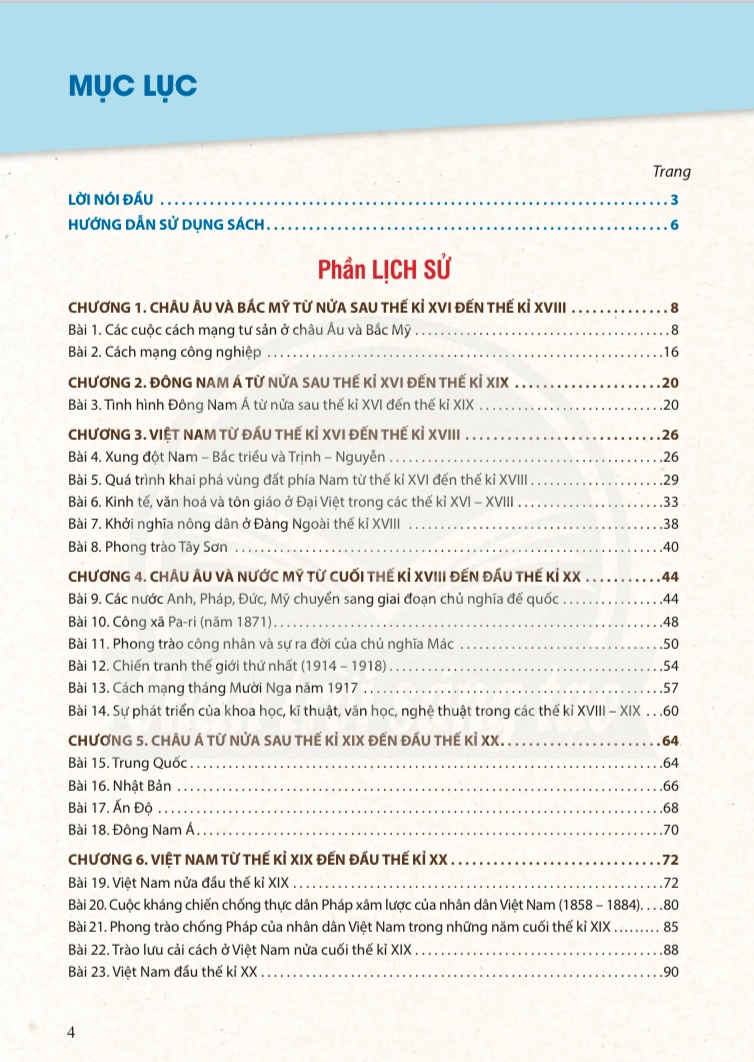
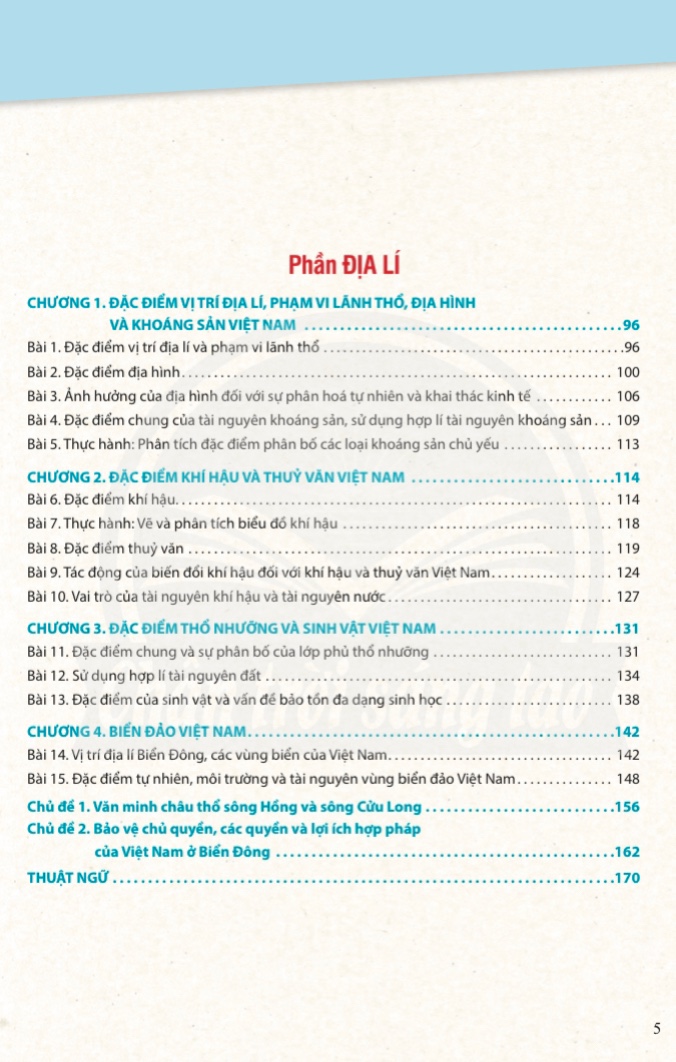
Table of contents for the 8th grade history and geography textbooks, the "Creative Horizons" series.
Many argue that we should "go back to the old ways," dividing textbooks into separate subjects as before, without any so-called integrated subjects. TNTV stated that she personally believes that integrated subject learning is a global trend. The advantage of integrated subject textbooks is that they are beautifully designed, heavily illustrated, and feature vibrant colors.
Meanwhile, D.Nh.K, a 7th-grade student (going into 8th grade this year) at Mach Kiem Hung Secondary School, District 5, Ho Chi Minh City, said: "Improvements will be better than the old method. If we just research more effective solutions in teaching and learning integrated subjects, I think it will be better than learning single subjects."
I haven't heard my child complain at all!
"During my child's elementary school years, I often tutored him in various subjects, but in middle school, he mostly studied on his own. Only during the Covid-19 pandemic did I hire a tutor to help with some subjects, otherwise he studied independently. But I've noticed that his academic results at school are good, and I haven't heard him complain about the integrated subjects or the teaching methods of the teachers at school."
Ms. Tr.Th.NC, parent of a student in 8th grade this year at Mach Kiem Hung Secondary School, District 5, Ho Chi Minh City.
Teaching at a "rocket speed" pace leaves one with a guilty conscience.
Readers of Thanh Nien Newspaper have sent many comments under articles about integrated subjects at the lower secondary level in the 2018 general education program.
Reader Tran Nghia shared: "I've been teaching physics for almost 12 years. It was fun because I had the students take notes less and told them stories about physics more. But last year, when I was assigned to teach 7th grade natural science, my blood boiled. The two-month summer training was just for show, 'to get by and get it over with.' When I started teaching a subject I wasn't supposed to be, the training knowledge was gone. I stumbled over the English names of the elements, and the students kept saying, 'Teacher, you're mispronouncing them.' I was afraid of teaching and the students not understanding, afraid of being criticized, afraid of having to rely on Google when the students asked more in-depth questions. When I asked senior teachers (who had taught 6th grade) for advice, they said, 'Just teach what the textbook says.' I could make excuses for chemistry, but biology... If I couldn't teach fast enough, my salary would be cut, but if I taught haphazardly, my conscience would ache."
Reader Nguyen Huy commented: "In reality, history and geography, when taught in the classroom, are completely separate subjects but are graded under a single score. This means students study two subjects, review two subjects, and take exams in two subjects, but only receive a grade for one subject. Even in grade 6, history and geography are separated. So what's the point of integration? Even the grade 8 science textbook in the 'Connecting Knowledge with Life' series has begun to clearly divide chapters into physics, chemistry, and biology. It's clear that reverting to single-subject teaching is necessary. Simply put, students still have to learn them that way."
Source link

![[Photo] Hanoi, the capital city, brilliantly welcomes the 14th National Congress of the Party.](/_next/image?url=https%3A%2F%2Fvphoto.vietnam.vn%2Fthumb%2F1200x675%2Fvietnam%2Fresource%2FIMAGE%2F2026%2F01%2F13%2F1768271572243_image-1.jpeg&w=3840&q=75)

![[Photo] National Assembly Chairman Tran Thanh Man receives the Ambassadors of Cambodia, the Philippines and the United States for a farewell visit.](/_next/image?url=https%3A%2F%2Fvphoto.vietnam.vn%2Fthumb%2F1200x675%2Fvietnam%2Fresource%2FIMAGE%2F2026%2F01%2F13%2F1768303256862_tiep-ds-5658-jpg.webp&w=3840&q=75)
![[Photo] Standing Committee member of the Party Central Committee Tran Cam Tu presides over the preliminary review of the organization of the 14th Party Congress.](/_next/image?url=https%3A%2F%2Fvphoto.vietnam.vn%2Fthumb%2F1200x675%2Fvietnam%2Fresource%2FIMAGE%2F2026%2F01%2F13%2F1768292063355_anh-man-hinh-2026-01-13-luc-15-14-10.png&w=3840&q=75)
![[Photo] Final preparations underway for the organization and service of the 14th National Congress of the Party.](/_next/image?url=https%3A%2F%2Fvphoto.vietnam.vn%2Fthumb%2F1200x675%2Fvietnam%2Fresource%2FIMAGE%2F2026%2F01%2F13%2F1768315558336_ndo_br_bnd-4068-jpg.webp&w=3840&q=75)













































Comment (0)