

On February 25, 2025, the Government Office issued document 59/TB-VPCP announcing the conclusions of the Standing Committee of the Government at the meeting on the draft Law on Railways (amended).
On February 25, 2025, the Government Office issued document 59/TB-VPCP announcing the conclusions of the Standing Committee of the Government at the meeting on the draft Law on Railways (amended).
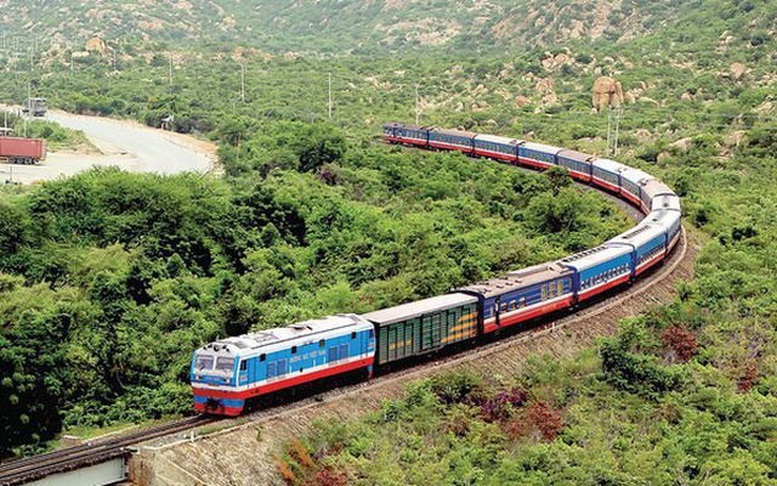 |
Finalizing the draft of the amended Railway Law
Accordingly, the Standing Committee of the Government welcomes and highly appreciates the Ministry of Transport's proactive coordination with the Ministry of Justice and relevant agencies in summarizing and evaluating practical experiences and studying international experiences to develop the revised Railway Law project, ensuring progress and quality under the conditions of having to implement many large and important national projects.
The Standing Committee of the Government directs the Ministry of Transport to synthesize and fully incorporate the opinions of the Government members, as well as the written comments from ministries and agencies, to revise and finalize the draft amendment to the Law for submission to the Government, with particular attention to the following:
The revised law needs to be reviewed and fully institutionalized in accordance with the views, policies, and orientations of the Central Committee of the Party, the Politburo, and the directives of the Party and State leaders on the development of railway transport and the railway industry, as outlined in Conclusion No. 49-KL/TW dated February 28, 2023, of the Politburo on the orientation for the development of Vietnam's railway transport until 2030, with a vision to 2045, and Resolution No. 57-NQ/TW dated December 22, 2024, of the Politburo on breakthroughs in the development of science, technology, innovation, and national digital transformation.
The draft amendment to the Law should be structured as a framework law, based on principles to ensure stability and long-term validity. It should only regulate matters within the authority of the National Assembly, while technical and specific issues should be left to the Government and Ministers of relevant ministries and agencies to provide detailed regulations, ensuring proactiveness and flexibility in implementation.
Carefully review and evaluate the classification of "local railways" in the draft Law to ensure consistency and convenience in the process of organizing investment and managing the operation of railway projects; the classification must be based on the principle that the entire railway system, whether invested in by the central or local government, is a national project.
Research should be conducted to codify mature and well-defined policy mechanisms, as well as specific and special mechanisms already submitted to the National Assembly; particularly those related to technology transfer, human resource training and development, and incentives to promote the development of the railway industry, in order to gradually master technology and establish a developed railway industry. Research should also be conducted to supplement necessary specific regulations for railway development, prioritizing their application and amending relevant regulations directly within this Law.
Creating a comprehensive and innovative legal environment that meets the development requirements of the railway industry both now and in the future.
The Standing Committee of the Government directed the Ministry of Transport to review and study the addition of regulations on mobilizing resources for investment in railway infrastructure systems through public-private partnership (PPP) contracts (BT, BOT, BTO, etc.); mobilizing resources from localities where projects pass through, especially in land clearance and station construction... Diversifying the types of enterprises participating in the management and investment in railway development (including both state-owned and private enterprises) according to the models of "Public leadership - private management", "Public investment - private management", and "Private investment - public use" in order to restructure investment, maximize the dynamism in private sector management, reduce the burden on the budget, reduce public debt, and improve investment efficiency.
Continue reviewing, reducing, and simplifying administrative procedures; promote decentralization and delegation of power to ministries, sectors, and especially localities (increasing the autonomy of localities; localities must proactively build railway stations using TOD, PPP, BOT, BT methods, etc.) coupled with resource allocation, creating favorable conditions for people and businesses, and promoting the socio-economic development of the country.
Referencing the laws and implementation experiences of countries with developed railway industries such as China, the revised law will be refined to ensure that, once enacted, it will create a comprehensive and groundbreaking legal environment that meets the development requirements of the railway industry both now and in the future.
Source: https://baodautu.vn/hoan-thien-du-thao-luat-duong-sat-sua-doi-d249179.html
![[Photo] Ho Chi Minh City decorated with flags and flowers ahead of election day.](https://vphoto.vietnam.vn/thumb/1200x675/vietnam/resource/IMAGE/2026/03/13/1773392076518_anh-man-hinh-2026-03-13-luc-15-53-29.png)

![[Photo] Prime Minister Pham Minh Chinh attends the inauguration ceremony of the Vietnam Space Center.](https://vphoto.vietnam.vn/thumb/1200x675/vietnam/resource/IMAGE/2026/03/13/1773397068038_ndo_br_dsc-3366-jpg.webp)

















































































Comment (0)