

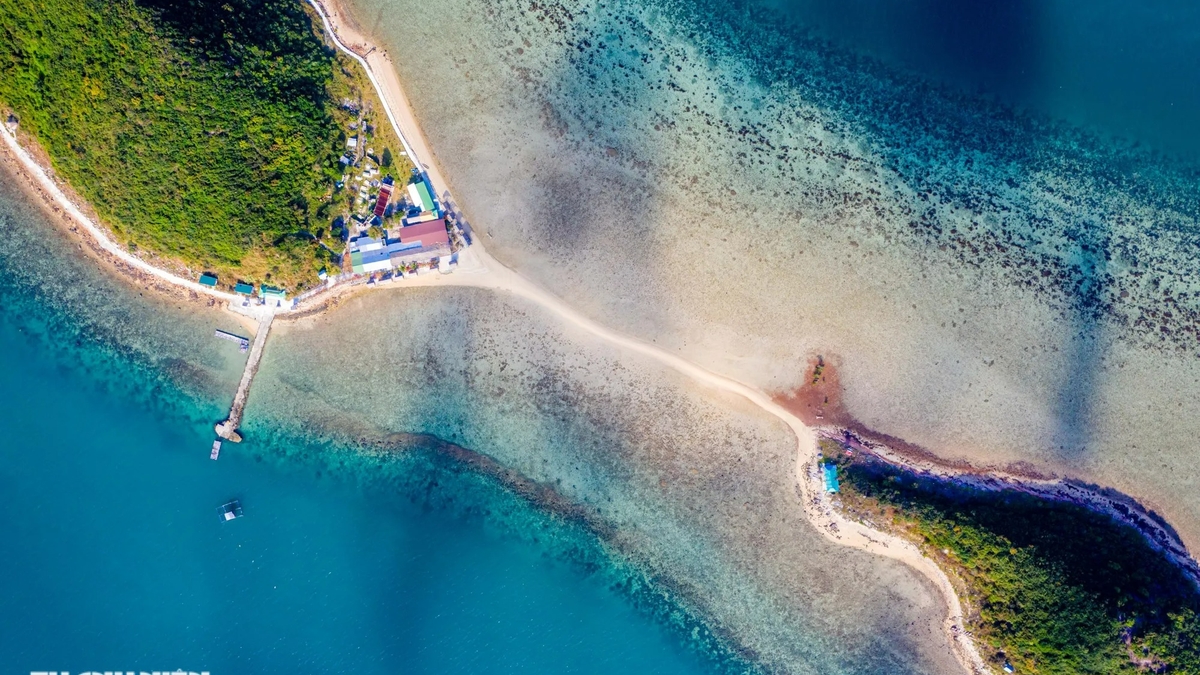
Quan Lan is an island located in Bai Tu Long Bay, Quang Ninh province, comprising Quan Lan and Minh Chau communes in Van Don district (approximately 40km from the district center).
This place is famous for its pristine, peaceful natural scenery, with pure white sand dunes and long stretches of crystal-clear beaches. Quan Lan is an exciting tourist destination for visitors to admire and enjoy the sea. After enduring a long, hot, and tiring journey, we were soothed by the breathtaking beauty of this land.
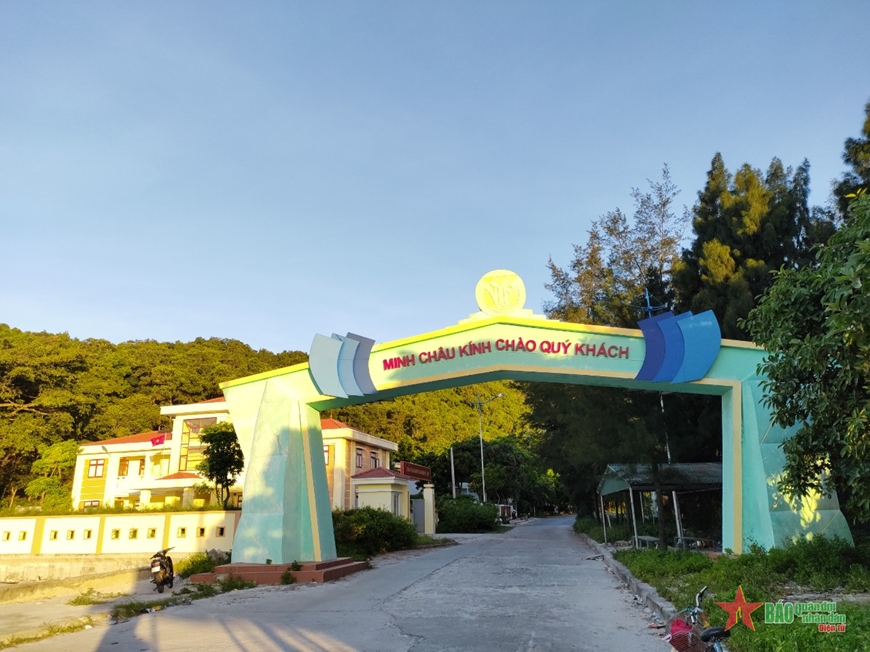 |
The entrance gate to Minh Chau commune on Quan Lan island. |
Visit Quan Lan during the most beautiful season of the year.
Before arriving in Quan Lan, we did quite a bit of research and concluded that Quan Lan is beautiful at any time except during the rainy season. It depends on the purpose of your visit. If you want to swim and enjoy the scenery, the best time is probably from May to July, as the weather is clear, with white clouds and golden sunshine, and the sea is warm, perfect for swimming and taking photos. August and September bring rain and storms. From September onwards, the weather turns autumnal, the sea water is cold, and it's no longer suitable for swimming, but the scenery remains very picturesque. You can visit Eo Gio or stroll along the beach to watch the sunset and sunrise. For those who prefer the unspoiled beauty of the island, this is the best time to visit, as there are almost no tourists.
For us, the best time to visit Quan Lan is July, when families and children are on summer vacation, allowing them to escape the hustle and bustle of the capital city. Although prices for rooms, homestays, and food increase during this time, if you plan ahead and choose a weekday trip, it's much more affordable. At this time, you can fully appreciate the natural beauty and unspoiled nature of Quan Lan while enjoying a complete family vacation with golden sunshine, blue sea, and white sand.
How to get to Quan Lan
There are several ways to get to Quan Lan Island, the first being by wooden boat. It takes about 2 hours to get there. The advantage of this means of transport is its safety, in any weather conditions including heavy rain, strong winds, and high waves.
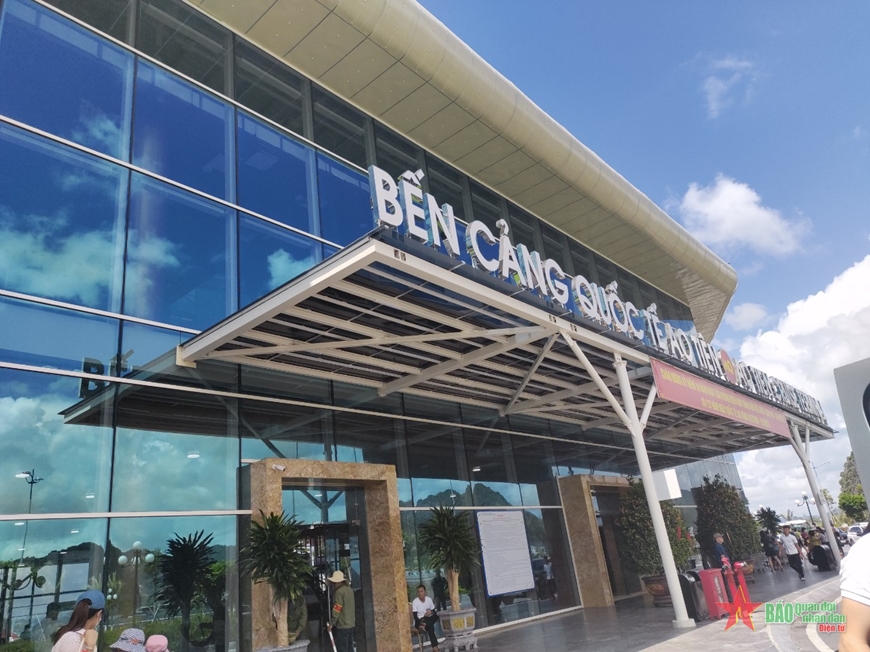 |
| The newly opened Ao Tien International Port is very beautiful and modern. |
The second option is to travel by speedboat. We chose this option. The speedboat ride from Ao Tien International Port to Minh Chau pier on Quan Lan Island only takes about 40 minutes. The first thing we saw upon arriving on the island was a row of brightly colored electric vehicles lined up at the pier, waiting for customers to call, agree on a price, and then "set off." Each electric vehicle can carry a group of 9 to 12 passengers, making it ideal for families or groups.
For solo travelers, we recommend renting a motorbike. We rented a motorbike on the island for 200,000 VND per day, not including fuel. Interestingly, you can buy gasoline at any convenience store for 35,000 VND per liter. Exploring Quan Lan by motorbike is the most popular choice among young people because it's both cost-effective and allows you to enjoy the scenery at your own pace.
Go to the island to swim in the sea.
It would be a shame to visit Quan Lan without swimming in the sea. Nature has blessed this place with long stretches of pristine white sand beaches and crystal-clear blue waters.
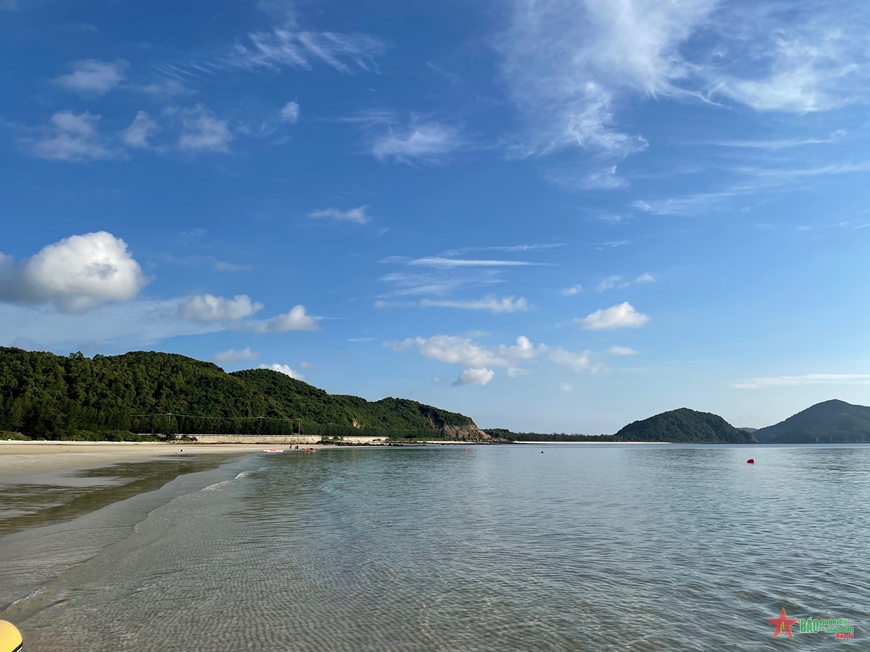 |
| Minh Chau beach in the early morning. The seawater is crystal clear, you can see the bottom. |
We stayed at Dau Dau homestay, so the closest place was Minh Chau beach. After unpacking, we went there for a swim in the afternoon. It's no exaggeration to say that Minh Chau beach is a gem in the heart of Quang Ninh, with its long stretch of fine white sand and crystal-clear water where you can see the bottom.
The second beach on the island is Son Hao Beach. Along with Minh Chau, Son Hao Beach is one of the two famous beaches on Quan Lan Island that attract tourists every summer. Son Hao is a famous beautiful beach on Quan Lan Island, stretching over 3km with clear blue water and a dreamy landscape. A distinctive feature of Son Hao Beach is its towering casuarina trees and diverse vegetation. A unique characteristic of Son Hao Beach is that when the tide rises, the beach narrows and the shoreline slopes slightly.
The third beach is Robinson Beach. And, true to its name, it's considered the most pristine beach in Quan Lan, having only recently been developed and remaining untouched by human hands. Getting to Robinson Beach is quite difficult, as it's a secluded beach hidden behind a small road, with the sea in front and a pine forest behind. Upon arrival, visitors will be amazed by the crystal-clear water, so transparent you can see the bottom, along with the long stretch of soft, white sand. Interestingly, the beach is extremely deserted, to the point that there's a sign directing people to the "nude bathing" area.
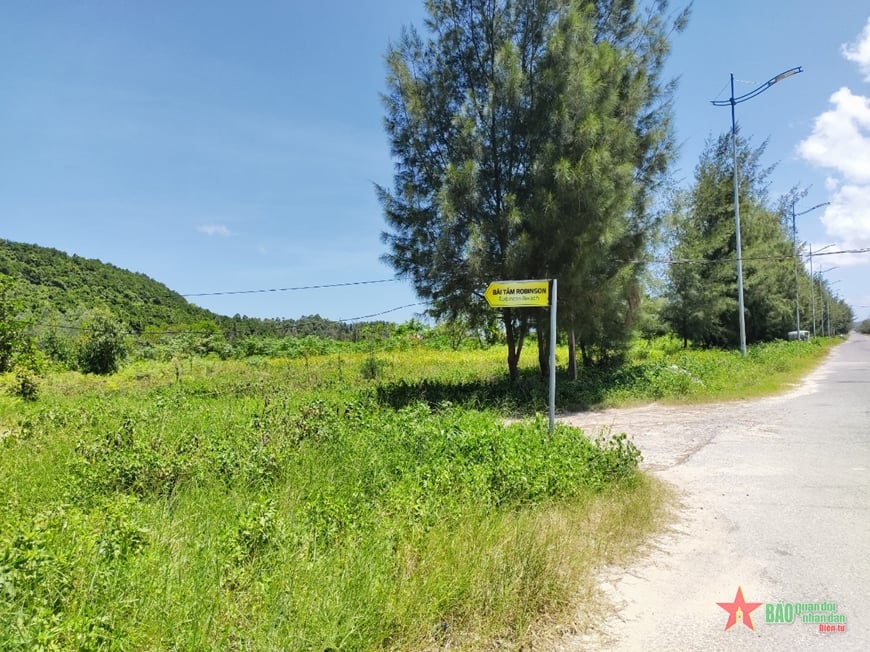 |
| The road to Robinson Beach is quite difficult to find. |
What to do on the island?
At 5 a.m. on Monday morning, Mr. Nguyen Van Toan, the owner of Dau Dau homestay where I rented a room, knocked on our door to wake us up. Then we rode our motorbikes to the rocky beach at Minh Chau to catch snails. He gave each of us a pair of gloves and a basket, then instructed us on how to flip over the rocks to search for and catch snails. He shared that finding a place to eat and drink here is very simple; you just need to go to the beach. That evening, we ate seafood prepared by Mr. Toan, including the snails that the whole family had gathered that morning.
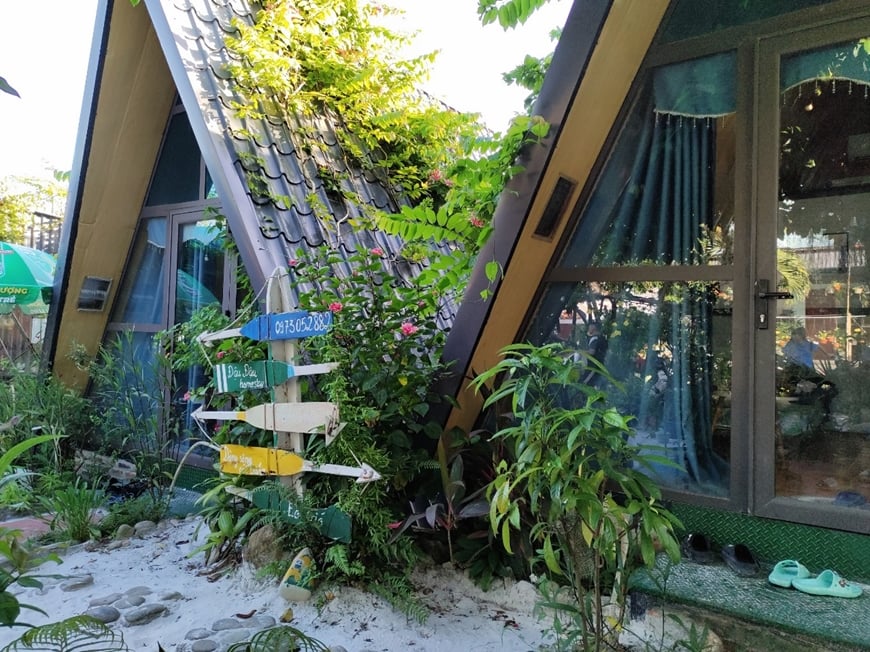 |
| Homestay Dau Dau, one of the lovely accommodations located just 300m from Minh Chau beach. |
Mr. Toan shared: "Here, tourists can participate in activities like catching snails or squid fishing. But I only recommend these to those who enjoy adventurous experiences and exploration, as both activities take quite a lot of time."
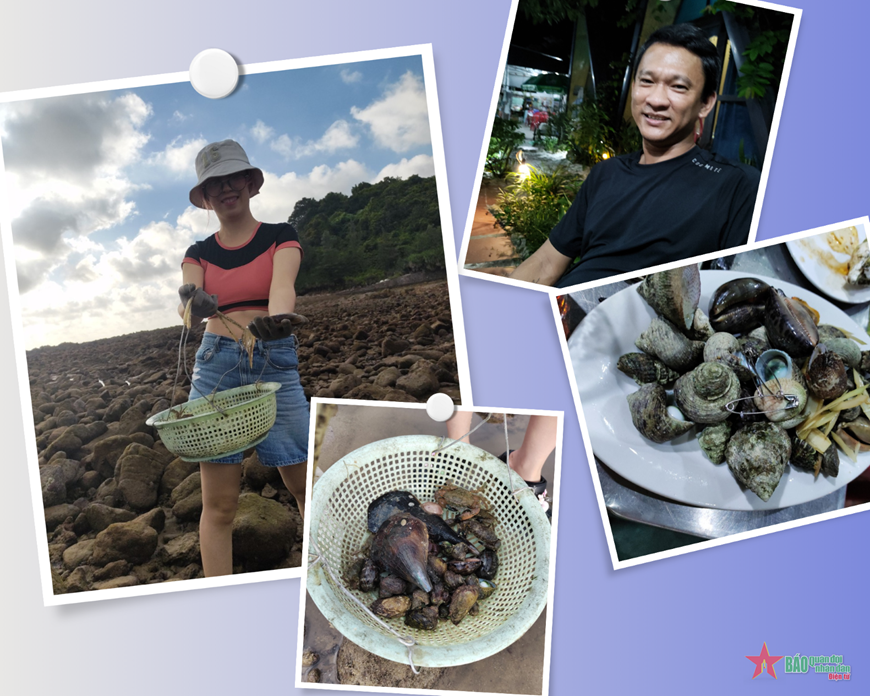 |
| Mr. Toan (in the black shirt) was the one who guided us on the snail-catching experience on the island, and the reward that day was a plate of delicious grilled snails. |
That evening, we cycled around the pedestrian street on our four-wheeled bikes, ate street food, participated in games with prizes, went to the beach to listen to music, and joined a bonfire.
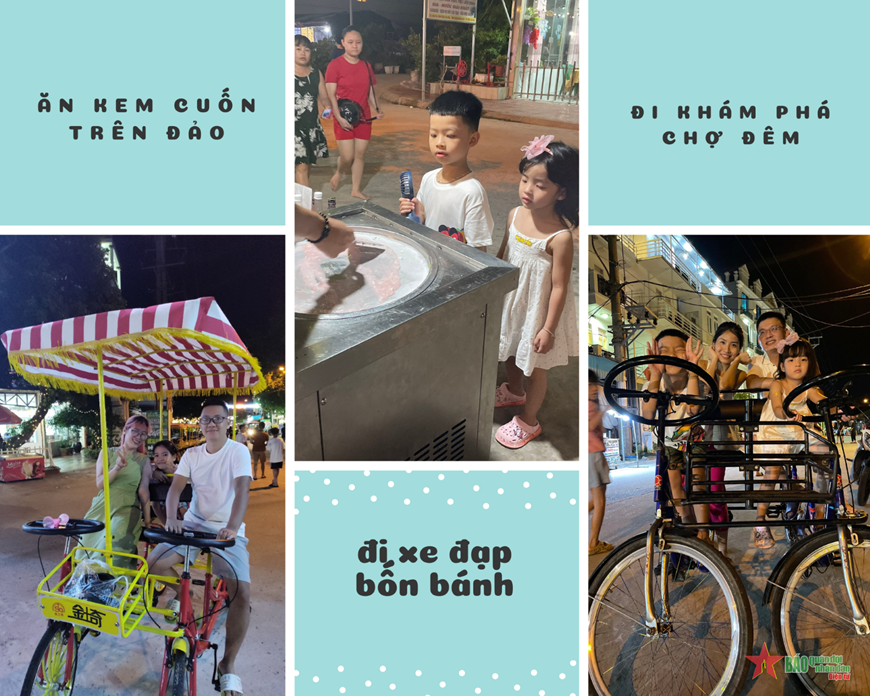 |
| An unforgettable experience riding a quad bike. |
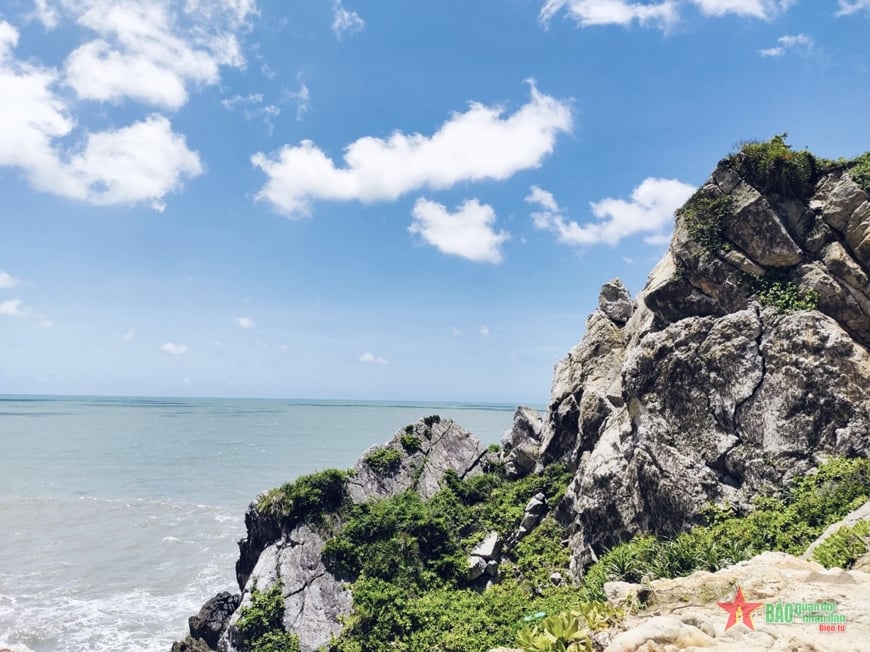
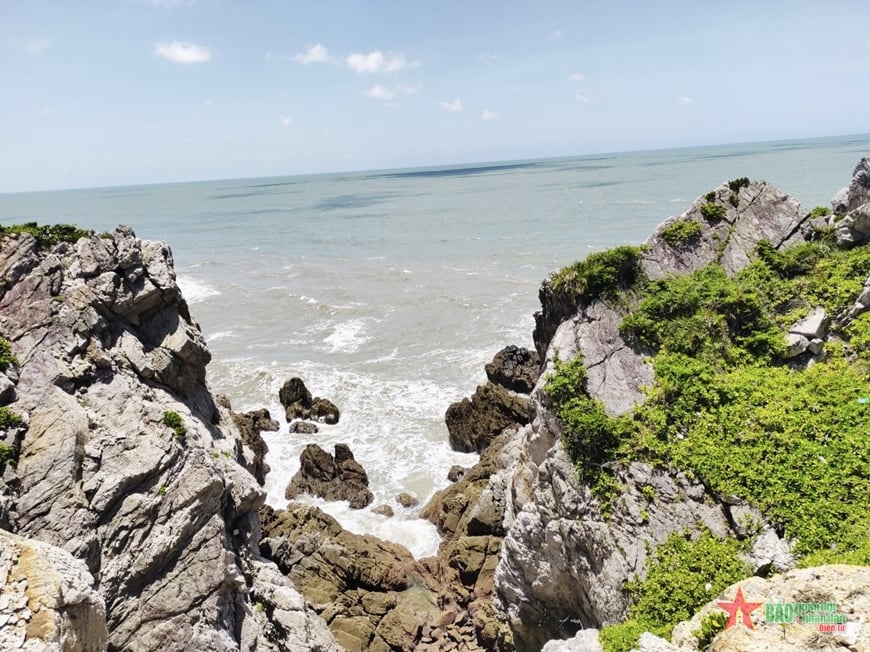
On Tuesday morning, the whole group woke up early, had breakfast, and then rented motorbikes to explore the island. The main road on the island was breathtakingly beautiful, lined with lush, straight rows of pine trees. Next, we visited Robinson Beach, Ngoc Vung Beach, Quan Lan pier, and Eo Gió (Windy Pass). Eo Gió on Quan Lan Island is probably most beautiful in May or June, as the sky is clear and cloudless during this time. The best time to admire the scenery is around 5 am at sunrise or in the late afternoon as the sun sets. From the mountaintop, you can observe the island from above, or gaze out at the blue sea with its crashing waves.
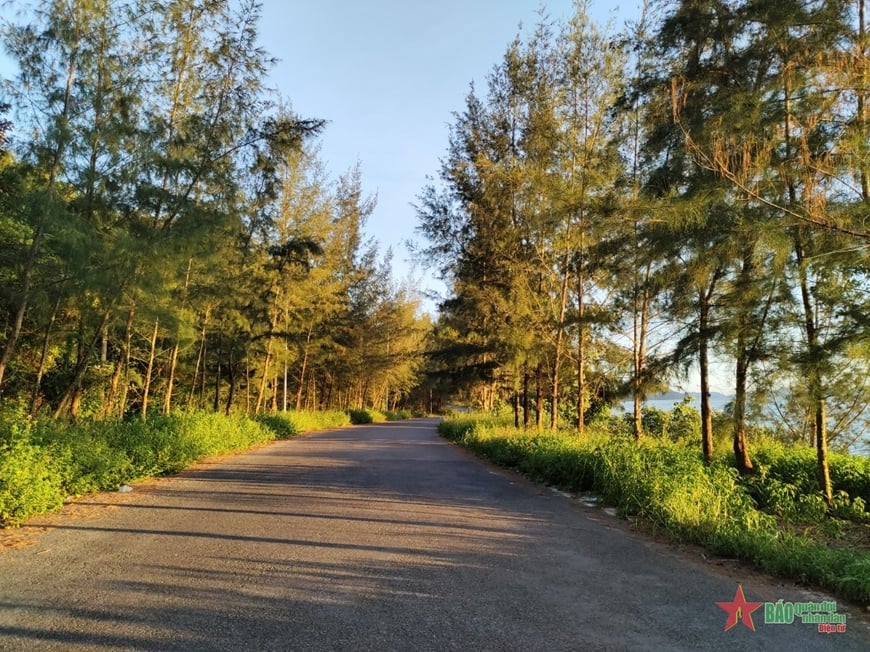 |
| The main road on the island is lined with two rows of lush green pine trees on either side and is sparsely populated. |
Ms. Anh Thu (My Dinh, Hanoi) – who accompanied our group – said: “I have traveled to many places and explored many islands, but I have never seen a place as beautiful as Eo Gió. Stepping foot on Eo Gió Quan Lan is like being in an endless expanse; standing high above, looking at the crystal-clear blue sea, feeling the salty sea breeze… I feel very lucky to have had this experience, although I regret not being able to see Eo Gió at its most beautiful.”
 |
 |
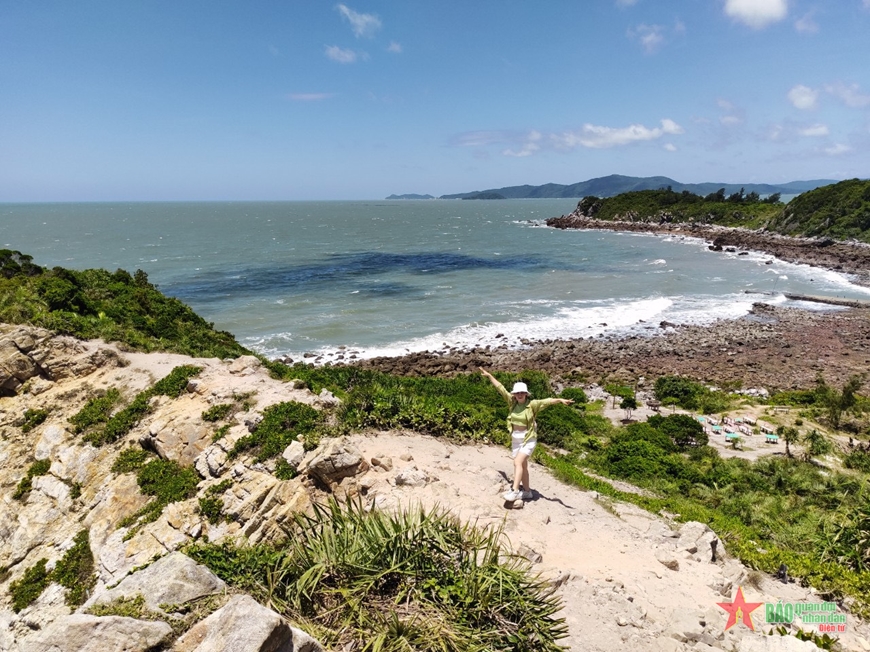 |
| Eo Gió Quan Lạn, a must-visit check-in spot. |
"Specialties" of the island
Visiting Quan Lan Island and missing out on enjoying its delicious local specialties would be a real shame. As a coastal area, it's famous for its wide variety of fresh and delicious seafood, such as geoduck clams, shrimp, oysters, crabs, and more. But besides these seafood items, what we saw most often on the island, and considered the "specialties" of this region, were probably jackfruit, various types of climbing plants, and sea worms.
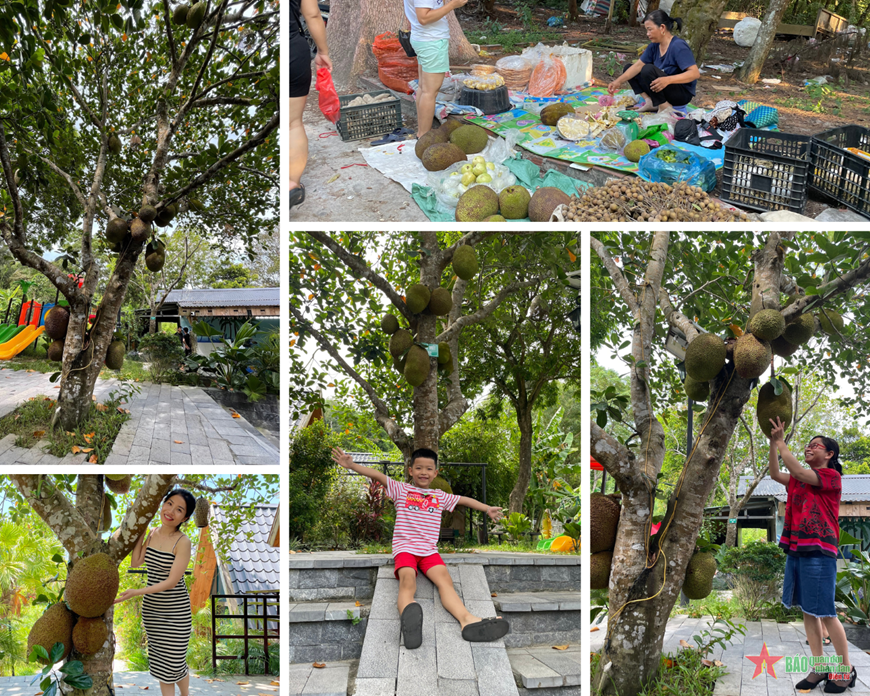 |
| "The most common 'specialty' we saw on the island." |
During our short three-day, two-night stay on the island, jackfruit trees were everywhere. They were grown in homestays, on hotel grounds, in resorts, and sold all along the road to the beach. We often joked that perhaps nothing grows faster than jackfruit trees in this sunny, windy place. And indeed, the jackfruit trees that grew on the island, in this sunny, windy place with the salty sea air, were laden with fruit, large ones growing all around the base. Children and adults alike enjoyed taking photos and eagerly sharing the large and small jackfruits to take home as souvenirs.
Perhaps due to the year-round hot and sunny climate, the most commonly grown plants here are bougainvillea, paper flowers, and honeysuckle. The bougainvillea, whose name means "a virtuous person who does not seek official positions but is neither a hermit nor a recluse," reflects the plant's resilience in the face of adversity and poverty, yet always reaching for truth and light with abundant vitality. Bougainvillea is often grown on trellises, providing shade from the hot sun, fragrance, and vibrant colors. It blooms repeatedly throughout the year, making it a popular choice for its excellent sun protection. The fragrant scent of bougainvillea permeates every house, inviting visitors to come and take pictures as souvenirs.
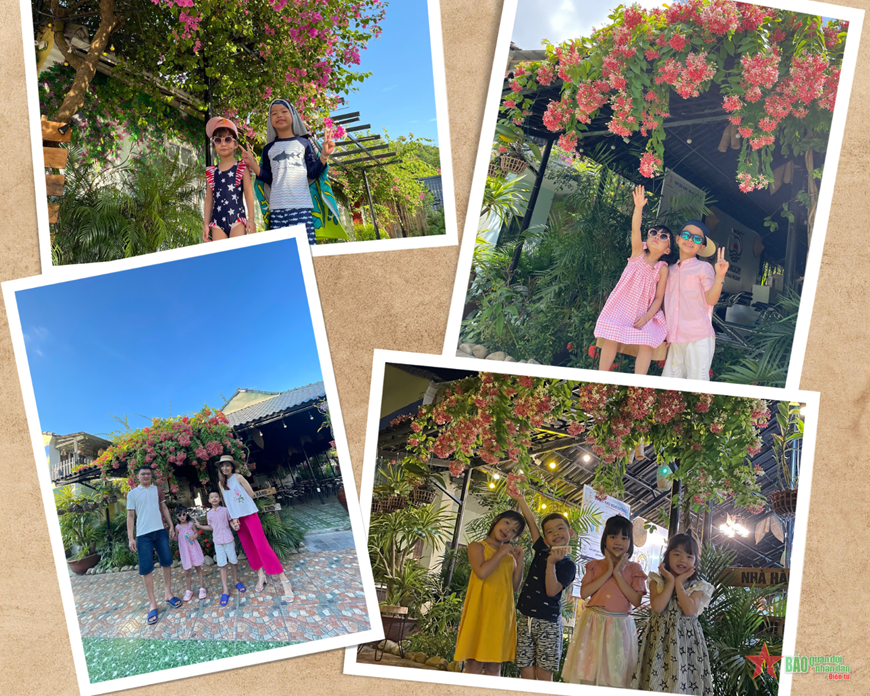 |
| The flower trellises are an ideal spot for tourists to take photos when visiting the island. |
When mentioning specialties commonly bought as gifts in Quang Ninh, one can name squid patties, dried squid, sun-dried fish, and sea worms (Sipunculus nudus). Sea worms, also known as "earth ginseng," are a famous local delicacy that the people of Quang Ninh have used for cooking, daily life, and health benefits since ancient times. The sea worm has a rather unusual name; some people may never have heard of it, but it possesses numerous miraculous uses that few people know about. Quan Lan sea worms are a precious delicacy that nature has bestowed upon the land of Quang Ninh, a valuable remedy given to mankind.
At the end of our short 3-day, 2-night trip, no one in our group wanted to leave this peaceful island. On the electric tram back to the pier, everyone was pensive and regretful. Some said their plan for next year was to return, but not just for another 3-day, 2-night trip. They wanted to stay as long as possible, to immerse themselves in the salty sea air, relax in the clear blue water, and explore all the places they hadn't visited on this trip. Because Quan Lan is so beautiful, because there are so many places to see, and because we truly cherished our time together on this island. See you again – Quan Lan!
Text and photos: THANH HUONG - TO NGOC
*Please visit the Travel section to see related news and articles.
Source
![[Photo] Ho Chi Minh City decorated with flags and flowers ahead of election day.](https://vphoto.vietnam.vn/thumb/1200x675/vietnam/resource/IMAGE/2026/03/13/1773392076518_anh-man-hinh-2026-03-13-luc-15-53-29.png)
![[Photo] Prime Minister Pham Minh Chinh attends the inauguration ceremony of the Vietnam Space Center.](https://vphoto.vietnam.vn/thumb/1200x675/vietnam/resource/IMAGE/2026/03/13/1773397068038_ndo_br_dsc-3366-jpg.webp)


















































Comment (0)