

On the evening of December 14th, despite the rain, thousands of people still flocked to the 28/3 Square in Bao Loc City ( Lam Dong province) to enjoy the art program "Bao Loc – City of Fragrant Tea and Silk".
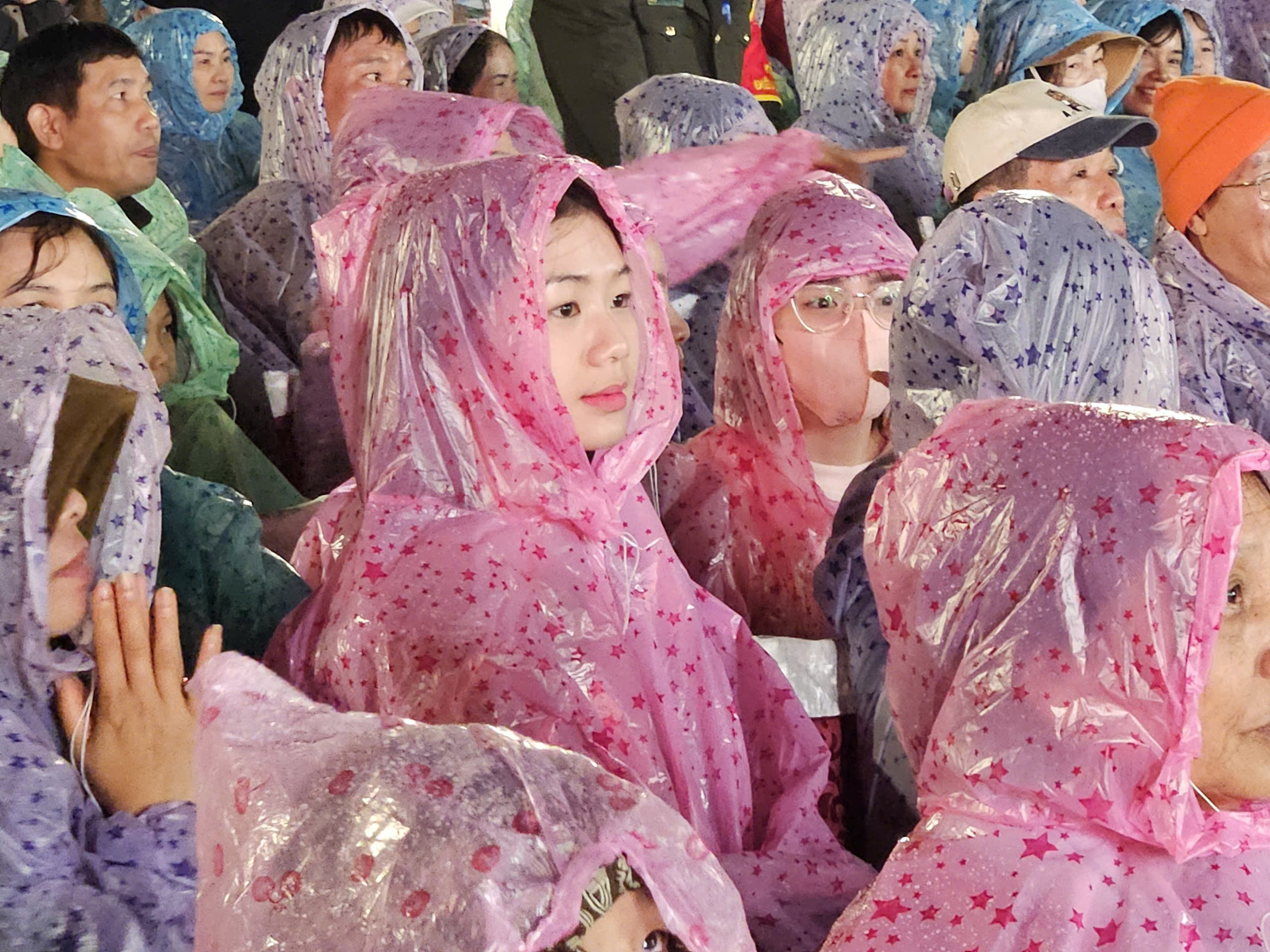
Watching the program intently in the rain.
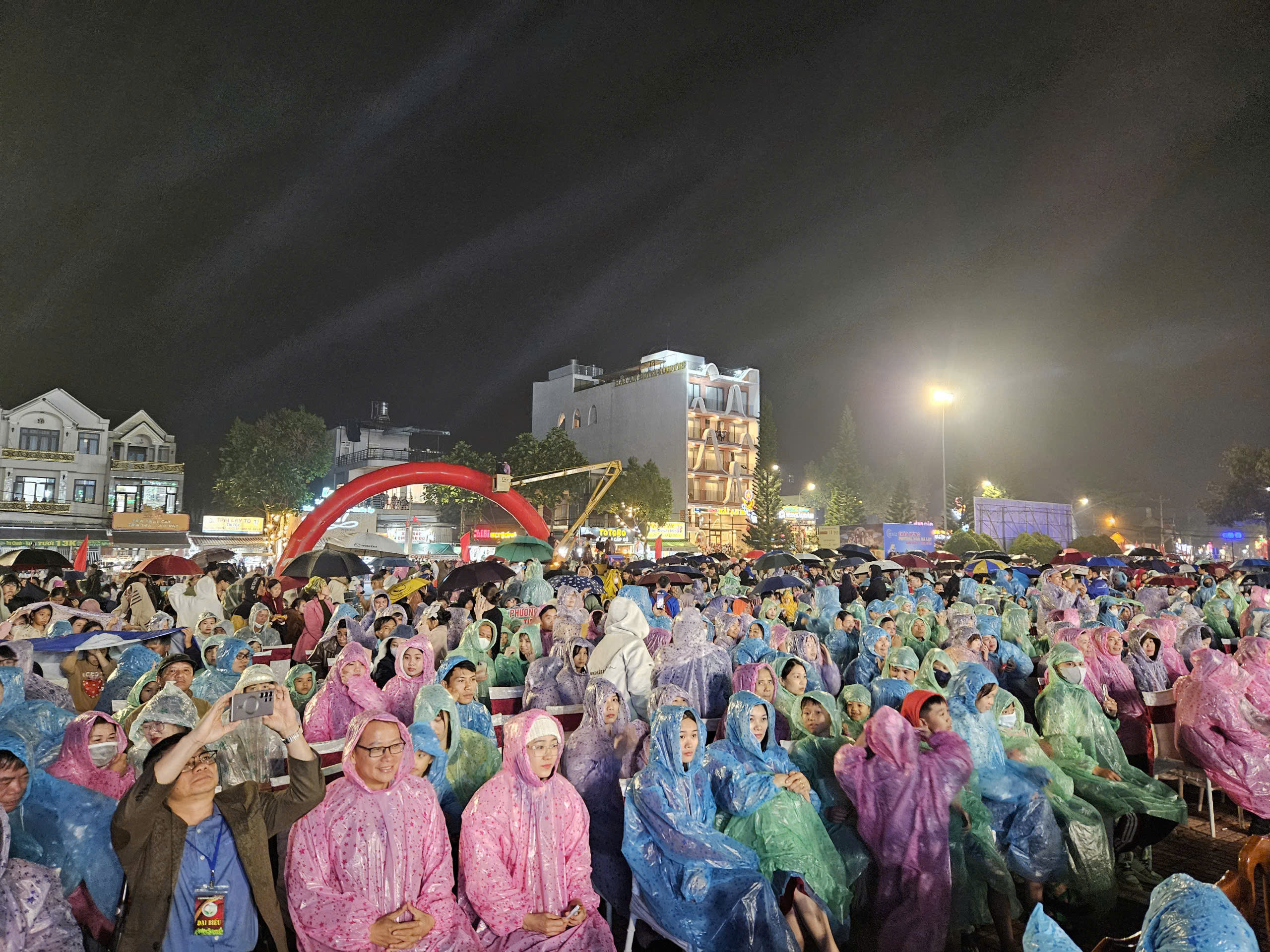
Thousands of locals and tourists in the mountain town of B'Lao braved the rain to watch the art performance.
This is one of the 10 main programs of the Da Lat Flower Festival 2024, kicking off the "Bao Loc - City of Fragrant Tea and Silk" festival, and also celebrating 30 years of construction and development of Bao Loc city (1994 - 2024), lasting until December 31st.
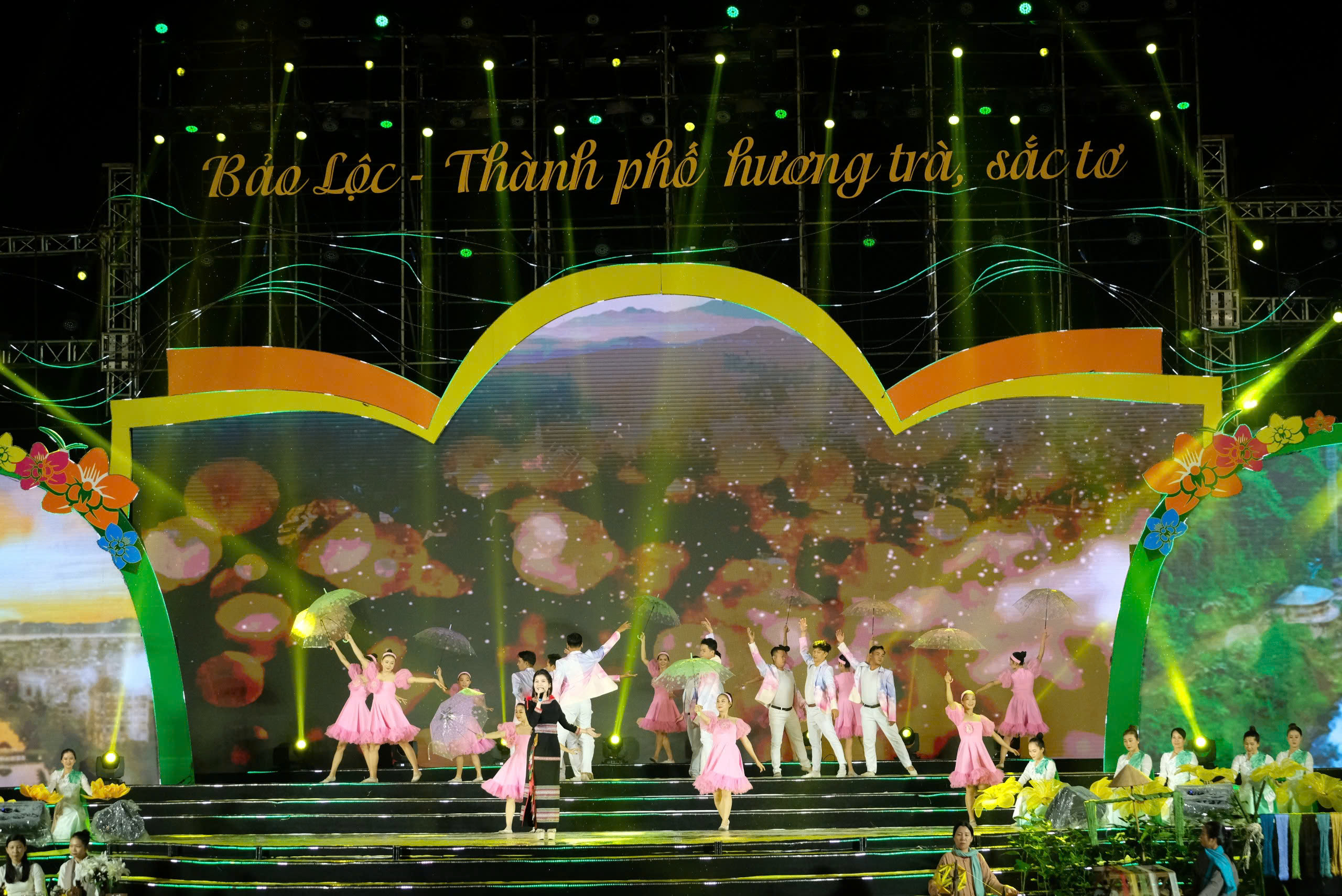
Art program "Bao Loc – City of Fragrant Tea and Silk"
The art program "Bao Loc, City of Fragrant Tea and Silk" aims to promote trade, advertise tourism , and introduce the land and people of Bao Loc City; while also affirming the traditional crafts of the locality with the brand of B'Lao tea, Bao Loc silk, and Bao Loc orchids to friends both domestically and internationally.
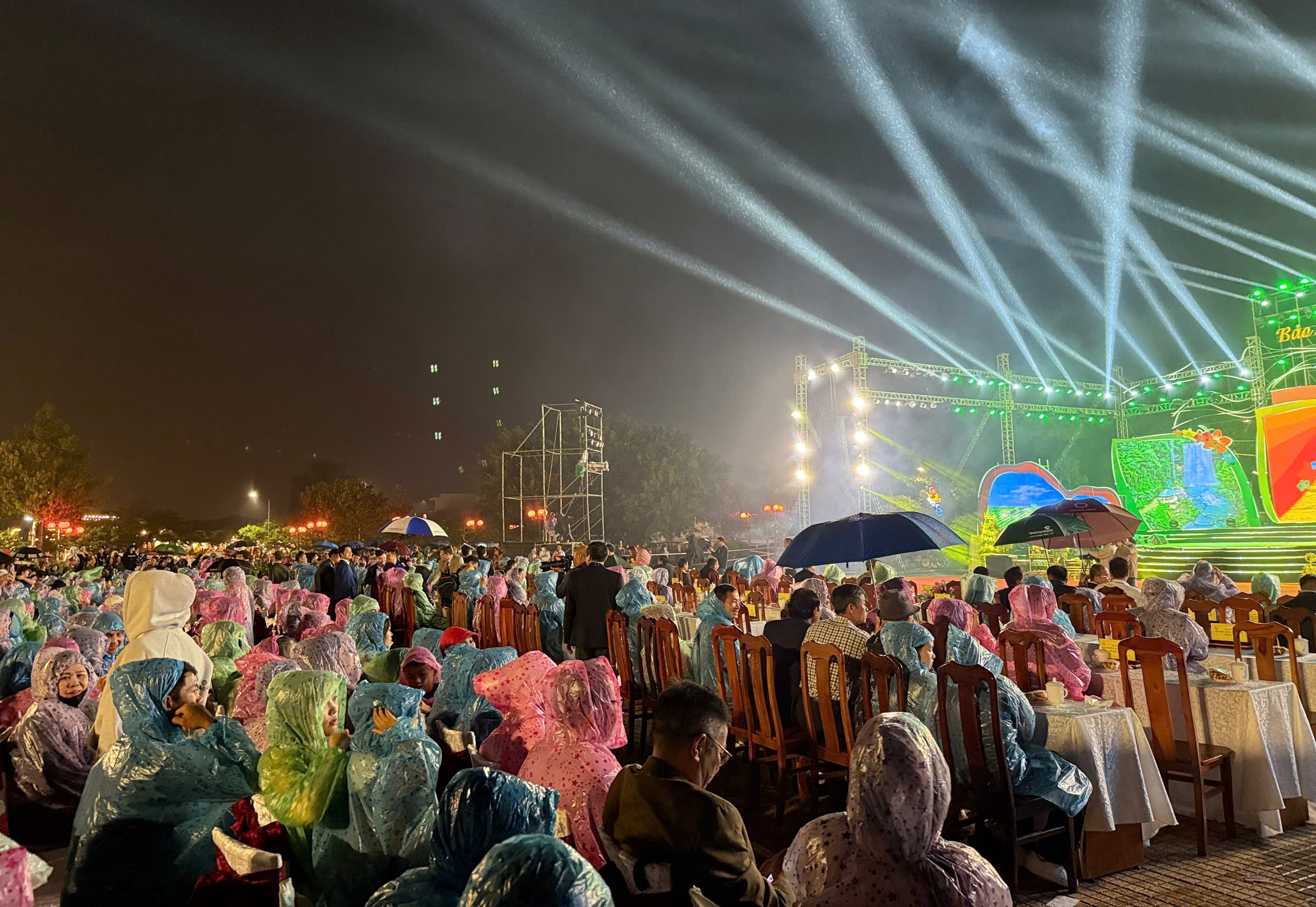
Despite the rain, the audience stayed to enjoy the show.
Speaking at the opening ceremony, Mr. Ngo Van Ninh, Chairman of the People's Committee of Bao Loc City, said that Bao Loc has long been considered the "capital" of tea and the "capital" of the silk industry in Vietnam. The program is an opportunity to honor tea growers and processors, silkworm breeders, silk weavers, and orchid growers – industries that have created a brand for the locality, contributing to its reputation both domestically and internationally, bringing high economic value and practical benefits to the land and people of Bao Loc.
The cultural and artistic festivals celebrating the tea and silk industries of Bao Loc were first organized in 2006 and, from 2017 to the present, have become one of the main activities of the Da Lat Flower Festival, held every two years.
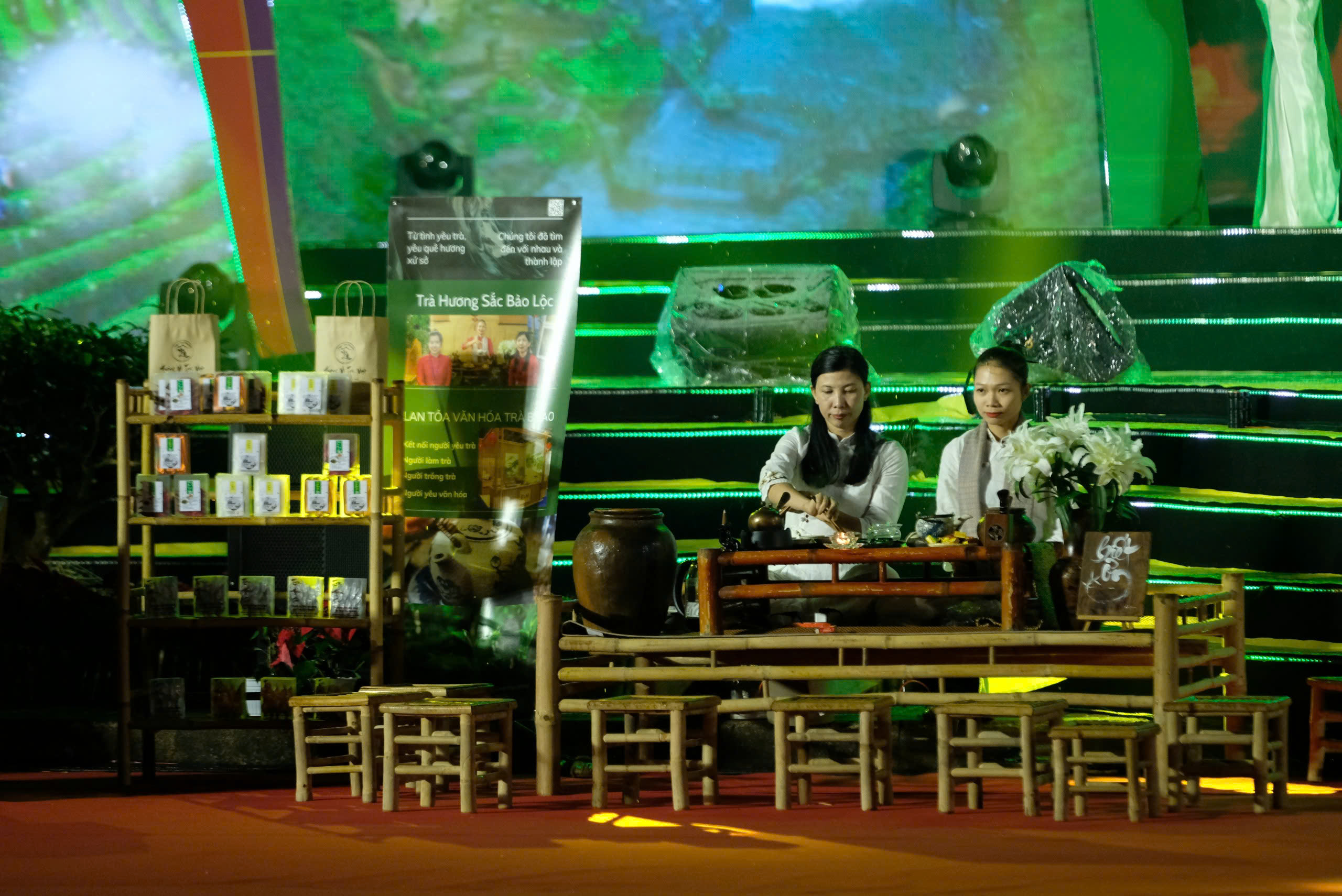
The play tells the history of the B'Lao tea industry.
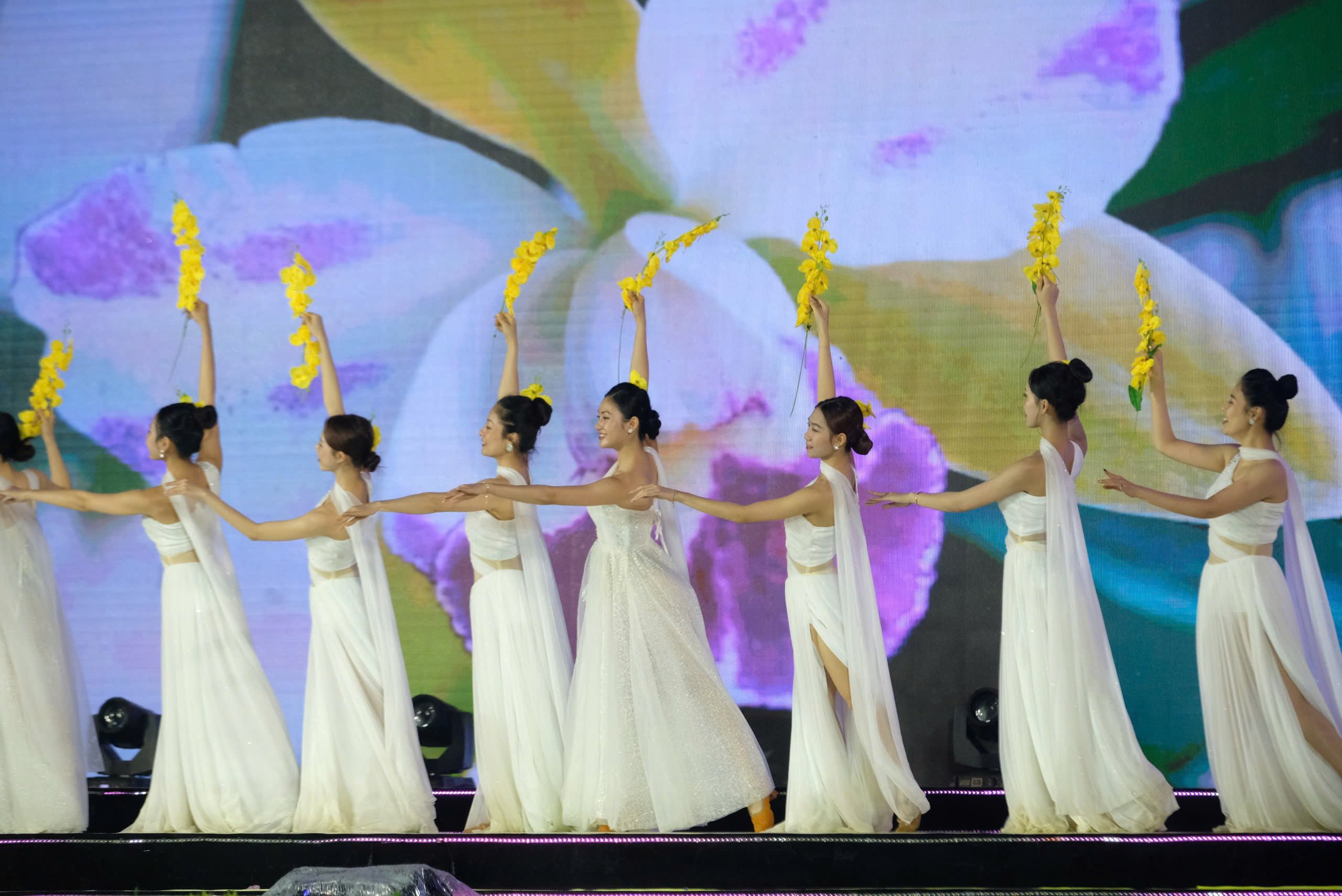
A performance honoring Bao Loc silk.
The art program "Bao Loc, City of Fragrant Tea and Silk" combines singing, dancing, music, and drama with themes praising the beauty of the mountainous city of Bao Loc, stories about the formation of silk weaving and tea processing, and the aspirations of the local people. The performances offer viewers a variety of emotions through the ups and downs of different periods and stories from the past, closely linked to the development of Bao Loc's tea, silk, and orchid products.
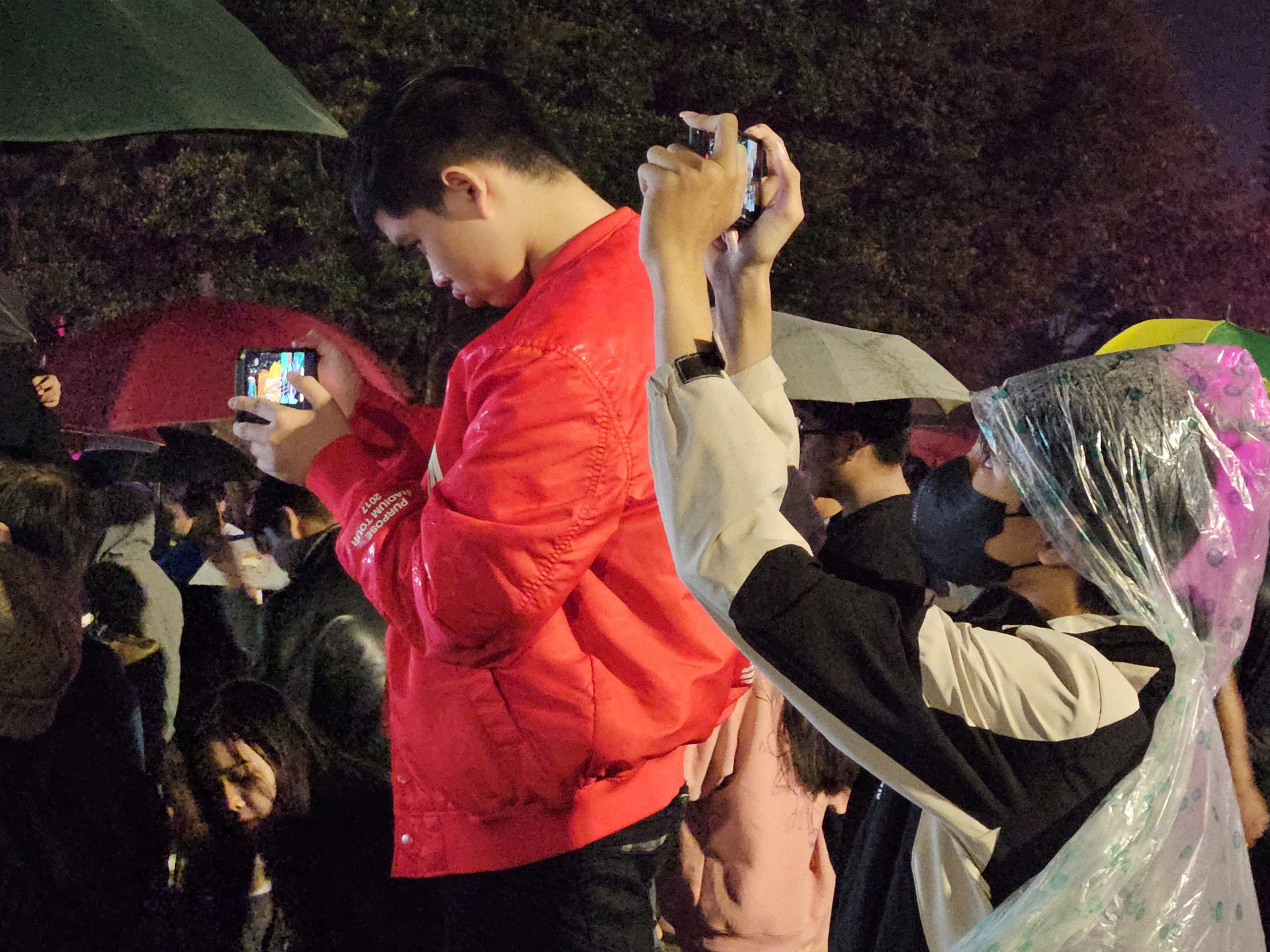
Audience members took photos as souvenirs during the art performance.
Bao Loc City has approximately 3,000 hectares of land dedicated to tea cultivation, with around 160 businesses and establishments involved in tea production, processing, and trading, yielding approximately 23,000 tons per year. In addition, there are about 800 hectares of mulberry plantations, with 600-700 households raising silkworms, producing about 1,500 tons of cocoons annually. Around 30 businesses operate in the silk industry, producing approximately 1,050 tons of silk per year and about 5 million meters of various types of silk fabric. Bao Loc City has registered and granted certification marks "Bao Loc Silk" and "B'Lao Tea" to local businesses and units to serve the market. Exports alone reach tens of millions of USD annually.
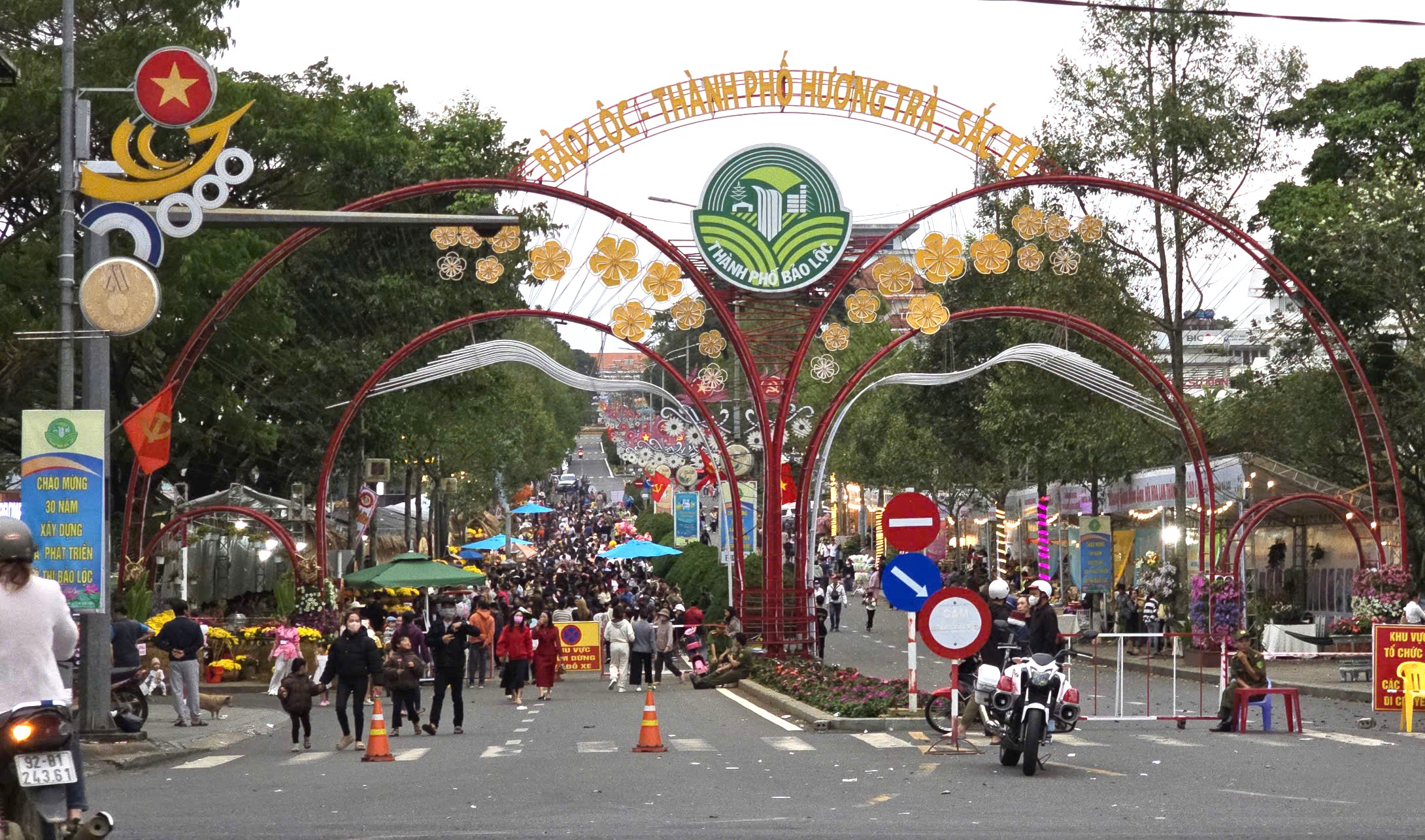
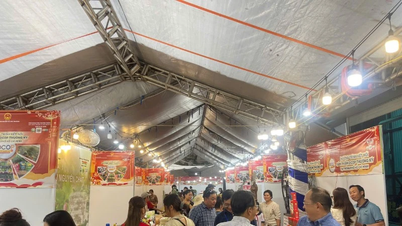
A large number of people flocked to the Night Street - Agricultural Products Market.
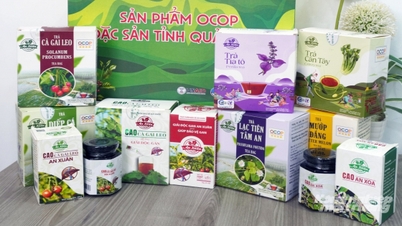
Previously, on December 13th, Bao Loc City inaugurated the Night Market - Agricultural Products and OCOP Products Fair, attracting dozens of stalls from communes, wards, production and business establishments, and households in the area to display, introduce, and promote local specialties such as tea, silk, orchids, coffee, honey, cordyceps, brocade, etc. There was also an area for free tea brewing and tasting demonstrations; displays and introductions of silk products; and demonstrations of the silk production process from mulberry cultivation and silkworm rearing to spinning and weaving, allowing locals and tourists to visit and learn.
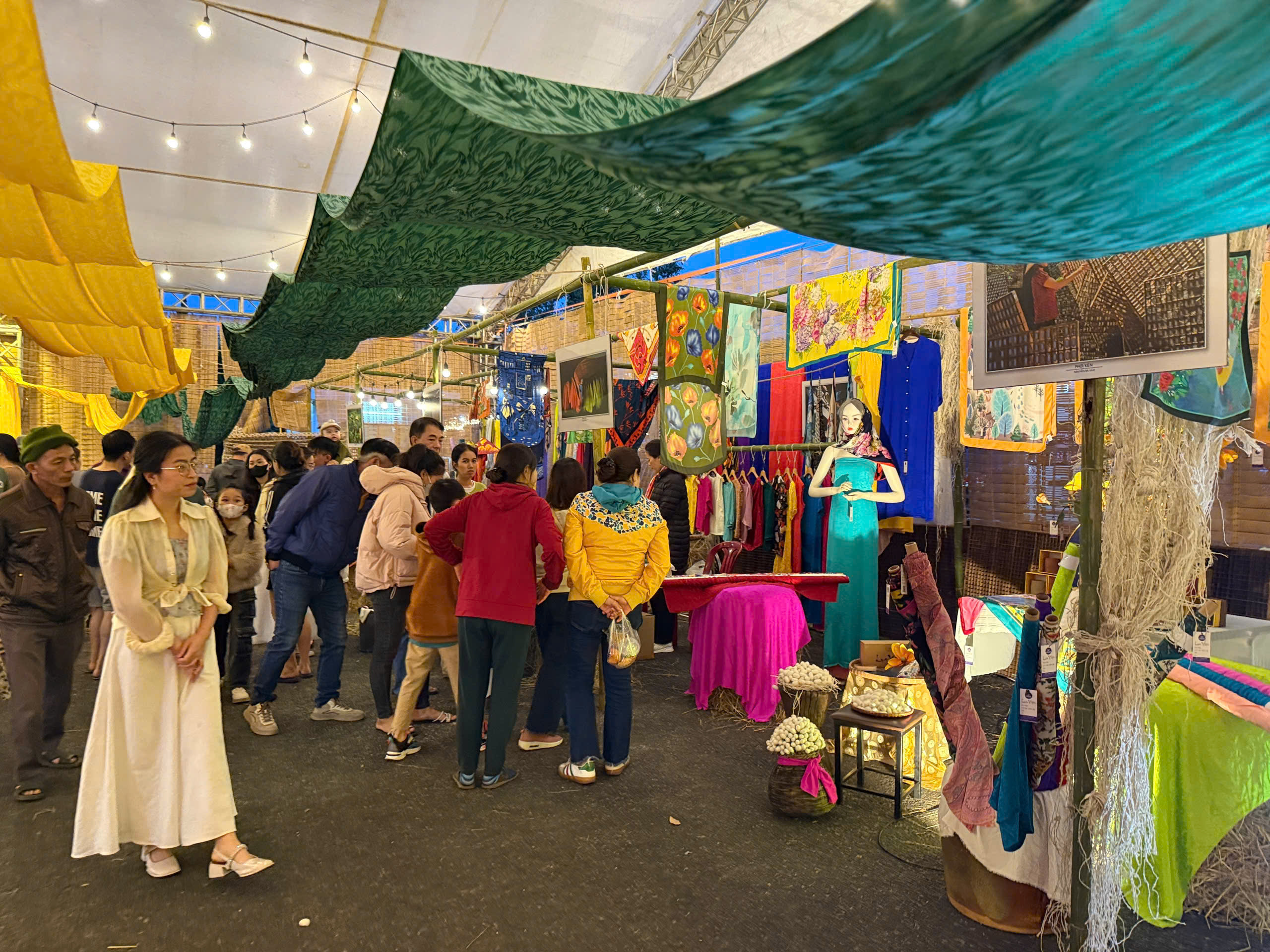
Booth displaying Bảo Lộc silk products.
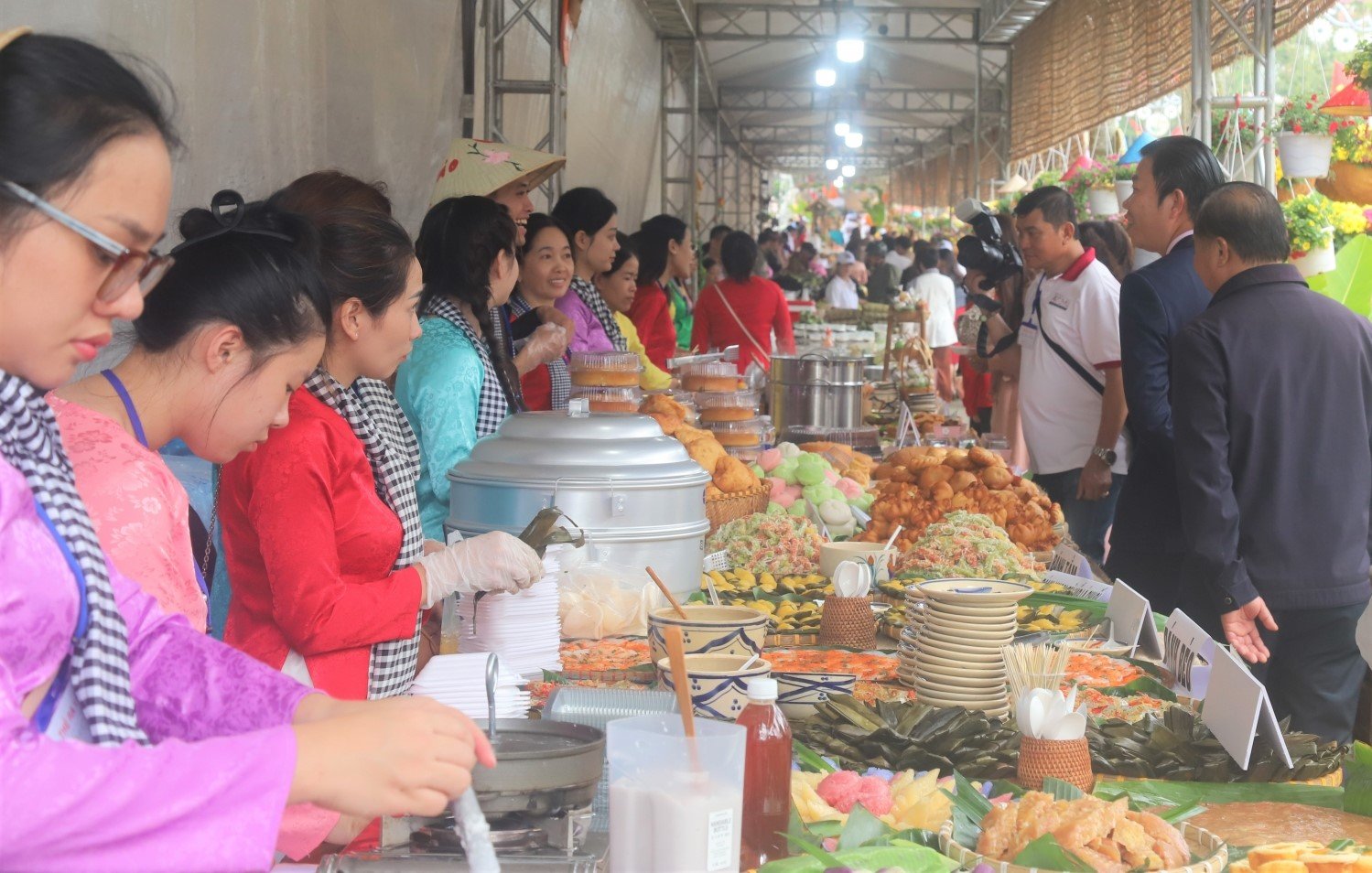
For just 50,000 VND, you can enjoy 7 dishes and drinks of your choice at the stalls of the rural market.
In particular, the traditional market area is designed in a strong, impressive, and beautiful style, with 30 stalls selling a variety of food and specialty agricultural products from all three regions of Vietnam.
Source: https://thanhnien.vn/hang-ngan-nguoi-doi-mua-xem-ton-vinh-tra-to-lua-bao-loc-185241214225137286.htm









































































Comment (0)