

(NLĐO) - Scientists have found the remains of two "zombie" objects floating right in the Earth's oceans.
"We are living in a supernova graveyard," asserted astronomer Brian Fields from the University of Illinois Urbana-Champaign (USA), speaking about Earth and its only natural satellite, the Moon.
That is the result of a study he led, which was recently presented at the American Physical Society's 2025 Global Physics Conference.
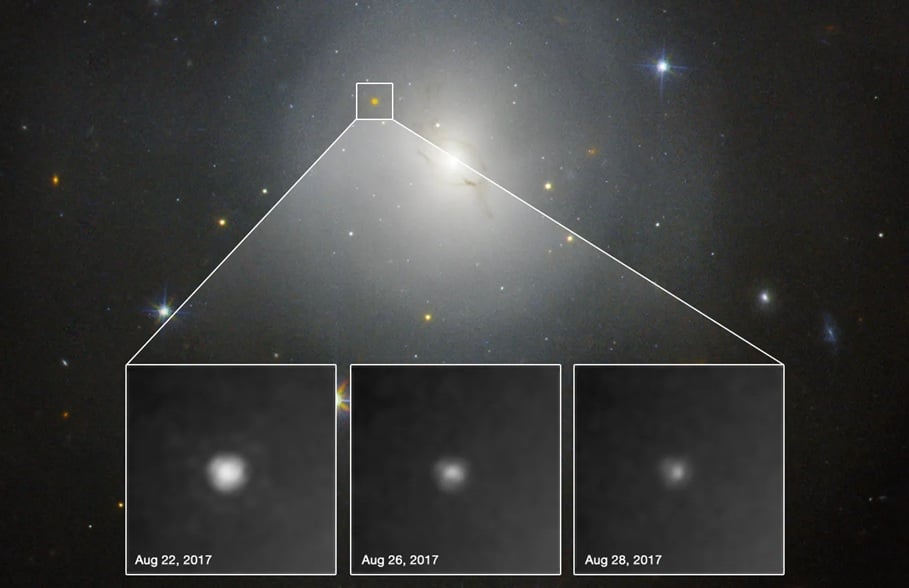
A kilonova was detected by the Hubble Space Telescope - Photo: NASA
According to Dr. Fields, supernovae can create tiny rocky particles that literally fall to Earth. These would accumulate primarily in deep ocean regions and also blanket the surface of the Moon.
Supernovae are the final death of stars, usually occurring after the star has already collapsed once into a "zombie" state, such as white dwarfs and neutron stars.
At some point, or when subjected to some powerful impact, these "zombies" will crumble, releasing throughout the universe the metals that the star forged in its core throughout its life.
Dr. Fields' team began searching for supernova remnants in 2004 and subsequently identified evidence linking two supernova events from 3 and 8 million years ago in samples taken from the deep ocean and the Moon.
This evidence suggests that these radioactive isotopes do not belong to Earth but could only have been created by cosmic events.
In 2021, they made a breakthrough when they identified an extremely rare radioactive isotope of plutonium.
This represents a very unusual, violent way of dying. It's a kilonova, a super-version of a supernova.
This event can only occur when two neutron stars – the most extreme type of "cosmic zombie" – spiral into each other in a catastrophic collision.
Kilonova is also a producer of some of the rarest elements on our planet, such as gold and platinum.
This event is estimated to have occurred approximately 10 million years ago.
The evidence above led the research team to conclude that Earth's oceans, as well as the Moon's oceans, could be giant graveyards of supernovae.
In these places, scientists can search for useful evidence to explain the chemical history of Earth, the solar system, and the universe.
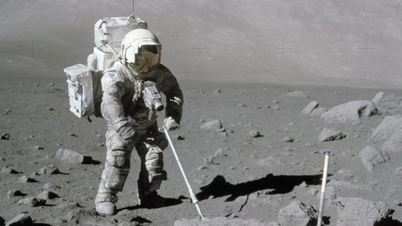
The research team believes the Moon would be the best choice for study because it is geologically simple and it would be easier for spacecraft to approach the satellite to collect samples than searching thousands of meters below the ocean surface.
Source: https://nld.com.vn/hai-thay-ma-vu-tru-phat-no-manh-vo-roi-day-trai-dat-196250321103916091.htm




























































































Comment (0)