

This is even more urgent in the context of climate change, which is increasing the frequency of severe natural disasters. A prime example is the heavy damage recently suffered by several northern provinces of Vietnam, including Hanoi , due to Typhoon No. 3 (Typhoon Yagi).
Severe impact
Typhoon No. 3 swept through Hanoi, causing significant damage in many areas. Besides tens of thousands of trees being broken or uprooted, there was also considerable damage to people's property and vehicles. Mr. Nguyen Nhat Truong, from Dinh Cong urban area, Hoang Mai district, said that during the days the typhoon hit, many car owners parked under trees, lampposts, or utility poles were very worried about their family's property. Because with the length and weight of such trees, lampposts, and utility poles, the consequences would be unpredictable if they fell.
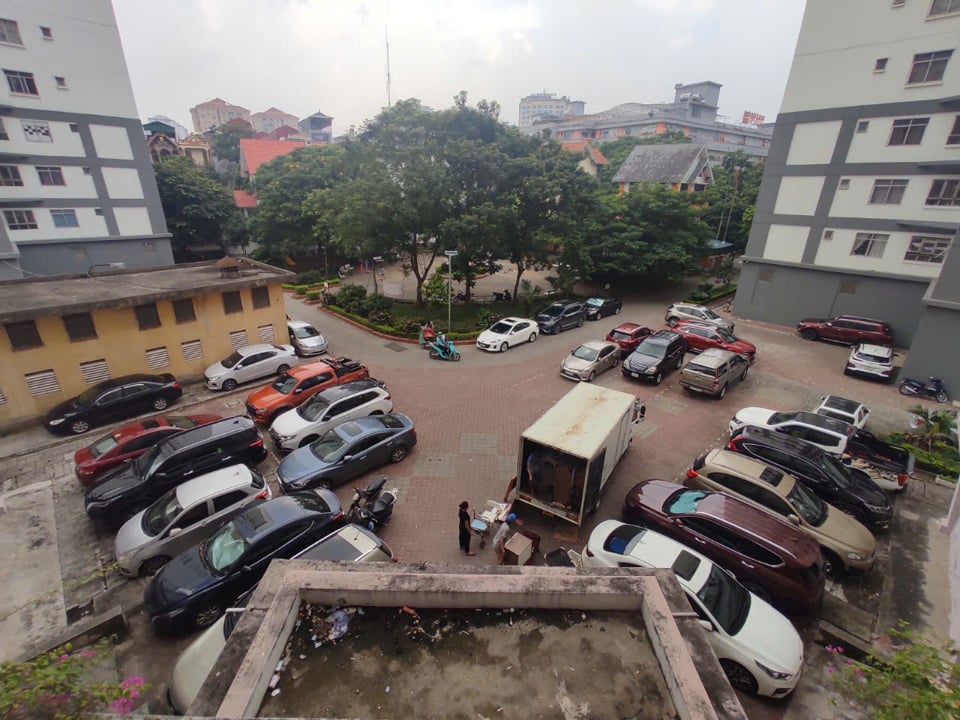
According to Mr. Truong, although the media, newspapers, and local authorities at all levels have regularly warned about the danger of the storm and organized campaigns to advise people to move their vehicles to avoid strong winds, the reality is that in densely populated areas such as Dinh Cong and Linh Dam (Hoang Mai district) or other inner-city districts, finding a safe parking lot is not easy, and even if a suitable parking lot is found, it is already full. Therefore, many families are left with no choice but to park on the roadside, which is usually lined with trees.
Images posted on the media after the storm show that many trees were broken and fell directly onto cars. Indeed, seeing the damaged vehicles deformed by the fallen trees is heartbreaking and regrettable, representing the loss of valuable assets that many families had accumulated over a lifetime.
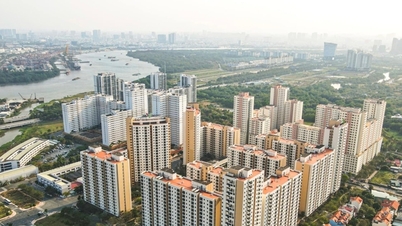
Discussing this issue, Associate Professor Dr. Nguyen Hong Tien, former Director of the Infrastructure Department ( Ministry of Construction ), stated that one of the reasons for property damage after each storm and flood is that Hanoi, as well as some other provinces and cities, have not yet promoted the development of underground spaces, including underground parking lots. In Hanoi, many urban development projects and high-rise apartment buildings have sprung up without basements; some have basements but only for motorbikes, for example, the Linh Dam area. Numerous apartment blocks have been built without parking lots, or if parking lots are available, they are mostly above ground, while the land allocated for this location is limited.
In densely populated inner-city districts, many old apartment buildings constructed in the 1960s lack underground parking spaces. Therefore, residents are forced to utilize parking areas in parks, on streets, sidewalks, and under trees, leaving no safe shelter for their vehicles during storms.
Notably, during the construction of apartment complexes and urban areas, investing in underground parking requires a relatively large additional budget, which developers often overlook. Without underground parking, many buildings are forced to arrange parking on the surface within public spaces… For example, at apartment building 183 Hoang Van Thai (Thanh Xuan district), most residents have to utilize the empty spaces on sidewalks, roadsides, and public areas for parking. Therefore, it can be asserted that the slow development of underground parking leads to negative consequences such as urban flooding; overloaded infrastructure; unsightly parked vehicles; and traffic congestion…
Unleashing the Underground Space
Speaking about the significance and role of underground space development, Associate Professor Dr. Nguyen Hong Tien affirmed that the effective use, exploitation, and development of underground space bring many benefits. Specifically, the first and most obvious benefit is improving the efficiency and quality of urban planning, reorganizing urban construction space; increasing the value of land use and rationally utilizing urban land for housing and public works; and contributing to the formation and development of the underground real estate market. In addition, underground space development contributes to solving urban traffic problems; effectively exploiting land resources; and minimizing the impact of environmental pollution. More importantly, it creates an effect on national security and defense. Accordingly, underground structures are used as a safe defense system in the event of natural disasters or war...
According to Associate Professor Dr. Nguyen Hong Tien, Hanoi is one of the leading localities in developing underground space. Specifically, since 2010, the city has had a policy of burying underground the electricity system, telecommunications system, water supply and drainage works, developing tunnels such as Kim Lien, Thang Long Boulevard, Nguyen Trai, and about 20 underground pedestrian tunnels… However, to meet the development needs of a modern city, to build a capital city of regional and global stature, the city needs to develop underground space even more strongly. To realize this goal, based on Government Decision 1259/QD-TTg of 2011, Hanoi has established a General Plan for Underground Construction Space in the city center. This plan outlines the planning direction for subway lines, underground stations, underground infrastructure systems, underground parking lots, etc.
In the upcoming Hanoi Capital City Planning for the period 2021-2030, with a vision to 2050, and the revised Hanoi Capital City Master Plan to 2045, with a vision to 2065, Hanoi will once again specify the exact locations and sites for underground space development. However, Associate Professor Dr. Nguyen Hong Tien emphasized that, in addition to focusing on underground space and the organization and implementation of underground space plans, the city needs to pay special attention to technical conditions, technology, management capacity, and financial resources.
In particular, the surveying, construction, and maintenance of underground structures require high technology and a high level of technical expertise. Underground constructions often have to meet very high technical standards regarding durability, ventilation, convenient operation, and safety under all conditions, including natural disasters (earthquakes, floods) and fire and explosion emergencies.
Therefore, the city needs programs, projects, and scientific research and technology transfer initiatives to serve the construction and operation of underground structures, meeting the demand for underground construction. This includes improving the management and operation capacity of underground structures, training a workforce capable of adopting modern technology for efficient operation, building a database of urban underground space, and implementing digital transformation in the management of this sector. Regarding financial conditions, the city needs to recognize that initial investment in underground construction requires a very large amount of capital, and therefore a specific mechanism is needed for investment in this sector, as well as mobilizing other resources for investment and construction.
To accelerate the development of underground spaces, Hanoi should first consider using budget funds as "seed" capital to invest in a number of underground projects and parking lots. This would, on the one hand, alleviate the overload of parking infrastructure in densely populated areas, and on the other hand, create a ripple effect in attracting investors to this sector.
Former Director of the Infrastructure Department (Ministry of Construction), Assoc. Prof. Dr. Nguyen Hong Tien
Source: https://kinhtedothi.vn/go-nut-that-quy-hoach-khong-gian-ngam.html
































































































Comment (0)