


According to the National Steering Committee on Collective Economy , as of December 2024, the country had over 33,335 cooperatives, an increase of 4.74% compared to 2023. However, products manufactured by cooperatives are often slow to sell and difficult to export due to a lack of branding. When introduced to the global market, cooperative products still do not meet the stringent standards of many major markets. This further highlights the need to focus on improving the competitiveness of products produced by cooperatives.
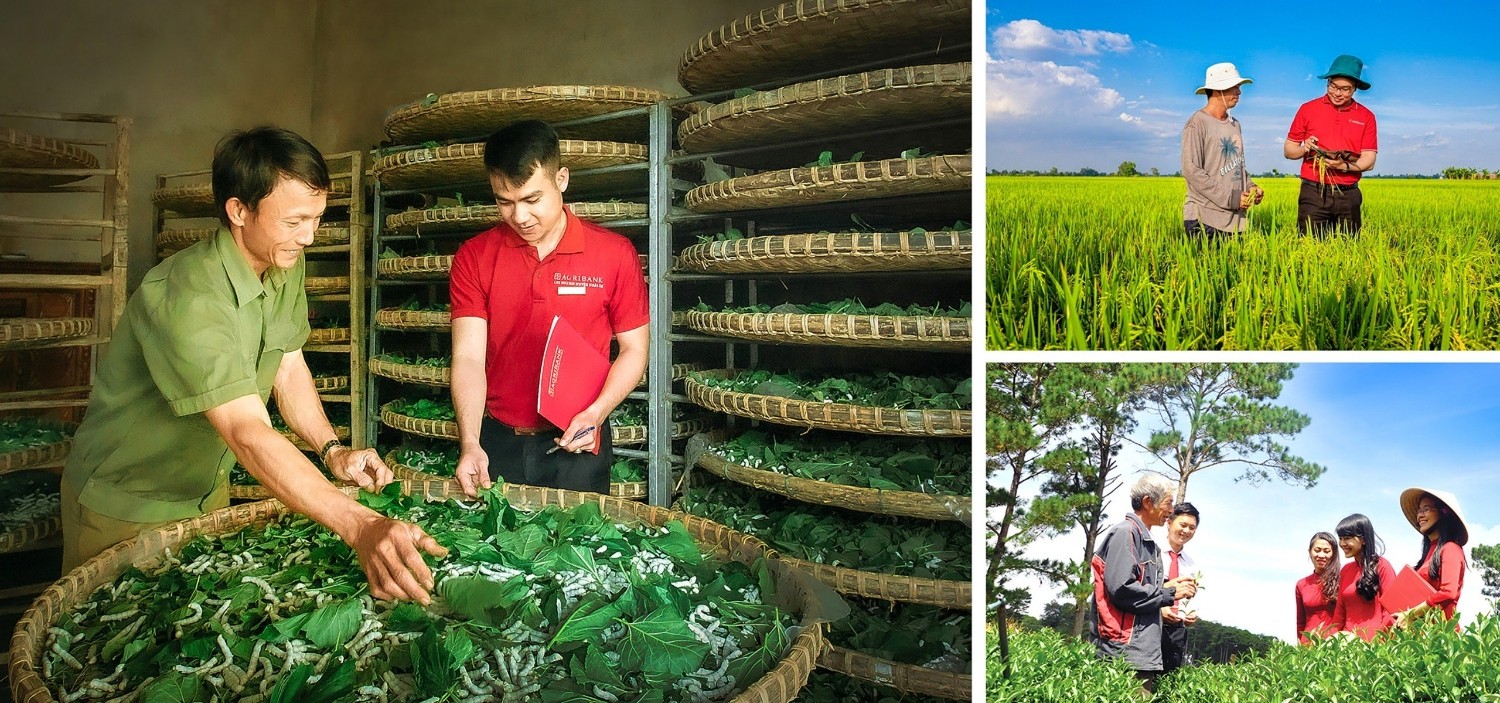 |
| Illustrative image. |
According to Mr. Nguyen Van Hung, Director of Alpha Industrial Joint Stock Company, the company's products are civil and industrial steel products, product lines facing fierce competition from similar products of large foreign corporations. He believes that small and medium-sized cooperatives are currently facing significant pressure regarding capital and technology, making it difficult for them to compete with imported products. A lack of capital also hinders many businesses from expanding their scale and improving their competitiveness in the market.
Furthermore, the quality of human resources is also a challenge for cooperatives. The majority of the workforce in cooperatives comes from the ranks of workers and farmers, lacking professional and technological training. Their knowledge is derived from practical experience, so when working, they are mostly "amateur" managers, making decisions based on emotion.
Dr. Le Thai Ha, a lecturer at RMIT University, noted that the biggest challenge with the cooperative model currently is the procedural obstacles, as well as the transition from household or individual economies to cooperative economies, due to the fact that cooperative leaders have not received adequate business training.
Based on the Law on Cooperatives No. 17/2023/QH15, dated June 20, 2023, Clause 7, Article 4 stipulates that a cooperative is a legal entity established voluntarily by at least 5 official members, cooperating and assisting each other in production, business, and job creation to meet the common economic, cultural, and social needs of its members, contributing to building a sustainable social community; and implementing autonomous, self-responsible, equal, and democratic governance.
However, in reality, cooperatives have not clearly distinguished the boundaries of "jointly owned enterprises" as well as other regulations, leading to a slowdown in overall growth.
In reality, important decisions in many cooperatives are still made collectively. Many issues are not complex, and while cooperative leaders can make decisions, they still have to be discussed at numerous meetings, leading to delays in overall decision-making and causing the cooperative to miss opportunities.
Furthermore, the financial resources and funds allocated to cooperatives are scarce and limited, and approval processes are difficult, leading to an even slower pace of technological transformation in cooperatives, which was already slow.
 |
| Cao Xuan Thu Van, Chairwoman of the Vietnam Cooperative Alliance, speaks at the workshop on insurance for agricultural cooperatives. (Photo: vca.org.vn) |
Recently, at the seminar "Discussing insurance solutions for agricultural production cooperatives in Quang Ninh province," Ms. Cao Xuan Thu Van, President of the Vietnam Cooperative Alliance, stated that the alliance is coordinating with the Ministry of Industry and Trade to organize exhibitions of OCOP products from cooperatives, inviting international cooperative federations to participate and find markets for consumption.
In this context, cooperatives are proactively seeking funding and promoting value chains, building models of cooperatives that closely link with businesses to address the issue of product output.
Many cooperatives have developed training programs linked to specific projects, with domestic and foreign experts providing support and technology transfer directly at the grassroots level.
Therefore, a solid foundation to help cooperatives enhance their competitiveness and thrive in domestic and international markets will focus on key factors such as resources, addressing institutional gaps, finance, governance, and supply chain linkages.
In addition, cooperatives are also striving to establish close links with businesses and ministries to find markets for their products, generating good revenue and supporting production.
Source: https://thoidai.com.vn/go-nut-that-de-hop-tac-xa-but-pha-212787.html






















![[Photo] A large number of people offer incense and visit the Ho Chi Minh Memorial Church.](https://vphoto.vietnam.vn/thumb/1200x675/vietnam/resource/IMAGE/2026/02/21/1771668099014_ndo_br_12-resize-7721-jpg.webp)








































































Comment (0)