

Winter has arrived in Northern Vietnam. The biting cold reminds us of rich, rustic dishes made from the canarium fruit.
The Canarium tree is widely distributed in the mountainous regions of Northeast Vietnam, such as Cao Bang , Bac Kan, Lang Son, and Tuyen Quang provinces. In late autumn and early winter, when the Canarium trees begin to ripen, ethnic minority people start harvesting black and green Canarium fruits to sell at the local markets.
In the old days, fresh canarium fruits were sold in abundance at the local markets in my hometown in the delta. When I was little, going to the market with my mother always meant stopping by the canarium fruit section. My mother would often buy a couple of kilograms of green canarium fruits to stew with crucian carp or braise with pork belly for the whole family to eat over five or seven days. The canarium fruit has a distinctive sour and astringent taste, but we children would grab a piece and immediately gnaw on it, then make faces and stick out our tongues...
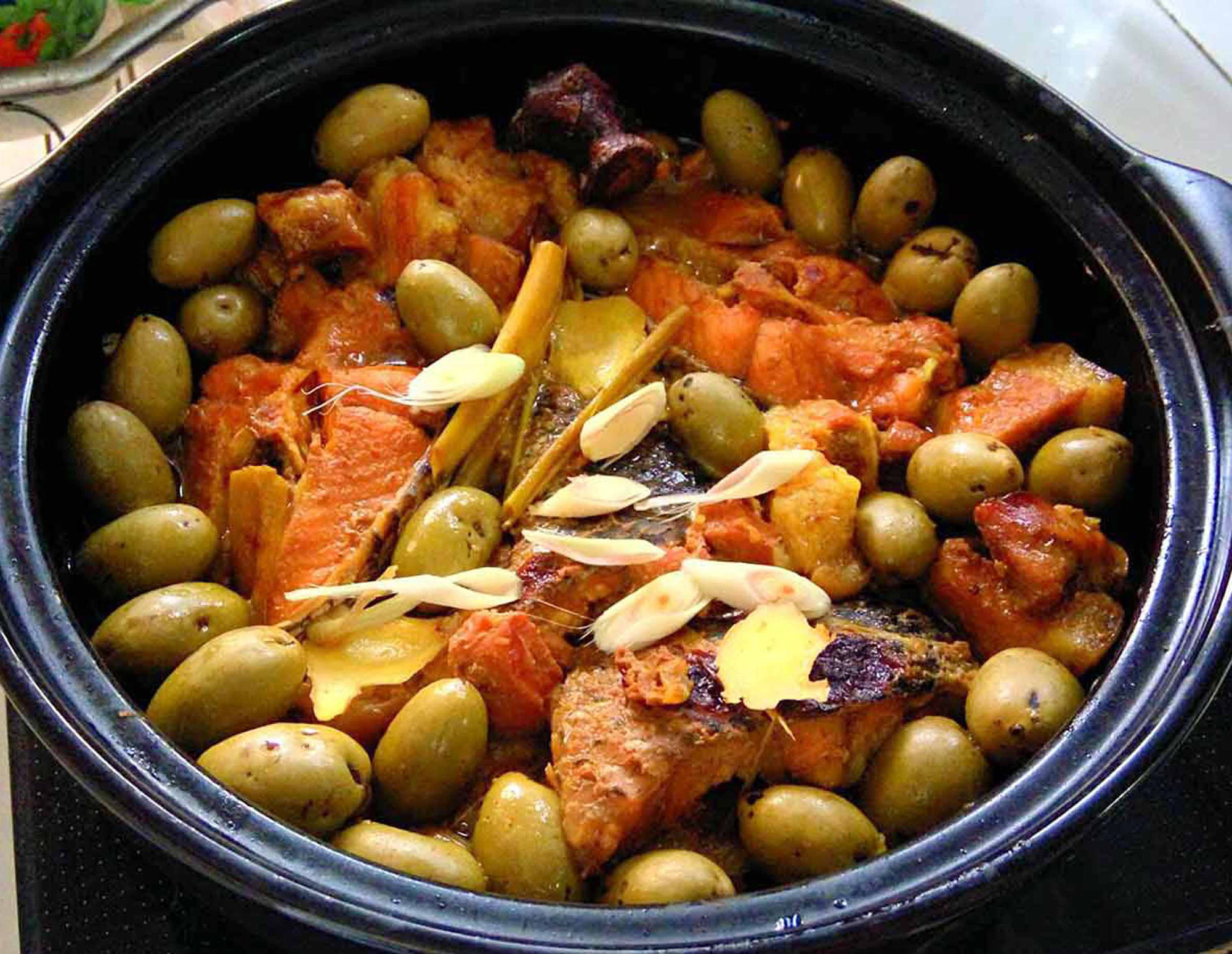
Preparing delicious dishes from canarium fruit is truly a meticulous process. If using whole canarium fruits, they must be pre-processed by cutting them in half and separating the pointed, rhombus-shaped seeds. Then, the seeds are soaked and rinsed thoroughly in diluted salt water. Next, the seeds must be boiled in 2-3 batches of boiling water, then the water is discarded to soften the fruit and remove some of its astringent taste.
The dark yellow, softened canarium fruit pieces, still retaining their sourness, now just waiting to be combined with pork belly or crucian carp along with spices such as galangal, ginger, and fermented rice paste... will create a delicious dish. The tangy sourness of the canarium fruit blends with the rich fat of the pork belly or the fishy smell of the fish, leaving a lasting impression on diners.
Braised olives are a great accompaniment to rice. And eating them in the cold winter weather is truly perfect. Parents often give them to the children and remind them to eat more meat and fish to grow up quickly. But every time, the braised olives are always gone, leaving only the meat and fish behind...
Later, when I had the opportunity to visit some mountainous provinces in Northeast Vietnam and wander through the markets, I had the chance to enjoy black olive sticky rice. Previously, the Tay and Nung ethnic groups in the highlands used to make black olive sticky rice to eat at weddings, housewarmings, and memorial services... But now, they make this dish to sell to tourists from near and far.
Only the finest glutinous rice grains are selected to make sticky rice with canarium fruit. The white color of the sticky rice mixed with the dark, purplish hues of the canarium fruit creates a uniquely appealing dish. Even before eating, just sitting near a plate of sticky rice with canarium fruit, you can smell the fragrant aroma. Sticky rice with canarium fruit has a rich, creamy flavor but isn't as cloying as other types of sticky rice.
These days, in the city, it's rare to find a delicious braised canarium fruit meal like in the old days. The cold northeast winds only intensify our memories of warm family meals, the playful squabbles of sisters vying for the last piece of braised canarium fruit on the plate...



Source: https://nld.com.vn/diem-den-hap-dan/gio-lanh-ve-nho-mon-tram-kho-20210107221458155.htm


![OCOP during Tet season: [Article 4] Elevating local products](/_next/image?url=https%3A%2F%2Fvphoto.vietnam.vn%2Fthumb%2F402x226%2Fvietnam%2Fresource%2FIMAGE%2F2026%2F01%2F29%2F1769652810578_2935-z6982071462129_649e82db06fb2f2ea701388b1f5f5b0b-173322_176-185229-202804_457.jpeg&w=3840&q=75)


![OCOP during Tet season: [Part 3] Ultra-thin rice paper takes off.](/_next/image?url=https%3A%2F%2Fvphoto.vietnam.vn%2Fthumb%2F402x226%2Fvietnam%2Fresource%2FIMAGE%2F2026%2F01%2F28%2F1769562783429_004-194121_651-081010.jpeg&w=3840&q=75)

![OCOP during Tet season: [Part 2] Hoa Thanh incense village glows red.](/_next/image?url=https%3A%2F%2Fvphoto.vietnam.vn%2Fthumb%2F402x226%2Fvietnam%2Fresource%2FIMAGE%2F2026%2F01%2F27%2F1769480573807_505139049_683408031333867_2820052735775418136_n-180643_808-092229.jpeg&w=3840&q=75)




Comment (0)