

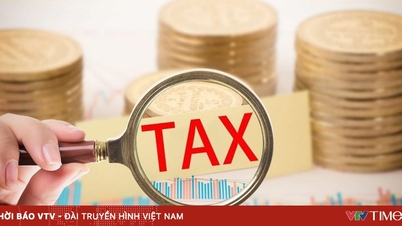
In 2025, another information technology application will be implemented in tax management: an electronic portal for households and individuals engaged in e-commerce and digital business to register, declare, and pay taxes.
In 2025, another information technology application will be implemented in tax management: an electronic portal for households and individuals engaged in e-commerce and digital business to register, declare, and pay taxes.
"Introducing this application into tax management will minimize the number of e-commerce businesses trying to evade taxes," said Ms. Nguyen Thi Cuc, President of the Vietnam Tax Consulting Association.
 |
| Ms. Nguyen Thi Cuc, President of the Vietnam Tax Consulting Association |
Following the launch of the e-commerce portal for foreign suppliers (etaxvn.gdt.gov.vn), the tax authorities have recently launched an e-commerce portal for households and individuals engaged in business activities to register, declare, and pay taxes. What is your assessment of this development?
The implementation of etaxvn.gdt.gov.vn has proven highly effective in tax management, not only increasing state budget revenue and reducing the workload in tax administration, but also minimizing the time, effort, and costs for taxpayers, and facilitating compliance with tax laws by foreign suppliers not present in Vietnam when generating revenue in Vietnam.
According to data from the General Department of Taxation, from the time the etaxvn.gdt.gov.vn website was launched (March 21, 2022) until now, 120 foreign suppliers have registered, declared taxes, and paid taxes. The total amount of taxes declared and paid directly through etaxvn.gdt.gov.vn in 2024 is 8,687 billion VND, an increase of 26% compared to the same period in 2023, exceeding the projected target by 74%.
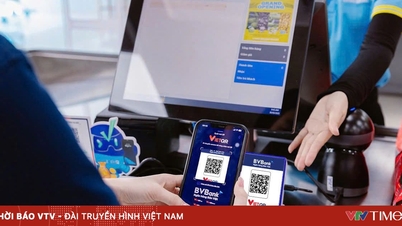
Following the successful application of information technology in tax management for foreign suppliers, on December 19, 2024, the tax authorities launched an electronic portal for household and individual businesses to register, declare, and pay taxes from e-commerce. This portal will support all household and individual businesses operating on e-commerce platforms such as Shopee, Lazada, and Tiki; providing goods and services on social media platforms like Facebook and Zalo; individuals receiving income from advertising on platforms like Google and YouTube; individuals providing software on app stores like CH Play and Apple Store; and those with income from business on other platforms to easily and conveniently register for, declare, and pay taxes.
The portal contributes to improving the efficiency of tax management for e-commerce business activities. Taxpayer declaration information is a crucial source of data in the large e-commerce database; serving risk-based tax management, helping tax authorities identify non-declaration, non-payment, and tax evasion; and meeting the requirements of state management of e-commerce through the digital environment.
Do you think that launching this portal will help reduce tax fraud and evasion in e-commerce?
Absolutely, because the tax authorities are very aggressive in combating tax evasion in e-commerce businesses, following directives from the Government, the Prime Minister, and the Ministry of Finance . Many cases of tax evasion have been detected, recovered, fined, and even investigated, prosecuted, and brought to trial by the police. In response to this, many online businesses and those earning income have proactively gone to the tax authorities to declare and pay their taxes.
Filing and paying taxes in person is very time-consuming and laborious for both the tax authorities and taxpayers. In cases of late or underpayment, taxpayers suffer losses and, in many cases, are fined for failing to file and pay taxes on time. Therefore, with the establishment of a tax portal, I believe that taxpayers will comply with tax laws better, and tax fraud and evasion in e-commerce businesses will be significantly reduced.
What advantages do e-commerce businesses gain from registering and filing taxes through the electronic portal, Madam?
According to current regulations, households and individuals engaged in commercial business (regardless of whether it's traditional business or e-commerce) that are registered must pay taxes at a rate of 1.5% on revenue, of which 1% is value-added tax and 0.5% is personal income tax; service provision activities are subject to a 7% commission, of which 5% is value-added tax and 2% is personal income tax. However, e-commerce businesses do not have a specific, fixed address, so they cannot register their business. Without registration and tax declaration, when income is generated, a provisional 10% personal income tax must be deducted from the income, and at the end of the year, taxes must be declared, settled, and paid according to the progressive tax rate schedule, ranging from 5% to 35%.
I have met and spoken with many livestreamers whose sales revenue reaches tens, even hundreds of billions of VND, and many e-commerce businesses with very high incomes. They all want to register for tax, declare taxes, and pay taxes. When the online tax portal becomes operational, e-commerce businesses will certainly proactively register for tax, declare taxes, and pay taxes because they will only have to pay 1.5% of their revenue or 7% of their commissions. A reasonable tax rate will enhance taxpayer compliance and reduce tax fraud.
Digital transformation is being implemented very strongly. How do you assess the application of information technology in tax administration?
I have traveled to Indonesia, the Philippines, and many other countries to learn how they apply information technology to tax administration. But now, even modestly, I must say that Vietnam has applied information technology to tax administration ahead of many countries in the world and the region, including those countries from which the tax sector once went to learn from experience.
While many countries are still struggling with how to manage individual tax payments, Vietnam has the eTaxmobile app. With this app, individuals can register for an electronic tax transaction account with the tax authorities using only a smartphone with an internet connection; look up their personal income tax obligations; registration fees; non- agricultural land use tax; land-related financial obligations, etc.; and pay taxes electronically through online integration with commercial banking systems. Importantly, with just a phone, anywhere, individuals can access tax declaration records; tax settlements; taxpayer information; dependent information; and many other convenient services.
Besides the existing information technology system, the tax sector will soon be applying a "virtual assistant," which will take taxpayer support activities to a new level, Madam?
The General Department of Taxation is piloting a virtual assistant (Chatbot) application to support taxpayers. I was invited to attend the launch ceremony of the Chatbot at the Hanoi Tax Department. There, I asked the Chatbot about the 2024 personal income tax settlement process if I have multiple sources of income, and I received a detailed answer and guidance in less than 5 seconds.
By proactively embracing digital transformation and strongly applying information technology, I understand that in 2024, the tax sector supported over 3.2 million taxpayers through email, social media, and the tax authority's website. This is a fast, effective, and cost-saving form of support, in line with the trend of digital transformation.
After launching the e-commerce-based tax registration, declaration, and payment portal for households and individual businesses, the tax authorities will deploy chatbots and a range of other information technology applications to support taxpayers. In reality, only with better support for taxpayers and more reasonable tax policies will tax compliance among individuals and businesses increase, and tax evasion be minimized.
The application of information technology to support taxpayers not only benefits taxpayers, but also reduces risks for tax authorities, and minimizes workload and pressure.
Source: https://baodautu.vn/giam-thieu-gian-lan-thue-kinh-doanh-qua-mang-d241076.html



































![[Photo] Prime Minister Pham Minh Chinh receives the Chinese Ambassador to Vietnam](https://vphoto.vietnam.vn/thumb/1200x675/vietnam/resource/IMAGE/2026/04/05/1775397481797_ndo_br_dsc-5512-jpg.webp)







































































Comment (0)