

Sufficient water for daily use throughout the dry season.
Traditionally, people in ethnic minority communities in highland communes such as Pa Ủ, Thu Lũm, Pa Vệ Sủ, Tà Tổng… in Mường Tè district, Lai Châu province, have relied on stream water for bathing, washing, cooking, and drinking. Every day, they go to the streams to carry water back for daily use. Water sources are often scarce during the dry season and frequently polluted due to livestock roaming freely.
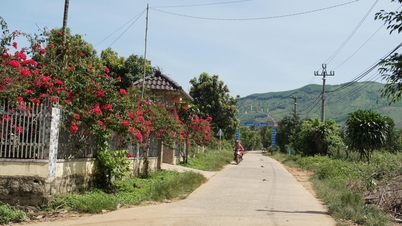
However, with the strong determination of the Lai Chau provincial authorities, especially the investment and support from the State through national target programs, new rural development support programs, poverty reduction programs 135 and 30a… for ethnic minorities and economically underdeveloped areas, the quality of life has gradually improved: village roads; clean and hygienic water supply facilities; and community centers have been prioritized for investment.
Mr. Vu Van Cuong, Vice Chairman of the People's Committee of Muong Te District, said: "In recent times, using funds from national target programs, the New Rural Development Program, Program 135, Program 30a, etc., Muong Te District has focused on prioritizing the construction of clean water facilities to ensure water supply for people in the district. This has helped people feel secure in their production and stabilize their lives."
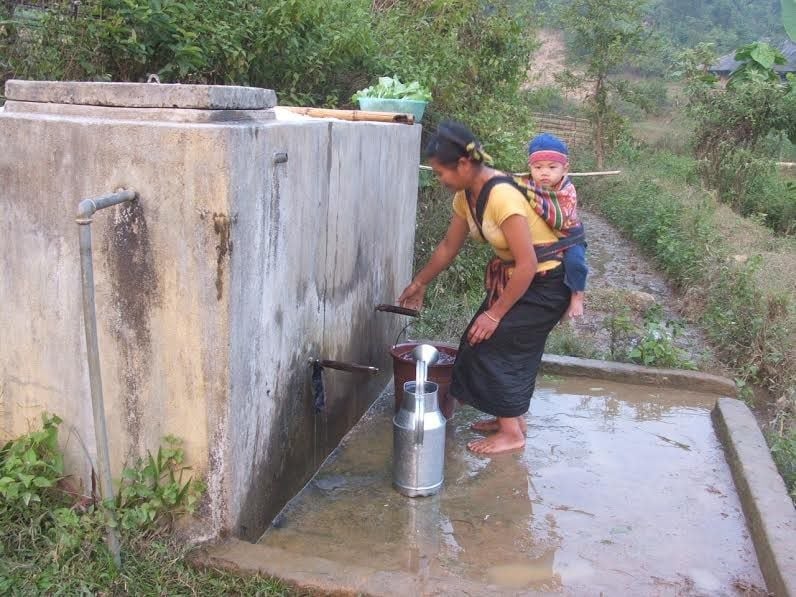
To date, the District People's Committee has invested in the construction of 114 hygienic water supply projects in communes and villages throughout the district, using funds from programs 135/CP, 30a/CP, and the New Rural Development program. Water is sourced from streams, springs, and groundwater, flowing through pipes directly to the reservoirs. Depending on the village, each reservoir has a capacity of 5-20 m³ of water, depending on the water source and the needs of the residents. All projects are built within residential areas, far from landslide-prone areas, to ensure their effectiveness.
Access to clean water is a great aspiration of the people, especially those in remote areas and ethnic minority communities. For many years, they have lived in conditions of water scarcity and unsafe water sources… Now, clean water has reached their villages, and people no longer have to spend a lot of time carrying water home as before. – Mr. Cuong said.
Ms. Chìu Tài Múi from Bum Tở commune shared: "Previously, to get water for daily use, my family often had to carry water for kilometers, which was tiring and time-consuming. The water from the streams was also not hygienic, affecting our health. Especially during the dry season, we had to travel dozens of kilometers to get drinking water. Since the Party, the State, and the government have invested in building water supply facilities for the village, my family is very happy because the water is both clean and convenient. With water in the village, we have more time to focus on labor and production to develop the economy and reduce poverty. As a result, we no longer worry about shortages of rice or drinking water."
Save time… focus on production to reduce poverty.
According to Mr. Vu Van Cuong, Vice Chairman of the People's Committee of Muong Te District: In recent years, clean water has always been a matter of concern for all levels of government and specialized agencies in the district. Currently, the percentage of households using hygienic water in the district is 95.9%. The percentage of households without access to clean water is 4.1%. From 2016 to 2022, the percentage of households using hygienic water increased to 9,968 out of 10,389 households. Ten new water supply projects have been invested in and put into operation in 8 communes of the district.
To manage, utilize, and ensure the long-term sustainability of water supply facilities, the People's Committees of communes and towns assigned to manage these facilities have established management teams in each village. They have also developed operational regulations and regularly supervise these teams, carrying out monthly and quarterly maintenance and minor repairs to ensure the supply of clean water to the people.
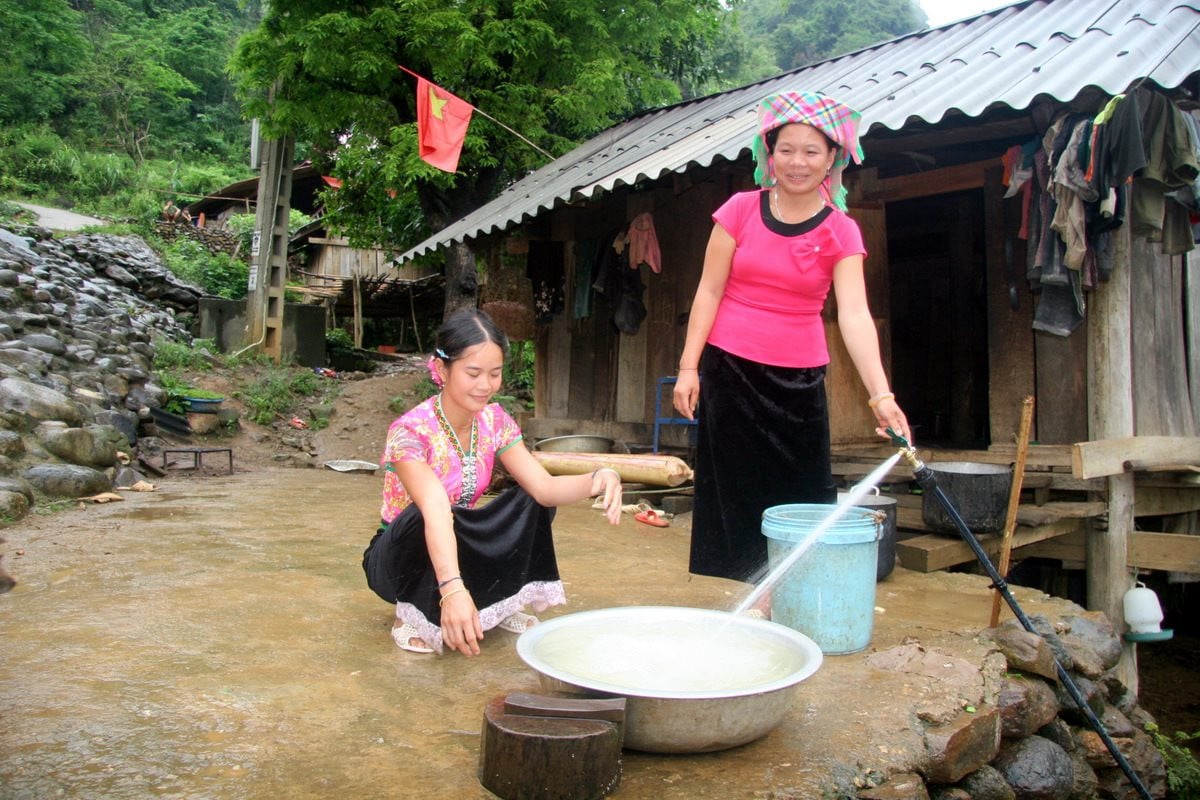
Furthermore, the specialized agencies of Muong Te district actively coordinate with communes and towns to disseminate information on techniques for repairing clean water facilities that have been invested in by the State. Along with this, they encourage people to raise awareness of water conservation, linked to the task of protecting forests, especially in areas at the headwaters of water sources. They regularly clean water tanks, refrain from disposing of garbage around them, and ensure hygienic water sources. In water channels and headwater springs, they prohibit livestock grazing and farming, regularly clear vegetation, and proactively inspect pipes and the quality of water supply facilities, promptly notifying local authorities if any problems are detected.
The centralized domestic water supply system has made a significant contribution to improving and enhancing the lives of people in Muong Te district. Recognizing the value of the clean water system, the people have strictly adhered to its management, operation, and use, ensuring its effectiveness. The benefits of these clean water projects have gradually transformed the appearance and lives of the people here, especially the ethnic minority communities.
In addition to clean water projects for domestic use, Muong Te district has also built 139 irrigation projects to provide water for rice fields, cornfields, and other crops, ensuring timely planting, increasing productivity, and contributing to poverty reduction. Furthermore, the entire district has 57 domestic water supply projects in good working condition, 34 projects operating at an average level, and 16 projects in poor or damaged condition that will be repaired and renovated in the near future.
Source

![[Image] The tenacious fighting spirit of Vietnamese women's football](/_next/image?url=https%3A%2F%2Fvphoto.vietnam.vn%2Fthumb%2F1200x675%2Fvietnam%2Fresource%2FIMAGE%2F2025%2F12%2F17%2F1765990260956_ndo_br_4224760955870434771-copy-jpg.webp&w=3840&q=75)
![[Image] Leaked images ahead of the 2025 Community Action Awards gala.](/_next/image?url=https%3A%2F%2Fvphoto.vietnam.vn%2Fthumb%2F1200x675%2Fvietnam%2Fresource%2FIMAGE%2F2025%2F12%2F16%2F1765882828720_ndo_br_thiet-ke-chua-co-ten-45-png.webp&w=3840&q=75)
![[Photo] Prime Minister Pham Minh Chinh receives the Governor of Tochigi Province (Japan)](/_next/image?url=https%3A%2F%2Fvphoto.vietnam.vn%2Fthumb%2F1200x675%2Fvietnam%2Fresource%2FIMAGE%2F2025%2F12%2F16%2F1765892133176_dsc-8082-6425-jpg.webp&w=3840&q=75)
![[Live] 2025 Community Action Awards Gala](/_next/image?url=https%3A%2F%2Fvphoto.vietnam.vn%2Fthumb%2F1200x675%2Fvietnam%2Fresource%2FIMAGE%2F2025%2F12%2F16%2F1765899631650_ndo_tr_z7334013144784-9f9fe10a6d63584c85aff40f2957c250-jpg.webp&w=3840&q=75)
![[Photo] Prime Minister Pham Minh Chinh receives Lao Minister of Education and Sports Thongsalith Mangnormek](/_next/image?url=https%3A%2F%2Fvphoto.vietnam.vn%2Fthumb%2F1200x675%2Fvietnam%2Fresource%2FIMAGE%2F2025%2F12%2F16%2F1765876834721_dsc-7519-jpg.webp&w=3840&q=75)










































![[Live] Closing Ceremony and Award Presentation for the "Impressive Vietnam Tourism" Video/Clip Creation Contest 2025](https://vphoto.vietnam.vn/thumb/402x226/vietnam/resource/IMAGE/2025/12/17/1765974650260_z7273498850699-00d2fd6b0972cb39494cfa2559bf85ac-1765959338756946072104-627-0-1338-1138-crop-1765959347256801551121.jpeg)













Comment (0)