

 |
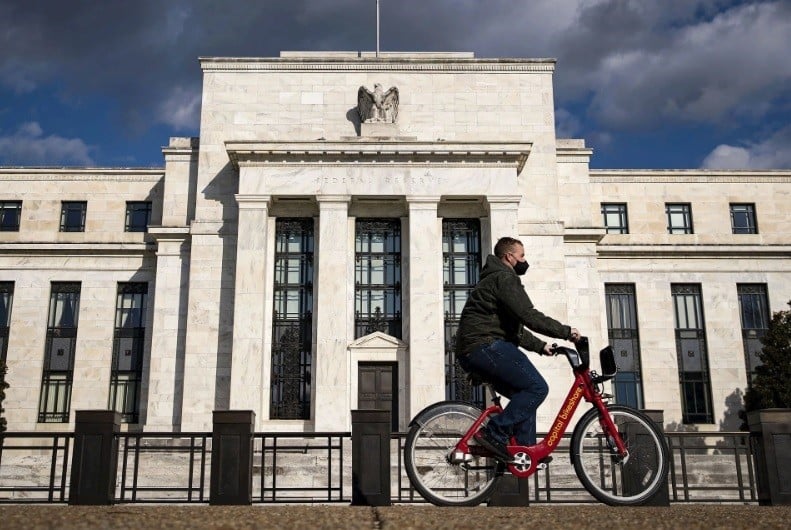
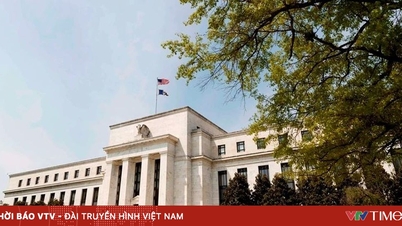
| Over the past year, the Fed has consistently cited a weakening economy as the justification for pausing interest rate hikes. (Source: Reuters) |
The risk of high inflation is ever-present.
Some Fed officials still favor raising interest rates, arguing that rate cuts are possible afterward. However, others see the risks as more balanced. They fear that raising interest rates and further weakening the economy is unnecessary, or that it will trigger a new wave of financial instability.
The shift towards a more balanced outlook on interest rates is reinforced by data: inflation and the labor market are easing. Furthermore, the unusually rapid interest rate hikes implemented over the past year and a half will continue to weaken consumer demand in the coming months.
Fed officials have decided to raise interest rates in 11 out of their last 12 meetings, most recently by 0.25 percentage points in July 2023, bringing the benchmark rate to 5.25-5.5%, the highest in 22 years. They appear to have reached a broad consensus on keeping interest rates unchanged at their meeting on September 19-20, to allow more time to assess how the economy will react to the rate hike.
The most pressing question is what factors will push the Fed to raise interest rates in November or December.
In June 2023, most officials at the agency maintained the view that two more small interest rate hikes were needed, meaning a 0.25 percentage point increase between now and the end of 2023 (following the 0.25 percentage point increase in July). However, whether or not to actually raise interest rates remains an open question.
Over the past year, the Fed has consistently used the weakening economy as the justification for halting interest rate hikes. As inflation eased, that burden shifted to robust economic growth – using this as a reason to anchor interest rates higher.
That's exactly what Fed Chairman Jerome Powell recently mentioned: the risk that better-than-expected economic activity will dampen recent progress in the fight against inflation.
Evidence of better-than-expected growth "could jeopardize progress in combating inflation, potentially necessitating further tightening of monetary policy," Powell stated at the Jackson Hole conference last August.
Prioritizing defense policy
Within the Fed, there is a faction that remains concerned about inflation and advocates for a hedging policy against inflation by raising interest rates this fall. These policymakers fear that ending the monetary tightening campaign will only lead to the Fed realizing months later that the policy implementation was insufficient.
This shortcoming would cause particularly significant disruption if financial markets were swept up in the view of falling inflation and lower interest rates, only to realize the opposite reality.
In an interview last year, Cleveland Fed President Loretta Mester stated: “Over-tightening is a risk. But we’ve underestimated inflation. Letting inflation continue for longer is also damaging to the economy. I would be prepared to cut interest rates fairly quickly next year.”
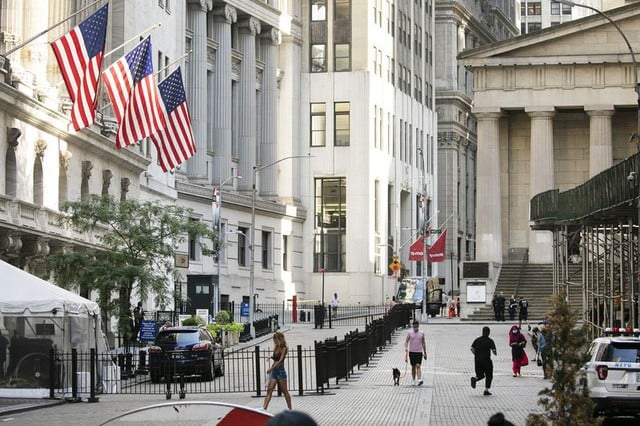 |
| Some Fed officials fear that raising interest rates and further weakening the economy is unnecessary or will trigger a new wave of financial instability. (Source: AP) |
Last week, Fed Governor Christopher Waller also suggested that the US central bank should raise interest rates if it deems it necessary. He argued that another slight rate hike wouldn't necessarily push the world's number one economy into recession.
Sharing this view is Dallas Fed President Lorie Loga, who believes that not raising interest rates this September does not mean the Fed has completely stopped its rate hike path.
Keep interest rates high for a longer period of time.
Another school of thought leans towards advocating for a halt to interest rate hikes. They want to shift the focus from the maximum rate hike to maintaining current rates for a certain period. The US economy maintained a growth rate of 2.1% in the second quarter of 2023 and could reach over 3% in the third quarter.
But this group of Fed officials is skeptical about the prospect of stable growth, especially as the economies of China and Europe slow down, and the US will also feel the negative impact of interest rate hikes due to the lag effect.
According to Susan Collins, President of the Boston Federal Reserve, the risk of rising and prolonged inflation now needs to be balanced against the risk that excessive monetary tightening will lead to a more severe economic downturn. The Fed needs patience during this current policy cycle.
The yield on 10-year US Treasury bonds has risen from 3.9% to 4.25% since the Fed's policy meeting in July. This has increased borrowing costs, especially mortgage rates, which recently reached a 22-year high.
Many also worry that if a subsequent interest rate hike proves unnecessary, the rate-cutting process will be more complicated and have worse consequences than what hawkish officials have anticipated.
Source


![[Image] First Congress of the Vietnam Science and Technology Trade Union](/_next/image?url=https%3A%2F%2Fvphoto.vietnam.vn%2Fthumb%2F1200x675%2Fvietnam%2Fresource%2FIMAGE%2F2025%2F12%2F24%2F1766552551054_ndo_tr_img-1801-jpg.webp&w=3840&q=75)


























































































Comment (0)