

 |
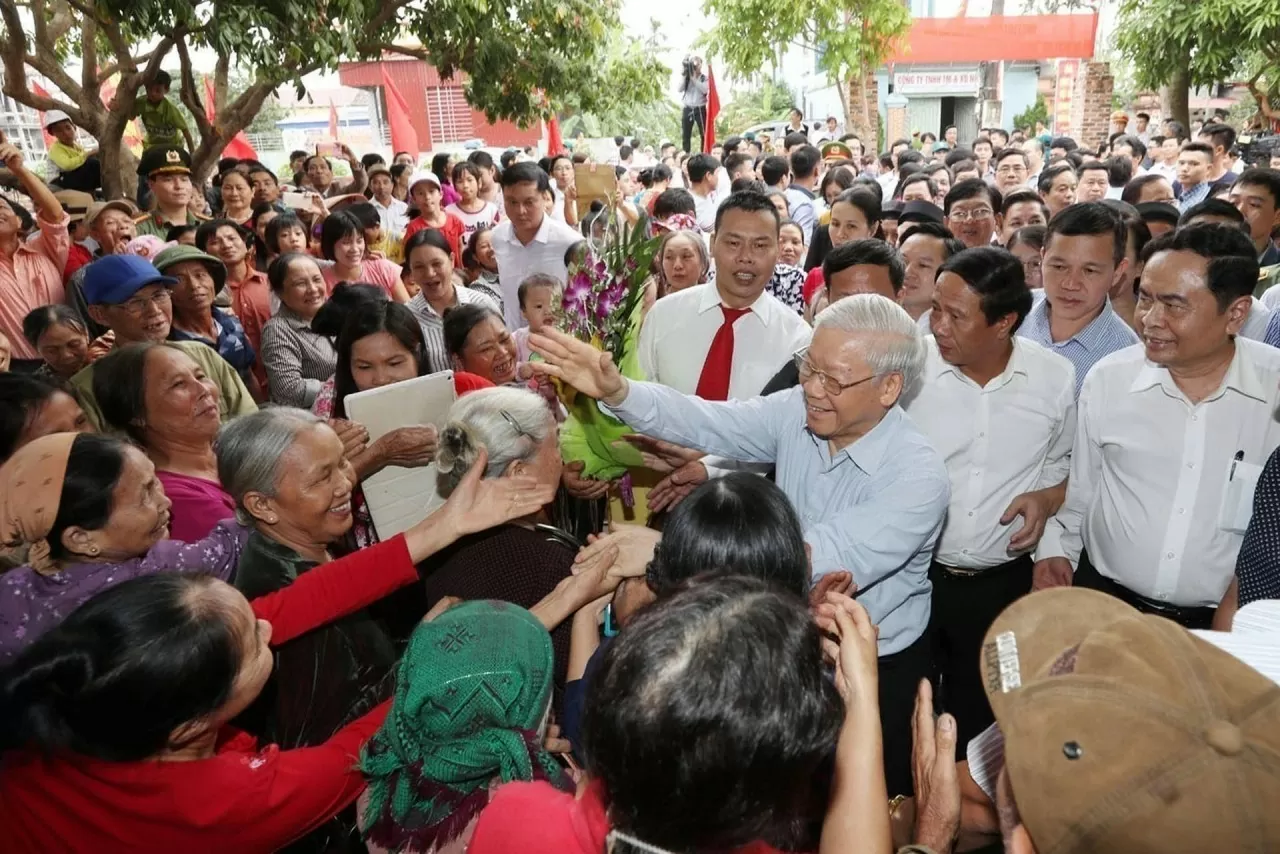
| Residents of Thuong Dien cultural village, Hai Phong city, welcomed General Secretary Nguyen Phu Trong to attend and celebrate the National Unity Day in November 2017. (Source: VNA) |
Can you share a memory or impression about General Secretary Nguyen Phu Trong?
I have a few memories. I'll just share one: in early Spring 1987, I wrote an article for the magazine "Learning," now the Communist Magazine. Afterwards, I was invited to the magazine's headquarters to discuss the content of the article. The person who received me was Comrade Nguyen Phu Trong, who at that time was the Head of the Party Building Department (equivalent to a Department Head). This wasn't the first time we had met.
We had discussed the manuscript for the journal article several times before. This time, I was even more impressed. Sitting opposite me in the journal's simple, unpretentious reception room was a man who had just defended his doctoral dissertation abroad. His demeanor was sincere and friendly, without a single word or gesture that suggested arrogance. We were both people from the countryside who had come to the city, perhaps that's why we easily empathized with the issues facing farmers in the article.
We agreed on many things, but there are still some points that need further consideration, some aspects that need correction, especially the realization that we should not fall into a scholastic approach when evaluating the duality of Vietnamese peasants: the positive revolutionary aspect and the negative aspect brought about by private ownership. In the West, that's true, as the founders of Marxism-Leninism wrote, but in Vietnam it's different. Looking through President Ho Chi Minh's legacy, we find that he hardly mentioned the negative aspect of private ownership among Vietnamese peasants.
Comrade Nguyen Phu Trong mentioned a passage even in the Testament where Uncle Ho wrote heartfelt lines honoring the farmers. I quote verbatim: “During the many years of resistance against French colonialism, and then against American imperialism, our people, especially the farmers, have always been extremely loyal to our Party and Government, contributing resources and manpower, willingly enduring all difficulties and hardships. Now that we have achieved complete victory, I propose exempting agricultural taxes for one year for agricultural cooperatives so that our people may be happy, relieved, and more enthusiastic, boosting production.” Perhaps Uncle Ho continued the tradition of many wise kings in the nation's history regarding easing the burden on the people after war to lay deep roots and ensure lasting stability. This is Comrade Nguyen Phu Trong's thinking, unlike some who believe he is somewhat conservative.
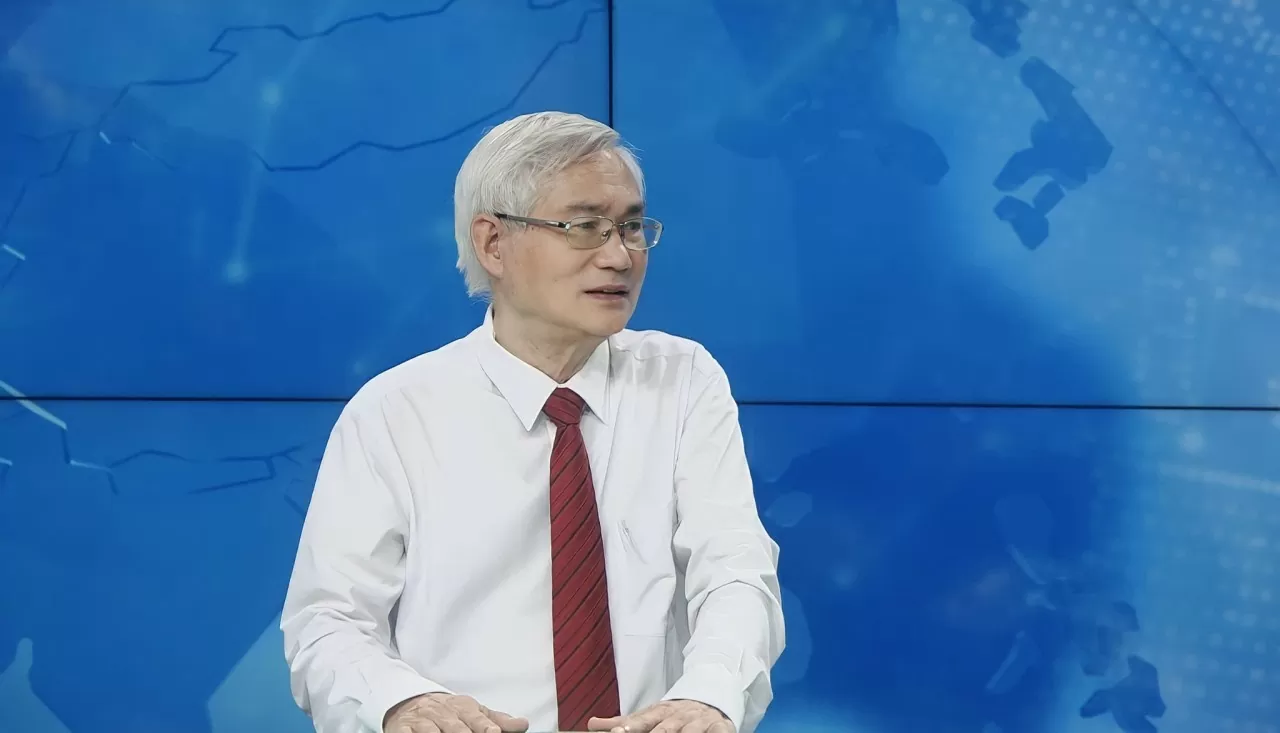 |
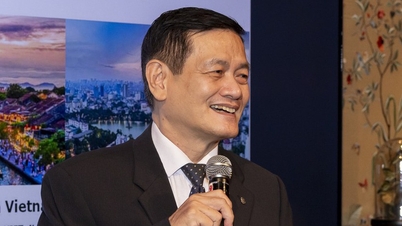
| Professor Mach Quang Thang believes that General Secretary Nguyen Phu Trong is a simple and sincere person. (Photo: Provided by the interviewee) |
What is his perspective on the life and career of the General Secretary?
To me, he was a man who led a rather difficult life. The published photos show that Comrade Nguyen Phu Trong had to work until the very last days of his life, without rest despite his aging and ailing body. It was hard work, but glorious, because his entire life was dedicated to the people, the country, and the progress of humanity.
Comrade Nguyen Phu Trong did not belong to the generation of leaders who fought against foreign invaders to liberate and protect the Fatherland, but the brutality of fighting "internal enemies" took a toll on his mind and body. And he matured through those fierce battles. That is why cadres, Party members, compatriots, comrades at home, as well as many conscientious people abroad, deeply respected him upon his passing.
General Secretary Nguyen Phu Trong attaches great importance to the role and position of foreign affairs. He affirmed that domestic and foreign affairs are always two fundamental issues for countries and that "foreign affairs today are not only a continuation of domestic policy, but also a powerful driving force for the development of nations and peoples." How do you assess the ideology and legacy of the General Secretary?
As General Secretary Nguyen Phu Trong has said, from ancient times to the present, from West to East, foreign affairs have always been extremely important. But during the period when Comrade Nguyen Phu Trong held the important position of General Secretary of the Communist Party of Vietnam – the leading and ruling party over the political system and the entire society of our country – it is even more crucial. This is because, as the country enters the trend of globalization and international integration, and opens up to the world, it is even more necessary to expand international relations, and to foster cooperation, friendship, and mutual development.
The strength of the Vietnamese nation needs to be combined with the strength of the times. Internal and external forces need to be combined to create a synergistic force. Internal strength is decisive, while external forces are important. However, in many specific cases, it is impossible to distinguish between internal and external forces because they transform into each other. Internal strength alone is insufficient for our country to develop rapidly and sustainably. Therefore, I wholeheartedly agree with Comrade Nguyen Phu Trong's view: "Today's foreign policy is not only a continuation of domestic policy, but also a powerful driving force for the development of nations and peoples."
What about the "culture of integrity" in the character of General Secretary Nguyen Phu Trong, sir?
I believe that a culture of integrity is a highly valuable characteristic and one of the outstanding qualities of Comrade Nguyen Phu Trong. President Ho Chi Minh even applied Confucianism when speaking of "integrity": "A person without integrity is no better than an animal"; he also said, "Integrity means being straightforward, not being deceitful, striving to do what is right, even if it is small, and trying to avoid what is wrong, even if it is small"; that, "if you want others to be upright, you must be upright first"; and that "a nation of integrity is a nation of wealth."
As a disciple of President Ho Chi Minh, Comrade Nguyen Phu Trong also held similar views when he said: "Honor is the most sacred and noble thing." Comrade Nguyen Phu Trong didn't just say this once; from what I've seen in the media, I've noticed he said it many times. Most admirable and worthy of respect is that he lived up to those words until his last moments before leaving this world. That is the "Cultural Value of Nguyen Phu Trong."
It is significant that the General Secretary chose the image of the bamboo tree to represent our nation's foreign policy and diplomacy, embodying the distinctive character of "Vietnamese bamboo," with its "firm roots, sturdy trunk, and flexible branches"; imbued with the soul, essence, and spirit of the Vietnamese people: gentle, skillful, yet very resilient. What is the importance of applying the image of the bamboo tree in building our current foreign policy and diplomacy?
The "bamboo diplomacy" foreign policy school, as expressed by Comrade Nguyen Phu Trong in several forums and even in his recently published book, is the consistent viewpoint of our Party and State in the current and upcoming periods. Bamboo is a symbol of Vietnam. Using this image to generalize and guide the thinking and actions of organizations and individuals within the political system is a very valuable tool.
Every patriotic Vietnamese citizen can hear or read this phrase and immediately understand its meaning. Especially officials specializing in foreign affairs and diplomacy, simply following this approach yields good results without the need for much analysis or explanation. Isn't this an advantage of using colloquial metaphors in political activities, one that should be preserved and developed?
The General Secretary has left many special imprints on both the people at home and international friends. In your opinion, what is the most profound imprint?
It's difficult to answer this question because everyone approaches it from a different perspective. I see Comrade Nguyen Phu Trong as a simple, sincere, approachable person with a charming way of speaking, who hates evil and loves good.
As for the Vietnamese people, if we were to find the most profound quality in Comrade Nguyen Phu Trong, it would be, as many have said, that he is "a great furnace burner." To the international community, Comrade Nguyen Phu Trong is a refined and sincere person...
Thank you very much, sir!
* Meritorious Teacher, Professor Mach Quang Thang, former Director of the Science Management Department of the Ho Chi Minh National Academy of Politics, former Senior Lecturer at the Ho Chi Minh National Academy of Politics.
Source
![[Photo] A vibrant celebration of generations of Nhan Dan Newspaper staff](https://vphoto.vietnam.vn/thumb/1200x675/vietnam/resource/IMAGE/2026/03/11/1773228432744_cb-75-nam-7-7034-jpg.webp)










































Comment (0)