

For several days now, betel nuts have become the hottest commodity on the agricultural market, bringing what could be described as dream-like profits to betel nut farmers as the Chinese market is crazing demand. Betel nut prices have hit record highs, reaching 90,000 VND/kg for several days, while the normal price is only 10,000-20,000 VND/kg.
Moreover, the price of betel nuts has maintained a high upward trend from the beginning to the peak of the season, creating significant appeal for the market and betel nut growers, and providing employment for a certain number of local workers.
However, recent news indicates that betel nut prices are trending downwards, causing many betel nut growing regions to anxiously await traders' arrival. In particular, the price has dropped by approximately 20,000 VND/kg in the last two days. Many betel nut growing areas have reported a dwindling number of traders buying betel nuts, signaling a potentially unfavorable outcome for this year's betel nut harvest, especially since it's nearing its end. Chinese traders who come to buy betel nuts are also constantly awaiting news from companies back home.
The recent surge in betel nut prices is explained by the fact that China's domestic betel nut supply is insufficient to meet the demand for betel nut candy, a popular candy known for its ability to ward off the cold.
The story of betel nut prices "peaking" and then suddenly "reversing course" this season illustrates the uncertainty and risks that have existed for many years, as domestic betel nut production, despite being grown in many regions, has only one market outlet: China. This means that in this game, the Chinese market holds the upper hand, while Vietnamese farmers, those who grow and raise the crop, seem to have the upper hand, but ultimately end up holding the short end of the stick.
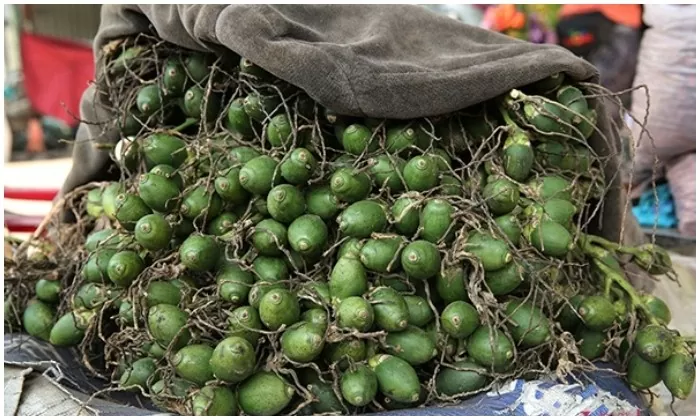 |
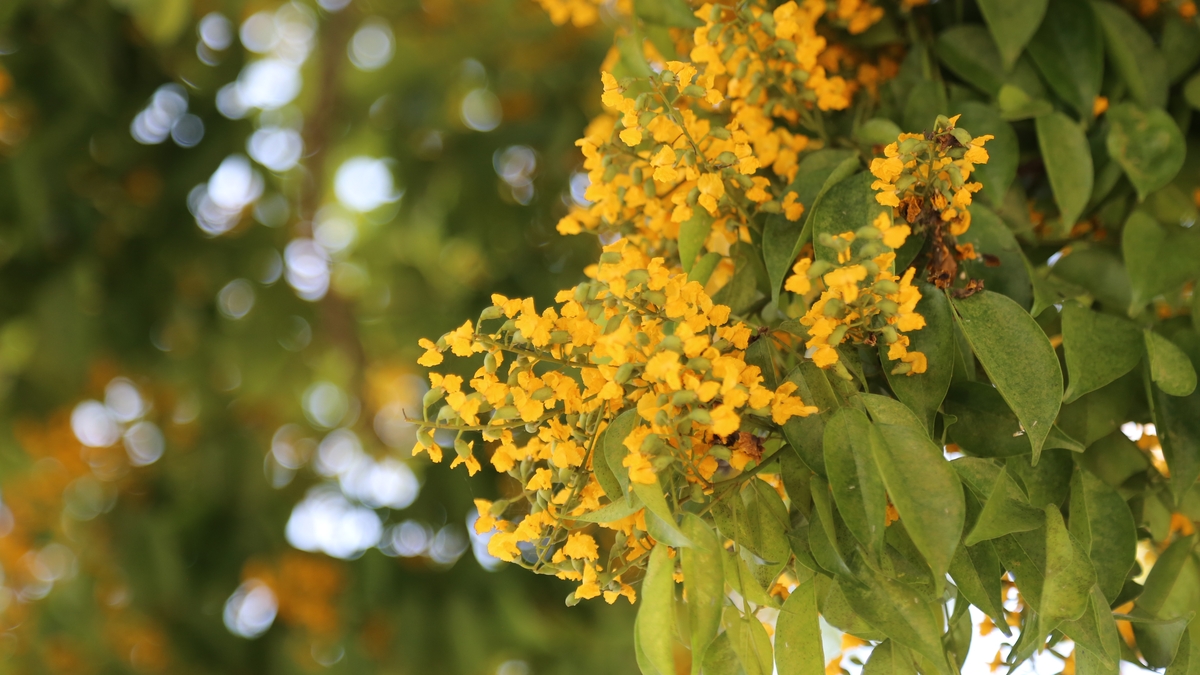
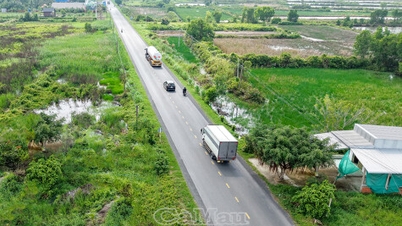
| The story of this year's successful betel nut harvest serves as a reminder of the importance of sustainability in market output. (Illustrative image.) |
The market lessons learned from exotic products that once captivated the Chinese market, such as buffalo hooves, fresh cashew leaves, earthworms, leeches, and golden apple snails, whose prices skyrocketed before plummeting, served as a costly warning against over-reliance on a single market. When the market unexpectedly reversed, farmers were caught off guard, left heartbroken as their carefully cultivated products became unsaleable, even in the domestic market.
Returning to the story of betel nuts: Betel nut trees are not easy to sell, and it takes 3-5 years of cultivation before they can produce fruit. Developing specialized betel nut growing areas in localities is also not very feasible because the market for betel nuts is very limited. Meanwhile, Vietnamese betel nuts are not yet officially exported to China, so price surges like the recent betel nut harvest are still conducted through unofficial channels. The fact that people in various regions, seeing short-term profits from betel nuts, have spontaneously rushed to plant them has posed a difficult management challenge for relevant authorities.
Therefore, the solution to the betel nut tree problem ultimately lies in exporting it through official channels, as has been done with other Vietnamese fruits, in order to achieve profitability.
If not for the "small betel nut" but with a "patterned shell," which hides many unpredictable risks and losses, it could even lead to avoidable mistakes in planning the development of the growing region.
Source: https://congthuong.vn/bi-hai-chuyen-thi-truong-cau-gia-len-dinh-roi-bat-ngo-quay-xe-353599.html




![[Image] Bridges and roads connecting the eastern part of Ho Chi Minh City](https://vphoto.vietnam.vn/thumb/1200x675/vietnam/resource/IMAGE/2026/04/16/1776328595108_ndo_br_bh-vt5-jpg.webp)































































![[Infographic] Details of the Hanoi-Quang Ninh High-Speed Railway Project](https://vphoto.vietnam.vn/thumb/402x226/vietnam/resource/IMAGE/2026/04/16/1776338188424_anh-man-hinh-2026-04-16-luc-18-16-10.png)
![[Photo] National Assembly Chairman Tran Thanh Man meets with the Speaker of the Georgian Parliament](https://vphoto.vietnam.vn/thumb/402x226/vietnam/resource/IMAGE/2026/04/16/1776338494029_anh-man-hinh-2026-04-16-luc-18-21-21.png)

























Comment (0)