

In Japan, supply shortages are driving up domestic rice prices. Vietnam is a leading rice exporter; could this be an opportunity for Vietnamese rice?
'The difficult door' is not easy to enter.
In fiscal year 2024 (ending March 2025), the amount of rice that private companies in Japan applied to import reached a record high of 991 tons by the end of January 2025. To be allowed to import, these companies must pay taxes to the Japanese government . The import tax that private rice importing companies must pay is 341 yen/kg.
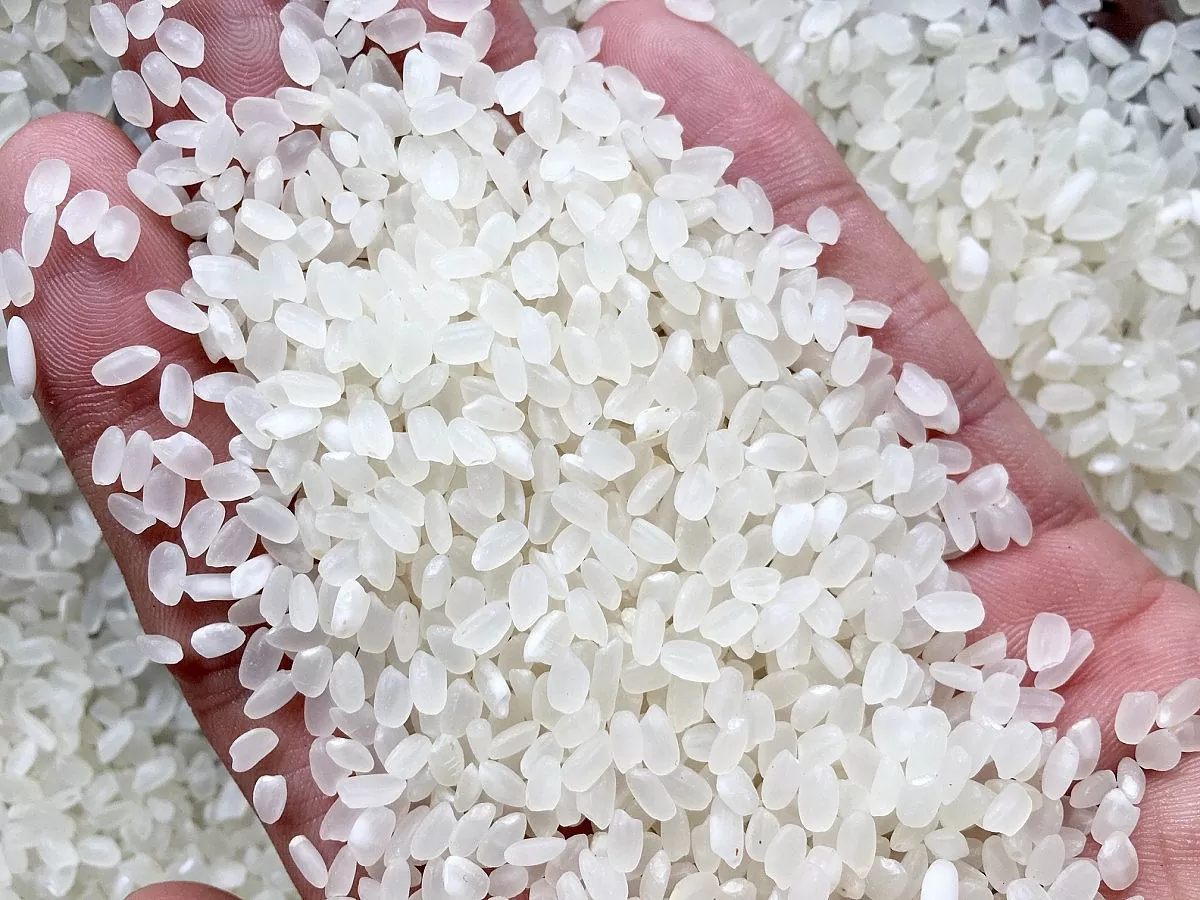 |
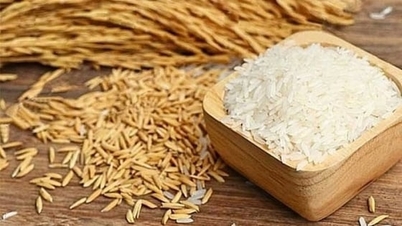
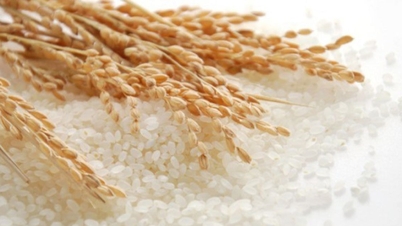
| Vietnamese Japonica rice looks similar to Japanese rice products and tastes almost identical. (Illustrative image) |
Data on privately imported rice only began to be compiled from fiscal year 2019 onwards, with 426 tonnes imported in fiscal year 2020. Since then, privately imported rice has typically ranged from 200-400 tonnes per year. But in fiscal year 2024, this amount reached 468 tonnes and then doubled to 991 tonnes by the end of January 2025.
Currently, rice prices in Japan have skyrocketed, with 5kg bags costing over 4,000 yen becoming commonplace, nearly three times higher than last year. The price of Japonica rice produced in Vietnam and imported into Japan, including taxes, currently stands at 3,240 yen per 5kg bag. Even at this price, imported Vietnamese rice is still about 800 yen/5kg cheaper than similar rice varieties on the Japanese market.
The question now is, Vietnam is one of the world's leading rice exporters, and the Vietnamese rice crop is currently in its biggest harvest season of the year – the winter-spring crop. Vietnamese export rice prices are also low. Among the exported rice varieties, Vietnamese Japonica rice looks similar to Japanese products and tastes almost identical. Given the current price crisis in the Japanese rice market, could this be an opportunity for Vietnamese rice?
Speaking with a reporter from the Industry and Trade Newspaper, Mr. Nguyen Van Thanh, Director of Phuoc Thanh IV Production and Trading Company Limited ( Vinh Long ), said that the Japanese market is experiencing a rice shortage, and this is not the first time it has happened. This also occurred 3-4 years ago, and they are still facing a shortage. The reason is due to crop failures in Japan and continuously rising rice prices.
For Vietnamese businesses, most rice exports to the Japanese market are conducted through companies in Japan. These are businesses that have previously operated in Japan and are familiar with the market's culture. Businesses that have never exported to Japan before will be very hesitant.
The reason is that this is a very demanding market with strict requirements regarding residue standards. Accordingly, Vietnamese rice imported into Japan must meet regulations on pesticide residue with 624 inspection criteria such as: soil, rice variety, pests and diseases, pesticide residue, rice quality, etc., and undergo three rounds of testing.
In addition, the procedure for importing rice into Japan is quite complicated. Typically, it takes up to a year and a half to obtain a permit.
Another challenge is that Japanese consumers are accustomed to Japanese rice varieties because of their sticky texture, delicious taste, and safety. They also highly value domestic products. Therefore, the types of rice exported to this market are very selective; businesses must have their own raw material areas to be able to export. For example, Phuoc Thanh IV's business, due to the lack of its own raw material area, finds it very difficult to export to this market.
“ The market standards are too strict, and the import policy is inconsistent, so businesses are hesitant to export to this market. They only allow imports when the price of Japanese rice increases. In other words, this market opens import quotas for rice; they only import if there is a shortage, and they stop importing when their inventory has a slight surplus, ” Mr. Nguyen Van Thanh informed.
Another issue Mr. Thanh mentioned is that for export businesses, exporting rice to this market is very risky if we don't have reliable partners. Because the types of rice exported to the Japanese market are quite selective, if businesses cannot sell to the Japanese market, they will not be able to sell domestically or to other countries.
" Japonica rice is sticky." "Most people in Southeast Asia don't like it, while only the Southeast Asian market consumes a lot of rice. Some other countries, such as those in West Asia, also don't eat this rice ; they use Jasmine or ST rice, or other fragrant sticky rice varieties ," Mr. Thanh said.
Being delicious isn't enough.
According to a report by the Ministry of Agriculture and Environment, Vietnam's key rice export markets include the Philippines, Indonesia, Malaysia, and China. The EU and the US are two major importers of high-quality rice varieties such as ST24 and ST25 fragrant rice, with a small market share of approximately 0.5-0.6% per year. Thus, Japan is not among Vietnam's main rice export markets.
According to the Ministry of Agriculture and Environment, white rice (accounting for approximately 71%) is mainly exported to the Philippines, Indonesia, and Africa. Fragrant rice varieties such as Jasmine, Dai Thom, ST24, and ST25 account for 19%, mainly exported to the EU, the United States, China, and Japan. Japonica rice and other specialty rice varieties account for 4%, mainly consumed in Japan, South Korea, and other high-end markets.
Speaking with a reporter from the Industry and Trade Newspaper, agricultural expert Hoang Trong Thuy said that although the Japanese market is experiencing a rice shortage and prices are very high, whether Vietnamese rice can be exported to this market is another matter. Japan only imports rice seeds from Japan that are cultivated in Vietnam. They trace the origin back to the native variety, grown according to organic standards, rather than simply buying rice that tastes good.
According to Mr. Hoang Trong Thuy, Japan has two types of rice imports. The first is rice imported by the government, as Japan is obligated to purchase a certain amount from abroad according to the regulations of the World Trade Organization (WTO). The second type is rice imported by private entities, such as trading companies and other companies.
Japanese agriculture still largely consists of small-scale producers with low yields and a heavy reliance on government subsidies. Japan joined the CPTPP negotiations at a time when its agriculture sector was not yet fully prepared to withstand the pressures of intra-bloc competition.
Meanwhile, according to businesses in the industry, Japan is currently not a major export market for Vietnamese rice. In the Japanese market, Vietnamese rice is not yet competitive enough compared to rice from the United States, Thailand, China, or Australia.
From 2012 to the present, Vietnamese rice exports to the Japanese market have mainly been through non-commercial channels, with negligible quantities and primarily used in food processing such as cakes and miso paste.
Forecasts indicate that Vietnam's rice exports to Japan will remain challenging in the near future due to a declining trend in Japanese consumer demand for rice, while Vietnamese rice continues to face fierce competition from rice from the United States, Thailand, and China – countries with a long tradition and strong position in exporting rice to Japan.
Japan currently has an annual rice import quota of 770,000 tons, of which 100,000 tons are imported by the government for food reserves. The 2024 fiscal year marks the first time in seven years that the entire government import quota has been sold out, due to soaring domestic rice prices prompting people to buy cheaper rice. In an auction held in December 2024, buyers placed orders for 64,380 tons, while only 25,000 tons were offered. The average selling price reached 548,246 yen per ton, a record high in the history of rice auctions in Japan. |
Source: https://congthuong.vn/gia-gao-nhat-ban-tang-soc-gao-viet-lieu-co-co-hoi-378817.html
![[Image] Leaked images ahead of the 2025 Community Action Awards gala.](/_next/image?url=https%3A%2F%2Fvphoto.vietnam.vn%2Fthumb%2F1200x675%2Fvietnam%2Fresource%2FIMAGE%2F2025%2F12%2F16%2F1765882828720_ndo_br_thiet-ke-chua-co-ten-45-png.webp&w=3840&q=75)
![[Photo] Prime Minister Pham Minh Chinh receives the Governor of Tochigi Province (Japan)](/_next/image?url=https%3A%2F%2Fvphoto.vietnam.vn%2Fthumb%2F1200x675%2Fvietnam%2Fresource%2FIMAGE%2F2025%2F12%2F16%2F1765892133176_dsc-8082-6425-jpg.webp&w=3840&q=75)

![[Photo] Prime Minister Pham Minh Chinh receives Lao Minister of Education and Sports Thongsalith Mangnormek](/_next/image?url=https%3A%2F%2Fvphoto.vietnam.vn%2Fthumb%2F1200x675%2Fvietnam%2Fresource%2FIMAGE%2F2025%2F12%2F16%2F1765876834721_dsc-7519-jpg.webp&w=3840&q=75)

![[Live] 2025 Community Action Awards Gala](/_next/image?url=https%3A%2F%2Fvphoto.vietnam.vn%2Fthumb%2F1200x675%2Fvietnam%2Fresource%2FIMAGE%2F2025%2F12%2F16%2F1765899631650_ndo_tr_z7334013144784-9f9fe10a6d63584c85aff40f2957c250-jpg.webp&w=3840&q=75)




































![[Live] Closing Ceremony and Award Presentation for the "Impressive Vietnam Tourism" Video/Clip Creation Contest 2025](https://vphoto.vietnam.vn/thumb/402x226/vietnam/resource/IMAGE/2025/12/17/1765974650260_z7273498850699-00d2fd6b0972cb39494cfa2559bf85ac-1765959338756946072104-627-0-1338-1138-crop-1765959347256801551121.jpeg)


















Comment (0)