

The pros and cons of a competitive electricity market.
There seems to be a prevailing view that the root of all problems lies in the monopoly in the electricity sector, and that breaking the monopoly will help the electricity industry develop, as has happened with telecommunications and aviation.
We need to take a deeper look at the gains and losses of market competition in the electricity sector.
Electricity transmission has always been a service with a natural monopoly, in every country in the world, whether it's a private or state monopoly. If businesses are allowed to have a monopoly, they will raise prices to maximize profits while consumers suffer. This is one of the flaws of a market economy and requires the visible hand of the State to intervene.
The basic method of intervention is for the State to set electricity prices. But on what basis does the State determine those prices?
Should we refer to other countries around the world before calculating domestic electricity prices? This seems impractical because the conditions in each country are very different.
The most feasible pricing method is the cost method. All the costs of producing and selling electricity in the previous year are added up and divided by the total electricity output for the following year to determine the electricity price for the following year. This is the method used not only in Vietnam but also in many other countries.
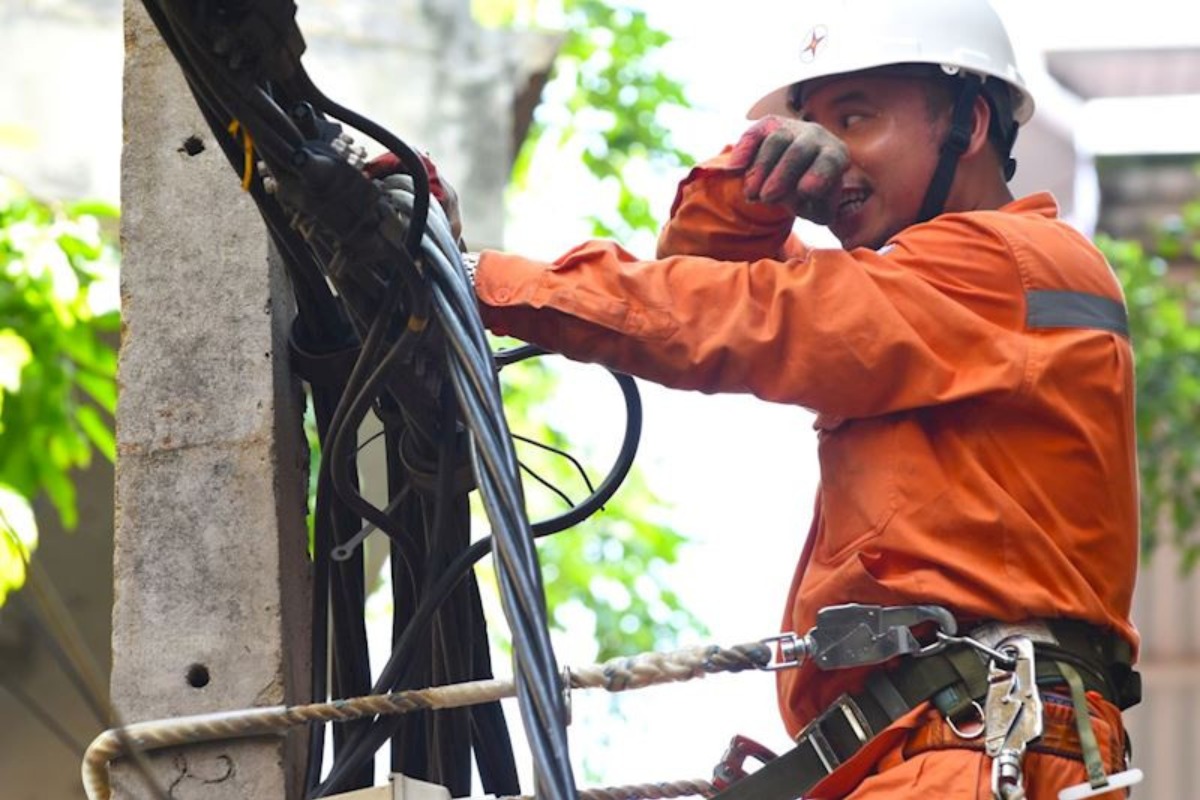
However, this method leads to an unintended consequence. Knowing that the costs incurred this year will be recouped the following year anyway, the power company will have no incentive to save. Many countries around the world face the situation where power companies have a monopoly, paying very high salaries to their employees and purchasing the most modern equipment.
The government can hire auditors or conduct its own cost checks, but it's very difficult to determine whether the costs of electricity production and operation are reasonable or if savings have been achieved. Furthermore, government officials themselves don't have much incentive to demand cost savings from the monopolistic power company, since their salaries don't increase from doing so.
The only ones motivated to demand that the power company save energy are consumers. However, millions of consumers are too small and lack the expertise to participate in this cost monitoring process. Even with consumer rights protection societies or business associations that use electricity, the process would still be ineffective.
Is there a solution to this problem? Competitive pricing in the retail electricity market could be the solution to this conflict.
First of all, it must be said that the competitive nature of the retail electricity market does not mean the elimination of monopolies. Natural monopolies over transmission lines still exist; it's just that the customers of those monopolistic enterprises have changed.
Under a competitive model, there would be several intermediary businesses that purchase electricity from power plants, lease transmission lines from a monopolistic power transmission company to "transport" the electricity to and sell it to customers. Consumers would then have a choice among many such electricity retailers.
These electricity retailers still have to lease power lines from a monopolistic company. They don't have the same choices as consumers.
But now, the monopolistic company's customers are no longer millions of people, but only a few electricity retailers. These businesses have the expertise and the motivation to demand that the monopolistic transmission company save energy. The state now only needs to intervene to ensure that any electricity retailer that "loudly" demands energy saving from the transmission company is not treated unfairly compared to other retailers.
Thus, market competition in retail electricity will help combat wasteful investment and operation of the transmission system.
"The problem" with competition?
However, competition is not without its problems.
Firstly, increased competition will raise transaction costs. It's immediately apparent that more businesses suddenly appear on the market, bringing with them personnel, organizational structures, operating costs, negotiation costs, advertising costs, customer service costs, and so on. All of these costs are added to the price, which consumers ultimately pay.
Will the increased transaction costs outweigh the benefits of eliminating waste? In other words, will electricity prices ultimately increase or decrease? It's difficult to answer this question because it depends on the conditions of each country and the extent to which the new model is implemented.
Secondly, these retail businesses will only compete with each other in urban areas, where electricity production is high and the cost of renting power lines per unit sold is low. In remote areas, where electricity production is low, power supply costs are high, and revenue is low, these retail businesses will not be interested. At that point, the government will be forced to intervene, either directly or through the monopolistic transmission company, to supply electricity to these remote areas.
Therefore, many oppose the competition in electricity retail because it would lead to a situation where lucrative areas are targeted by private companies seeking profits, while less lucrative areas remain under the state's monopoly, used for public welfare purposes.
In short, the competitive nature of the retail market has the advantage of creating a better cost control mechanism for monopolies, avoiding waste. Consumers have a wider variety of choices and tend to enjoy better after-sales service. However, these consumer benefits are only seen in urban areas; changes in remote areas are not guaranteed (?). Ultimately, whether electricity prices will increase or decrease remains a question mark.
However, there is an immeasurable value: society will become more transparent. There will no longer be ambiguity between business and welfare, and no one will arbitrarily benefit simply because of the wastefulness of the system.
A society that operates on the principle of "you have to work to eat." Is that what civilization is?
Nguyen Minh Duc (Public policy expert)
Source






























































































Comment (0)