

According to information from the Department of Crop Production and Plant Protection of Ha Tinh province , nearly 30,000 hectares of summer-autumn rice in the province have now bloomed.
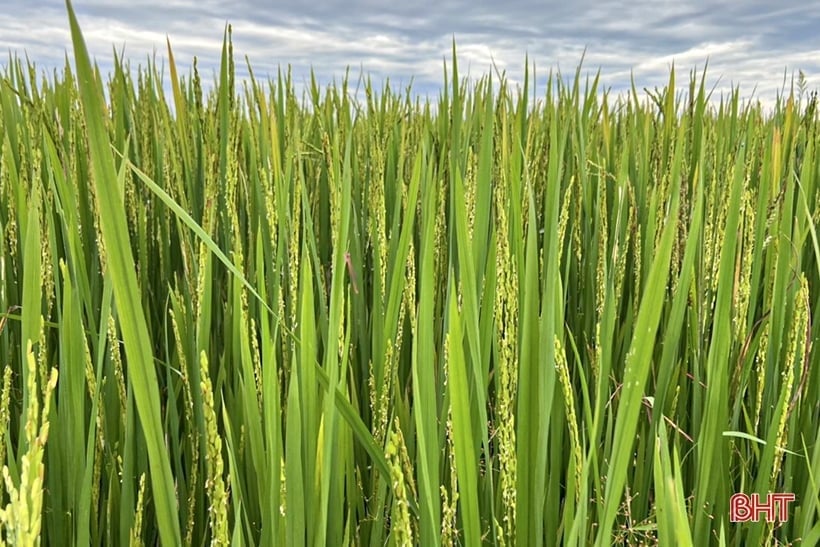
Over 7,200 hectares of summer-autumn rice in Can Loc district have bloomed.
Despite the intense heatwaves during this year's summer-autumn crop season, thanks to adherence to a concentrated planting schedule and proactive water management in various localities, the rice plants have grown relatively uniformly. The rains in July also provided valuable nutrients for the plants to develop and develop panicles successfully.
To date, nearly 30,000 hectares of summer-autumn rice in the province have bloomed, accounting for more than 65.3% of the total planted area. Some localities have large areas of blooming rice, such as: Can Loc (over 7,200 ha), Cam Xuyen (over 7,700 ha), Duc Tho (over 1,500 ha), Ky Anh district (2,750 ha), Thach Ha (4,700 ha),…
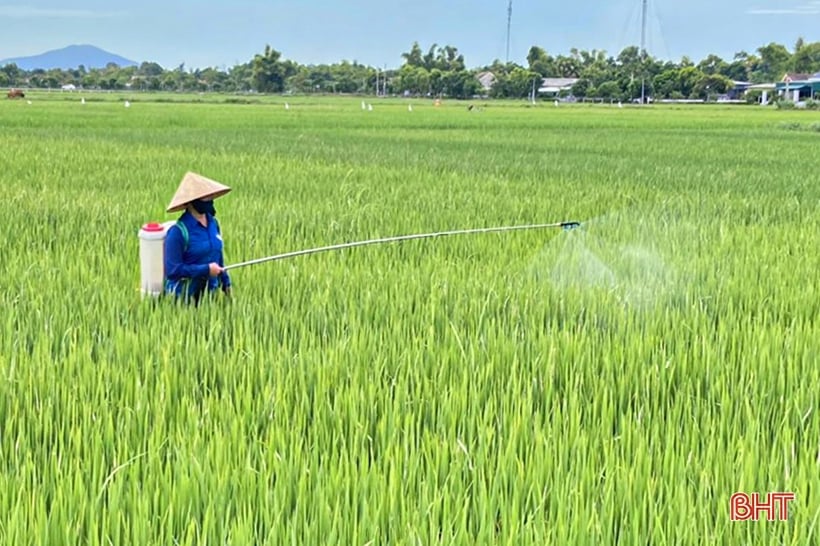
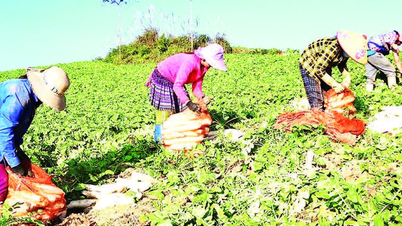
Farmers are focusing on pest and disease control in the final stages of the growing season.
This is a crucial stage for the summer-autumn rice crop, determining yield and quality at harvest. However, some major pests and diseases that usually cause damage towards the end of the season have already appeared in many fields.
Accordingly, the third generation of rice leaf rollers is causing damage to rice, especially to the functional leaves, particularly in rice crops that flower after August 20, 2023; rats are causing damage in areas near villages and hills; and brown spot disease continues to develop, especially in densely planted fields with excessive nitrogen fertilization.
Therefore, farmers need to regularly inspect their fields, maintain appropriate water levels; closely monitor the development of the small leaf-rolling caterpillar to proactively control it and limit leaf-white damage affecting growth; and at the same time, monitor the development of brown planthoppers, white-backed planthoppers, leaf blight, etc.
The Department of Crop Production and Plant Protection of Ha Tinh province has also sent officials directly to the grassroots level to guide and advise farmers on timely control measures, aiming to minimize damage caused by pests and diseases.
BIG
Source























































































Comment (0)