

Speaking to VTC News on the sidelines of the National Assembly , many delegates argued that before increasing electricity prices, authorities must clarify many issues within the sector and identify bottlenecks to resolve, rather than simply requesting price increases whenever losses occur.
Representative Nguyen Thi Viet Nga, Deputy Head of the Hai Duong Provincial National Assembly Delegation, said: “ EVN’s reported losses have many causes, including objective reasons as EVN has explained. However, in my opinion, there are also subjective reasons related to the company’s business management and calculations. It is necessary to carefully review and study the reasons why EVN has been operating at a loss for such a long time. Only then can we identify the bottlenecks and find solutions, instead of simply increasing electricity prices whenever losses occur, inadvertently causing harm to the people .”
According to Ms. Nga, " increasing electricity prices is only one solution, not the whole picture ." EVN must innovate its management and business practices to maximize savings on input materials and operate efficiently. Before EVN considers raising electricity prices, the corporation needs to review its pricing structure to ensure it is the most reasonable way to avoid losses for the people, businesses, and EVN itself.
Electricity prices shouldn't be increased every time there are losses; inadvertently, the people are the ones who suffer the most.
Ms. Nguyen Thi Viet Nga, Member of the National Assembly Delegation of Hai Duong Province
Ms. Nga also commented that the recent 3% increase in electricity prices has not had a significant impact on people's lives. However, the current drawback is that the tiered electricity pricing system is not suitable for the current conditions.
"There are industries that require electricity at different rates than residential electricity, and the current residential electricity rates are not very reasonable. Then there are industries that should receive preferential electricity rates but are currently paying very high prices, or industries that are not in preferential zones but are still receiving preferential treatment," Representative Nga raised the issue.
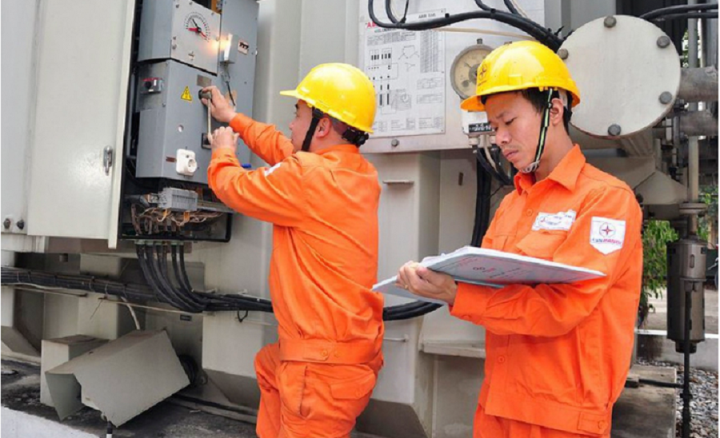
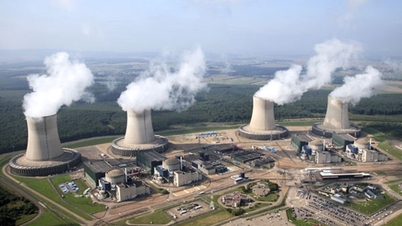
Electricity prices increased by 3% at the beginning of May 2023, and EVN has proposed another price increase in September 2023. (Illustrative image: Baochinhphu.vn).
Regarding the issue of not yet integrating renewable energy sources into the national power grid, the Russian representative stated that she had heard explanations from EVN many times and also heard many complaints from the public about the loss of money invested in solar power systems. EVN had committed to buying all the solar power but has only been buying in small quantities, while in reality we are facing a very high risk of electricity shortages, especially in the summer when electricity demand increases significantly.
"To thoroughly resolve this issue, we cannot rely on speculation, but need careful monitoring and investigation. Currently, there is a disconnect between EVN's response and the public's feedback. I believe this issue needs to be made transparent to address the concerns of the people and businesses, and also to allow EVN to provide a clearer and more coherent explanation," Ms. Nga suggested.
The people are not affected by EVN's losses.
Meanwhile, delegate Le Thanh Van (from Ca Mau province) said: " The people have nothing to do with EVN's losses; it's due to poor electricity production and pricing management, and a failure to save costs within the system, leading to high expenses ."
Mr. Van also pointed out the reasons for the current "oversupply" of renewable energy. According to him, electricity production needs to go hand in hand with improving transmission infrastructure, but recently these two things have not been done in sync.
“ At times, we agree to allow the addition of numerous renewable energy projects, but when the electricity is produced, the transmission capacity is limited, leading to a situation where there is electricity but it cannot be consumed. In addition, the legal basis of these projects is not transparent, causing difficulties in connecting to the grid, ” Mr. Van said, adding that if these issues had been addressed earlier, there would be no electricity shortage and no need to increase electricity prices.
The people have nothing to do with EVN's losses; it's due to poor electricity production and pricing management, and a failure to save costs, leading to high expenses.
Delegate Le Thanh Van (Ca Mau delegation)
Representative Vân also suggested that the operating costs of the power transmission system and the electricity production costs of EVN need to be reviewed, as many people are still concerned that these costs are too high due to the cumbersome operational structure, and that these costs are all included in the price.
"There was a period when public opinion questioned whether EVN was using its accumulated funds to invest in real estate and resorts, leading to losses, and then passing all of that on to electricity prices. I'm not sure how far the investigation into this issue has progressed, as there has been no public disclosure," Mr. Van wondered.
According to Representative Le Thanh Van, EVN is a state-owned enterprise with a leading role in electricity production and supply, but many National Assembly representatives believe that an inspection and audit of EVN's role is needed to answer to the National Assembly about how this enterprise is managed and governed, and why it suffers losses of tens of thousands of billions of dong every year, yet these losses are all passed on to electricity prices, causing the people to bear the burden.
He argued that the current roadmap for the socialization of the electricity sector is slow, and the longer the monopoly remains, the more inevitable price gouging will be.
"It is necessary to quickly implement that roadmap to allow economic sectors to participate in electricity production and transmission. The State should only have a monopoly on distribution, separating state management functions from business functions to ensure the national energy security strategy," Mr. Van observed.
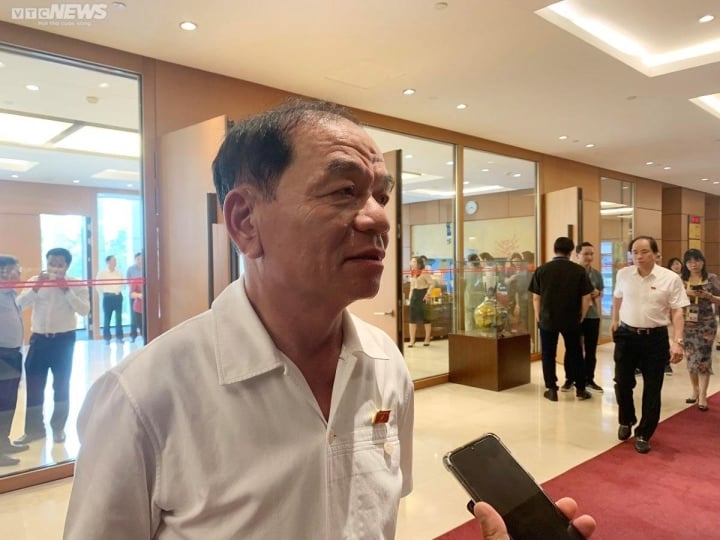
Representative Le Thanh Van gave an interview to VTC News on the sidelines of the National Assembly regarding EVN's proposal to further increase electricity prices.
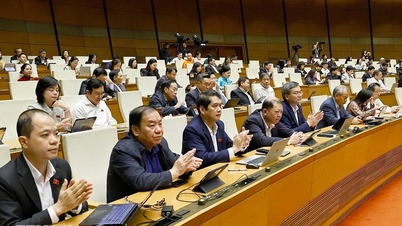
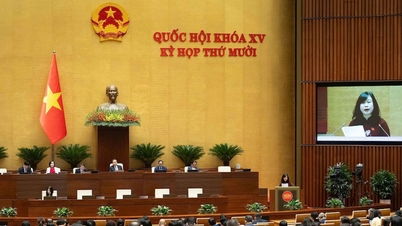
During the group discussion in the National Assembly on the socio-economic situation, many National Assembly deputies also requested clarification of responsibilities and a review of spending and living conditions of leaders in the electricity sector in the context of such losses… Deputy Ta Thi Yen (from Dien Bien province) said that voters are very concerned about the adjustment of electricity prices.
"In its reports, EVN consistently affirms that its electricity production and business operations are continuously incurring losses. However, the report does not clarify the causes or provide specific solutions for EVN's loss of over 26 trillion VND in 2022," the representative said.
Notably, within the same ecosystem, the parent company reported losses while its subsidiaries still announced high profits in 2022. For example, two companies under EVN, Power Generation Corporation 3 and Power Generation Corporation 2, both recorded after-tax profits of VND 2,550 billion and VND 3,668 billion respectively in 2022.
"I believe it's necessary to clarify the cause of this loss. If it's attributed to high input costs, including fuel, interest rates, or exchange rate losses, then the subsidiaries are also facing similar difficulties. Why are the results different? Is this a matter of management capacity?" Representative Yen questioned.
EVN proposes further electricity price increases in September 2023.
In its report to the Government, EVN proposed a further electricity price increase in September 2023, arguing that the 3% increase from the beginning of May 2023 had not yet offset the costs.
Specifically, EVN proposes amending Decision No. 24/2017/QD-TTg of the Prime Minister to allow timely adjustments to retail electricity prices based on basic input parameters in the power generation, transmission, distribution, and trading stages during the 2023-2025 period. At the same time, it requests permission for EVN to continue adjusting retail electricity prices from September 1, 2023, to offset the increased costs due to rising input costs as stipulated, ensuring financial balance for EVN.
PHAM DUY
Beneficial
Emotion
Creative
Unique
Source
















































































Comment (0)