

The phenomenon of students focusing solely on subjects for the 10th grade entrance exam and university entrance exam while neglecting other subjects is not uncommon in the education sector. In recent years, the Ministry of Education and Training has continuously introduced innovations and reforms in the education program to curb this situation, but perhaps these efforts have not been truly effective and have inadvertently added more burden and pressure to students.
Each subject in school has its own purpose in educating students' thinking and awareness. For example, Physical Education aims to improve students' health. If this subject is neglected, students will have weak physical health, lack strength, and not have enough energy for studying and playing.
Music and Art are often considered "minor" subjects, but they are actually crucial foundational subjects that help students develop their creative talents and aesthetic sense, thereby enhancing their self-confidence, communication skills, and collaborative abilities in learning.
The issue of unbalanced learning and rote memorization is a perennial topic with conflicting viewpoints from parents, students, and education administrators. It's necessary to frankly acknowledge that students focusing too much on a few subjects like Math, Literature, and English also constitutes unbalanced learning.
The Ministry of Education and Training cites concerns about students focusing on only certain subjects, but the Ministry itself is also conducting exams with only three subjects—Mathematics, Literature, and English—as a measure of student performance. Why not diversify the subjects in the exams or allow students to choose their subjects based on their abilities and career aspirations when they enter high school and university?
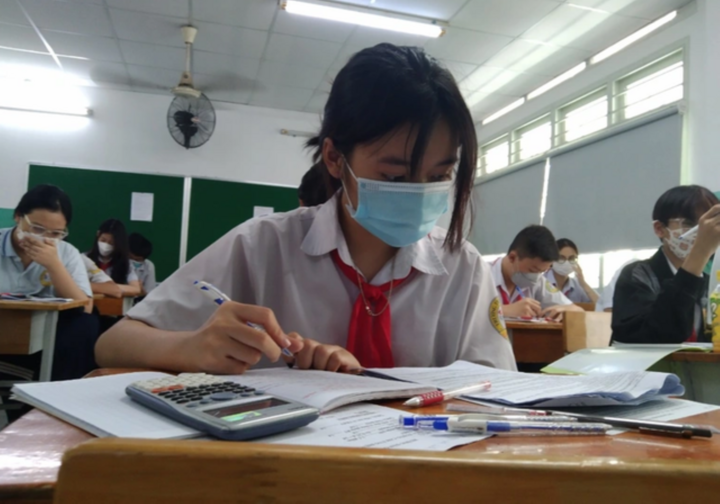
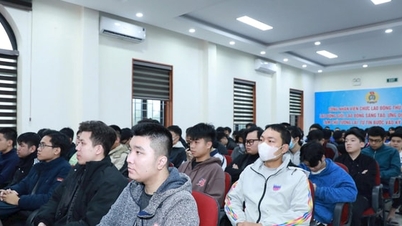
The issue of focusing on only certain subjects and memorizing specific answers is a timeless one, sparking conflicting viewpoints. (Illustrative image)
Overemphasizing subjects like Math, Literature, and English will, in the long run, lead to a lack of fundamental knowledge, making it easy to feel confused and overwhelmed when encountering diverse issues outside of school.
Learning all subjects, as mentioned, is very important, but there's a big difference between learning and learning well. Each child has a talent and interest in a particular field or subject. Therefore, it's perfectly normal and understandable that some subjects might be easy and interesting for one student, while others might find them dry, boring, and difficult to grasp.
Adults, parents, teachers, and educational administrators need to provide proper guidance to help students develop their talents, instead of clinging to the deeply ingrained notion that "it's better to be equally bad than exceptionally good."
In fact, a good doctor doesn't necessarily need to know the acceleration of light or the Earth's gravity. A good athlete might not know how to calculate the area of a triangle inscribed in a circle. And of course, not knowing that litmus paper turns red when it comes into contact with an acid solution and blue when it comes into contact with a base solution won't prevent someone from becoming a talented writer.
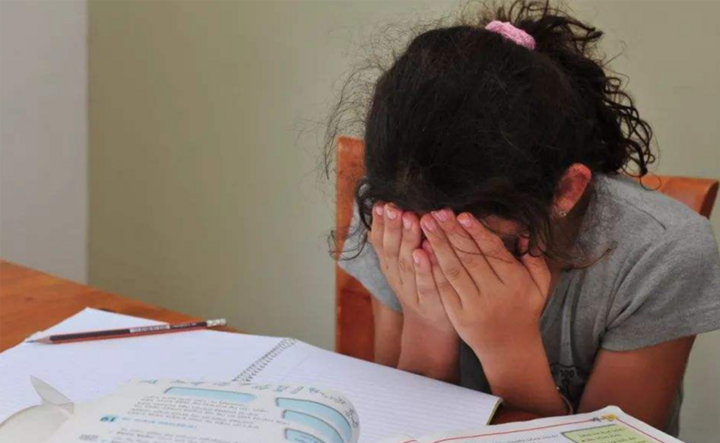
Proper guidance is necessary to help students develop their talents. (Illustrative image)
The education program already has grading scales to assess the level of achievement in each subject; students only need to achieve a certain score to pass the subject. Achieving success in subjects they are not good at or not interested in is commendable.
Accepting that students can only achieve passing grades in certain subjects helps reduce academic pressure by eliminating the need to spread their time too thin across subjects they dislike. This also allows them more time to focus on developing and learning their strengths.
My eldest son is now an architect, and I'm always proud of him and his career. To get to where he is now, he worked very hard for his dream of becoming an architect, starting from his middle and high school years.
Instead of focusing on making my child excel in subjects like Math, Literature, and English, I guided her towards studying Math and Art to pursue her passions. She continued to study the remaining subjects, maintaining an average to above-average level. Neither I, the teachers, nor the educational program at the time saw this as problematic. And reality proved us right in creating a good educational "product."
For example, my youngest daughter is currently in 9th grade under the new general education program. Besides the subjects she's expected to take in the entrance exam next year, she's constantly stressed out by other subjects as well.
Ever since hearing the news that the Ministry of Education and Training is drafting a plan to randomly select subjects for the 10th grade entrance exam to prevent unbalanced learning and rote memorization, my child has been on pins and needles, worried about how to study so many subjects with no extra time available.
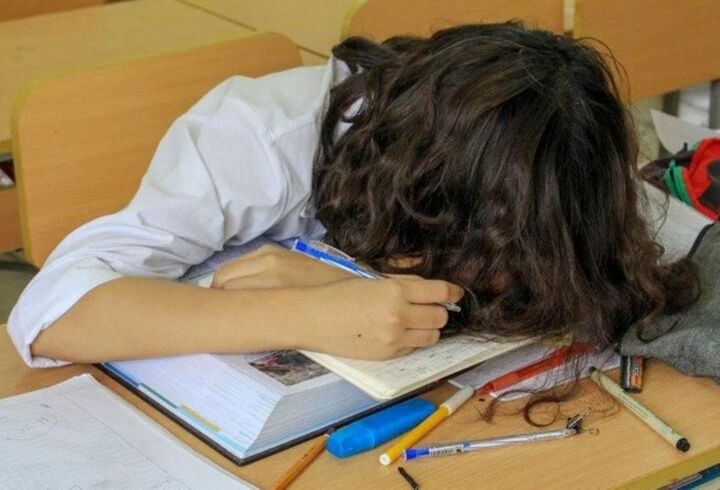
My child is increasingly anxious, worried about how to study. (Illustrative image)
My child is naturally inclined towards social sciences; they enjoy reading and have a great passion for history and geography. Conversely, they find natural sciences more difficult to grasp. I always remind them not to neglect subjects they don't like, but I also don't force them or put too much pressure on them to achieve good grades in these subjects.
With the exam and assessment program for each subject, achieving a passing score should automatically mean the child isn't focusing on specific topics or memorizing answers. So why include it in the high school entrance exam to prevent such learning? As parents, we all want our children to excel academically, but if I had to choose between sacrificing my child's enjoyment and happiness for high grades, I would choose happiness for my child.
Ultimately, success and excellence are only for the sake of living a happy life. Seeing my child struggling with subjects they dislike breaks my heart. I'm not perfect, you're not perfect, so why should we expect our children to be perfect by excelling in all subjects?
Dr. Dang Huy Phuoc
Source: https://vtcnews.vn/ep-hoc-sinh-gioi-toan-dien-chang-khac-nao-bat-ca-leo-cay-ar900891.html


![[Photo] Prime Minister Pham Minh Chinh attends the Conference summarizing and implementing tasks of the judicial sector.](/_next/image?url=https%3A%2F%2Fvphoto.vietnam.vn%2Fthumb%2F1200x675%2Fvietnam%2Fresource%2FIMAGE%2F2025%2F12%2F13%2F1765616082148_dsc-5565-jpg.webp&w=3840&q=75)

















































































Comment (0)