

However, according to some experts, there still seems to be a situation of "hot at the top, cold at the bottom," where the "flame" of reform at the central level remains blazing, but some ministries, sectors, and localities are still "indifferent."
In reality, although cuts have occurred, the reform process is considered slow and largely superficial; the practice of "inserting" business conditions into circulars issued by ministries still does not truly facilitate businesses.
Untangling the "bottlenecks"
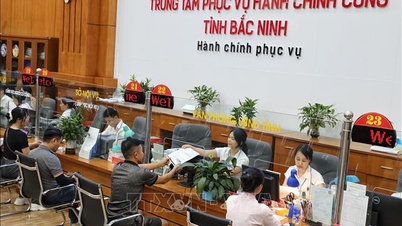
Although the business environment in our country is continuously improving, with increasing attitudes and responsibilities from ministries, sectors, and localities, many businesses have reported that there are still "bottlenecks" creating obstacles in the process of improving the business environment.
Accordingly, harassment and corruption remain common in some areas of administrative procedures, leading to prolonged processing times; access to preferential loan resources, customer acquisition, and market access are still not favorable.
According to the 2023 Provincial Competitiveness Index (PCI) Report, 57.1% of businesses stated that the biggest difficulty they are facing is access to credit, the highest figure ever; 14.5% of businesses reported that changes in policies and laws are also hindering business development and disrupting project implementation plans, etc.
This shows that, despite the government's strong direction and efforts to improve the quality of the investment and business environment, there are still many limitations at the local level, including departments, agencies, districts, and towns, in resolving difficulties for businesses and citizens. There are even instances of shirking responsibility, passing the buck, or working with a low sense of responsibility.
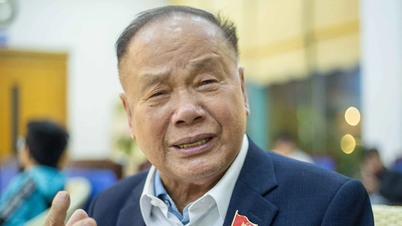
Chairman of the Board of Directors of Hop Luc Joint Stock Company, Nguyen Van De, shared that the process of soliciting opinions in many localities regarding proposals, plans, projects, etc., is not truly appropriate. Some proposals concerning land price schemes mechanically seek opinions from departments and agencies unrelated to land pricing, such as: Interior, Foreign Affairs, Education and Training, Information and Communications, and Military . These agencies often lack specialized departments to advise on relevant matters, making the consultation unnecessary and leading to a situation where most responses simply agree to get the job done.
Therefore, the working regulations at the local level should be revised, and decentralization and delegation of power should be further promoted. For specialized and specific issues, opinions should only be sought from the departments and agencies whose management directly relates to the content requiring consultation; avoiding formality, wasting time, and prolonging procedures, which can easily lead to the risk of exploiting collective responsibility to evade the responsibility of the head of the organization, and a lack of decisiveness and willingness to think and act boldly in leadership and management.
The above reflection closely matches the PCI survey in 2023, where the index for "pioneering dynamism of local government apparatus" showed signs of decline compared to previous years, falling from 6.84 points (2022) to 6.77 points (2023).
Only 82.1% of businesses stated that "the Provincial People's Committee is flexible within the legal framework to create a favorable business environment for private enterprises," a decrease of 3.9% compared to 2022; 57.6% of businesses stated that "local authorities have a positive attitude towards the private sector," a decrease of 6% compared to 2022.
In addition, 20% of surveyed businesses indicated that "delaying implementation, seeking guidance, or doing nothing" was the local response when there were ambiguities in central government policies and documents. Notably, 51.5% of businesses agreed with the statement that "departments and agencies are not properly implementing the policies and guidelines of provincial and city leaders," an increase of 1.1% compared to 2022.
Besides administrative procedural obstacles, according to many associations and businesses, there is still a fairly frequent duplication of inspection and audit content.
According to Truong Dinh Hoe, Secretary General of the Vietnam Association of Seafood Processing and Export (VASEP), although the burden of inspections and audits has decreased, many businesses in the seafood industry still report having to deal with too many inspection teams in a year. Sometimes, the same content and field are inspected by multiple different units, especially in the areas of customs, taxation, and environment, leading to duplication and overlap in inspection activities and somewhat affecting production and business operations, reducing the competitiveness of businesses. The 2023 PCI survey also showed that the percentage of businesses reporting overlapping inspection and audit content increased from 6.7% in 2022 to 8.5% in 2023. Therefore, to thoroughly address the above situation, inspection agencies must strengthen coordination, detect overlaps and duplications right from the stage of developing and issuing annual inspection and audit plans, ensuring that a business activity is only the subject of inspection by one agency.
Expectations for a breakthrough.
It can be affirmed that continuing to effectively and substantively reduce and simplify administrative procedures at ministries, sectors, and localities to serve the people and businesses is a key and urgent task today. This is considered the most fundamental and important solution to bring "peace of mind" to businesses. However, in reality, the reform process shows signs of slowing down and has not met the government's directives and the expectations of businesses.
The business community earnestly desires that the State quickly finalize policies and laws, creating a favorable, safe, and equitable investment and business environment for entrepreneurs and businesses to develop and contribute; especially with mechanisms to prevent and strictly handle acts of harassment, obstruction, corruption, negativity, and procrastination in administrative procedures, as well as in the process of bringing policies closer to reality. Because ultimately, a good policy is meaningless if it is not well implemented and does not yield tangible results.
Emphasizing the crucial and urgent role of institutional reform in today's economy , the Chairman of the Vietnam Chamber of Commerce and Industry (VCCI), Pham Tan Cong, stated that for a competitive economy, a suitable legal framework for competition is essential. This includes reviewing unreasonable business conditions and regulations that hinder or distort competition. A reality is that, despite businesses constantly complaining about difficulties, sometimes, solutions to their problems and proposals are merely promises. Many localities implement reforms under pressure rather than genuinely; they haven't prioritized the people and businesses as the central focus, objectives, and driving force; and they haven't used the satisfaction of the people and businesses to evaluate the effectiveness of implementation.
Therefore, the Chairman of VCCI expects that Resolution No. 41 of the Politburo on building and promoting the role of Vietnamese entrepreneurs in the new era has set specific tasks for the Government and ministries, sectors, and localities in creating a favorable, safe, and equitable business environment. These will be important tasks to revitalize the spirit and atmosphere of reform in many ministries, sectors, and localities. At that time, leaders of ministries, sectors, and localities, within their authority, must be more proactive and urgently remove all obstacles to investment and business activities caused by overlapping, conflicting, unreasonable, and inconsistent legal regulations. Furthermore, there is a need for greater transparency in the process of drafting circulars and decrees. Consultations with the business community are necessary to gather feedback and suggestions on policies, promptly identify obstacles and barriers in the business environment, and subsequently propose appropriate solutions to create the most favorable conditions for businesses.
Igniting the "flame" of reform is difficult, but maintaining that flame is even more challenging without the support, dynamism, and pioneering spirit of the government at all levels. Furthermore, the State needs to strengthen market management and regulation through market-based solutions, not through administrative orders or abrupt, unpredictable changes to institutions and laws.
More than ever, businesses need stability, consistency, and reliability in the development and implementation of policies and laws. In addition, specific responsibilities must be assigned to officials and civil servants in the process of receiving and handling administrative procedures, and individuals and groups that create difficulties or hinder business operations must be resolutely disciplined.
Only in this way can we create strategic breakthroughs for the development of the business environment in the coming period, with a spirit of equality and mutual development; harmonious benefits and shared risks, thereby gradually leading the Vietnamese economy to rapid and sustainable development in the future.
-----------------------------
(*) See Nhan Dan Newspaper, issue dated June 20, 2024.
Source: https://nhandan.vn/bai-2-duy-tri-ngon-lua-cai-cach-post815428.html
![[Photo] Standing Committee member of the Party Central Committee Tran Cam Tu presides over the preliminary review of the organization of the 14th Party Congress.](/_next/image?url=https%3A%2F%2Fvphoto.vietnam.vn%2Fthumb%2F1200x675%2Fvietnam%2Fresource%2FIMAGE%2F2026%2F01%2F13%2F1768292063355_anh-man-hinh-2026-01-13-luc-15-14-10.png&w=3840&q=75)
![[Photo] Final preparations underway for the organization and service of the 14th National Congress of the Party.](/_next/image?url=https%3A%2F%2Fvphoto.vietnam.vn%2Fthumb%2F1200x675%2Fvietnam%2Fresource%2FIMAGE%2F2026%2F01%2F13%2F1768315558336_ndo_br_bnd-4068-jpg.webp&w=3840&q=75)
![[Photo] National Assembly Chairman Tran Thanh Man receives the Ambassadors of Cambodia, the Philippines and the United States for a farewell visit.](/_next/image?url=https%3A%2F%2Fvphoto.vietnam.vn%2Fthumb%2F1200x675%2Fvietnam%2Fresource%2FIMAGE%2F2026%2F01%2F13%2F1768303256862_tiep-ds-5658-jpg.webp&w=3840&q=75)
![[Photo] Hanoi, the capital city, brilliantly welcomes the 14th National Congress of the Party.](/_next/image?url=https%3A%2F%2Fvphoto.vietnam.vn%2Fthumb%2F1200x675%2Fvietnam%2Fresource%2FIMAGE%2F2026%2F01%2F13%2F1768271572243_image-1.jpeg&w=3840&q=75)


















![[Video] Striving to complete the cleanup of land contaminated with landmines by 2045](https://vphoto.vietnam.vn/thumb/402x226/vietnam/resource/IMAGE/2026/01/13/1768318860962_dung00-57-43-20still006-jpg.webp)


![[Photo] Final preparations underway for the organization and service of the 14th National Congress of the Party.](https://vphoto.vietnam.vn/thumb/402x226/vietnam/resource/IMAGE/2026/01/13/1768315558336_ndo_br_bnd-4068-jpg.webp)





















































Comment (0)