


Yen Bai - Yen Bai - Lao Cai will be united as one family; the people of the two provinces will once again live together peacefully at the foot of the majestic Hoang Lien mountain range, enjoying a tranquil life alongside the Red River, heavy with red silt.
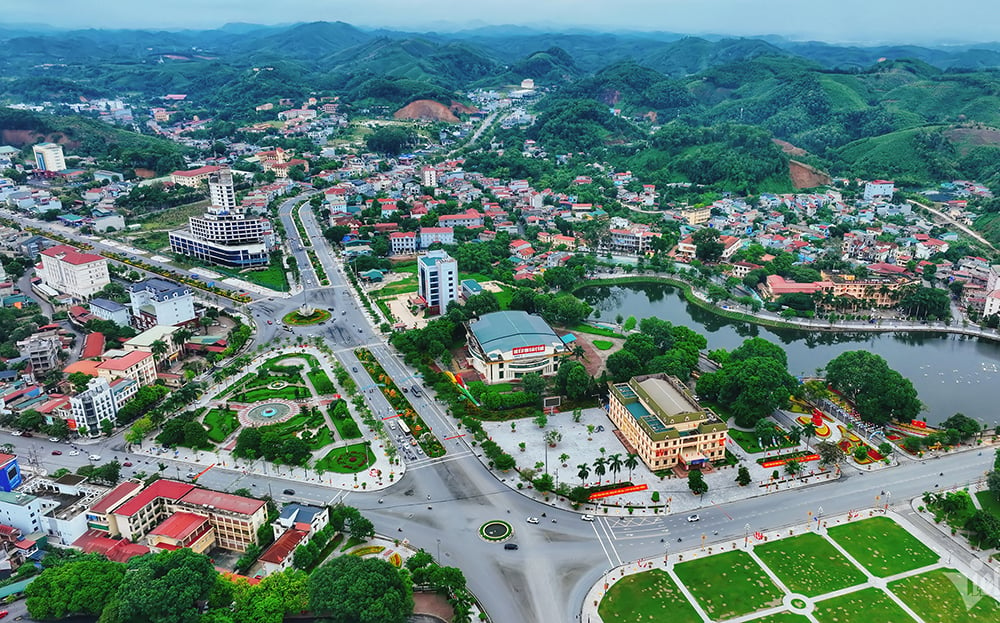 |
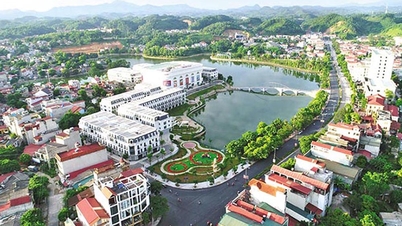
A view of Yen Bai city today. |
Yen Bai and Lao Cai provinces assess cooperation results and agree on a plan for rearranging and merging provincial-level administrative units.
The news of the merger of Yen Bai and Lao Cai provinces came as no surprise to me. I'm certain of that. Because even when I was still in university, my professor, Nguyen Van Ba (Ho Chi Minh National Political Academy), said: "Your Hoang Lien Son province is too large, travel is really difficult. Leaders of distant districts like Than Uyen and Bac Ha who need to go to Yen Bai town to report and seek the opinion of the provincial leaders have to travel for two days, and after reporting, it takes another two days to return to the district, not to mention having to go down to the communes. With such distance, many things might not even be finished. Eventually, the province will have to be separated."
Then my teacher, Mr. Ba, asserted: "Separate for a while, then merge again. Sounds contradictory, right? But no, society will continue to develop, roads will get better, transportation will become more modern, and distances will naturally shorten. Not to mention the development of communication, science and technology, management skills, and socio-economic life… Mergers will happen, and at that time, not only will they not have any negative impact, but they will also reduce the administrative apparatus."
After listening to the teacher's detailed explanation, I understood and looked forward to the day the province would be divided so that my father wouldn't have to travel far for work (at that time, my family lived in Nga Quan commune, now Cuong Thinh commune after the merger, Tran Yen district). My father was stationed on the border for decades, from Bat Xat to Cam Duong, Bao Thang, and closest to Bao Yen, but he only came home to visit once a month.
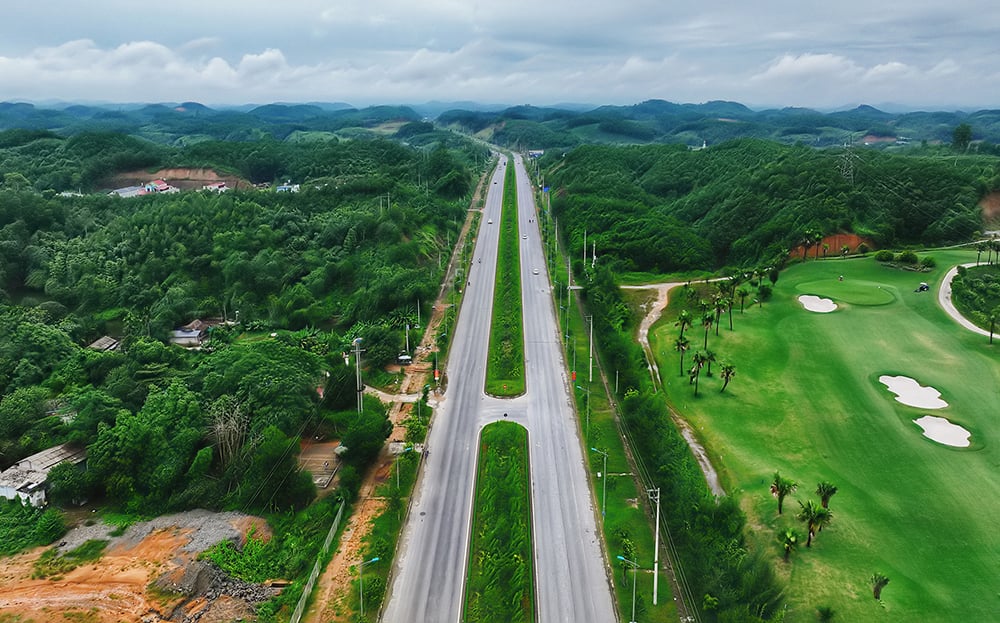
The Noi Bai - Lao Cai Expressway, connecting the two provinces of Yen Bai and Lao Cai, creates favorable conditions for a new phase of development for Lao Cai province after its merger.
At the end of 1991, Hoang Lien Son province was divided into two provinces, Yen Bai and Lao Cai. My father transferred to Yen Bai for work, and now Yen Bai and Lao Cai have merged again. So, my teacher's prediction was 100% correct. It's truly admirable! Sadly, my teacher has passed away, and my father has also gone to join his ancestors, so he didn't get to witness the merger of Lao Cai and Yen Bai provinces, this momentous event, or the joy of the great family of ethnic groups at the foot of Hoang Lien Son mountain coming together as one family in the truest sense of the word.
It's worth celebrating because it's not only a historical milestone, reflecting the viewpoint and guidance of the Central Party Committee, but it's also in line with current circumstances and the inevitable trend of the times. Mergers create strength, provide a sufficiently large space for development, and leverage the advantages, especially the potential and strengths, of each region in the context of integration.
Due to historical circumstances, the two provinces of Yen Bai and Lao Cai were separated; however, both remain located in the Northwest region of Vietnam, sharing many similarities in natural conditions, potential, advantages for socio-economic development, and revolutionary historical traditions.
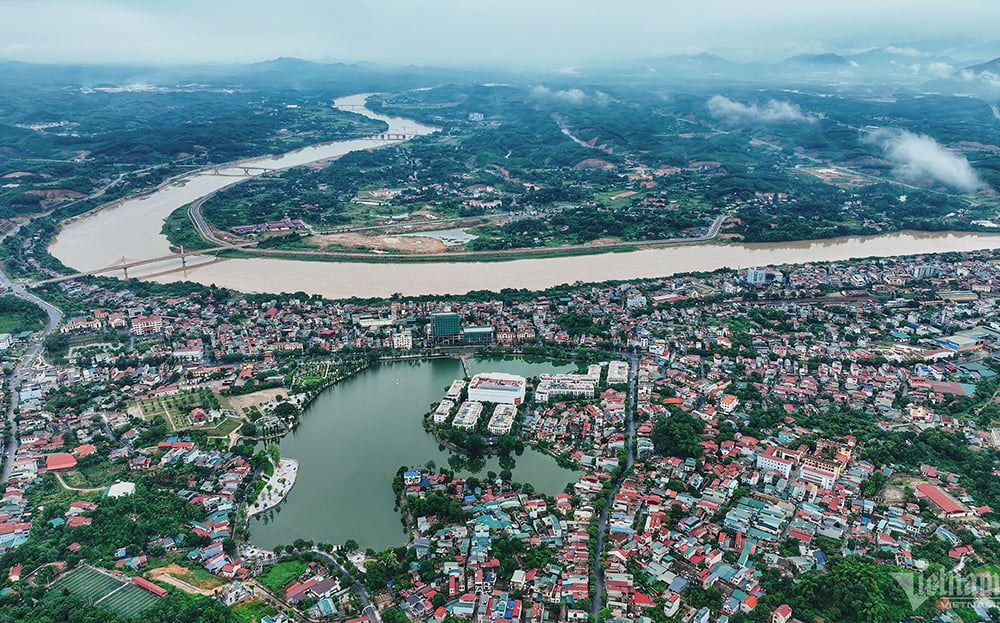
Yen Bai and Lao Cai share the Red River, which carries a heavy load of silt year-round, and in the near future will become a major inter-provincial waterway for trade, connecting Lao Cai to Hai Phong.
Let my family take my own example. My father worked for over 30 years in the districts of Lao Cai province. My eldest brother and several of my cousins served in the army and fought directly in Y Ty, Cam Duong, Si Ma Cai, and Bac Ha. Two of my cousins died on February 17, 1979, in Lao Cai town, and the other fell a day later while defending the Apatite factory during the war to protect the northern border of our country. Our family is divided, living in two provinces. My grandparents' family lives in the Cau Bun area, Bao Yen district, separated from Lang Thip commune, Van Yen district by just one stream… I recount this story of my family and clan to show that, although we are in two different provinces, we are still one. In terms of the thoughts and feelings of each individual, each family, each clan, or more broadly, we are all part of the Vietnamese ethnic community.
Economically, during the separation period, each locality made the most of its potential and advantages, taking advantage of and mobilizing domestic and foreign resources to invest in development and achieving very important results.
While Lao Cai boasts a bustling provincial capital city and a total provincial budget revenue exceeding 13 trillion VND in 2024, thanks to its potential in mineral resources, tourism, and especially border trade, Yen Bai, with its development policy focused on "green - harmonious - distinctive - happy," maintains stability and balanced development, with a flourishing agricultural landscape, rural areas, and farmers. Tran Yen district was the first district in the Northwest region to achieve the new rural standard (as of 2019). In 2024, Yen Binh and Van Yen districts will both reach the new rural standard (to date, the province has 5 districts and towns that have achieved the new rural standard: Yen Bai city, Nghia Lo town, and the districts of Tran Yen, Yen Binh, and Van Yen). In 2025, Yen Bai province aims for over 60% of villages and hamlets in particularly disadvantaged communes to achieve the new rural standard; and the quality of life for rural residents will be improved.
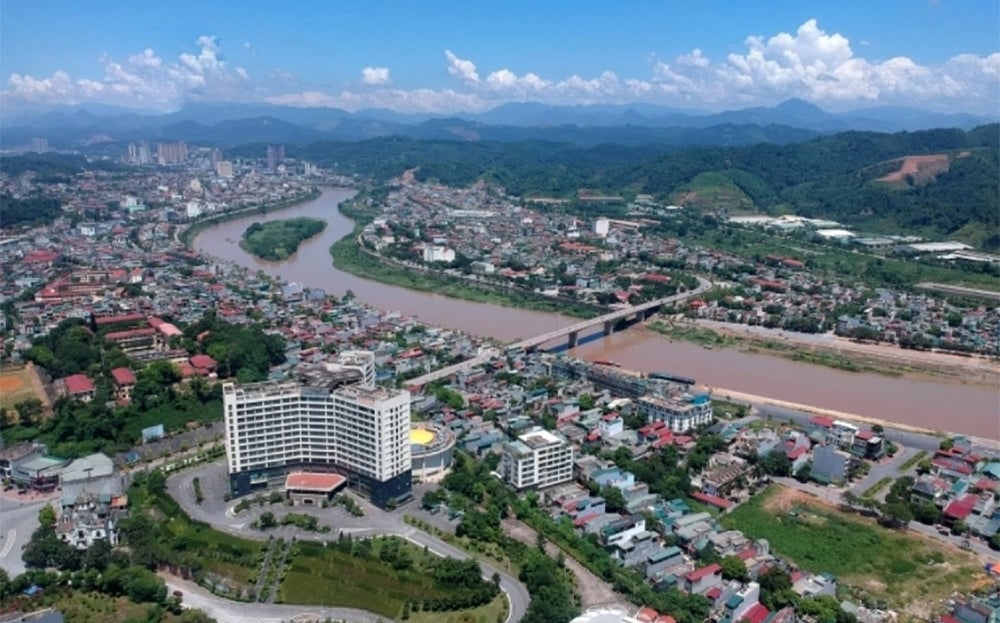
A view of Lao Cai city today.
Over 20 years after their separation, Yen Bai and Lao Cai remain like brothers, with the leaders of both provinces maintaining a cooperative relationship in all aspects, supporting each other's development. The cooperation agreement between Lao Cai and Yen Bai was first signed on February 26, 2006. The two provinces have demonstrated a friendly, cooperative, and solidarity relationship, exchanging knowledge and learning from each other, acting as reliable partners, coordinating many cooperative activities in various fields, and strengthening cooperation in all areas to support each other's development.
Accordingly, many cooperation programs between the two sides have been maintained and implemented, such as: The agricultural sectors of the two provinces have signed a Coordination Regulation on forest management, forest protection, forest product management, and forest fire prevention and control in the border area. Planning and development of transportation and urban infrastructure have been synchronously implemented by both provinces. As a result, cooperation in building transportation infrastructure linking Lao Cai and Yen Bai, and regional linkages, has achieved many positive results.
Currently, Phase I of the Noi Bai - Lao Cai expressway has been completed; National Highway 70 has been upgraded. The plan for the 1,435 mm gauge high-speed railway line from Lao Cai to Hanoi and Hai Phong (passing through Yen Bai) and the railway connection between Lao Cai station (Vietnam) and Hekou North station (China) has been approved by the Prime Minister. In addition, the two sides are also coordinating the investment and construction of inter-district roads bordering the two provinces to serve the overall socio-economic development in the region.
In the field of culture and tourism, along with Phu Tho, Yen Bai and Lao Cai have successfully maintained and implemented the "Tourism to the Roots" program; Yen Bai and Lao Cai are also among the 8 provinces that have effectively maintained the program of linking and cooperating in tourism development among the 8 provinces of the expanded Northwest region and Ho Chi Minh City for many years.
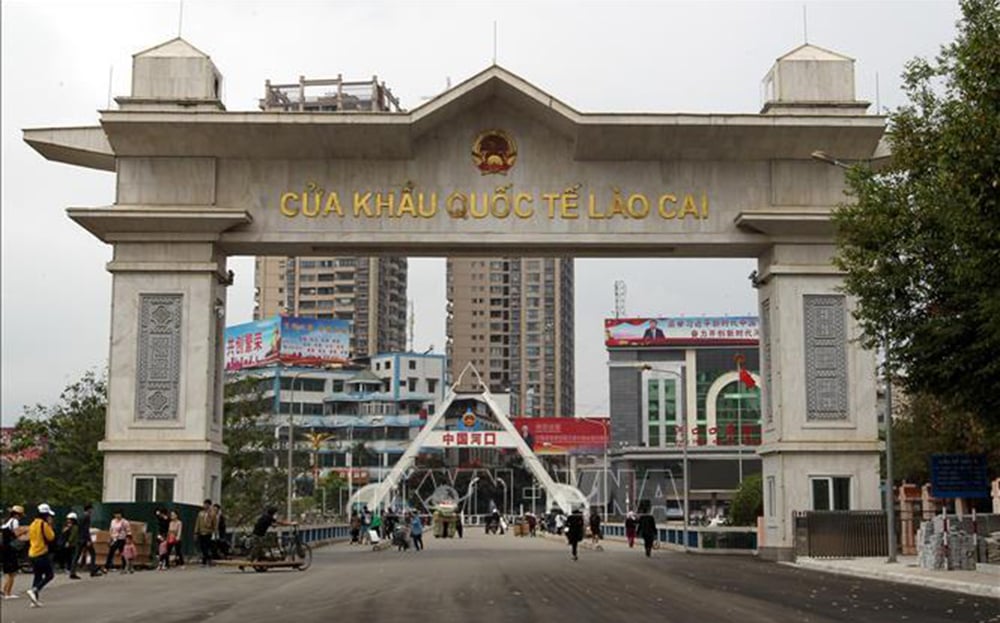
Lao Cai border gate.
In the field of national defense and security, Yen Bai and Lao Cai are both located within the defense zone, under the direct command of Military Region II and the Ministry of National Defense; security and order are always maintained thanks to the coordination between the police forces of the two provinces. In particular, border areas always receive attention from the Party committees, authorities, and police forces. The model of joint security and order maintenance in the border area between Minh Chuan commune, Luc Yen district, Yen Bai province, and Viet Tien commune, Bao Yen district, Lao Cai province, has been highly praised by the Ministry of Public Security and requested to be replicated nationwide.
A new era of development has officially begun, promising more comprehensive and sustainable development opportunities thanks to the harmonious combination of the potential and strengths of both localities. Accordingly, with its strategic geographical location as a gateway for trade with China via the Lao Cai international border gate, and an increasingly完善 transportation system, including railways and inter-provincial roads, there will be more favorable conditions to attract investment, develop the regional economy, and expand its reach to the regional and international levels.
The connection between Lao Cai's industrial, mineral, and logistics potential and Yen Bai's advantages in agriculture, forestry, and ecotourism will create strong synergy, contributing to the transformation of the economic structure towards a modern, green, and sustainable direction. The cultural exchange among ethnic minorities and long-standing revolutionary traditions will be a solid foundation to amplify endogenous strengths, promote the development of socio-cultural fields and tourism, and improve the material and spiritual lives and happiness index of the people.
There are many more cooperation programs between the two localities, coordination regulations between sectors, especially regarding history, cultural traditions, business relationships between economic sectors; and the close ties of village life, kinship, and blood relations between the people of Yen Bai and Lao Cai, which cannot all be listed within the scope of this article.
Comrade Tran Huy Tuan, Secretary of the Yen Bai Provincial Party Committee, affirmed: "The two provinces of Yen Bai and Lao Cai are delighted and proud to have once shared the same Hoang Lien Son mountain range. Today, we continue to promote the strength of solidarity and close ties, developing, expanding, and elevating our level to strive to become the economic, cultural, and tourism center of the northern midland and mountainous region, a shining example in border region development cooperation and international integration, so that the people of all ethnic groups in the area can have increasingly prosperous, developed, and happy lives, realizing the advice of President Ho Chi Minh when he visited Yen Bai and Lao Cai in September 1958."
Lao Cai and Yen Bai share a long history of close ties and favorable natural conditions, rich in mineral resources, and are particularly situated on the Red River's strategic axis. These are crucial prerequisites for the merger of the two provinces to become a "three-horse chariot," leading to stronger development.
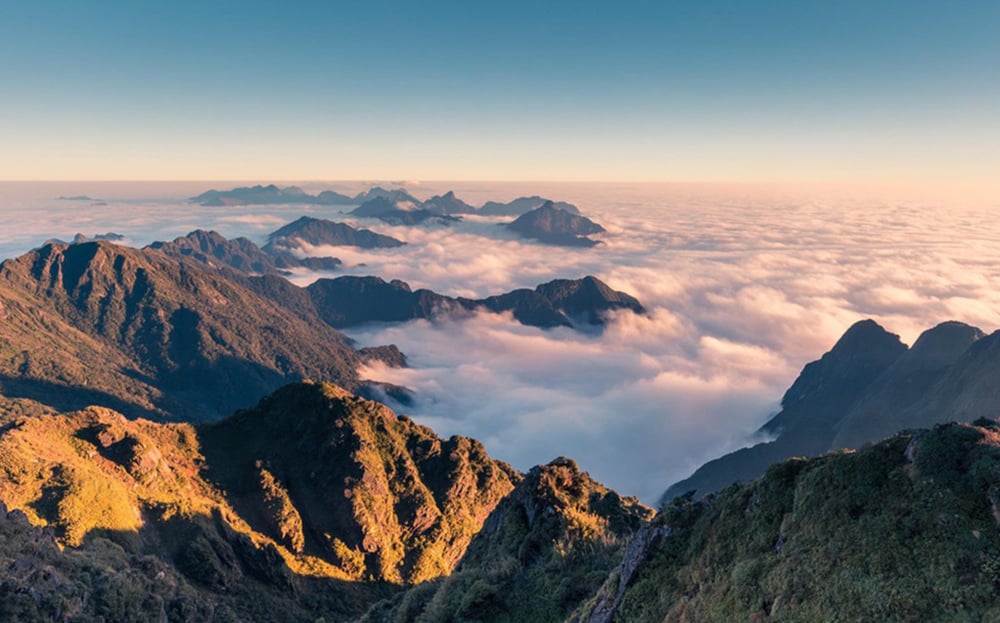
Yen Bai and Lao Cai are both located in the Hoang Lien Son mountain range.
Yen Bai and Lao Cai will be united, and the people of various ethnic groups will once again live in harmony at the foot of the majestic Hoang Lien mountain range, their peaceful lives flowing along the Red River, heavy with red silt. Streamlining the workforce and building a state administrative apparatus that ensures efficiency, effectiveness, and effectiveness is a major policy, a revolution in institutions, to propel the country into a new era of national progress. The restructuring process inevitably involves some losses and disadvantages, but these are only small sacrifices, personal disadvantages… The greatest benefit from the support of all sectors of the population over the past months is the sacrifice of a small personal part for the benefit of the nation, for the future of our children, so that the entire nation can enter a new era, an era of national progress.
Le Phien
Source: http://baoyenbai.com.vn/11/348574/Duoi-chan-nui-Hoang-Lien-yeu-dau.aspx
![[Photo] National Assembly Chairman Tran Thanh Man inspects election preparations in Hai Phong city.](https://vphoto.vietnam.vn/thumb/1200x675/vietnam/resource/IMAGE/2026/02/26/1772095420401_ndo_br_bnd-8016-jpg.webp)
![[Photo] Thousands of tourists visit the Quang Trung Emperor Temple in Nghe An during the early spring season.](https://vphoto.vietnam.vn/thumb/1200x675/vietnam/resource/IMAGE/2026/02/26/1772095410680_img-9305-3882-jpg.webp)












































Comment (0)