

In my opinion, no melon is as cheap as the cantaloupe (called "dưa bở" in the North). And perhaps, cantaloupe is also one of the cheapest fruits. When I was a child, cantaloupe was one of the few things my siblings and I could eat freely. Because it was so cheap. Because it was easy to grow and rarely had pests or diseases. If the soil was poor and nothing else could be grown, we'd plant a few cantaloupe seeds; they would sprout vigorously, the vines would grow quickly, and before we knew it, we had fruit to eat. Back then, most people grew it for personal consumption, to give as gifts to relatives, and whatever they could sell was fine too.
For decades, cantaloupes have been ripening to a vibrant yellow in the arid fields. Every summer, passing through Hoa Da area, An My commune, Tuy An district (Phu Yen province), I still see cantaloupes being sold along the roadside. Despite the scorching sun and the heat radiating from the asphalt of National Highway 1, in makeshift shelters, men and women patiently sit and sell cantaloupes, honeydews, watermelons… freshly harvested from nearby fields. Cantaloupes crack very quickly when they ripen. If they aren't sold in time, they have no choice but to be thrown away.
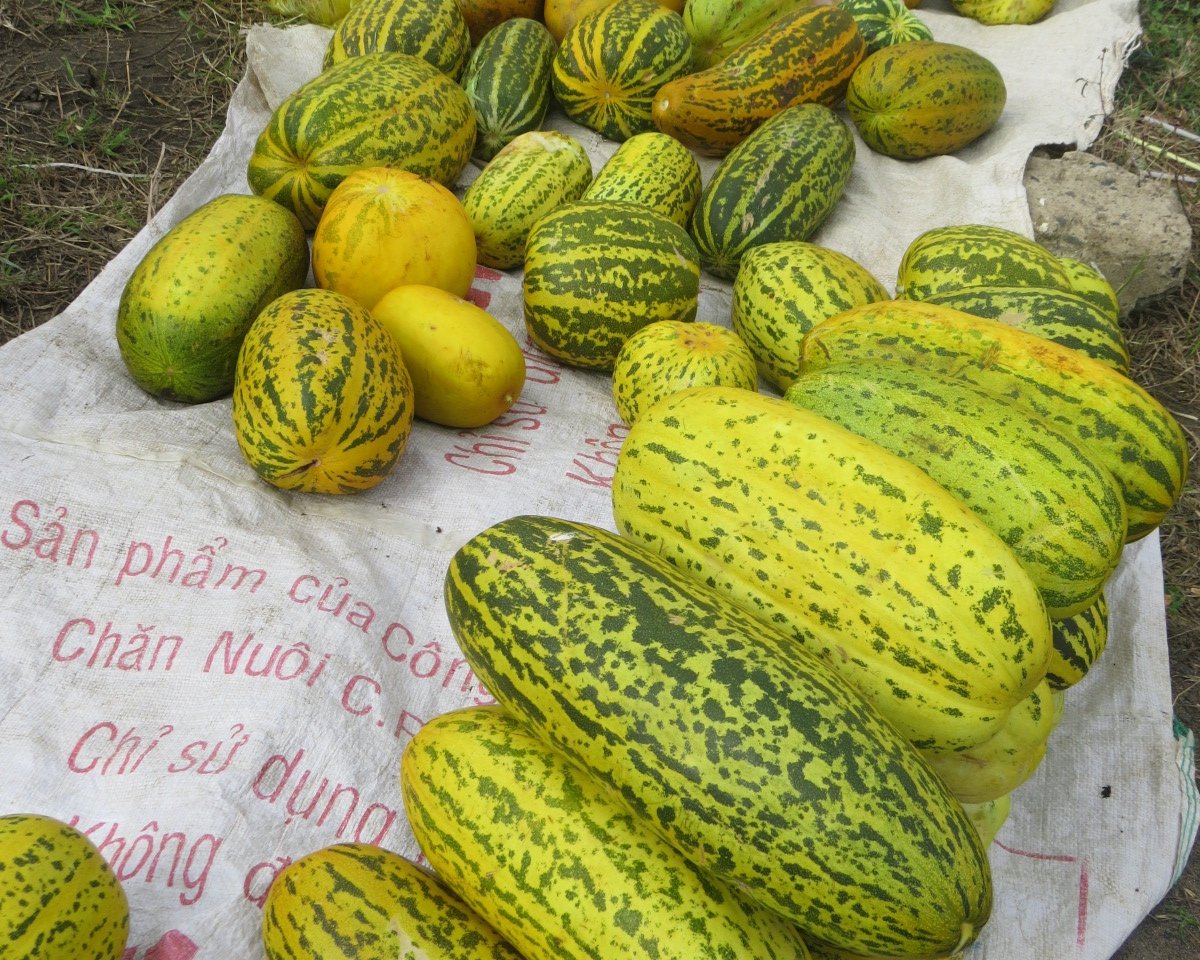
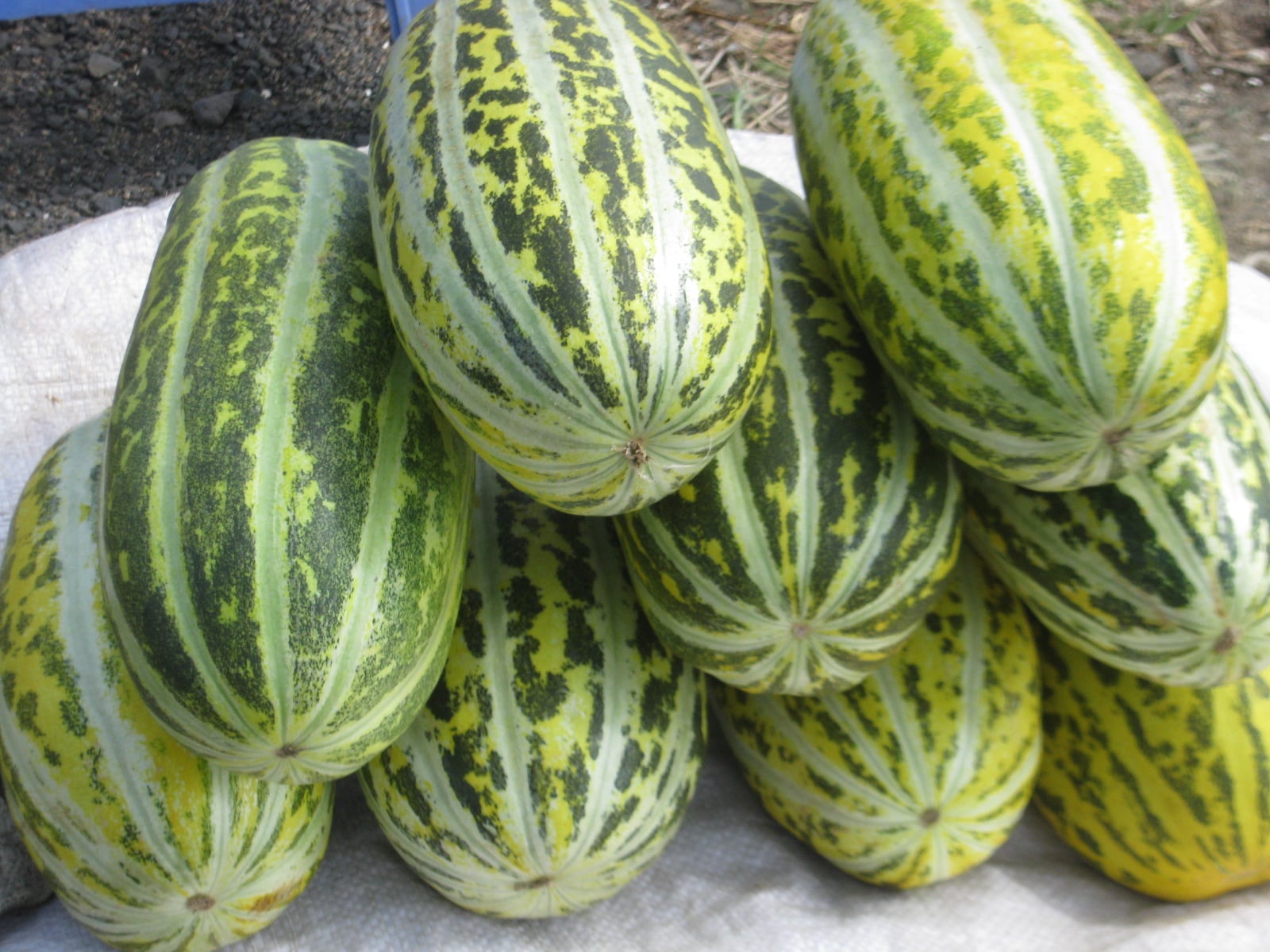
Cantaloupe can be used to make many delicious and refreshing dishes.
The price of cantaloupe is only a few thousand dong per kilogram right now. For just a few tens of thousands of dong, you can have enough cantaloupe for the whole family to eat for a week. The quickest way to eat it is to break a ripe cantaloupe into pieces and bite into them. The flavor is delicate, fragrant, nutty, and slightly sweet. Kids can add a little sugar if they like it. For something a bit more elaborate, mash the cantaloupe, add some sugar and ice, and eat a whole bowl (or a large glass) – it's satisfying and refreshing. A more innovative option is to have a glass of cantaloupe mixed with milk or blended into a cantaloupe smoothie. The heat outside and the heat inside will disappear instantly. If you have too much ripe cantaloupe, you can blend it with a little sugar (or no sugar), divide it, freeze it, and make ice cream to enjoy later…
That's talking about eating ripe cantaloupe. But with unripe cantaloupe, you can make a whole range of delicious and unique dishes. There's cantaloupe salad mixed with herbs, roasted peanuts, fish sauce, garlic, chili, lime, and sugar; if you like, add a few slices of pork belly. There's thinly sliced cantaloupe mixed with anchovy fish sauce, crunchy, flavorful, stimulating the taste buds, and leaving the pot empty. There's pickled cantaloupe, cantaloupe stewed with pork, cantaloupe stewed with tuna, cantaloupe stir-fried with pork belly… Just hearing about it makes your heart flutter.
Recently, cantaloupe has found a new market as several establishments and supermarkets have started producing and distributing cantaloupe sandwiches, cantaloupe crepes, and other similar products. Thus, cantaloupe has continued to thrive and accompany countless generations through the years.
Source: https://thanhnien.vn/huong-vi-que-huong-dua-gang-an-cho-mat-long-185250121183054247.htm
![[Photo] Standing Committee member of the Party Central Committee Tran Cam Tu working with the Central Inspection Committee](https://vphoto.vietnam.vn/thumb/1200x675/vietnam/resource/IMAGE/2026/05/28/1779969579668_ndo_br_bnd-2495-jpg.webp)

















![The Quintessence of Northern Vietnam's Villages: [Part 2] The Famous Cassava Noodles of Kunming](https://vphoto.vietnam.vn/thumb/402x226/vietnam/resource/IMAGE/2026/05/28/1779937455892_3929-3144-mien-dong-15-nongnghiep-023138.jpeg)













































































Comment (0)