

 |
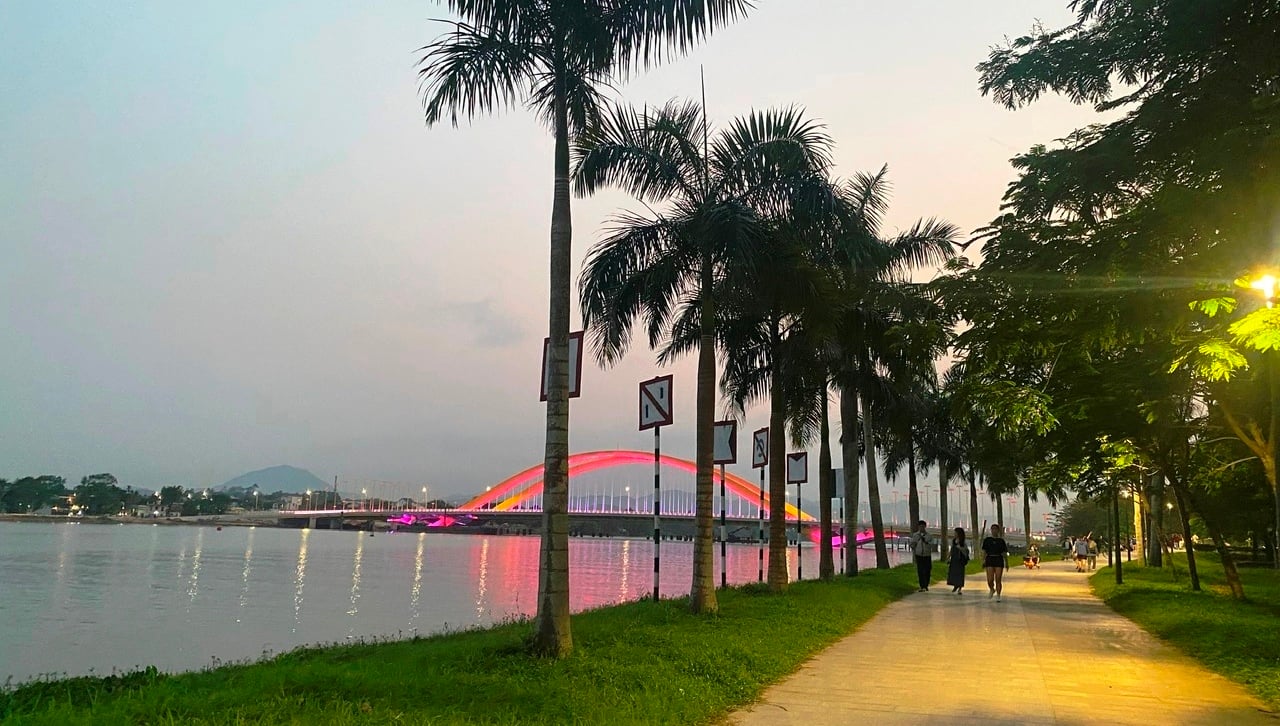
| Taking a stroll along the Perfume River and checking in at Nguyen Hoang Bridge are popular activities among locals. |
The bridge is captivating due to its beautifully designed structure, its architectural effect, and the enchanting, shimmering nighttime lighting that is so uniquely Hue . Hue is named after Nguyen Hoang, the first lord of the Nguyen Dynasty to establish the Thuan Hoa - Phu Xuan region in Dang Trong in the 16th century. The design concept is to create a slender, graceful bridge, like a crane's wing, blending into the Hue River, the Hue gardens, and the gentle, meek people of Hue. Even the debates and criticisms regarding the aesthetics and safety of the unique canopy lighting system on the bridge, or the questions surrounding the design concept, along with the diverse perspectives and exchanges in the media, have contributed to its public attention.
There are no, and it's difficult to obtain, detailed statistics on how many tourists the Nguyen Hoang Bridge has attracted to Hue since its opening. All we know is that some people, like my relatives from Dak Lak , have taken the bus to check in at the Nguyen Hoang Bridge when they return home. The childlike happiness and the stunning, charming photos of the bridge have spread with the trending message: If you come to Hue, you must visit the Nguyen Hoang Bridge.
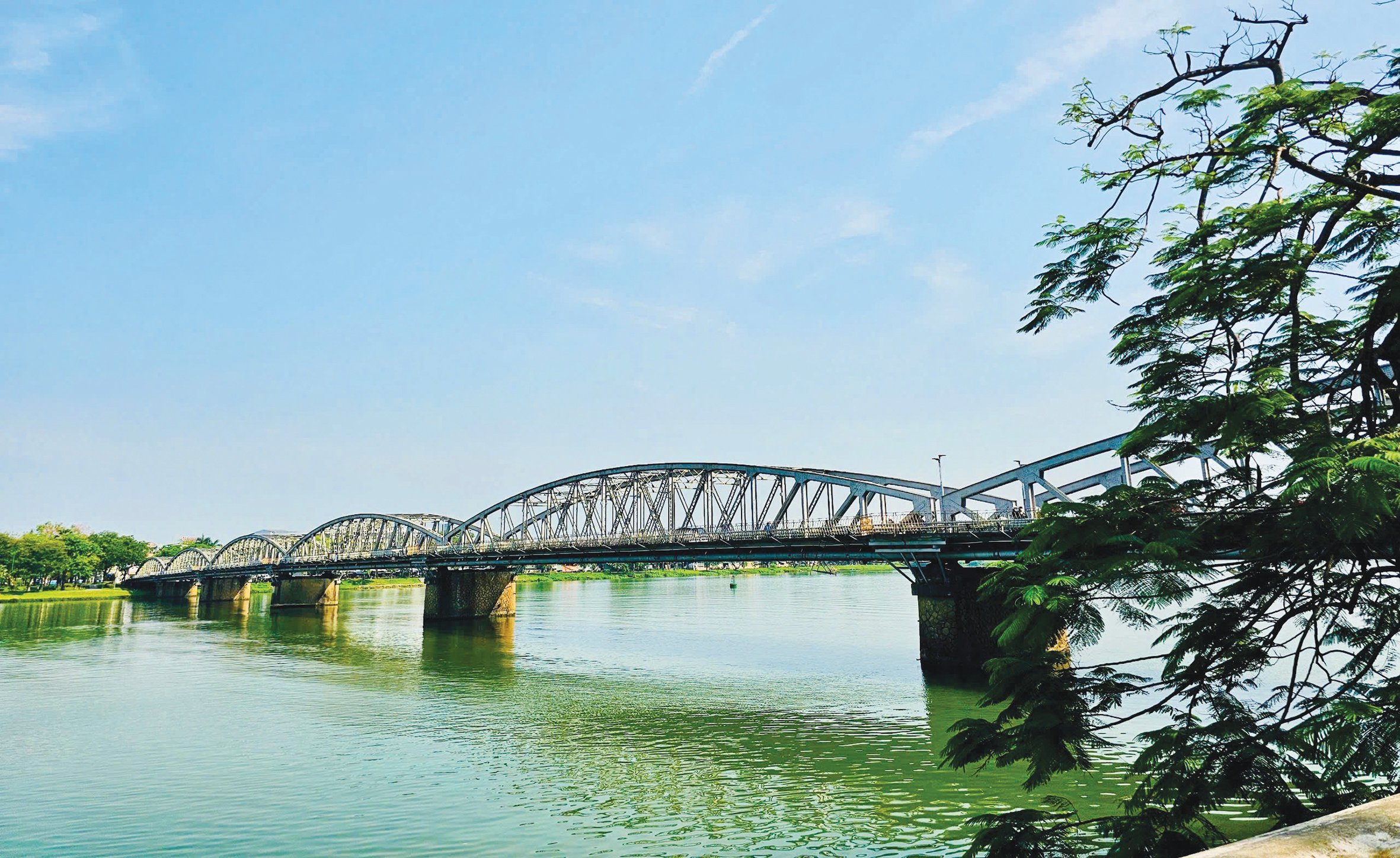 |
| The Truong Tien Bridge is associated with the history and culture of Hue for over 120 years. |
Until recently, walking along the Perfume River to the former capital of Kim Long, and admiring the bridge's silhouette, hidden amidst the greenery and waterways of Hue, I understood why so many tourists and locals flocked here every night. Along with the crowds of people admiring the view and taking photos, not only has the new image of Hue from the bridge been spread, but related services have also had the opportunity to thrive. For example, a sugarcane juice and smoothie stall on Kim Long road, recently opened by a young couple, capitalized on the bridge's popularity and has become very busy. And perhaps the happiest are the photographers, who have become more in demand for their services here.
Speaking of the Nguyen Hoang Bridge, it suddenly occurred to me that Hue could absolutely develop a tourism tour linked to the bridges on the Perfume River. The Truong Tien Bridge, an ancient bridge steeped in Hue's history and culture for over 120 years, was begun during the reign of Emperor Thanh Thai. Through time, war, and natural disasters, this graceful bridge, a symbol of the ancient capital of Hue, has become a historical witness, containing stories that form the soul and allure of tourist destinations.
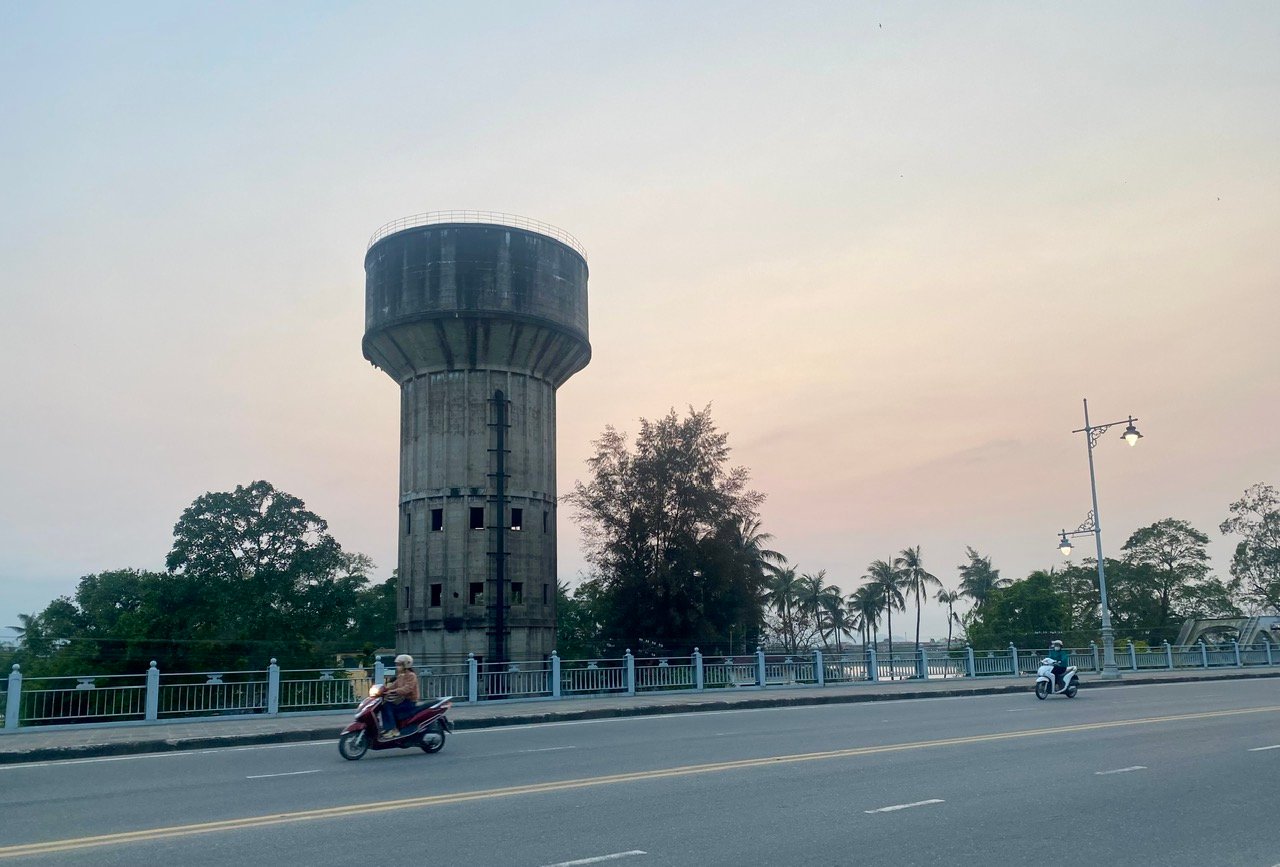 |
| The Da Vien Water Tower, strategically located in the middle of the Perfume River, is a delightful stop for tourists. |
Or consider the Bach Ho Bridge – a unique railway bridge in Hue, over a century old, which also became famous after being chosen as a setting in popular Vietnamese films such as "Mat Biec" (Blue Eyes) and "Gai Gia Lam Chieu" (The Old Lady's Tricks). It's a sought-after spot for young people to take stunning photos for social media. In particular, the massive Da Vien Water Tower, reflecting its image in the Perfume River, creates a very unique corner of Hue, making the Bach Ho railway bridge a striking feature when viewed from afar.
And there are many other bridges, such as Tuan Bridge, spanning the Perfume River upstream. Then there are Da Vien Bridge, Phu Xuan Bridge, and Phu Luu Bridge downstream, connecting to Con Hen Island… Each bridge has its own story, its own unique features connected to the Perfume River landscape, and if properly invested in and developed, it would certainly create interesting tourist tours. Such as walking along the Perfume River to admire and photograph the bridges in the evening and when the city lights up; or cruising on the river to enjoy the cool breeze and immerse yourself in the mystical beauty of the Perfume River at night, with the bridges as a highlight…
All of this hints at one of the vast tourism potentials associated with the riverine landscape, a special gift that nature has bestowed upon Hue.
Source: https://huengaynay.vn/du-lich/du-lich-tu-nhung-cay-cau-152465.html


![[Image] Ho Chi Minh City simultaneously commences construction and breaks ground on 4 key projects.](/_next/image?url=https%3A%2F%2Fvphoto.vietnam.vn%2Fthumb%2F1200x675%2Fvietnam%2Fresource%2FIMAGE%2F2026%2F01%2F15%2F1768472922847_image.jpeg&w=3840&q=75)


Comment (0)