

 |
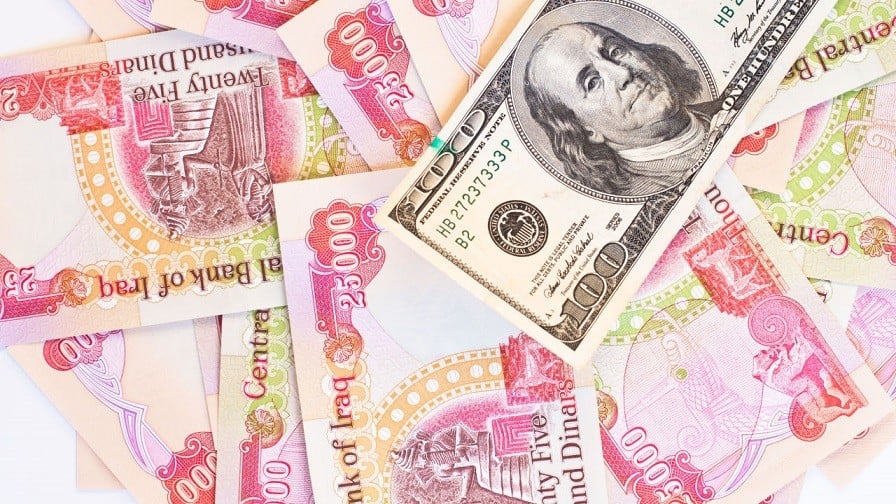
| The dominance of the US dollar in the Middle East may be waning. (Source: Shutterstock) |
Over the past few months, senior politicians in several Middle Eastern countries have made statements suggesting that the dominance of the US dollar in the region may be waning.
The Iraqi government issued a ban on the use of the US dollar in business transactions on May 14th. The ban was implemented to promote the use of the Dinar, reduce the influence of the US dollar, and curb its exploitation in the black market.
Previously, in February 2023, Iraq announced it would allow trade with China in yuan instead of US dollars.
The Central Bank of Iraq has announced it will allow transactions with China to be conducted in yuan. This also marks the first time Iraq has accepted cross-border trade transactions without requiring the US dollar.
The Middle East is 'shunning' the USD.
Earlier this year, Saudi Arabia's finance minister said the country was "ready" to sell oil in various currencies, including the euro and the yuan. The United Arab Emirates (UAE) also revealed it would work with India to use the rupee in trade transactions.
Last year, Egypt announced plans to issue bonds denominated in Chinese yuan. The country has already issued bonds denominated in yen.
In addition, several other Middle Eastern countries such as Egypt, Saudi Arabia, the UAE, Algeria, and Bahrain have stated that they wish to join the BRICS group of leading emerging economies , which includes Brazil, Russia, India, China, and South Africa.
This group plans to discuss the feasibility of introducing a common currency at a summit in South Africa later this year. This idea was floated by Russian President Vladimir Putin in early June 2022.
Bloomberg reports that BRICS will discuss the issue on August 22nd.
Since 2021, the UAE has also been part of a pilot project run by the Swiss-based Bank for International Settlements. This project examines cross-border digital payments that could bypass the US dollar.
According to Bloomberg , the US dollar currently accounts for approximately 58% of official global foreign exchange reserves, down from 73% in 2001. In the late 1970s, this figure was 85%.
The USD continues to dominate the Gulf region.
However, most experts assert that the move away from the US dollar is happening slowly, and this is certainly true for the Middle East.
Since the 1970s, the oil-producing Gulf states have had partnerships with the United States. Most of them, with the exception of Kuwait, have pegged their currencies to the US dollar.
Hasan Alhasan, a Middle East policy researcher at the London-based International Institute for Strategic Studies, noted: “One of the biggest signs that de-USD is taking off is currency devaluation in the Gulf countries. But so far, we haven’t seen that.”
According to Daniel McDowell, a professor of political science at Syracuse University in New York (USA), "The keywords here are 'declaration,' 'potential,' and 'willingness' when it comes to replacing the USD. However, declaring is easy, acting is much harder."
For oil-producing nations, such as Saudi Arabia , statements like these are also a way to attract American attention.
McDowell did not rule out the possibility that the dominance of the US dollar would one day gradually diminish. But right now, "much of this talk is symbolic. Any changes are very small and slow," the expert asserted.
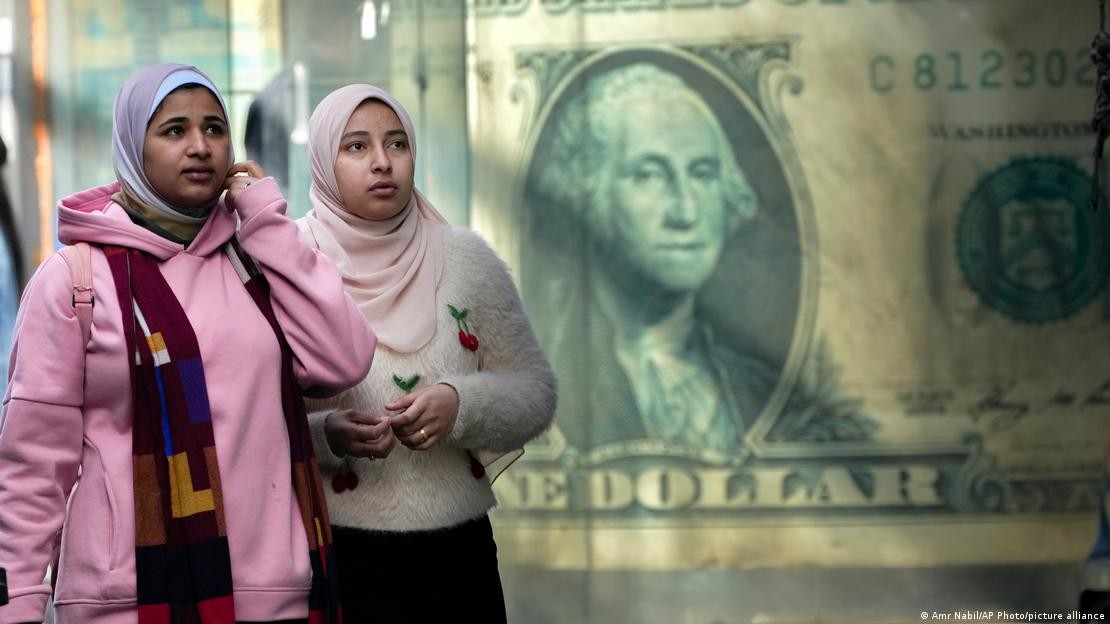 |
| The US dollar is losing its appeal in the Middle East. (Source: AP) |
Two main reasons
According to DW, experts agree that there may be two main reasons why people in the Middle East are seeking alternative currencies instead of just using the USD.
Firstly, this relates to Russia's special military operation in Ukraine.
McDowell believes that sanctions are a very important part of the debate over whether or not to "move away" from the US dollar.
The expert argued that, "The more the U.S. uses the dollar as a weapon in its foreign policy, the more its adversaries will move away from it. Currently, a lot of Russian money is flowing through countries in the Middle East and Asia. Essentially, these are countries that have chosen not to comply with or enforce U.S. or European sanctions."
But if sanctions against Russia are further intensified, becoming secondary sanctions, then those countries will find it much more difficult to "evade" the sanctions.
McDowell explained: “Therefore, governments concerned about U.S. sanctions should take proactive steps, even if they are not yet ready or interested in making a radical shift away from the dollar.”
Secondly, according to Alhasan, countries are realizing that the US is trying to rewrite the rules of the global oil market, targeting Russia's interests, and that this poses a strategic threat to Saudi Arabia.
In March, Saudi Arabia's Energy Minister Abdulaziz bin Salman said that if any country tried to impose a price cap on its oil exports – similar to what it had done with Russia – Saudi Arabia would no longer trade with them.
Maria Demertzis, a professor of economic policy at the European University in Florence, Italy, argues that this issue is why the trend of moving away from the USD seems likely to continue as long as sanctions remain in place.
However, de-dollarization or distancing oneself from the greenback cannot be done immediately.
Mr. Demertzis pointed out that even if some countries wanted to bypass the USD as a currency, replacing the payment infrastructure provided by a currency-oriented system would be extremely difficult.
Source
























![[Image] Fifth meeting of the Steering Committee for National Projects in the Railway Sector](/_next/image?url=https%3A%2F%2Fvphoto.vietnam.vn%2Fthumb%2F1200x675%2Fvietnam%2Fresource%2FIMAGE%2F2026%2F01%2F06%2F1767712857541_ndo_br_dsc-0581-jpg.webp&w=3840&q=75)









































































Comment (0)