The 55th session of the United Nations Human Rights Council (HRC), the longest session ever held by the HRC (February 26 - April 5), has concluded successfully after a packed and ambitious agenda.
Vietnam, as a member of the Human Rights Council for the 2023-2025 term, has made positive contributions throughout the session, leaving its mark in 2024 and beyond, helping to build an image of Vietnam as a proactive and responsible advocate for global human rights values.
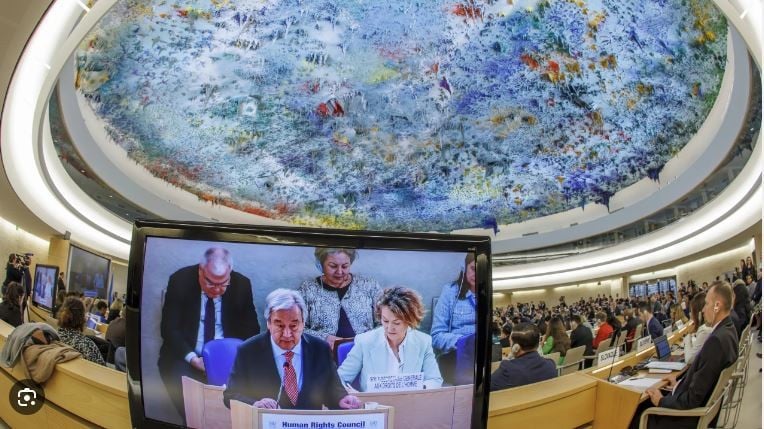 |
| UN Secretary-General Antonio Guterres speaks at the 55th High-Level Session of the UN Human Rights Council. (Source: X Network) |
32 resolutions and 2 decisions
While at the opening session of the meeting, UN Secretary-General Antonio Guterres, President of the UN General Assembly Dennis Francis, and many world leaders called for "immediate action" from the international community in the face of the alarming human rights situation in many regions of the world , the discussions during the session immediately demonstrated that spirit with many practical solutions put forward, resulting in 32 resolutions and 2 important decisions.
This session successfully organized a high-level meeting; seven thematic discussion sessions – on universal human rights, combating religious hatred leading to incitement to discrimination, hostility, and violence, challenges and best practices in ensuring social security and providing quality public services, and the rights of persons with disabilities; two discussion sessions on children's rights; commemoration of the International Day Against Racism; discussions and dialogues on approximately 36 special procedures and human rights mechanisms of the UN; and discussions and dialogues on the human rights situation in countries around the world.
At the session, the Human Rights Council also considered and discussed approximately 80 reports; consulted on and adopted 32 draft thematic resolutions; adopted reports on the Universal Periodic Review (UPR) mechanism of 14 countries; and adopted decisions to postpone some Human Rights Council activities and on a hybrid online-in-person meeting format.
One notable resolution, which received widespread international support, was the Human Rights Council's resolution calling for a halt to arms sales to Israel. Against the backdrop of the Israel-Hamas conflict, which is causing significant human rights concerns and raising serious international worries, the resolution to stop arms sales to Israel was adopted on April 5, 2024, just before the end of the session.
Accordingly, the document calls on countries to “cease the sale and transfer of weapons, ammunition and other military equipment to Israel.” The text states that this is necessary “to prevent further violations of international humanitarian law as well as violations and abuses of human rights.” 28 of the 48 member states of the Council voted in favor, 13 abstained, and 6 voted against. This move marks the first time the UN’s top human rights body has taken a stance on the deadliest Gaza war to date.
In addition, the Human Rights Council also adopted several important resolutions related to the issues of Ukraine, Syria, Haiti, Mali, Belarus, South Sudan, etc. Hopefully, with the strong determination of the international community, human rights problems in many hotspots around the world will soon find solutions.
| The Human Rights Council reviewed and discussed approximately 80 reports; consulted on and adopted 32 draft thematic resolutions; adopted reports on the Universal Periodic Review (UPR) mechanism on human rights from 14 countries; and decided to postpone some of the Council's activities and to adopt a hybrid online-in-person meeting format. |
Responsible, proactive, and impactful.
It can be affirmed that throughout the Session, Vietnam consistently demonstrated a sense of responsibility, proactiveness, and made substantive and timely contributions in many important sessions, leaving a significant mark. Vietnam's initiatives, speeches, and proposals received widespread support and endorsement from other countries.
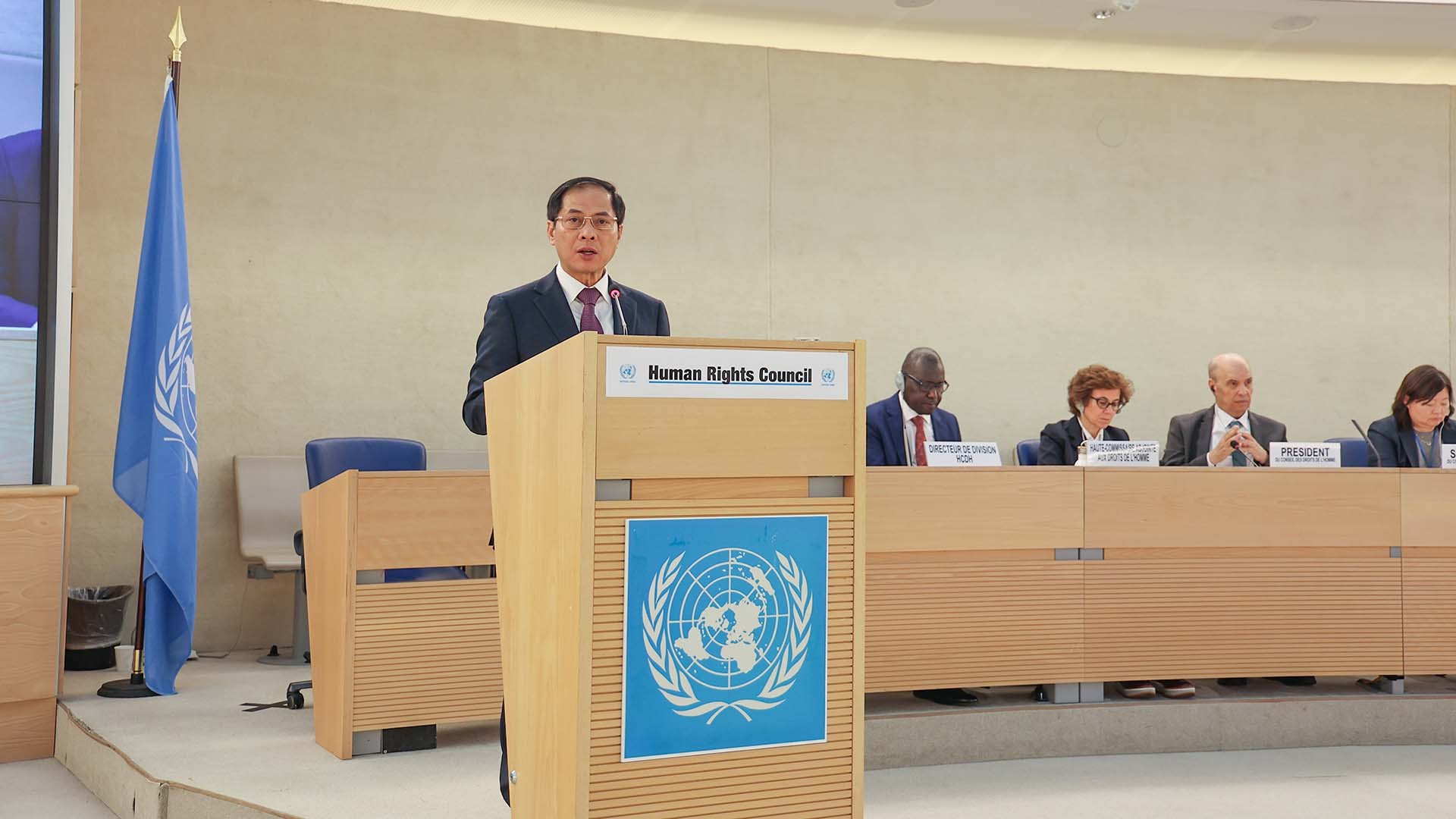 |
| Minister Bui Thanh Son speaks at the High-Level Session of the 55th Session of the United Nations Human Rights Council, February 26 in Geneva, Switzerland. (Photo: Nhat Phong) |
Notably, at the high-level meeting, Foreign Minister Bui Thanh Son mentioned Vietnam as a "success story" regarding efforts to ensure human rights amidst regional and international changes and numerous challenges.

The Minister reaffirmed Vietnam's priorities in participating in the UN Human Rights Council, including protecting vulnerable groups, gender equality, digital transformation, and human rights. In particular, demonstrating a positive spirit and strong commitment to the work of the Human Rights Council, Minister Bui Thanh Son declared and called on countries to support Vietnam's re-election as a member of the Human Rights Council for the 2026-2028 term.
Furthermore, Vietnam actively participated in discussions across a wide range of "hot" topics at this session of the Human Rights Council, such as the right to a clean and sustainable environment; the right to food; the right to culture; the rights of persons with disabilities; and the rights of children. In addition, Vietnam actively engaged in dialogue, exchange, and consultation with delegations from other countries, co-sponsored several initiatives in the spirit of dialogue and cooperation, and fulfilled its duties as a member of the Human Rights Council in consulting and voting on 32 draft resolutions and 2 decisions.
Not only did the Vietnamese delegation speak and contribute opinions from Vietnam's perspective, but they also participated in discussions in the spirit of being an ASEAN member. This has been and continues to be integrated into Vietnam's activities at many important United Nations bodies. This time, together with other ASEAN countries, the Vietnamese delegation delivered a joint speech on a topic of common concern and shared by ASEAN countries in the areas of fisheries exploitation and ensuring the right to food.
The Vietnamese representative shared several ASEAN initiatives aimed at supporting the activities of smallholder fishermen, including the ASEAN Strategic Action Plan on Fisheries Cooperation (2021-2025). In addition, the ASEAN Leaders' Declaration on Strengthening Food and Nutrition Security in Response to Crises, adopted in September 2023, underscores the commitment to facilitating access to finance for fishermen, aiming to improve the long-term resilience and sustainability of the fisheries sector.
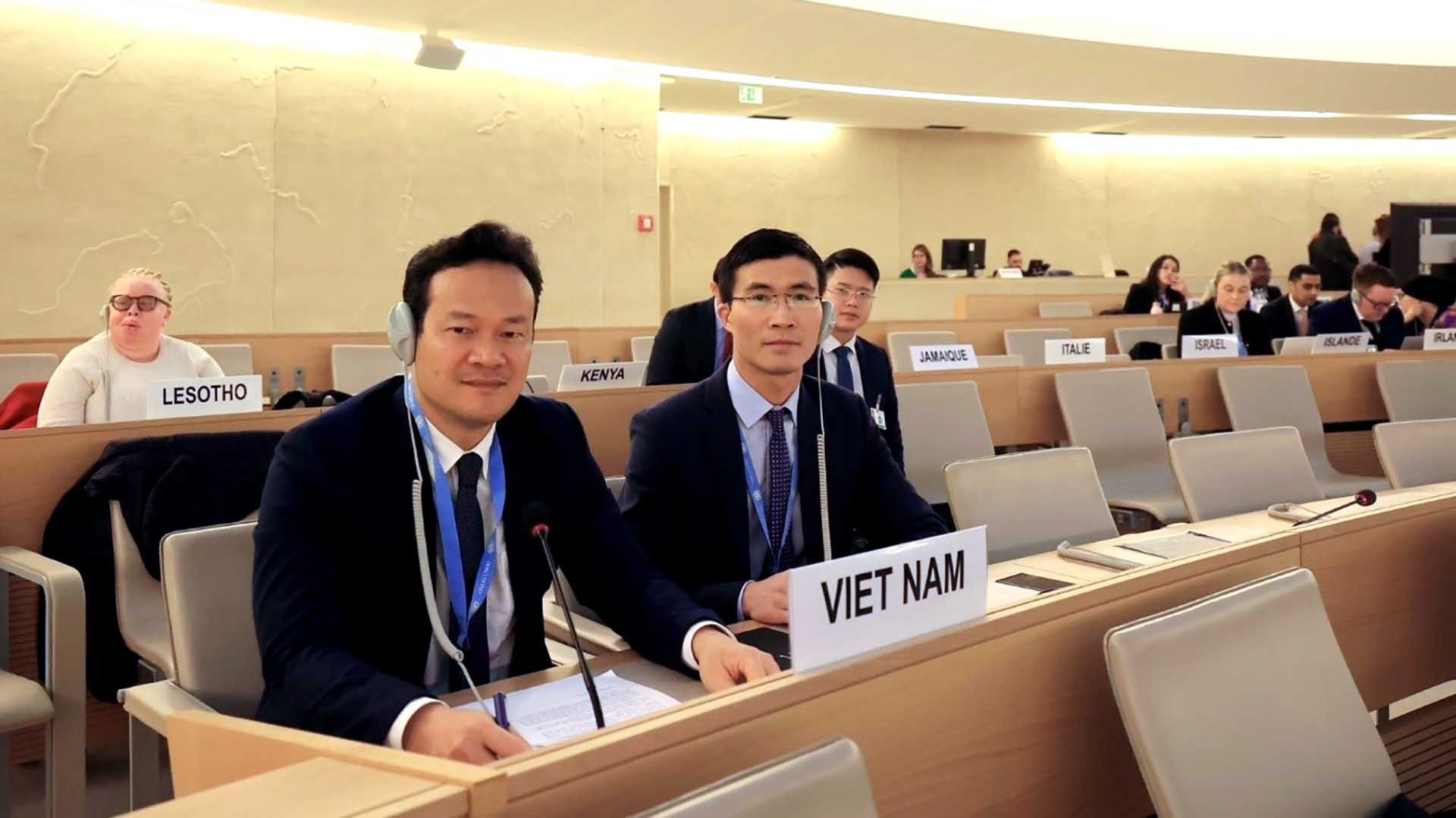 |
Ambassador Mai Phan Dung spoke on behalf of the Core Group for the Resolution on Human Rights and Climate Change, which includes Vietnam, Bangladesh, and the Philippines, during a dialogue session on the report of the UN High Commissioner for Human Rights on measures to mitigate the impact of climate change on the enjoyment of the right to food. (Source: VNA) |
Vietnam also spoke on behalf of the Core Group for the Resolution on Human Rights and Climate Change – which includes Vietnam, Bangladesh, and the Philippines – during the dialogue session related to the report of the UN High Commissioner for Human Rights on the topic of measures to mitigate the impact of climate change on the enjoyment of the right to food.
Accordingly, the Vietnamese representative affirmed that ensuring food security is always a top priority for countries, especially in the context of challenges posed by climate change that exacerbate vulnerability to hunger and malnutrition. Next June, Vietnam, along with Bangladesh and the Philippines, will present a draft annual resolution on promoting and protecting human rights in the context of climate change at the 56th session of the UN Human Rights Council.
Confidently running for the 2026-2028 term.
A highlight for Vietnam at this session was Minister Bui Thanh Son's declaration and call for support from other countries for Vietnam's re-election as a member of the Human Rights Council for the 2026-2028 term. With Vietnam's efforts and contributions to the Human Rights Council in the past, Vietnam can confidently continue to make significant contributions to the Council in the future.
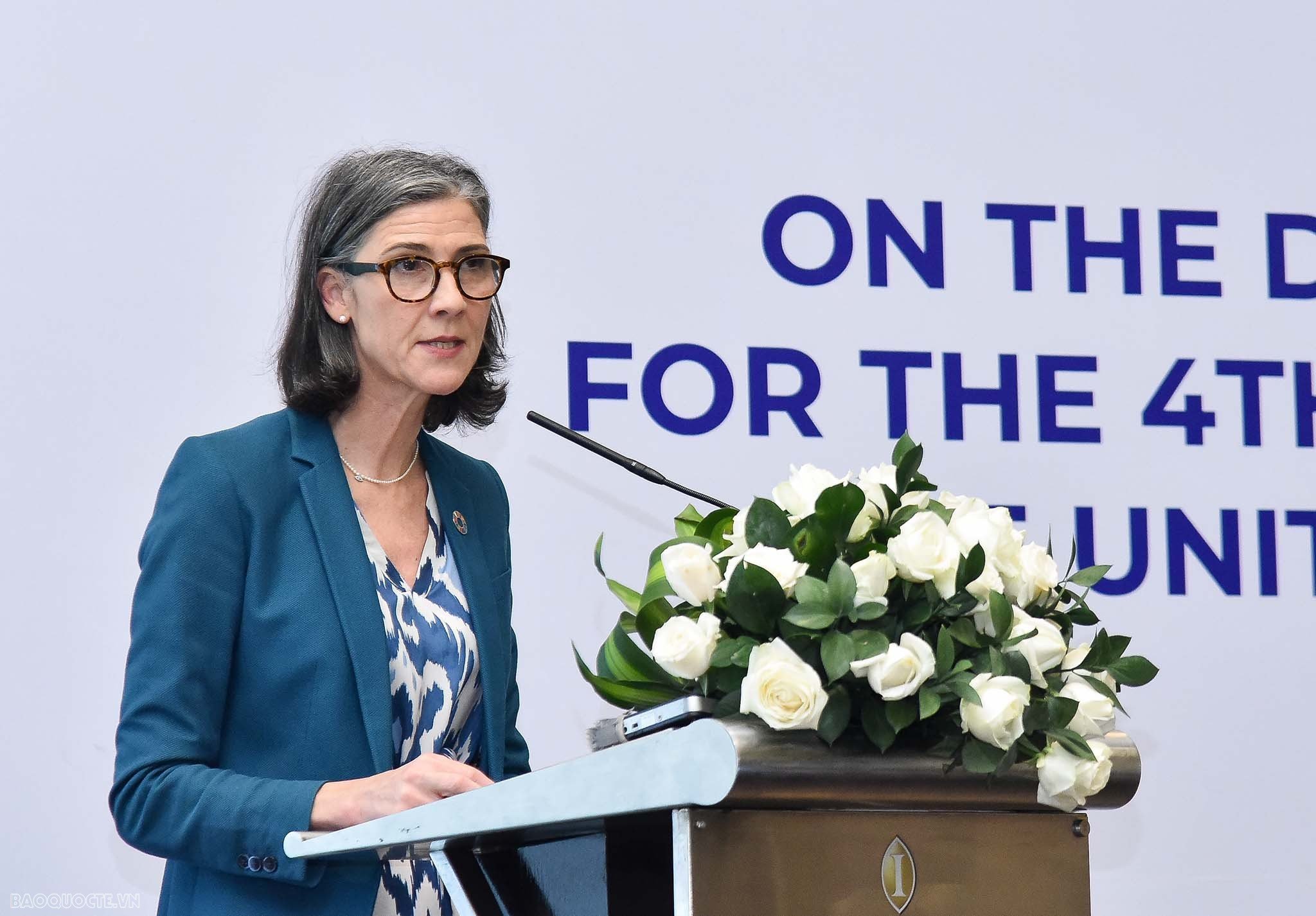 |
| Ms. Ramla Khalidi, in her opening remarks at the International Workshop on Consulting on the Draft National Report under the UPR Mechanism, Cycle IV, of Vietnam, on November 24, 2023. (Photo: Nguyen Hong) |
Ramla Khalidi, Resident Representative of UNDP in Vietnam, in her opening remarks at the International Workshop on Consulting on the Draft National Report under the UPR Mechanism, Cycle IV, on November 24, 2023, expressed: “I hope that Vietnam will continue to demonstrate its leading role in protecting and promoting human rights both domestically and globally.”
During its term as a member of the UN Human Rights Council from 2023 to 2025, Vietnam has become more deeply involved in the common work, promoting dialogue and cooperation within the Council in the spirit of "Respect and understanding. Dialogue and cooperation. All rights. For all." Vietnam has responsibly fulfilled its obligations and exercised its primary rights as a member state of the UN Human Rights Council in the negotiation and voting process for draft resolutions.
Specifically in 2023, Vietnam's six outstanding initiatives at all three regular sessions of the Human Rights Council were significant, closely linked to our country's key priorities in participating in the Human Rights Council, and contributed to enhancing Vietnam's image as a responsible and active member of the international community.
Of particular importance in 2023 for the Human Rights Council was the initiative to adopt a resolution commemorating the 75th anniversary of the Universal Declaration of Human Rights and the 30th anniversary of the Vienna Declaration and Programme of Action, which was adopted by consensus with 121 co-sponsors. At the High-Level Session of the 52nd Human Rights Council Meeting on February 27, 2023, Deputy Prime Minister Tran Luu Quang proposed the initiative to commemorate the 75th anniversary of the Universal Declaration of Human Rights and the 30th anniversary of the Vienna Declaration and Programme of Action with a Human Rights Council document.
Vietnam has adopted a constructive approach to human rights issues that are still subject to significant differences, politicization, and friction at the Human Rights Council, such as the situation in specific countries (Ukraine, Russia, Palestine, Sudan, etc.), the relationship between development and human rights, reproductive health and sex education, the rights of lesbian, gay, bisexual, and transgender (LGBT) people, and religious tolerance.

On the one hand, Vietnam contributes to the common struggle of developing countries to protect the principle of non-politicization and not using human rights issues to interfere in the internal affairs of sovereign states. On the other hand, Vietnam has listened to and respected the needs for cooperation and technical assistance of other countries, promoting cooperation and dialogue so that the Human Rights Council can act to meet the legitimate needs of countries in this field.
Thus, 2024 – a pivotal year in Vietnam's 2023-2025 Human Rights Council membership term – has seen a successful start with many notable Vietnamese achievements at the 55th session. Despite numerous difficulties and challenges, with strong determination, we can have complete confidence in the future. "Vietnam will certainly continue to make important contributions to the Human Rights Council, leaving its mark in 2024 and beyond, contributing to building a strong, comprehensive, modern, professional, and sophisticated Vietnamese foreign policy and diplomacy, and elevating multilateral diplomacy," Deputy Minister of Foreign Affairs Do Hung Viet affirmed in an article about Vietnam's achievements at the recent Human Rights Council session.
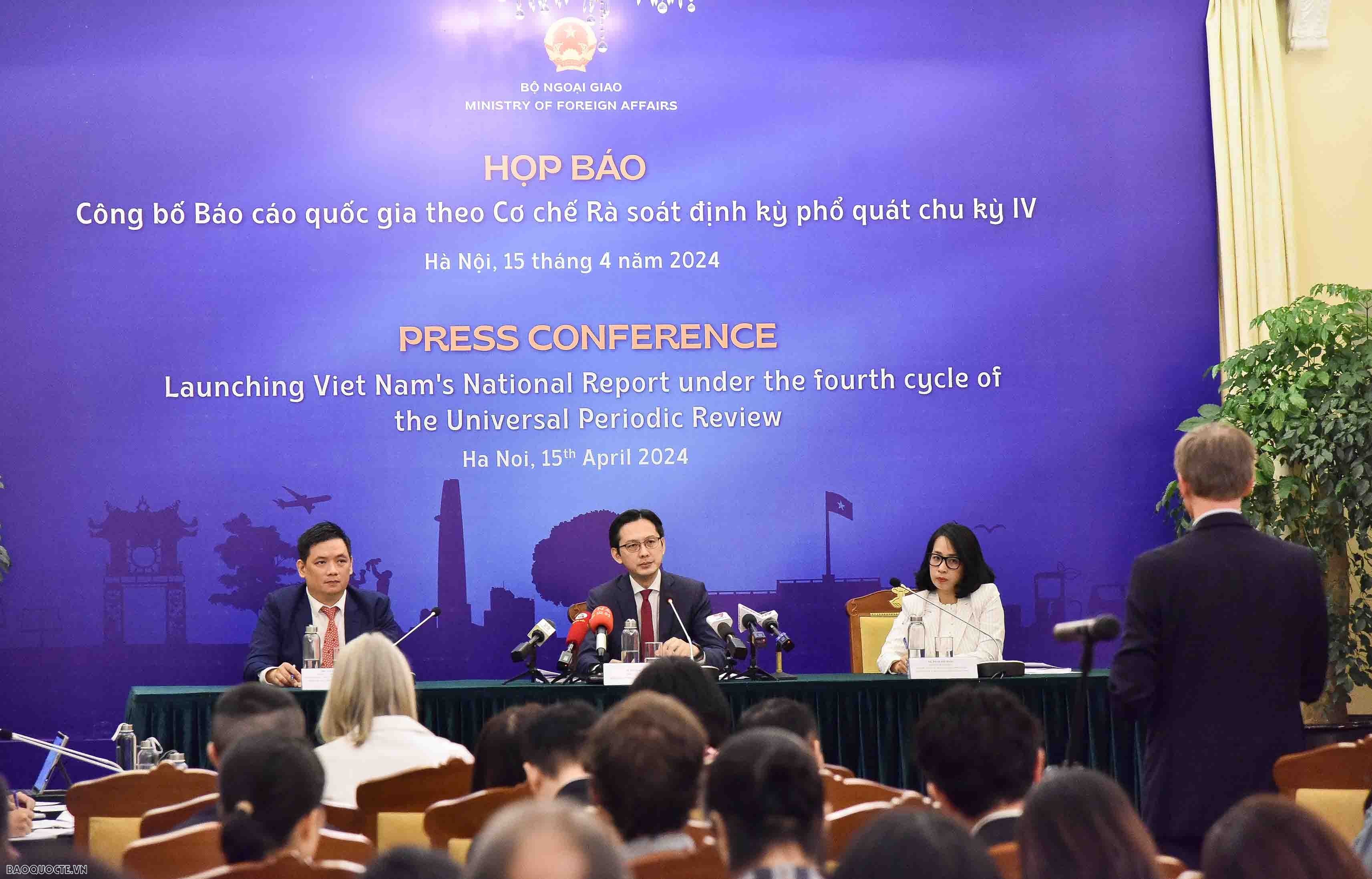 |
| Deputy Minister of Foreign Affairs Do Hung Viet chaired a press conference to announce the National Report under the Universal Periodic Review Mechanism, Cycle IV, on April 15. (Photo: Nguyen Hong) |
The resolution calling for a halt to arms sales to Israel was passed on April 5, 2024, just before the end of the session. It urged countries to “cease the sale and transfer of weapons, ammunition, and other military equipment to Israel.” The document stated that this was necessary "to prevent further violations of international humanitarian law as well as human rights violations and abuses." 28 of the Council's 48 member states voted in favor, 13 abstained, and 6 voted against. This move marks the first time the UN's top human rights body has offered a perspective on the deadliest war in Gaza's history. |
Source