

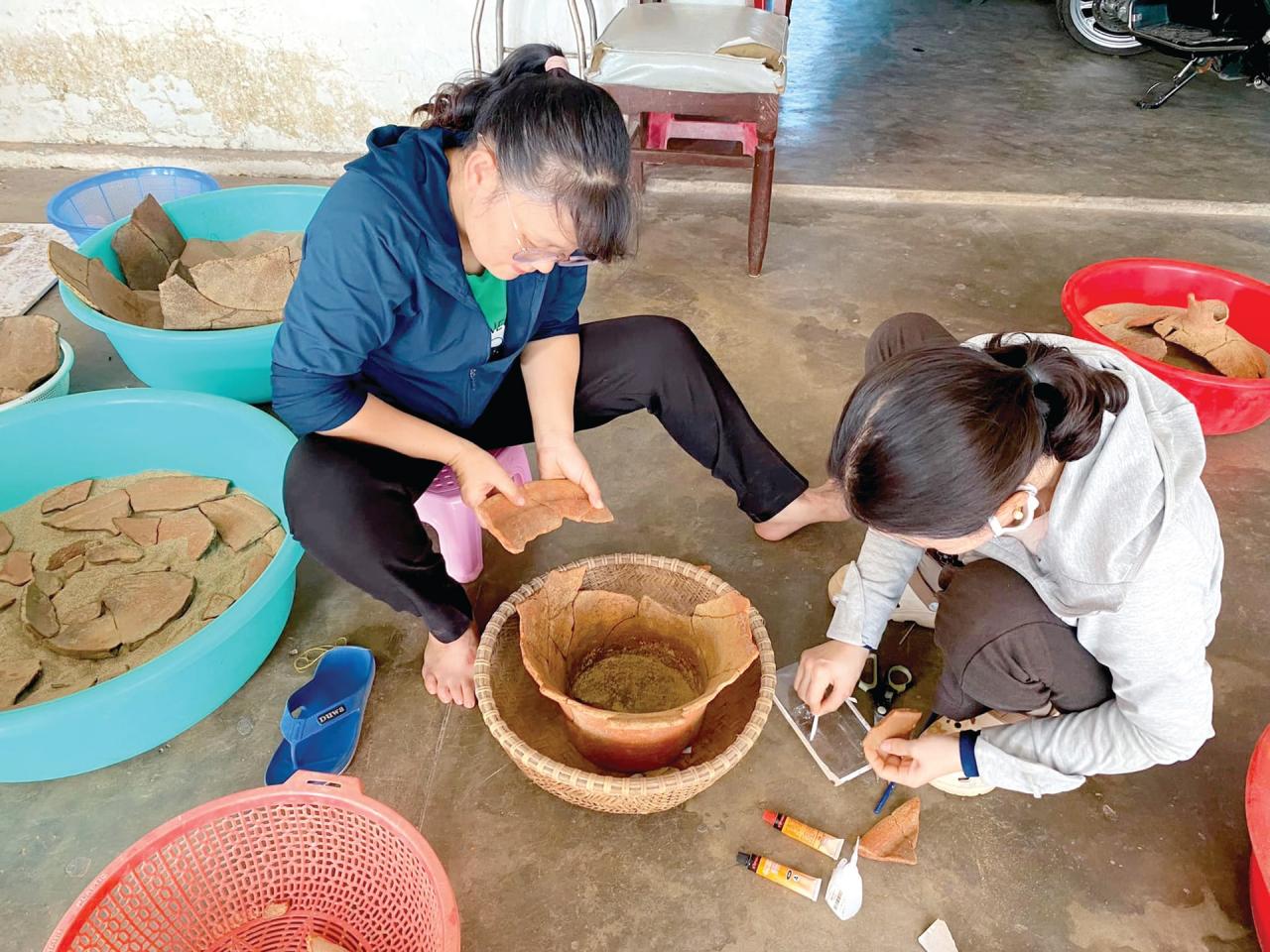
Every day I usually browse through my usual newspapers. This morning I came across an article about archaeology in the Quang Nam newspaper. Quickly scrolling down to find the author's name, I recognized a young colleague who is a researcher at the Quang Nam Provincial Museum.
Digging profession
Time flies so fast! It feels like just yesterday I was a talented undergraduate student at university, a young mother pursuing postgraduate studies, and now I'm a female doctor making significant contributions to a region rich in archaeological heritage.
Reading your articles about newly discovered relics and artifacts, your scientific yet measured and simple observations and assessments, suitable for readers... I am delighted by your rapid growth.
I'm not an isolated case because I've been fortunate enough to meet and work with many talented female colleagues! Some are renowned professors and doctors both domestically and internationally, and many others are PhDs and masters working at research institutes, universities, and museums...
Archaeology is a less common but always fascinating and interesting profession. I often receive questions about archaeology. The questioners usually start with a recent archaeological discovery and end with a question along the lines of, "Are there many women working in archaeology in our country? Why do women choose this profession... of digging?"
Questions like these always make me think: Why, and since when, have we assumed that some professions are for men and others for women? And why shouldn't women (shouldn't/are allowed to) work in archaeology?
Since the beginning of the 21st century, rapid economic development has led society to prioritize economic, service, and applied engineering fields. Meanwhile, humanities and social sciences fields often struggle to find jobs, offer low salaries, make it difficult to live, start a family, or advance in career… in short, they face numerous challenges. Even young people who want to study these fields often find it difficult to explain their choices to their families and friends.
Despite the "career guidance" movement, it still tends to steer young people towards high-paying professions. Few families pay attention to their children's personal interests and talents, and even fewer guide them towards basic research fields.
Archaeology is also a field that doesn't receive much favoritism from society, due to the unique nature of the profession. Because working in this field offers nothing but a basic salary and... passion!
Qualities of female archaeologists
Compared to other fields of study, archaeology doesn't just involve working in laboratories or on computers. It requires much more actual manual labor in the field.
Every profession requires suitable qualities. Archaeology, for example, involves long survey and excavation trips, arduous working conditions, and challenging environments lacking basic necessities. Therefore, female archaeologists constantly face unpredictable weather conditions, including rain, sunshine, heat, and cold.
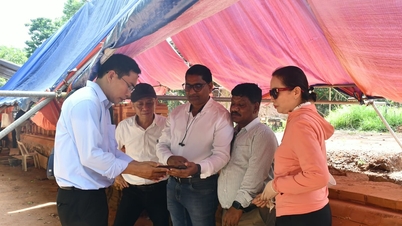
On each trip, at the excavation site, men and women work equally. We all dig, shovel, sort artifacts, classify specimens, research, write excavation reports, attend scientific conferences, and present our research papers... The work always demands meticulousness and carefulness, high levels of cooperation, and continuous learning from teachers, friends, and colleagues.
Women in the field of archaeology seem to possess these qualities inherently. With a sense of responsibility and solid professional expertise, they are indispensable members of every work assignment and research project.
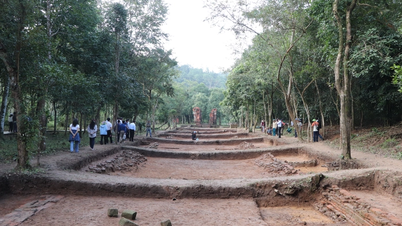
Some women even played key roles in the excavations, strictly managing their colleagues while also meticulously arranging food, accommodation, and living arrangements for everyone. They made significant contributions to every achievement of the field of archaeology. In Vietnam, many world heritage sites and national heritage sites owe a great deal to the efforts of archaeology, including the contributions of many of my female colleagues.
Passionate about their work, eager for travel and new discoveries, these women who have chosen this profession always accept challenges and difficulties, having identified it as their "calling." To pursue this career, female archaeologists must be in good health, and while decisive in their work, they always maintain a cheerful demeanor with everyone.
And they remain women who fulfill their roles as mothers and wives in their families, women with romantic and gentle souls.
Archaeologists are often seen as detectives because they constantly gather data and evidence and then draw conclusions. Female archaeologists are even more "sophisticated"—that's what our male colleagues often joke about.
A lifetime dedicated to the profession.
If any girls are interested in archaeology, they should definitely study it; it's a very interesting field!
It's exciting to travel to many places and experience so much. Our ancestors taught us, "Traveling a day's journey teaches you a basketful of wisdom." Female archaeologists often pursue this profession for life, because the more they work, the more new knowledge and experience they gain to guide their students and younger colleagues.
Despite the hardships and difficulties, the field of archaeology always attracts students, including many female students! Rest assured, women in archaeology don't have to worry about being left single. Almost all of them have happy families! Don't think archaeology is always dusty and unattractive; female archaeologists are still very feminine and always dress elegantly at the right time and place.
Archaeology is not the most glamorous profession, nor is it an easy or high-paying job. Every profession has its own appeal and challenges; if you enjoy it, pursue it. If you have to choose a profession and face difficulties, don't think you have to "sacrifice" yourself for it.
When we overcome obstacles to marry the person we love, no one calls that a "sacrifice," right? Nowadays, life in general has improved, and the lives of archaeologists are different from before.
No matter what profession it is, if you do your job well—even a small one—you'll gain many things: satisfaction of your passion, a unique and useful career, increased understanding from diverse life experiences, and a richer life. Most importantly, you'll fulfill your dreams and take responsibility for your own life.
My female archaeological colleagues are like that!
Source: https://baoquangnam.vn/doi-tay-luc-tim-qua-khu-3143916.html

![[Photo] General Secretary and President To Lam presides over the meeting to approve the draft report on the results of the second inspection by the Politburo of the Standing Committee of the Hanoi City Party Committee.](https://vphoto.vietnam.vn/thumb/1200x675/vietnam/resource/IMAGE/2026/05/26/1779789811432_a2-bnd-4430-9620-jpg.webp)



































































Comment (0)