

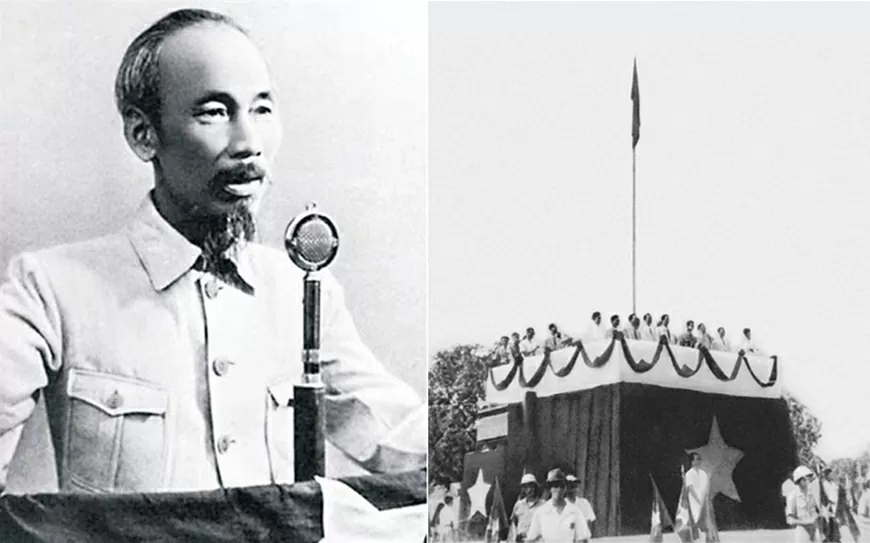
President Ho Chi Minh read the Declaration of Independence on September 2, 1945, giving birth to the Democratic Republic of Vietnam and ushering in a new era for the history of the Vietnamese nation, as well as for Vietnamese foreign relations and diplomacy . (Archival photo)
Since ancient times, diplomacy has been an essential and indispensable relationship between nations, helping humanity expand communication in all aspects to develop productive forces and production relations worldwide, serving the legitimate development needs of human society. For our country, throughout its history, foreign relations and diplomacy have always been a fundamental method in national governance, affirming its indispensable role in protecting sovereignty, creating a peaceful environment, promoting cooperation and development, and continuously enhancing the country's international prestige.
Diplomacy for national defense
Throughout the history of nation-building and national defense, diplomacy has always been a crucial shield protecting the borders, territory, and sovereignty of the country against threats of invasion, helping our country achieve "internal peace and external tranquility." The ideology of "harmony and friendship" was emphasized by General Tran Quoc Tuan in his book "Essentials of Military Strategy": "Harmony is a very good principle in governing the country and conducting military operations. Peace within the country means less need for warfare, and peace on the borders means no fear of alarm." This serves as a guiding principle in preventing war, maintaining peace for the nation, and firmly protecting the country's borders. In the history of our ancestors' diplomatic relations, to achieve lasting peace, one of the strengths of their diplomacy was always using righteousness and diplomatic persuasion to win the hearts of the enemy, clearly demonstrated in Nguyen Trai's "Proclamation of Victory over the Wu" (1428): "Using great righteousness to overcome brutality / Using benevolence to replace tyranny."
In the modern era, with the establishment of the Democratic Republic of Vietnam in 1945, diplomacy continued to play a vital role in protecting the fledgling revolutionary government from pressure from multiple sides. In a critical situation, President Ho Chi Minh directed the signing of the Preliminary Agreement (March 6, 1946) and the Provisional Agreement (September 14, 1946) with France, temporarily achieving a truce to avoid simultaneous confrontation with both Chiang Kai-shek's forces and the French colonialists. These steps demonstrated flexible and adaptable diplomatic skills, allowing Vietnam time to consolidate its forces and protect its newly independent nation.
During the two protracted wars of national resistance, Vietnamese diplomacy contributed to ending the war, restoring peace, and unifying the country. The Geneva Accords (1954) and the Paris Agreement (1973) are testaments to tireless diplomatic efforts and the skillful art of combining "fighting" and "negotiating" to end the war and pave the way for national reunification. Especially in today's era of high globalization, diplomacy has even more reason to play a pioneering role in protecting national security and sovereignty early and from afar, enhancing the ability to respond to new threats. Along with other foreign policy forces, Vietnam resolutely and persistently defends its independence, sovereignty, unity, and territorial integrity, as well as its legitimate interests, and builds peaceful, friendly, secure, cooperative, and developing borders with neighboring countries. Simultaneously, we will promote the peaceful resolution of outstanding issues, strengthen international cooperation based on respect for and adherence to international law, especially the 1982 United Nations Convention on the Law of the Sea (UNCLOS 1982).
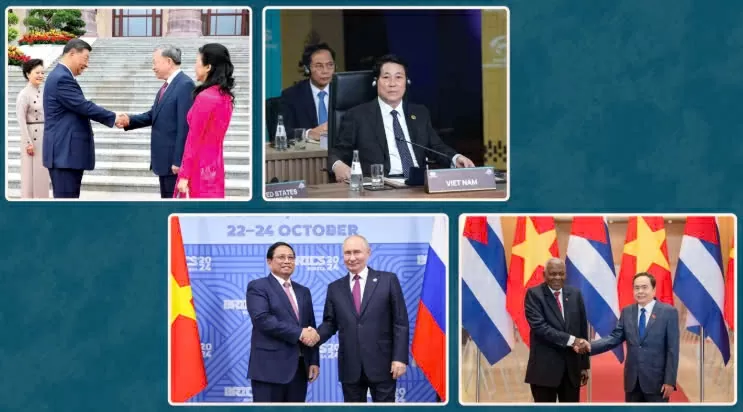
The vibrant diplomatic activities of the country's key leaders in recent times have contributed to enhancing Vietnam's position and prestige in the international arena. (Source: VNA)
Creating a favorable environment
Foreign affairs and diplomacy have always been at the forefront of establishing and maintaining a peaceful and stable environment, constantly consolidating a favorable foreign policy landscape, both bilaterally and multilaterally. Maintaining and strengthening the zone of peace, friendship, and cooperation plays a crucial role in the country's security and development. During the Doi Moi (Renovation) period, resolutions marking a turning point in foreign policy thinking, such as Resolution 32 (1986) and Resolution 13 (1988) of the Politburo, laid the foundation for a diversified and multilateral foreign policy, "making more friends and fewer enemies," leading to the normalization of relations with China (1991), the US (1995), and joining ASEAN (1995). Since then, Vietnam has consistently pursued a foreign policy of independence, self-reliance, peace, friendship, cooperation, and development, multilateralism, and diversification. Independence and self-reliance mean that all decisions must be based on national interests and the common principles of the international community. Peace, friendship, cooperation, and development link the country's cause with the progressive goals of humanity. Diversification and multilateralism combine the country's strengths and international conditions to create a favorable environment for national security and development.
On this basis, national interests are ensured, independence and sovereignty are maintained, and national security and social order are preserved. Vietnam integrates deeply into the world, actively contributing to maintaining peace and stability in the region and globally. Currently, Vietnam has established diplomatic relations with 194 countries and built a network of 32 strategic and comprehensive partnership frameworks, including all five permanent members of the United Nations Security Council and the G7 economies. These relations are maintained on the principles of mutual respect, non-interference in internal affairs, and mutually beneficial cooperation, helping Vietnam ensure a peaceful environment to focus on socio-economic development. Stability in international relations also minimizes the risk of conflict, creating conditions for Vietnam's deep and sustainable integration with the world.
Resources for development
Whether in times of war or peace, with its distinctive advantage of "peaceful methods and negotiations," diplomacy has always played a constructive and driving role, opening up new opportunities for the country to thrive. Furthermore, diplomacy has a dialectical relationship with other fields, as President Ho Chi Minh once summarized in his saying, "Strength is the gong, diplomacy is the sound." Accordingly, diplomacy is the thread connecting internal strength with external strength, where internal strength is fundamental and long-term, while external strength is important and groundbreaking, creating the overall strength of the nation, encompassing both hard and soft power in the implementation of foreign policy.
The combined strength of diplomacy lies in the integration of various pillars and branches of foreign policy, between internal and external forces, and between national strength and the strength of the times. In particular, external resources, including both material and spiritual resources, include trade, investment, aid, economic development and integration trends, a multipolar, multicentered world order based on international law, and the power of the era of scientific and technological revolution, the knowledge economy, and globalization.
At a higher level, Vietnamese foreign relations and diplomacy play a crucial role in positioning Vietnam optimally within development trends and movements, maximizing external resources, and continuously enhancing the country's status and prestige. Economic diplomacy has become a pillar for development, with the signing and effective implementation of nearly 20 free trade agreements, bringing trade turnover to a record high of nearly 800 billion USD, while expanding cooperation in new fields such as semiconductor technology, artificial intelligence, and innovation.
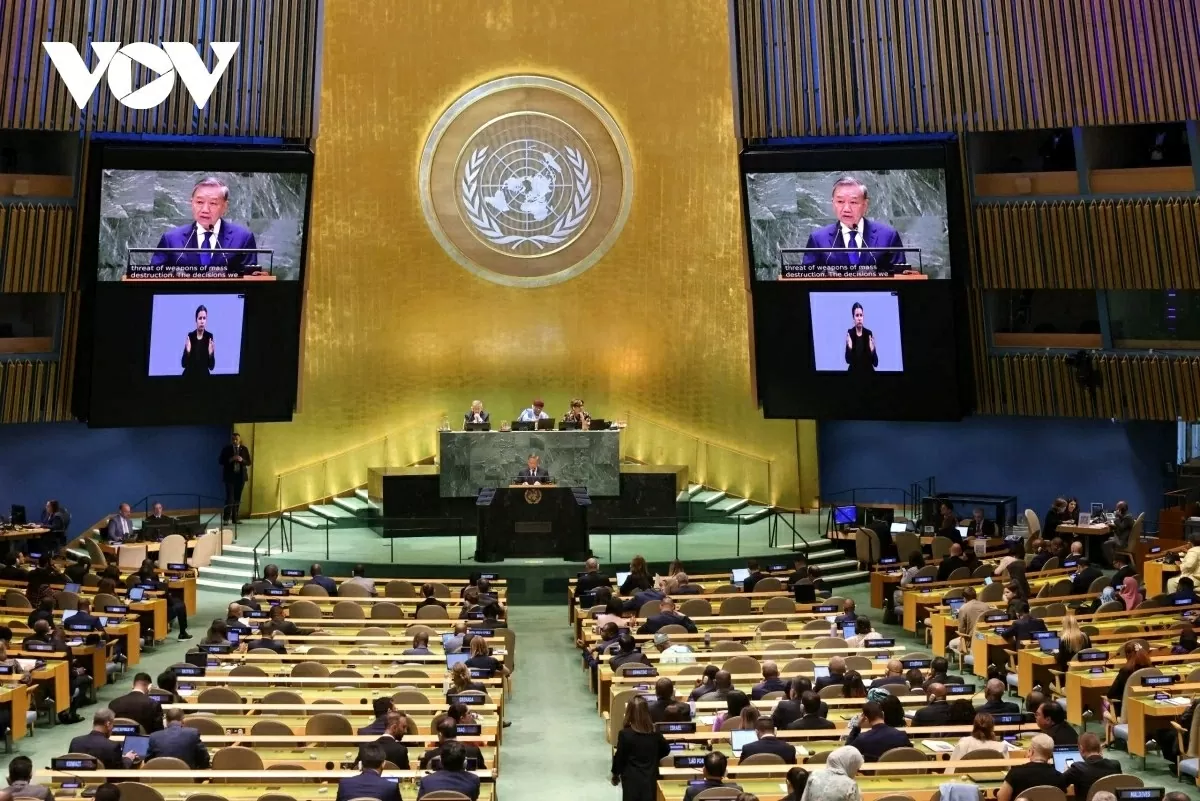
General Secretary and President To Lam delivered a speech at the Future Summit of the 79th session of the United Nations General Assembly on September 22, 2024. (Source: VNA)
Enhancing international prestige and standing.
Throughout 80 years of growth and development, under the leadership of the Party and the direct guidance of President Ho Chi Minh, Vietnamese diplomacy has always upheld its glorious tradition, serving the Fatherland and the People, contributing to the great victories in the nation's revolutionary cause. In nearly 40 years of reform, foreign affairs and diplomacy have achieved "important results and achievements of historical significance," a crucial prerequisite for successfully achieving the goals of the 100th anniversary of the Party's founding, and creating a foundation for successfully achieving the goals of the 100th anniversary of the nation's founding. Political, economic, cultural, social, scientific and technological, national defense, and security potential have continuously improved. From a poor and backward economy with a low level of development, in 2024, GDP growth reached 7.09% (exceeding the target of 6-6.5%), placing Vietnam among the few countries with high growth rates in the region and the world. The economy is worth nearly $500 billion, an increase of almost 100 times compared to 1986, ranking fourth in Southeast Asia and 34th in the world; the national brand value is projected to reach $507 billion in 2024, ranking 32nd out of 193 globally.
On multilateral forums such as ASEAN, the United Nations, APEC, G20, and BRICS, Vietnam is increasingly affirming its active and responsible role. In particular, in 2024 and 2025, our country initiated and successfully organized two ASEAN Future Forums, demonstrating Vietnam's contribution to shaping the future of the ASEAN Community.
Contributing to peace and common development.
After 40 years of reform, Vietnam's economic, security, defense, and foreign relations strength and position have changed, creating demands for a new mindset and status in international relations. With the maturation of foreign relations, diplomacy in the new era requires a new, more comprehensive approach to the role of foreign affairs, shifting from receiving to contributing, from learning to leading, from deep integration to full integration, from a lagging nation integrating into the world to a nation striving to be a pioneer in new fields and assuming new responsibilities. On the one hand, Vietnam has the conditions to participate more actively and responsibly; on the other hand, the international community also expects Vietnam to contribute more positively to resolving common issues.
For every nation, peace is a prerequisite for mobilizing and concentrating all resources for development. A just, equitable, and rules-based world order is in line with the interests of the country and the common aspirations of the world's people. With the current deep integration, the interests of the Vietnamese state, businesses, and citizens are closely linked to a peaceful, stable, and cooperative external environment. Foreign policy and diplomacy must contribute to creating the most favorable regional and global order for the country's interests.
For non-traditional security challenges such as economic security, energy security, water security, cybersecurity, climate change, and epidemics, foreign policy and diplomacy not only play a role in leveraging external forces and securing support and cooperation from the international community, but also proactively contribute to building regional and global institutions and frameworks, working together to address these challenges.
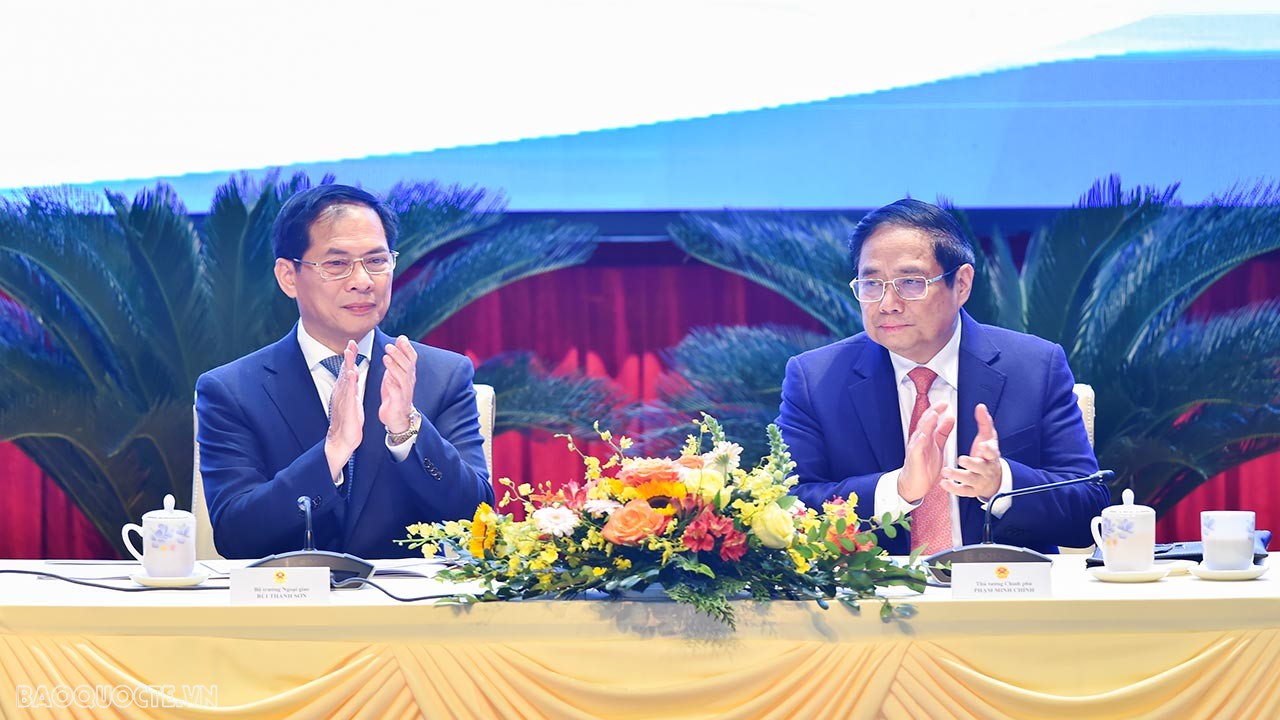
Prime Minister Pham Minh Chinh and Minister of Foreign Affairs Bui Thanh Son attended the Plenary Session on Economic Diplomacy for National Development within the framework of the 32nd Diplomatic Conference, December 2023. (Photo: Tuan Anh)
Playing a pioneering role in the new era of the nation.
Entering a "new era, the era of Vietnam's national resurgence," the role of the diplomatic sector has been elevated to a new level, as stated by General Secretary and President To Lam: "Ensuring national defense and security and promoting foreign relations are crucial and ongoing." With this strategic vision, the requirements for diplomacy in the new era must be a diplomacy commensurate with the cultural and historical stature, political and economic position of the country, and with the contributions of our nation to the common cause of the world's people. Diplomacy must be at the forefront in connecting the country with the world, the nation with the times; enabling the country to proactively participate in resolving common global issues; and preserving and continuously fostering the good feelings of the world's people towards the Vietnamese people and country. This will create new momentum and strength, build a favorable international environment for the Vietnamese revolution, make a significant contribution to building the image, strength, and position of the country, and consolidate and enhance Vietnam's role and position in world politics, the global economy, and human civilization.
To fulfill that mission, the Ministry of Foreign Affairs needs to continue innovating its thinking and actions, advising and developing new solutions to supplement the Party's foreign policy guidelines and principles. Foreign affairs and diplomacy in the new era must continue to maintain its resilience, adaptability, and creativity in new spaces and positions, demonstrating both strategic and artistic levels of diplomacy. Specifically: (i) Always be ready to adapt to all circumstances in thinking and action, avoiding dogmatism and rigid adherence to formulas; breakthroughs are needed in researching and assessing current events; (ii) Maintain "strategic initiative" in all situations, promptly assessing and forecasting the direction of world movements, the policies of neighboring countries and major powers, and development trends and new trends, thereby proposing appropriate policies and decisions to the Party and the State, avoiding passivity and surprise; (iii) Recognizing the interplay between Vietnam's national interests and the interests of other partners, based on the United Nations Charter and international law.
In this era of national resurgence, under the leadership of the Party, on the foundation of Marxism-Leninism and Ho Chi Minh Thought, combined with national traditions and the finest aspects of human culture, diplomats and soldiers in peacetime are at the forefront of foreign relations, continuing to shoulder the glorious mission: positioning Vietnam favorably in the flow of the times, to lead the country to new heights, "standing shoulder to shoulder with the great powers of the world."
* Institute for Strategic Diplomatic Studies, Diplomatic Academy of Vietnam.
Baoquocte.vn
Source: https://baoquocte.vn/doi-ngoai-ngoai-giao-viet-nam-trong-ky-nguyen-vuon-minh-cua-dan-toc-306632.html


![[Photo] Prime Minister Pham Minh Chinh presides over the conference announcing the establishment of the International Finance Centre in Vietnam.](/_next/image?url=https%3A%2F%2Fvphoto.vietnam.vn%2Fthumb%2F1200x675%2Fvietnam%2Fresource%2FIMAGE%2F2025%2F12%2F21%2F1766309817714_ndo_br_dsc-3400-jpg.webp&w=3840&q=75)
![[Photo] Prime Minister Pham Minh Chinh presides over a meeting on private sector economic development.](/_next/image?url=https%3A%2F%2Fvphoto.vietnam.vn%2Fthumb%2F1200x675%2Fvietnam%2Fresource%2FIMAGE%2F2025%2F12%2F20%2F1766237501876_thiet-ke-chua-co-ten-40-png.webp&w=3840&q=75)



![[Photo] Prime Minister Pham Minh Chinh presides over the conference announcing the establishment of the International Finance Centre in Vietnam.](https://vphoto.vietnam.vn/thumb/402x226/vietnam/resource/IMAGE/2025/12/21/1766309817714_ndo_br_dsc-3400-jpg.webp)











































Comment (0)