

Kinhtedothi - According to Associate Professor Dr. To Van Hoa - Vice Rector of Hanoi Law University, streamlining the administrative apparatus by eliminating intermediate levels is an important step in building a lean, modern, effective, and efficient administration...
On March 6th, the Ministry of Justice, in collaboration with the Ho Chi Minh National Academy of Politics, organized a national scientific conference titled "Innovating the Work of Lawmaking and Enforcement to Meet the Requirements of National Development in the New Era." The conference focused on analyzing the urgent needs in lawmaking and enforcement to meet the development requirements of the country in the new era – an era of Vietnam's rise and prosperity.
The workshop was chaired by: Politburo member, Chairman of the Central Theoretical Council, Director of the Ho Chi Minh National Political Academy Nguyen Xuan Thang; Politburo member, Secretary of the Central Committee of the Party, Head of the Central Internal Affairs Commission Phan Dinh Trac; Central Committee member, Minister of Justice Nguyen Hai Ninh; and Deputy Minister of Justice Nguyen Thanh Tinh.
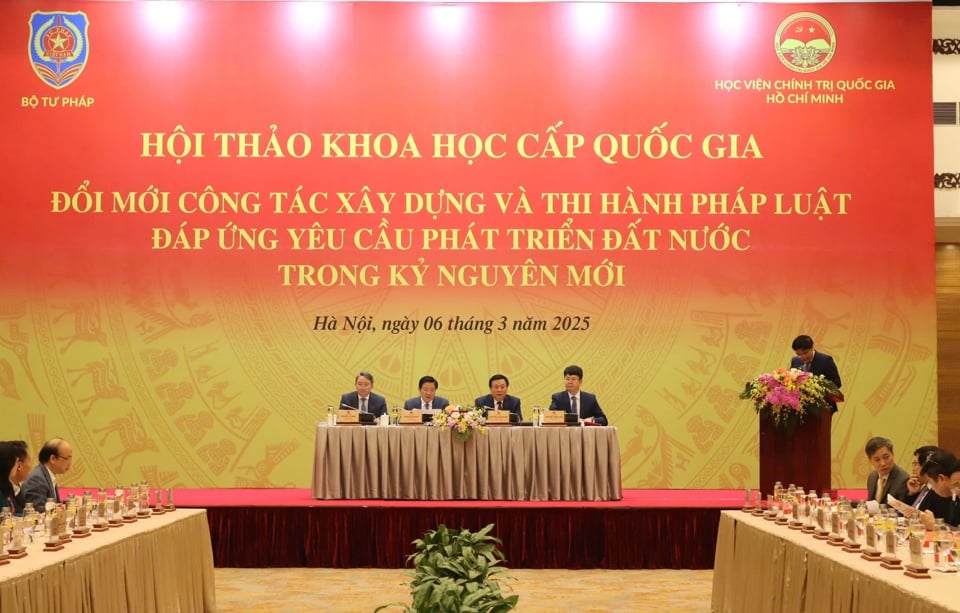
Rethinking the process of lawmaking and enforcement.
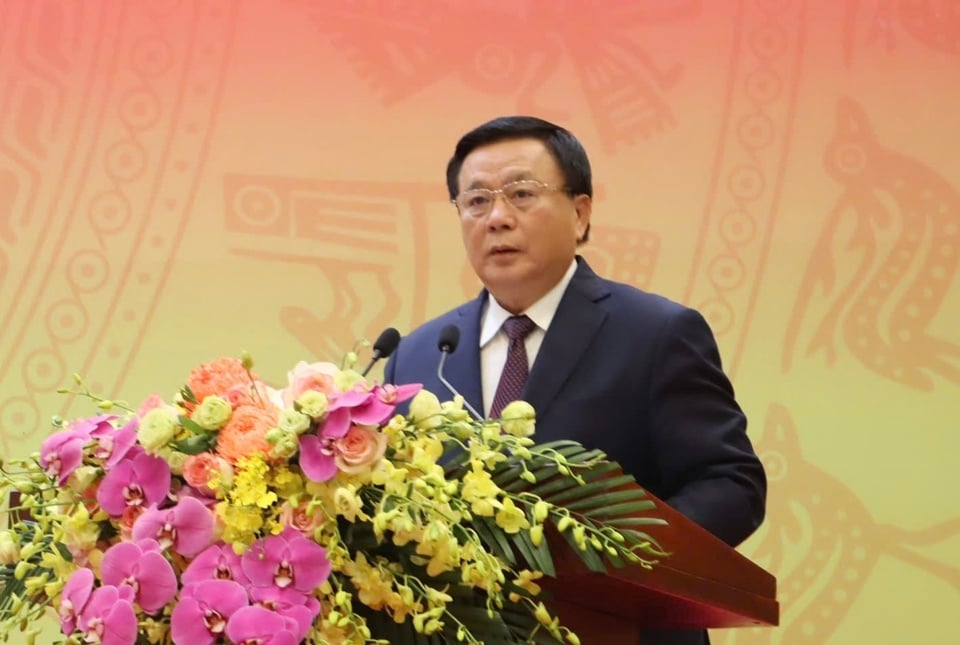
In his opening remarks, Director of the Ho Chi Minh National Political Academy Nguyen Xuan Thang affirmed that reforming the work of lawmaking and enforcement is of paramount importance in the process of comprehensively and synchronously promoting the country's renewal. To realize the aspiration to rise in the new era requires great determination and effort, a genuine renewal of thinking, and revolutionary transformations to not only catch up but also to surpass in development.
“The entire political system is resolutely carrying out a revolution in organizational restructuring, ensuring it is lean, efficient, effective, and efficient; identifying institutional breakthroughs as the “breakthrough of breakthroughs,” which must be implemented early, ahead of time, paving the way for development, and unleashing all resources, especially those within the people; promoting decentralization and delegation of power in the spirit of “Local authorities decide, local authorities act, local authorities are responsible, the Central Government and the National Assembly play a constructive role” and “strengthening supervision, inspection, urging, and resolving difficulties and obstacles” - emphasized Nguyen Xuan Thang, Director of the Ho Chi Minh National Political Academy.
To implement these groundbreaking policies and decisions, the Director of the Ho Chi Minh National Political Academy, Nguyen Xuan Thang, affirmed that it must begin with a change in thinking about the development and implementation of laws.
The Director of the Ho Chi Minh National Academy of Politics also directed the discussion on reforming and reorganizing the organizational structure of law-making and law-enforcement agencies to ensure they are lean, efficient, effective, and effective from the central to local levels.
Furthermore, continue reviewing and improving regulations on the functions, tasks, and organizational structure of ministries, ministerial-level agencies, government agencies, the National Assembly, People's Committees and People's Councils at the local level, courts, and procuratorates, with a view to eliminating intermediate levels, especially the district level...
Speaking at the seminar, Professor Hoang The Lien, former Permanent Deputy Minister of Justice and member of the Scientific Council of the National Assembly Standing Committee, remarked that after nearly 40 years of reform, our country has gathered all the prerequisites and conditions for our nation to rise up in the new era.
Professor Hoang The Lien argues that for the nation to reach its aspirations in the new era, it requires setting higher development targets, especially socio-economic growth targets; accelerating and breaking through in the pace of development; and being more decisive in implementing revolutionary reforms in institutions, laws, and organizational structures, with a focus on promoting the task of building and perfecting the socialist rule of law state of Vietnam according to Resolution No. 27-NQ/TW of the Party. Promoting institutional and legal reforms is a top priority to create a comprehensive, synchronized, and effectively functioning institutional system that promotes national development. This institutional system, viewed holistically, must ensure the fulfillment of three fundamental requirements: sustainable general order, the rule of law, and development.
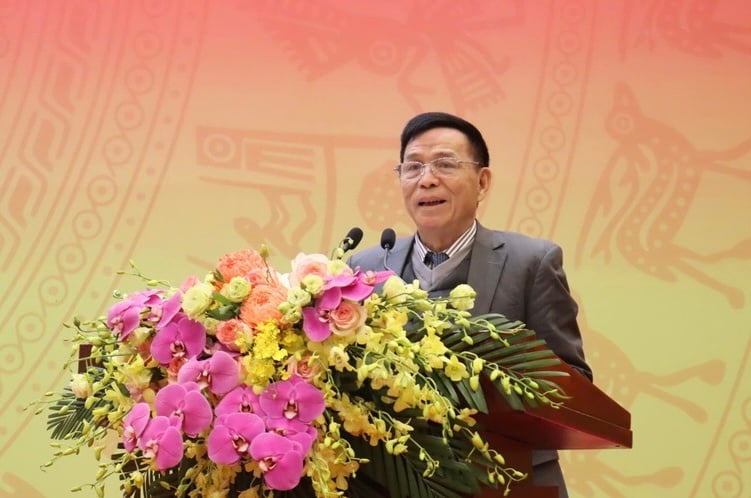
Furthermore, Professor Hoang The Lien also suggested that relevant agencies should soon develop a Resolution on reforming the work of drafting and enforcing laws to meet the requirements of national development in the new era, in order to reform institutions and laws and meet the requirements of national development in the new era.
Research on amending and supplementing certain provisions of the Constitution.
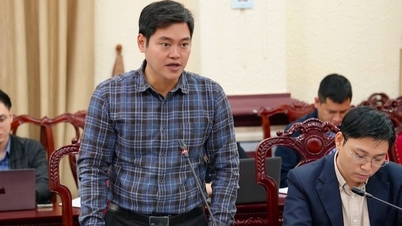
Speaking at the conference, Associate Professor Dr. To Van Hoa, Vice Rector of Hanoi Law University, offered his opinion on the research into abolishing the district level. According to Associate Professor Dr. To Van Hoa, abolishing the district level in Vietnam's local administrative system is not simply about eliminating district-level administrative units or merging communes, but rather about ensuring smooth administrative work at the local level in the current context, especially in providing public services to the people.
According to Associate Professor Dr. To Van Hoa, first, it is necessary to clarify the concepts of "administrative unit" and "specialized administrative unit". In modern local administration, the national territory is usually divided by the State into administrative units and special administrative units so that every square meter must be managed and have national sovereignty. However, not every square meter is managed under the exact same mechanism; there are differences appropriate to the natural, demographic, economic, and social conditions of that place.
Based on the analysis of the above principles in organizing the local administrative system, Associate Professor Dr. To Van Hoa stated that administrative units have two levels: Firstly, the provincial level, which includes provinces and centrally-administered cities. Secondly, the grassroots level (below the provincial level, which can be called the "commune level" or "grassroots level"), which includes the administrative units closest to the people, namely communes and concentrated urban areas (which can be called cities, classified into groups depending on size and level of development).
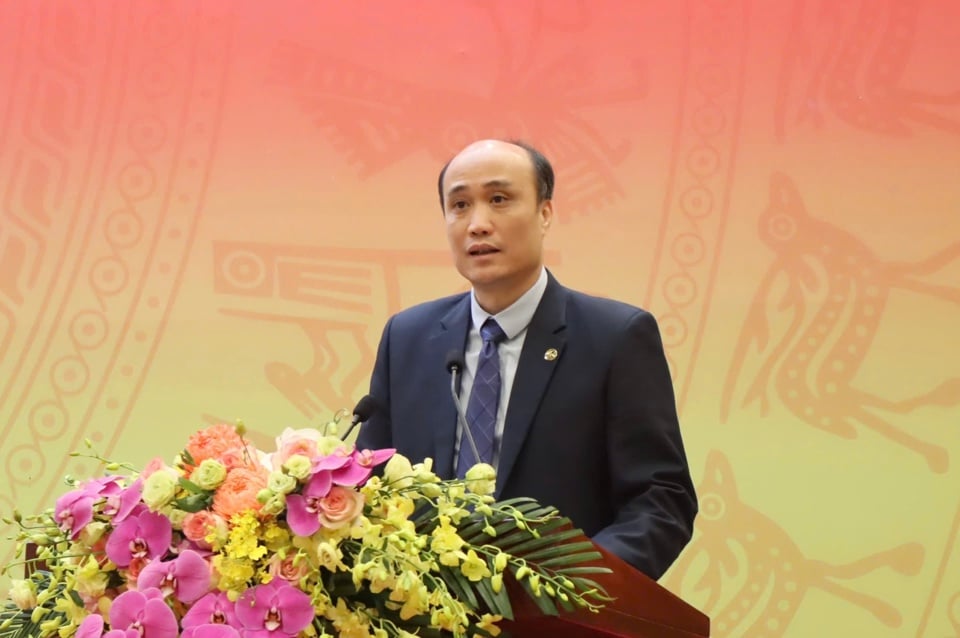
Associate Professor To Van Hoa stated that implementing the policy of not organizing district-level administrative units would require research into amending and supplementing some provisions of the Constitution. He proposed amending Article 110 of the Constitution on administrative units in Vietnam to stipulate that the Socialist Republic of Vietnam comprises administrative units and specialized administrative units.
There are two levels of administrative units: provincial-level administrative units (including provinces and centrally-governed cities) and grassroots-level administrative units, or communes (including communes, cities, and towns in provinces; communes within cities, towns, and inner-city areas in centrally-governed cities). The inner-city area is a new administrative unit, encompassing the core urban area and capital of centrally-governed cities, including the current inner-city districts of centrally-governed cities. For example, the inner-city area of Hanoi comprises 12 districts, the inner-city area of Ho Chi Minh City comprises 16 districts, and the inner-city area of Hai Phong comprises 6 districts…
Basic administrative units can be divided into smaller territorial areas, but these are not administrative units; they are merely administrative management areas. Local governments are not established there; instead, only departments/facilities of higher-level administrative agencies carry out administrative management.
Specialized administrative units include specialized administrative units at various levels established and managed according to the provisions of law. The Law on Local Government may stipulate two or more levels of specialized administrative units.
These include specialized administrative units managed by provincial-level local governments and specialized administrative units managed by the central government.
The establishment, dissolution, merger, division, and adjustment of administrative boundaries of administrative units and specialized administrative units are carried out according to the provisions of the law. Therefore, Associate Professor Dr. To Van Hoa believes that the procedural regulations in the law are appropriate, ensuring both democracy and the necessary flexibility to suit the diversity of administrative and specialized administrative unit types.
Regarding the amendment of the Constitution on the organization of local government, Associate Professor Dr. To Van Hoa stated that Article 111 of the Constitution on the organization of local government should be studied and amended in two directions. Firstly, it should stipulate that all administrative units establish local governments comprising People's Councils and People's Committees. There should be no distinction between "local government" and "level of local government," because any local government must have a complete structure of People's Councils and People's Committees. Secondly, it should stipulate that specialized administrative units do not establish local governments but may establish administrative management mechanisms suitable to the purpose of establishing the specialized administrative unit.
“Streamlining the local government apparatus by eliminating the district level is an important step to improve the efficiency of state management. If implemented well, it will help reduce the cumbersome nature of the state administrative system, while creating a streamlined, flexible administrative model suitable for development requirements in the current context. To successfully implement this policy, amending and supplementing the Constitution is necessary to create a clear and stable constitutional foundation for the reorganization of the apparatus,” emphasized Associate Professor Dr. To Van Hoa.
Source: https://kinhtedothi.vn/doi-moi-cong-tac-xay-dung-va-thi-hanh-phap-luat-dap-ung-yeu-cau-phat-trien-trong-ky-nguyen-moi.html


![[Image] Central Party Office summarizes work in 2025](/_next/image?url=https%3A%2F%2Fvphoto.vietnam.vn%2Fthumb%2F1200x675%2Fvietnam%2Fresource%2FIMAGE%2F2025%2F12%2F18%2F1766065572073_vptw-hoi-nghi-tong-ket-89-1204-jpg.webp&w=3840&q=75)







![[Photo] Prime Minister Pham Minh Chinh attends the Conference summarizing and implementing tasks of the judicial sector.](https://vphoto.vietnam.vn/thumb/402x226/vietnam/resource/IMAGE/2025/12/13/1765616082148_dsc-5565-jpg.webp)
























































Comment (0)