

The Dao people in Thanh Hoa province are divided into two main groups: the Dao Tien, who reside in the high mountainous areas, mainly concentrated in Muong Lat district (Suoi Tut, Con Dao villages, Quang Chieu commune; Pu Quan, Pu Nhi commune), and the Dao Quan Chet, who live concentrated in Ngoc Lac and Cam Thuy districts. Their current population is approximately 7,400 people.
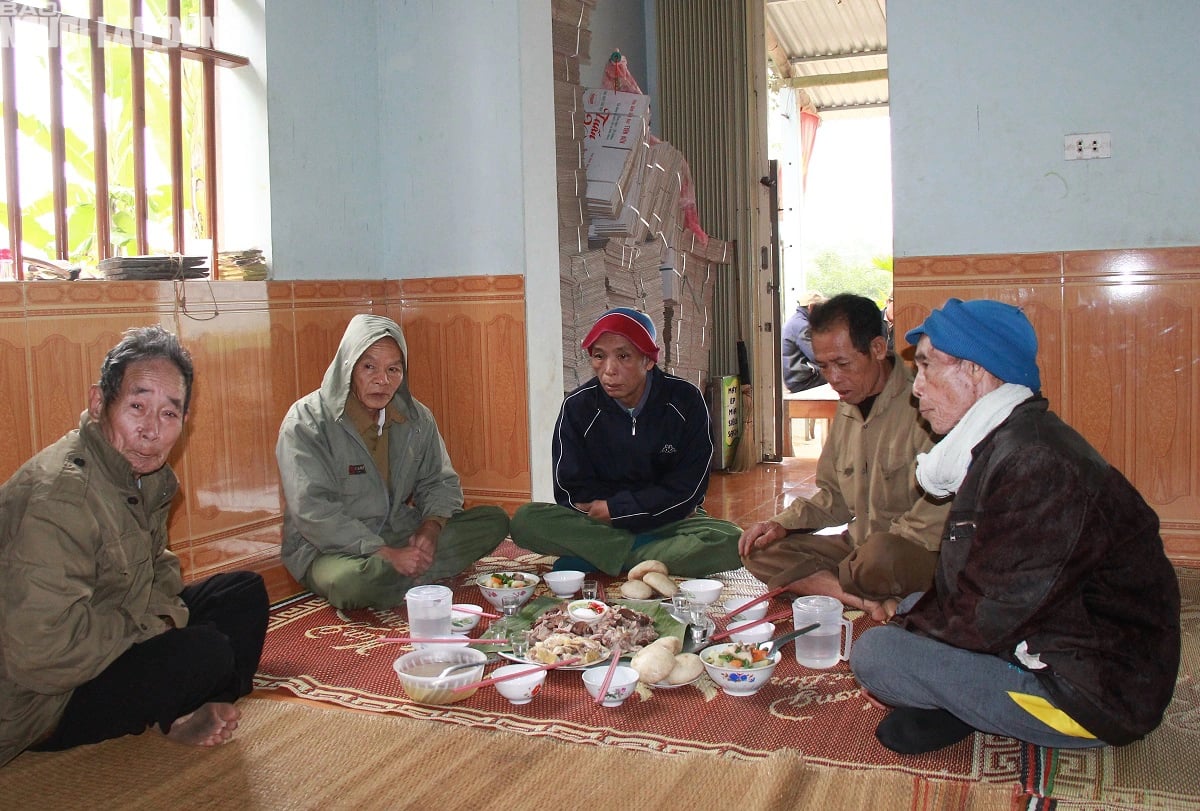
The "Year-End Tet" is a unique and most important custom of the year for the Dao Quan Chet ethnic group in Thanh Hoa.
One of the three important New Year's days for the Dao Quan Chet people.
For the Dao people, there are three important festivals in a year: Thanh Minh Festival, the Mid-Autumn Festival (the 15th day of the 7th lunar month), and the "Year-End Festival". Of these, the "Year-End Festival" is the most important, as it is an occasion for descendants to report to their ancestors about the year's work of their family, clan, and village.
In Ngoc Lac and Cam Thuy districts (where the Dao Quan Chet ethnic group mainly lives), at the end of the twelfth lunar month, when the harvest is bountiful and people are excited about the fruits of their labor, the Dao people will organize the "Year-End Celebration" to report to and thank their ancestors for the year's achievements, and at the same time pray for their ancestors' blessings and assistance for the family, clan, and village to have a prosperous new year with favorable weather.
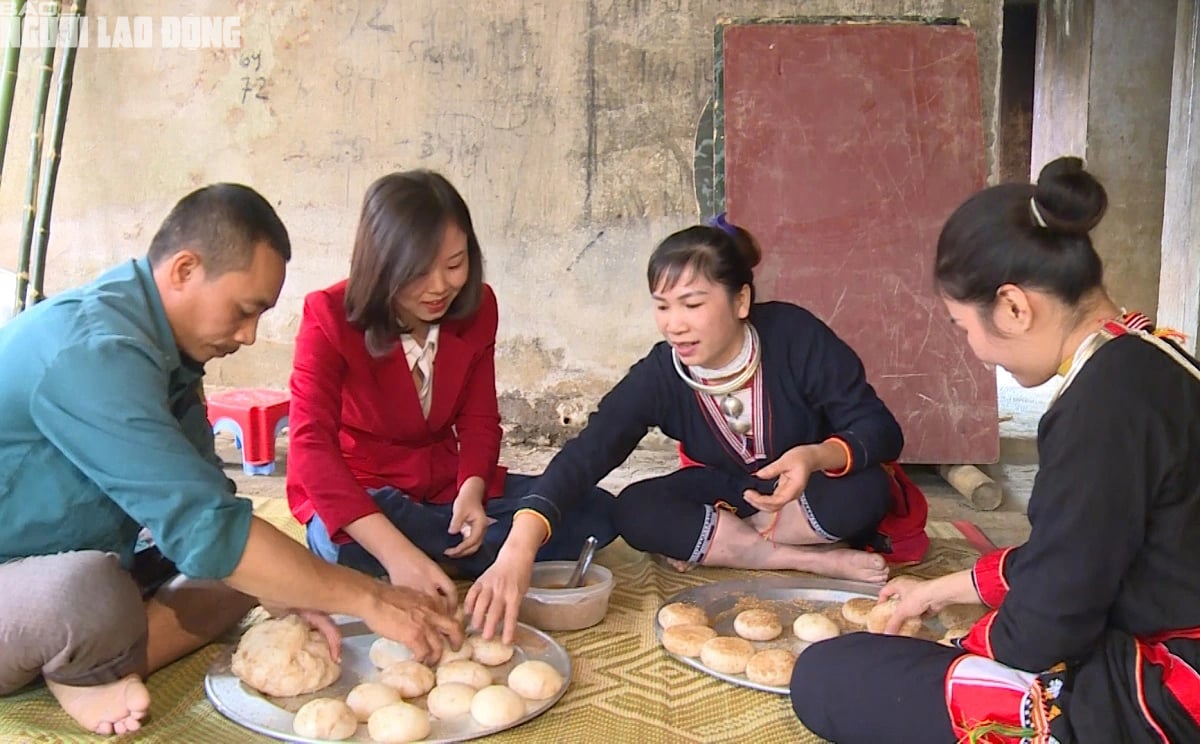
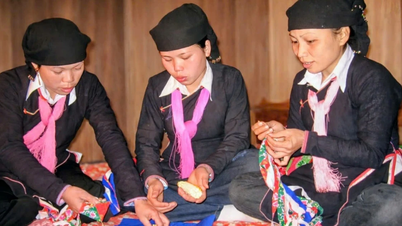
The Dao people make sticky rice cakes, one of the indispensable offerings during the "Year of the New Year" celebration.
Depending on the economic conditions of each family and clan, they organize a truly thoughtful and warm Tet celebration. This is an opportunity for relatives to gather together to contribute to a grand Tet feast; everyone contributes what they can, but the most important is the head of the clan.
To prepare for Tet (Vietnamese New Year), starting from the beginning of September in the lunar calendar, the clan leader must prepare delicious sticky rice, raise pigs and chickens to feast the entire clan at the end of the year. If many relatives and friends come to visit, Tet is considered prosperous and successful. When the most descendants and members of the clan are present, Tet is celebrated. All members of the clan gather at the clan leader's house to celebrate Tet together.
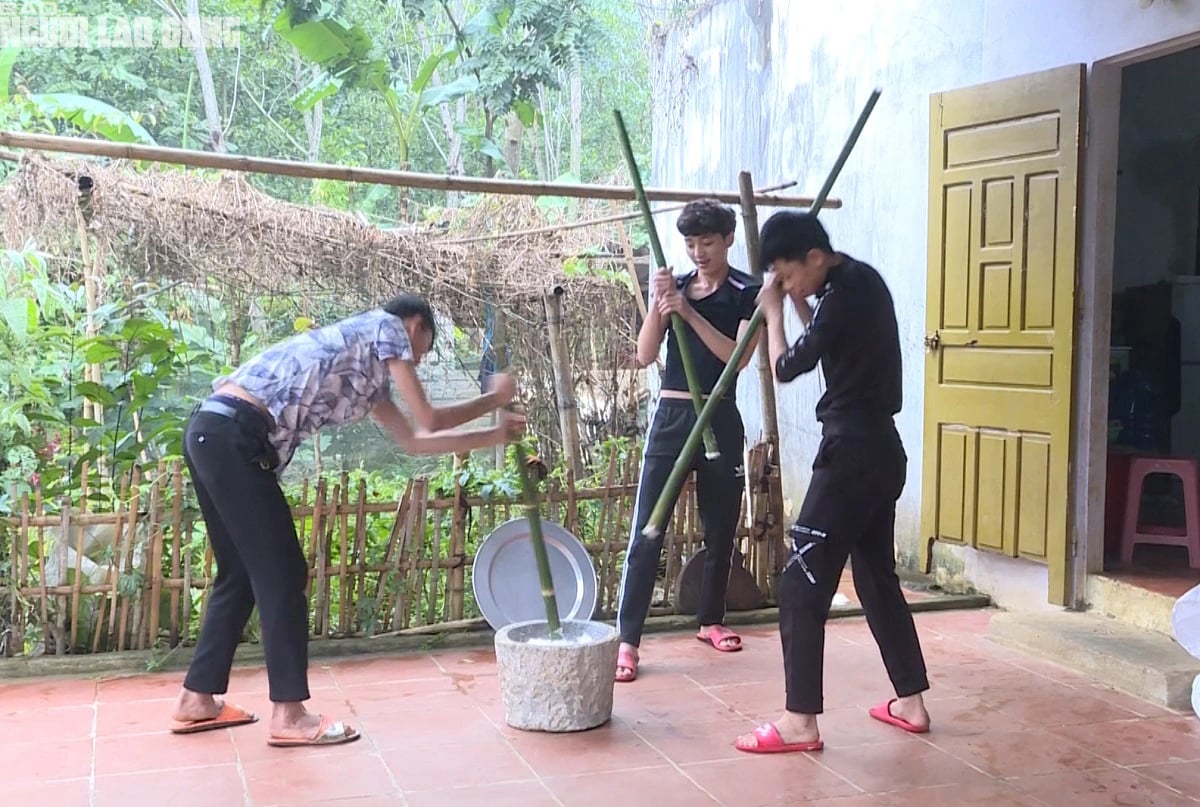
Healthy young men will be tasked with pounding sticky rice to make cakes.
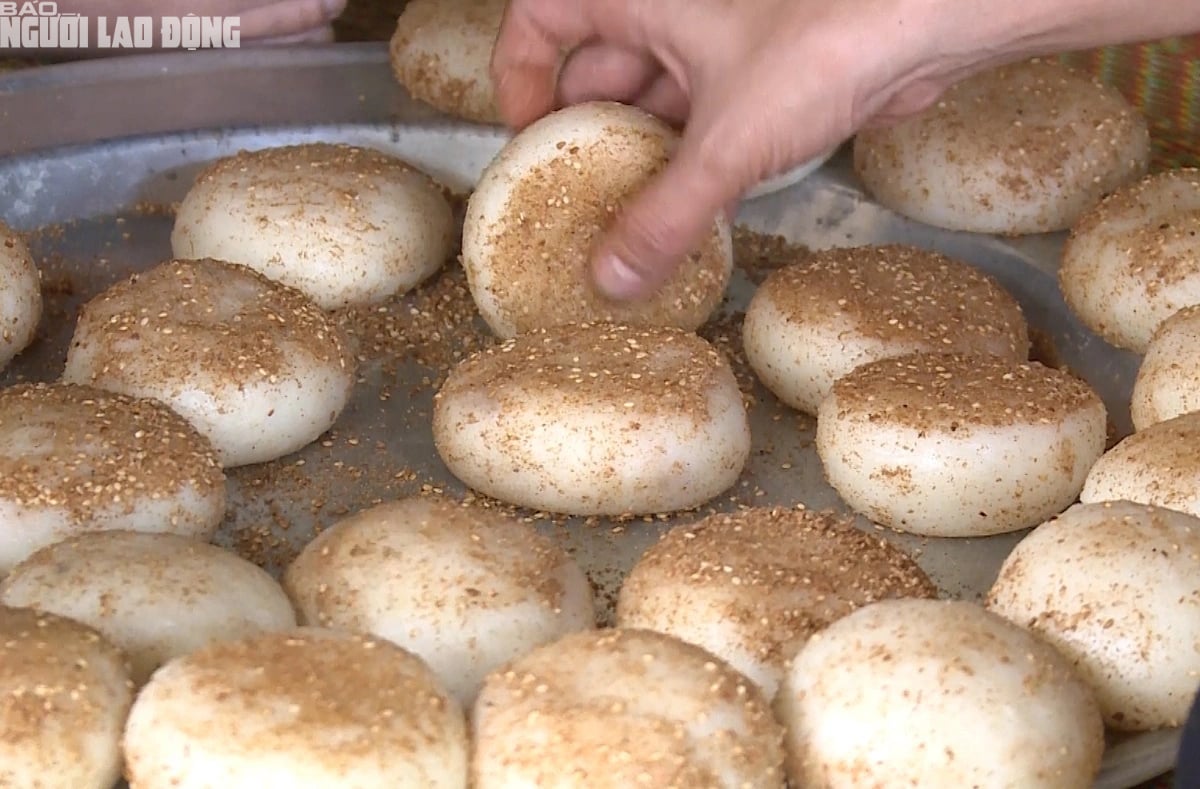
Sticky rice cakes are eaten during the Lunar New Year celebration.
Mr. Trieu Hung Cuong (Thach An village, Cam Lien commune, Cam Thuy district) said that the "Year of the New Year" Tet is a very important custom for the Dao people, so every year at the end of November and beginning of December in the lunar calendar, most families in the village will take turns preparing feasts, inviting shamans to perform rituals, and inviting relatives, friends, and neighbors to celebrate Tet.
During the Lunar New Year celebration, there are three indispensable dishes on the offering tray: pork, chicken, and sticky rice cakes. The pig is selected from a good breed, raised since the beginning of the year. When slaughtered, the pig must be butchered whole; the head is used for the offering ceremony, and the rest is prepared into various dishes.
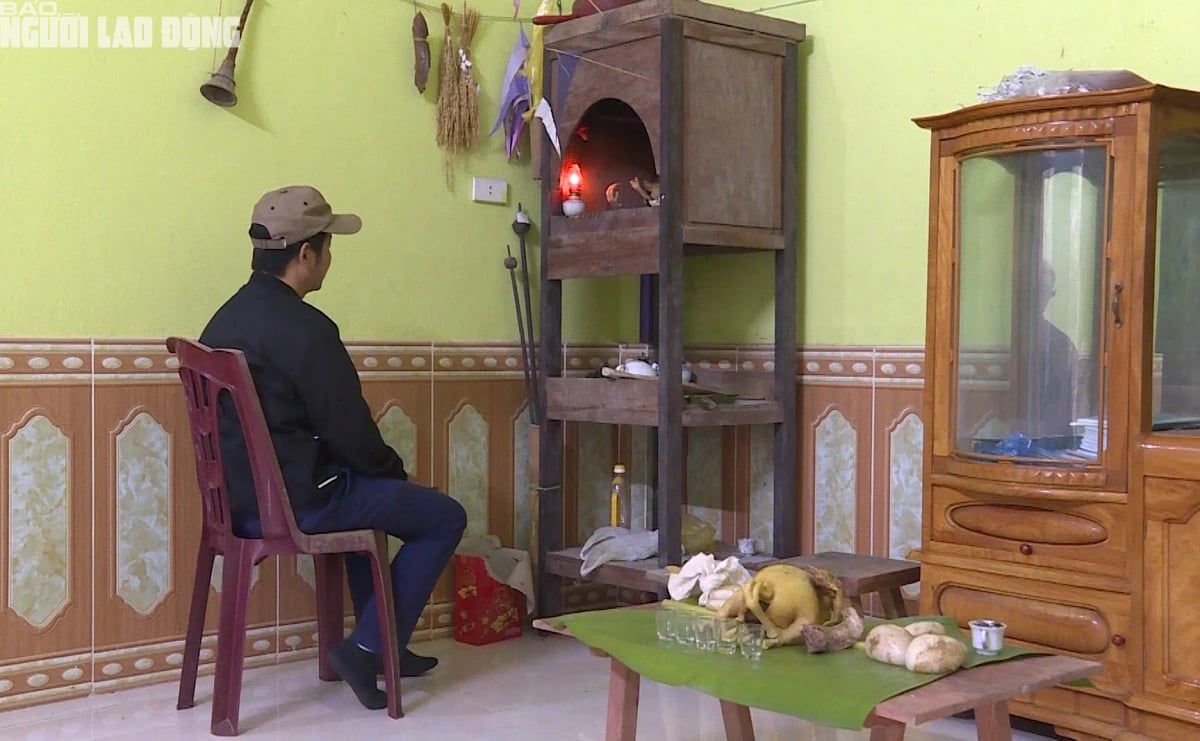
The shaman performs the rituals to worship the ancestors.
To prepare the pork, from early morning, the strong and enthusiastic young men of the clan are mobilized by the clan leader to catch and slaughter the pig, and to participate in preparing the chicken and pounding the rice cakes. The rice cakes are made from glutinous rice that has been steamed until cooked, then pounded in a stone mortar until smooth, mixed with roasted sesame seeds, and shaped into small, round cakes.
Three indispensable offerings
For the Dao people, the ritual offering is the most important, usually performed by three shamans fluent in the ancient Dao language. They are the first to arrive to prepare the offerings and the altar, ensuring the ceremony is complete. The Dao people don't place much importance on the offerings themselves; they offer whatever their family has, depending on their economic circumstances. Those with more resources tend to make larger offerings, but a pig's head, a rooster, and sticky rice cakes are indispensable.
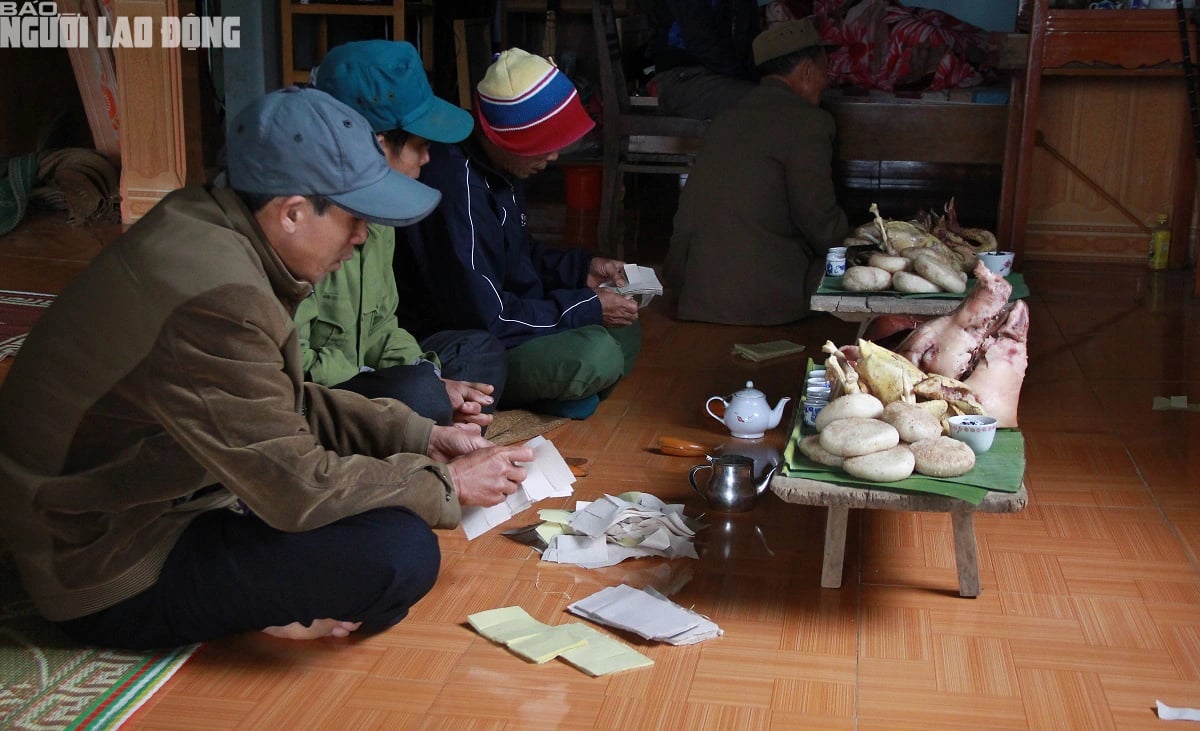
The ancestral worship ceremony usually involves three priests performing the rituals.
In their religious beliefs, the Dao people are deeply influenced by Confucianism, Buddhism, and especially Taoism. Three trays of offerings are respectfully arranged to worship the ancestors, the Ban Vuong (the progenitor of the Dao people), and the collective family ancestors (younger members of the family such as wife, children, etc.).
During ancestor worship ceremonies, the Dao people do not use incense bought from the market, but instead use incense made from the bark of trees gathered from the forest, which is very fragrant. They buy the bark and put it in a small bowl. Each time they burn a piece of bark, they must use a piece of glowing charcoal to burn alongside it, until the bowl is full of charcoal and incense bark.
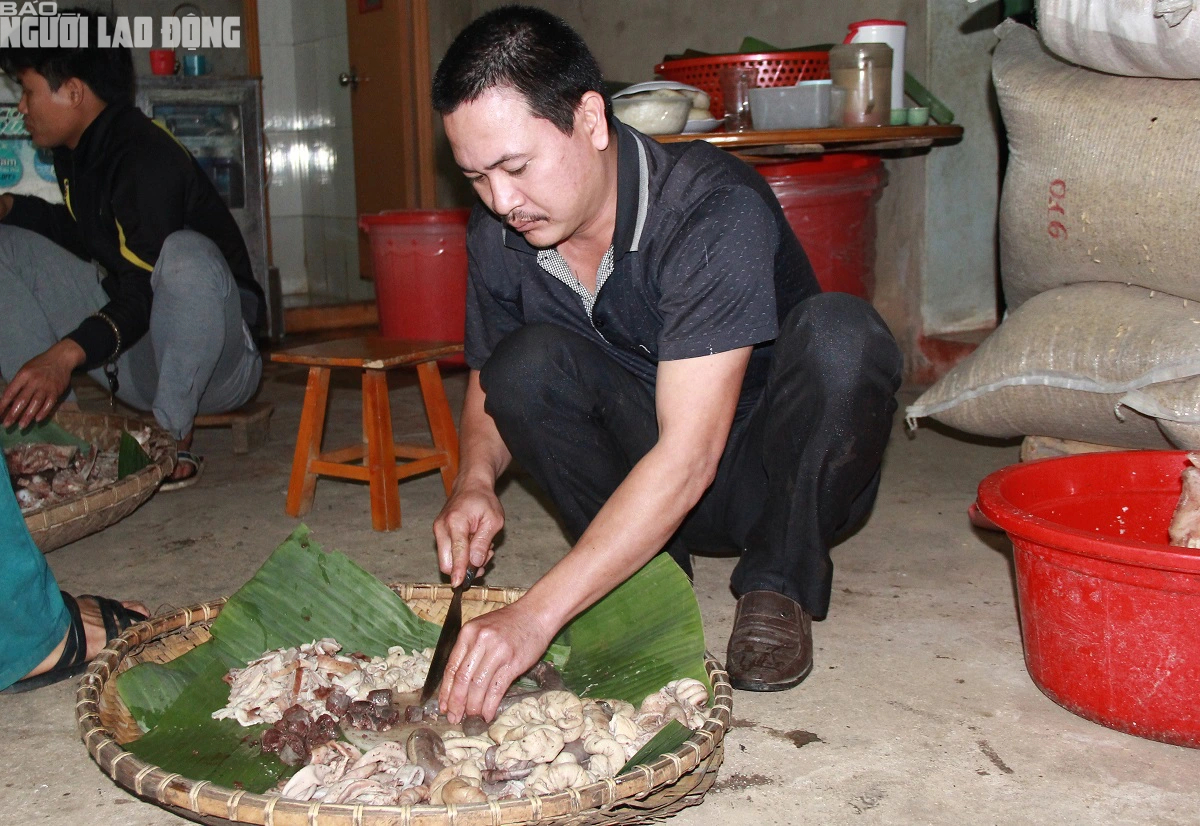
After the head is offered to the ancestors, the pork is processed into various dishes.
The shamans will, on behalf of the family, respectfully report to the ancestors, the clan leader, and the family lineage about the accomplishments and unfinished tasks of the year, while also praying for good fortune and success in the new year.
Strengthening the spirit of unity within the family and community.
According to tradition, the "Year Together" Tet offering ceremony will be performed by shamans for over an hour. After the ceremony, all the offerings are taken down and spread out for the descendants to share during Tet.
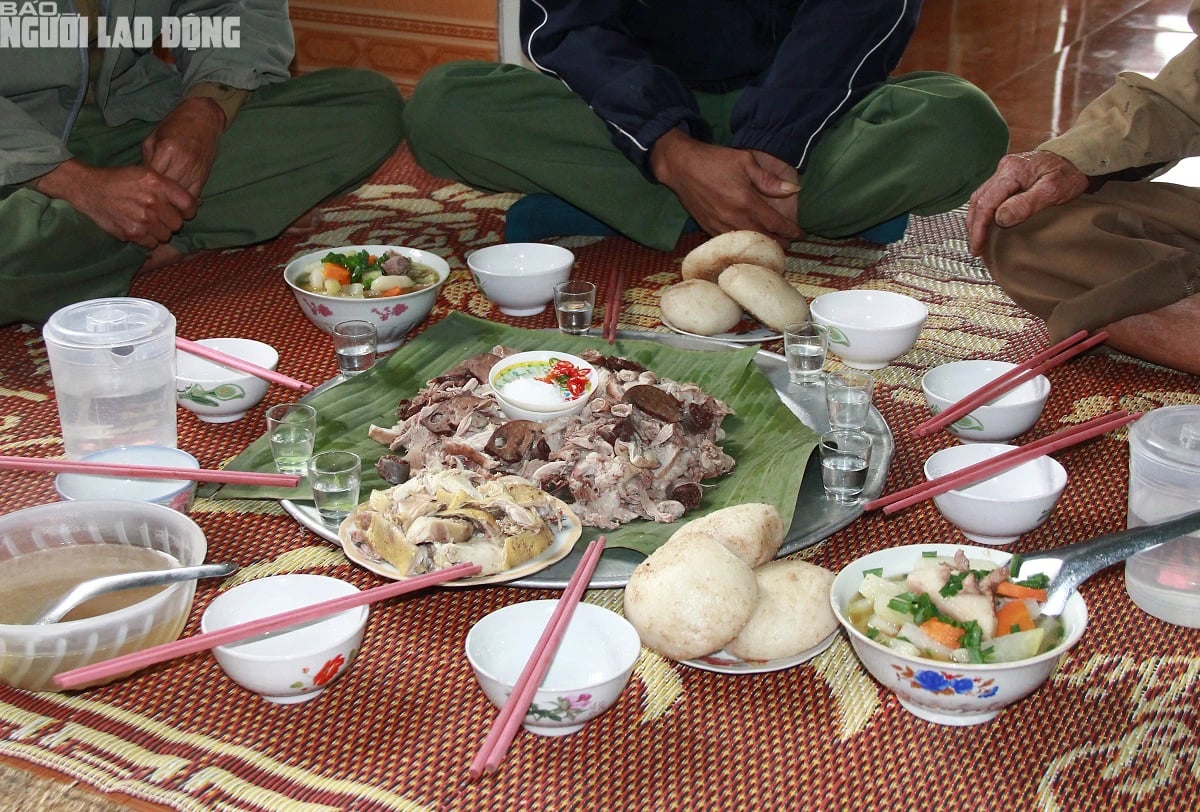
All the dishes were arranged together on a tray lined with banana leaves.
According to Dao custom, all food must be served on fresh banana leaves. Before sharing a meal to show solidarity, the clan leader goes around offering wine to relatives, wishing everyone good health and encouraging them to work together for a more prosperous and joyful Tet holiday next year. Even more special, the shaman and village elders, along with the male members of the clan, sit at a separate table inside the main house. The young men and women of the family eat outside in the courtyard or downstairs.
The Dao Quan Chet people believe that the more guests a family receives during the "New Year" celebration, the more fortunate they will be in the new year. Therefore, during the "New Year" celebrations, the Dao community always lives in an atmosphere full of joy.
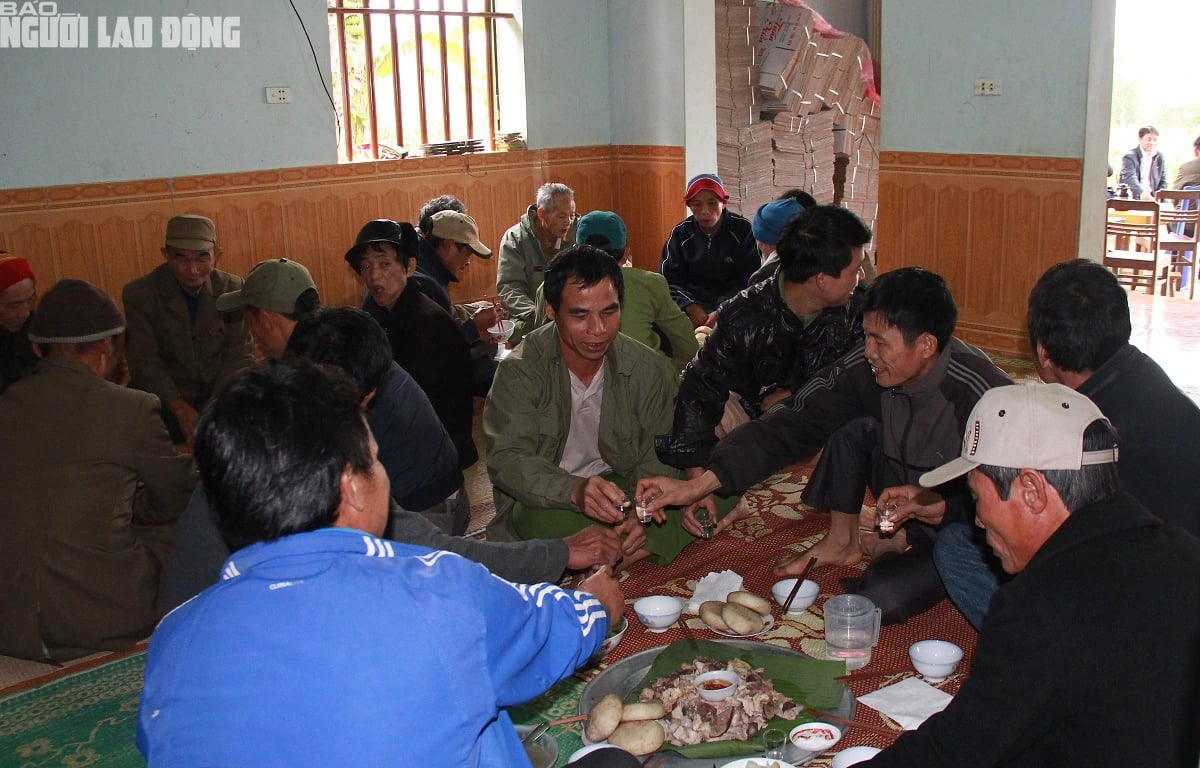
After the rituals are completed, the feast is laid out for all family members, relatives, and villagers to celebrate Tet together. For the Dao people, the more guests who come to celebrate Tet together, the more luck they believe that year will bring.
"We are very excited about our national New Year, a tradition deeply ingrained in every generation here, so everyone feels enthusiastic and eager to return home to celebrate with their families," shared Mr. Duong Kim Khoa, from Binh Son village, Cam Binh commune.
According to the People's Committee of Cam Thuy District, there are currently nearly 4,000 Dao ethnic minority people living in the communes of Cam Binh, Cam Lien, Cam Chau, and Phong Son town. Each year, the Dao people celebrate three festivals: the Mid-Autumn Festival (the 15th day of the 7th lunar month), the "Year of the Together" Festival, and the Thanh Minh Festival (Qingming Festival). This is a unique cultural feature of the Dao people, and therefore, over the years, Cam Thuy District has always paid attention to and encouraged the Dao people to preserve, protect, and promote these unique cultural rituals and traditions.
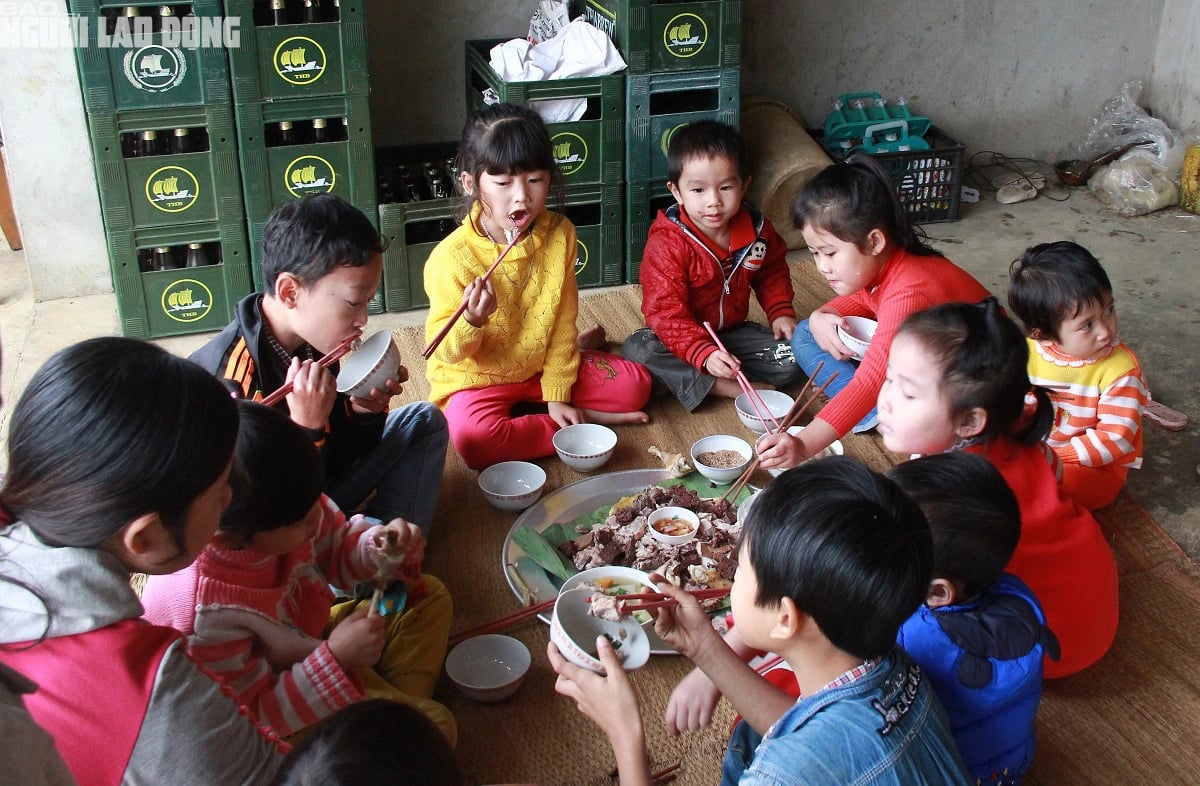
The "year-long reunion" Tet celebration is a unique cultural feature, reflecting the spirit of family and community solidarity.
In the days leading up to the traditional Lunar New Year, if you have the opportunity to visit the districts of Cam Thuy, Ngoc Lac, and Muong Lat (Thanh Hoa province), where the Dao ethnic minority lives, you will experience an atmosphere full of spring colors and enjoy the New Year celebration with the Dao people there.
Source
![[Image] Pleasant weather helps students enter the 10th grade entrance exam with confidence.](https://vphoto.vietnam.vn/thumb/1200x675/vietnam/resource/IMAGE/2026/05/29/1780034401612_ngay-1-thi-lop-10-minh-duy-8-5009-jpg.webp)
![[Photo] Ba Lang An Lighthouse - the "eye of the sea" amidst the "rock museum" of Quang Ngai province.](https://vphoto.vietnam.vn/thumb/1200x675/vietnam/resource/IMAGE/2026/05/29/1780038698840_anh-man-hinh-2026-05-29-luc-14-10-42.png)




























































Comment (0)