

The management of the petroleum market remains largely administrative in nature.
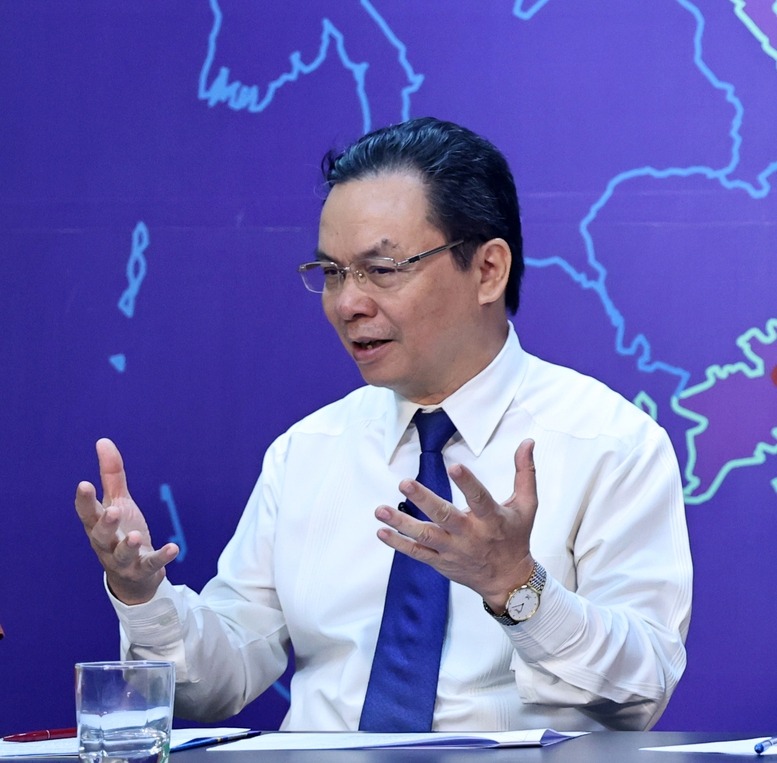
At the seminar "For the stable, transparent and efficient development of the petroleum market" on the morning of July 30th, National Assembly representative Hoang Van Cuong - a member of the National Assembly's Finance and Budget Committee - stated that petroleum prices are managed using various tools, including the base price, tax adjustments (tax reductions when necessary), and adjustments to the price stabilization fund.
Mr. Cuong argued that the drawback of this mechanism is that prices must follow world prices; high import prices result in high prices. The management still relies heavily on administrative tools, with the State imposing prices on petroleum businesses.
This has led to situations where the regulatory mechanism fails to guarantee benefits and profits for businesses, especially those involved in the distribution and retail of petroleum products. There have been periods when prices fluctuated, and without any tools to intervene, businesses suffered losses and had to close down.
Therefore, Mr. Cuong believes that future policy development should aim to reform the administrative mechanism of imposition into a market-based tool for self-regulation and create competition among petroleum businesses.
"The current management mechanism is an administrative state management mechanism, so we should shift to market-based tools, allowing the market to regulate. Currently, we have the basis to use market-based tools and don't need to worry about being passive, because domestically produced petroleum products have a fairly large source (accounting for 70%). I believe that market competition is the overarching factor."
"To have market tools for competition, we must have a competitive market; to have a competitive market, buying and selling must be decided by the market, with hundreds of sellers and thousands of buyers," Professor Hoang Van Cuong stated.
Equal competition is also the desire of many petroleum businesses in recent times.
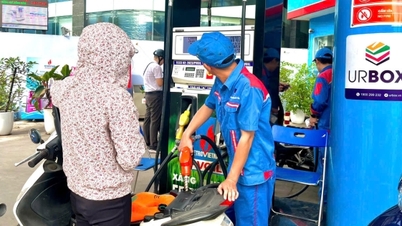
Speaking to Lao Dong newspaper, a petroleum distributor stated that petroleum businesses are not in a level playing field for fair competition in the market. This is especially true in the relationship between wholesale distributors, retailers, and small and medium-sized enterprises; and between large and super-large businesses dominating the market and small and medium-sized enterprises.
For example, one corporation holds up to 51% of the market share, and together with 6 out of 32 other large enterprises, they account for 88% of the market share. However, the draft Decree on petroleum business is structured in a way that is disadvantageous and eliminates the possibility of fair and equal competition for small businesses.
Furthermore, despite its dominant market position, the draft allows the business to have full discretion in determining wholesale and retail prices for gasoline and diesel within its distribution system. This is inconsistent with the Competition Law.
When there is price competition, consumers will benefit.
According to Bui Ngoc Bao, Chairman of the Vietnam Petroleum Association, petroleum products are extremely sensitive commodities and the government has paid attention to them for the past 20 years.
We see that, starting in 2003 with the first decision, Decision 187, on the organization of petroleum business, we have promptly developed five decrees to perfect the management mechanism for organizing the petroleum business.
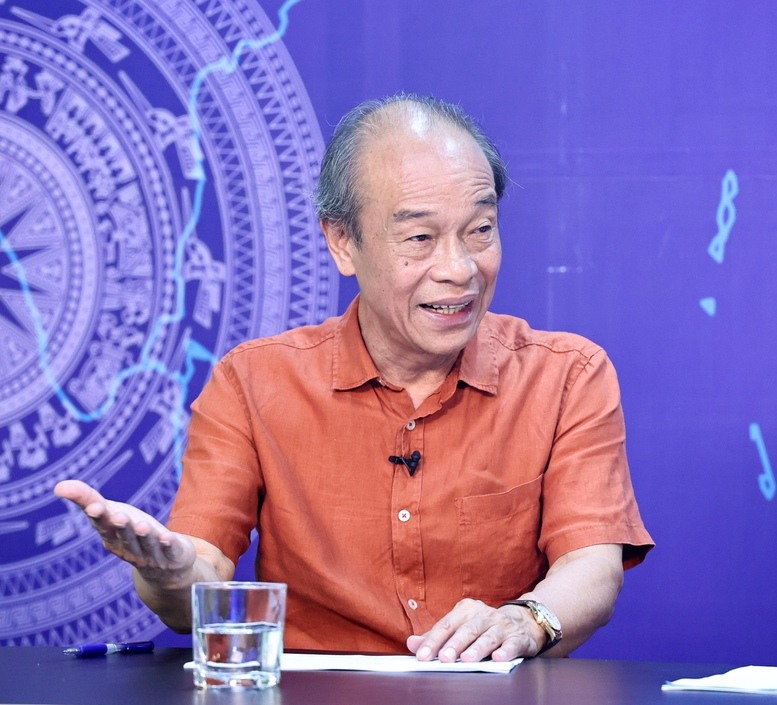
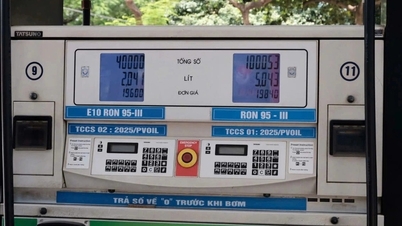
He argued that world oil prices account for 64-72% of the price structure, leading to domestic prices being entirely dependent on international prices. This commodity does not fully adhere to the pure law of supply and demand and cannot be detached from international prices.
However, according to Mr. Bao's assessment, the current mechanism for managing gasoline and oil prices is administrative in nature, especially regarding pricing. He argues that the current regulations are "too strict," with a 7-day adjustment period and state management agencies setting regulations instead of businesses.
"Regarding state management, in the coming period, the priority is to ensure energy security and guarantee the supply for this economy, while letting the market operate. When there is competition, consumers will always benefit," Mr. Bao said.
Mr. Pham Van Binh, Deputy Director of the Price Management Department (Ministry of Finance), said that the Ministry of Industry and Trade is currently tasked by the Government with leading the development of a decree to replace the current decree on petroleum products.
"The content of the decree is currently under review, and we hope it will bring about changes in the petroleum business, moving towards a business model that suits current realities," Mr. Binh said.
Source: https://laodong.vn/kinh-doanh/doanh-nghiep-xang-dau-muon-duoc-canh-tranh-binh-dang-1373513.ldo

![[Photo] Closing Ceremony of the 10th Session of the 15th National Assembly](/_next/image?url=https%3A%2F%2Fvphoto.vietnam.vn%2Fthumb%2F1200x675%2Fvietnam%2Fresource%2FIMAGE%2F2025%2F12%2F11%2F1765448959967_image-1437-jpg.webp&w=3840&q=75)


![[Photo] Prime Minister Pham Minh Chinh holds a phone call with the CEO of Russia's Rosatom Corporation.](/_next/image?url=https%3A%2F%2Fvphoto.vietnam.vn%2Fthumb%2F1200x675%2Fvietnam%2Fresource%2FIMAGE%2F2025%2F12%2F11%2F1765464552365_dsc-5295-jpg.webp&w=3840&q=75)





































![[OFFICIAL] MISA GROUP ANNOUNCES ITS PIONEERING BRAND POSITIONING IN BUILDING AGENTIC AI FOR BUSINESSES, HOUSEHOLDS, AND THE GOVERNMENT](https://vphoto.vietnam.vn/thumb/402x226/vietnam/resource/IMAGE/2025/12/11/1765444754256_agentic-ai_postfb-scaled.png)










































Comment (0)